![[Indistinct Chatter] logo](https://assets.buttondown.email/images/6151609f-9740-4849-8e12-fa40bef93ca6.JPG)
[MF]#3 / Celebrating the Year of the Horse
It’s a bite late for the official Lunar New Year celebration I know, but I thought it might be apt to share this piece of writing anyway. In the process of writing my book Music Films (BFI/Bloomsbury, 2024) I had to lose some material in order to make my word count. One chapter that went in pretty much its entirety was one on Punk. So many great films, but I felt it was a cinematic genre covered elsewhere. One of the films I write about in that chapter was Jim Jarmusch’s brilliant 1997 tour film Year of the Horse, following Neil Young and Crazy Horse on tour. It’s a film that doesn’t get written about nearly enough. So, in honour of the Year of the Horse, here’s the section from that culled chapter - and a note; this did not go through the editing process the rest of the book did. Consider this a rough, punk, fragment. I think I’m going to do this for other culled chapter elements too, here, when something aligns in my mind, like in the past week.
“One day the world’s gonna come looking for this” - Films about punk pioneers
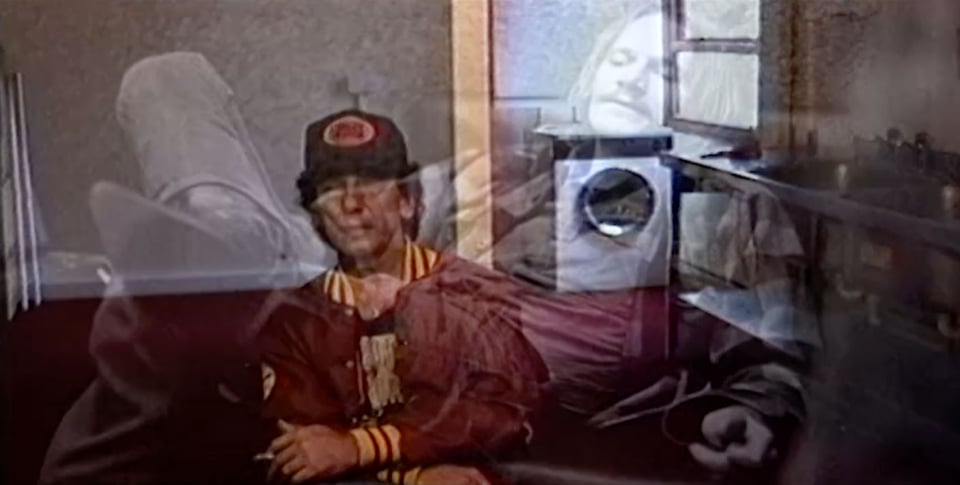
For much of the interview footage included in Jim Jarmusch’s film about The Stooges, Gimme Danger (2016), leader of the band Iggy Pop is shown talking in front of a washing machine, laundry piled up behind him. This echoes similar footage from another Jarmusch film, Year Of The Horse (1997) where Neil Young and members of the band Crazy Horse are interviewed in a backstage laundry room at a venue they are performing it. A further echo can be found in Christine Franz’s film about Sleaford Mods, Bunch of Kunst (2017), with its talk of loading the dishwasher. Franz may be paying homage to Jarmusch’s fascination with household clothes cleaning appliances but what it more reasonably speaks to is the connection of punk to class, most notably conceptions of the working class - accurate or not in terms of punk’s participants - as well as poverty and punk as a reaction to dismal states of affairs. In, Gimme Danger, seeing Iggy Pop talk about growing up in a trailer and being poor and being inspired by life in mid 1960s Detroit, rings true given the modesty of his surroundings in the film telling his story. It also illustrates something that returns again and again in films about punk, that of the financial precarity of being a punk musician.
Gimme Danger has flashes of this kind of aesthetic thinking that lead to a cinematic depth of representation of the story of Iggy and the other stooges, all of whom that were alive at the time of filming are featured in the film. Similar to Cobain: Montage of Heck (Morgen, 2015) and End of the Century, Jim Fields and Michael Gramaglia’s 2003 film about the Ramones, Jarmusch makes the decision to focus interviews on the core of those involved, rather than bringing in the opinions of those influenced by the Stooges. That influence is clear both in popular culture but also across the films discussed here including End of the Century. By focusing on the band members, manager and key players, the film retains an intimacy that again, similar to the setting of the interviews - domestic, low-profile - adds to a sense of the roots of the music. As mentioned, this kind of thought and feeling is sadly only present in flashes in the film, which for the most part feels like it could have been made by anyone, rather than one of the filmmakers who came out of the seminal punk era to create films that captured and shared the same essence as the music of the Stooges and others. It rarely feels like a “Jarmusch” film, something discussed next, which is strange because of the filmmaker’s long-standing relationship with Iggy Pop as a collaborator on the likes of Dead Man (1995) and Coffee and Cigarettes (2003).
Also, because of Jarmusch’s association with notions of “punk cinema”, alongside the likes of Alex Cox, filmmakers who emerged from the punk and no-wave scenes to create cinematic counterparts to the fiercely independent, oppositional music of punk. As discussed earlier in the book when discussing Julien Temple’s The Great Rock ’n’ Roll Swindle (1980) the peak moment of punk, Spheeris’ The Decline of Western Civilization aside, didn’t result in a document that really captured the time and its importance. However, it could be argued that traces of that moment are most felt in the early work of Jarmusch, Alex Cox’s Repo Man (1984) and possibly most notably in the films made by female filmmakers associated with the New York No-Wave scene, such as Susan Seidelman’s Smithereens (1982), Bette Gordon’s Variety (1983) and Lizzie Borden’s Born In Flames (1983). These films took the gestalt of punk and created cinematic equivalents in form and content through use of locations, unknown and untrained performers, innovative uses of music and cultural reference points to tell stories about people on the fringes of society that had received scant attention on cinema screens to that point.
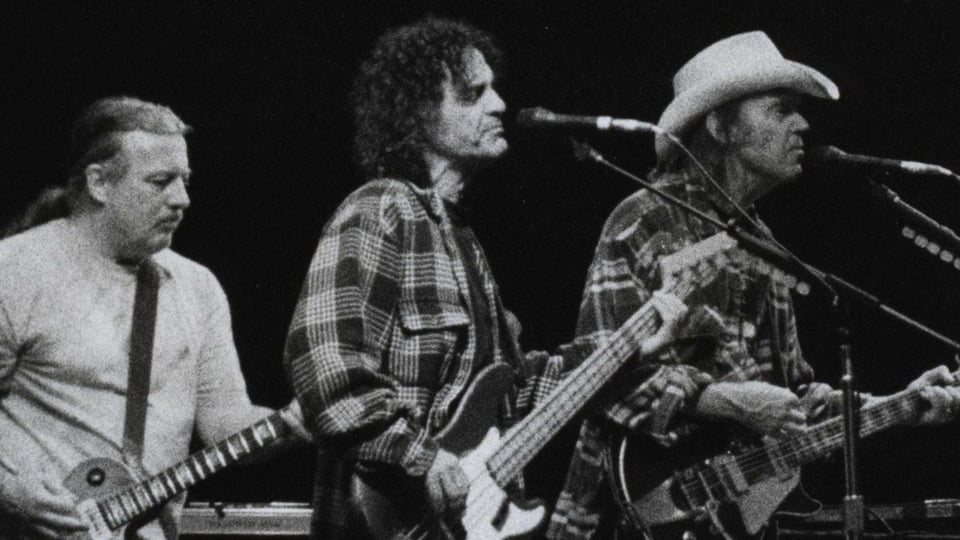
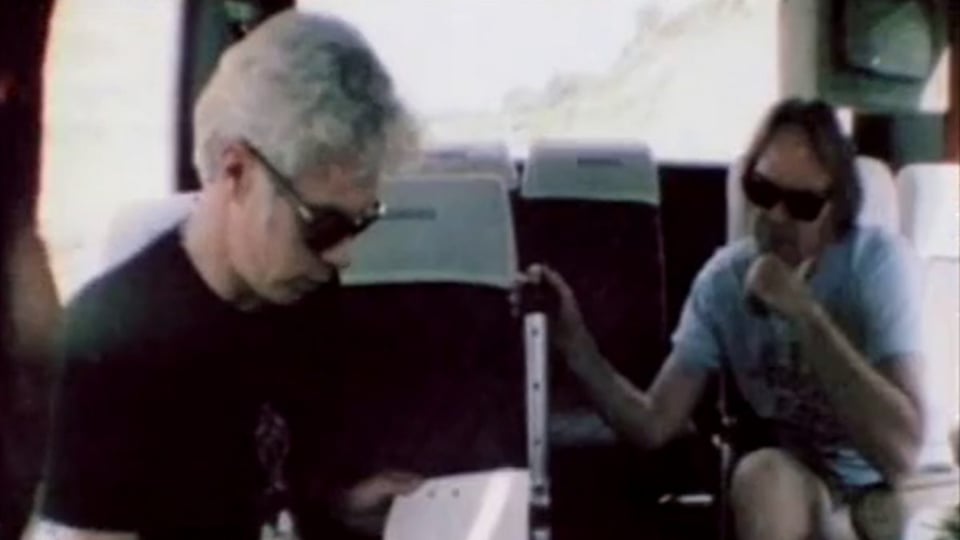
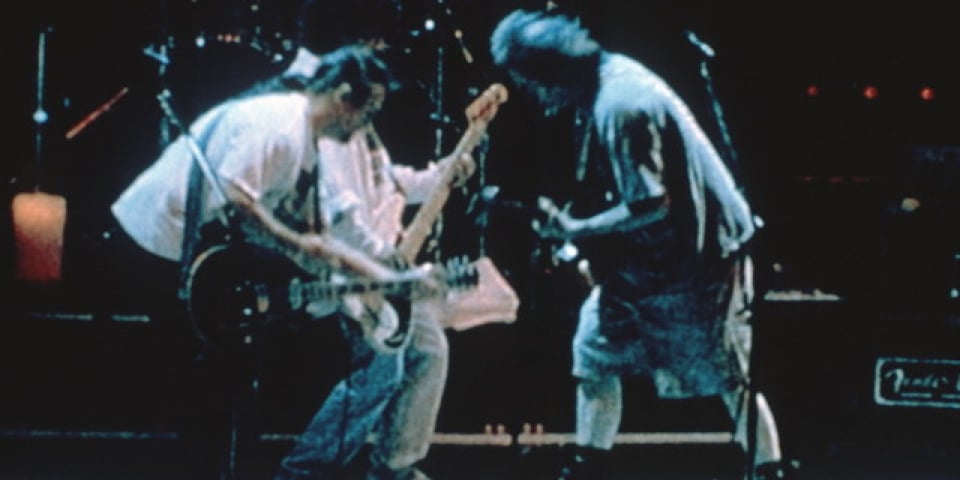
As alluded to in the introduction, Jim Jarmusch’s other music documentary feels far more punk than his later work on The Stooges. His tour film, following Neil Young & Crazy Horse across Europe and America on the tour that gives Year Of The Horse its name feels much more radical than Gimme Danger, cinematically speaking. Shot on a variety of formats including Super 8mm, 16mm and Hi 8 video, the film captures the band on and offstage in 1996, wonderfully intercut with footage of the band on tour in both 1976 and 1986. The effect is mesmerising in how it tells the story of a band across time, the different temporalities echoing the interview footage that speaks of growing bonds and realisations of closeness and specialness brought about by the passing of time. The fluidity of time is elegiac, and it butts up against the, admittedly pretty punk approach of, the band performing huge arenas with their backs mostly turned to the audience, clustered around the centre of the stage, locked into each other’s playing, creating their patented sound with little care for the usual “playing to the gallery” expectations of live performance. One moment intimate, one moment obstinate, the construction of the film feels instinctive and associative rather than overly preplanned. It’s all the more rewarding because of this and feels much closer to Jarmusch’s narrative work in spirit than the more lauded and slicker Gimme Danger. Throughout Year Of The Horse, guitarist Frank “Poncho” Sampedro, ribs Jarmusch on camera about how his film will never be able to capture 30 years of Neil Young & Crazy Horse. Jarmusch seems to take this as a direct challenge. Even if Sampedro is right, the film certainly strives to capture and relay an essence of a band over that time and it does it by creating a tapestry of faces, moments and performances over time that is fuzzy, chaotic and messy, just like the music the band plays to adoring audiences night after night.
In Punk Attitude (Letts, 2005) Sonic Youth’s Thurston Moore and fellow No Wave pioneer Glenn Branca situate Patti Smith firmly in the lineage of punk rock. Moore claims her work, particularly her live performances at CBGB’s alongside fellow luminaries such as Television and Talking Heads and her debut album Horses, ‘informed punk’. Meanwhile, Branca puts it more emphatically when he calls Smith ‘the queen of the universe’. Of all the artists contained in this chapter, the inclusion of a film about Smith is arguably the most debatable. However, Steven Sebring’s 2008 film Patti Smith: Dream of Life is one that seeks to provide a cinematic portrait of an artist whose influence on the music that surrounded and followed her emergence at the height of what might be termed “proto-punk” is undeniable. Smith’s music and life contains directness, rawness, simplicity and poetry. She believes in the power of rock ’n’ roll and is reflective on life, death and art to a degree that is rarely seen. Sebring, a friend and collaborator of Smith’s, strives to capture the simplicity and poetry of Smith’s existence and work. The film observes Smith sitting telling stories, singing songs, thinking. The audience watches her create worlds of things around her. Her relationship to proximity and tactility, objects and places, discussed so beautifully in her book M Train, is rendered visually in the film in a way that feels very punk, recalling through lingering observation the importance of the physical - clothes, records, fanzines - to the music.
In the film, Smith says “life is not vertical or horizontal” and neither is the film. The film moves around time and space fluidly, evoking the dream space that cinema is so apt at conveying, tying Patti Smith’s philosophies of life and existence to the formal approach of the film. The film doesn’t seek to tell audiences what is in her mind, but more what it might be like to be in her mind. It strives to see the world through her eyes. Connected, restless, curious. It’s not entirely successful - how could it ever be? - but this is largely on account of Smith as a person who deflects attention and glory and importance to others, constantly. Be it her family, Sam Shepherd, Robert Mapplethorpe, Lenny Kaye, Fred “Sonic” Smith or her beloved poets, she is always quick to insist on the importance of others in her story, something that again feels very punk’. However, the quietness of the film as it watches her on stage, in archive, on a beach with Flea from the Red Hot Chilli Peppers, ensures that her importance is central and shines through. Anyone still in doubt that Patti Smith is punk would surely be swayed towards the end of the film when she clambers over protective railings to sit on Rimbaud’s grave to try and get a bit of that feeling of proximity she relentless craves and feeds on. Perimeters be damned.
One of the mythical legacies of punk is that bands and musicians were inspired by the simplicity and primitiveness - an often diplomatic way of saying the bands couldn’t play - of the likes of The Stooges and The Velvet Underground that they picked up guitars and bass and drums and started their own bands. Yet, despite being from Detroit, hometown of The Stooges, the story of the band Death doesn’t follow that trajectory. Its roots and its legacy are very, very different. In 1975 the band, three brothers, recorded one record at the famous United Sound Systems Recording Studio that captured their anger at the state of the world and harnessed their love for The Who and Alice Cooper into one of the most individual albums to emerge from the mid 1970s punk scene. That album was never released, one of the brothers never recovered from the album being shelved and the band sidelined, he drifted into alcoholism and bitterness. The other two brothers did the best they could, eventually having mild success in a reggae band. A Band Called Death tells the remarkable story of how the album was rescued from obscurity thanks to music fans, including avid collector Jello Biafra of punk legends the Dead Kennedys ,finding some of the self-pressed 7inch singles in 2008 of key track Politicians In My Eyes and how before he died of lung cancer in 2000 the band’s spiritual leader David Hackney told his brother Bobby to keep the master tapes of the album safe because ‘one day the world’s gonna come looking for this’.
The film is straightforward in its style, choosing simple but effective graphics, interviews and archive where available to tell the story in a mostly linear way. The power of the film is in the story of three Black brothers, the racket that they made and that they, and in particular David, believed in so much. It is a film about family, with the power of the later parts where the band receives long overdue recognition, through the record finally being released and being lauded critically, being aided by the filmmakers being present for reunion shows as well as the death of the brothers’ mother. The filming of this period, where the family deals with further loss as well as the burden of David’s prophecy, captures both that loss and the bittersweetness of that prophecy coming true without him being around to enjoy it. Earlier in the film when talking about why the band were rejected, strangely for the time less to do with their race or the unusual context of an all-black rock band, because of the negativity that people saw in their name, Death, the remaining brothers discuss how they were willing to change the name but David wasn’t. At the end of the film, as Bobby watches his three sons onstage as Rough Francis - named after one of their uncle David’s side projects - perform the music of Death, he and his brother Dannis understand the importance of David sticking to his guns. As Biafra says “David didn’t waiver”. Thanks to David and Bobby the world has the remarkable album …For The World To See, and the film is a fitting tribute to the brothers’ story, one that convincingly argues for their importance to be recognised alongside more renowned and successful peers.