![[Indistinct Chatter] logo](https://assets.buttondown.email/images/6151609f-9740-4849-8e12-fa40bef93ca6.JPG)
[IC]#3 / Waving Birds Look to the Sun
March 2026
I’m not brilliant. And that’s ok. I don’t need to be. I don’t want to be. Like most humans I am capable of brilliance, and I have been privileged to have had moments where that has been something others have said of me, about something I have done. A lot of humans never get to experience moments where their brilliance comes through or where it is reflected through the affirmations of audiences, witness.
I used to think I needed to be brilliant, and execute and communicate brilliance, constantly. That it would make things better, ok. That it would make me feel better, loved, like I belong. The need to try and be brilliant has gone and in its place is the soft sigh of a different, more consistent, more authentic and values-driven self-worth. I feel better because of this. I feel lighter and more secure. My relationship to the ideas and feelings conjured by that way of thinking and relating to the world have been shifted and reframed.
I’m thinking about this, this past month, because of a lot of thinking about teaching and education and how I approach those parts of my life, and want to, and how that is representative of other aspects of my life in the ‘how you do anything, is how you do everything’ mode. It started with Beth sharing this piece from WonkHE - The end of pretend – AI and the case for universities of formation - and the continuing question of what are universities ‘for’. This was aligned with some work I am doing with Trinity College London looking at the legacy of the deep Neoliberal entrenchment of outcomes based assessment, over something where process (journey not destination) is what matters and is focused on.
And these two areas were front at centre during my annual session with doctoral students at Falmouth titled ‘introduction to teaching’ which is really more an in-depth conversation about the current state of academia, universities, arts and creative education, and teaching. These ideas of what is a university for and what should we be assessing were discussed at length, openly, and with curiosity and vulnerability. Central to all of this thinking was that questioning of brilliance and excellence, what they might be and how if at all we should recognise these in creative education.
I think why this has been something that has resonated a lot with me this month is down to noticing that, maybe due to tiredness or life overwhelm, I have shifted at times back into monolithic thinking about brilliance and excellence. I have berated myself for not being a brilliant parent, or partner, or friend, as if that was an achievable constant. I don’t teach that as a reachable target, so why do I judge myself for not reaching that? And why am I still drawn to living with targets like that? So much to continue to unravel and unlearn.
What is important to me is doing my best, learning as I go, and feeling good about how I go about my days. If I can feel that my priorities are right [for me] and that I’m doing my best for those I love - family, friends - overall, then that’s good. And if life has moments of joy and elation and experience [shared and individual] then that’s a sign that I’m on the path I want to be. And February, alongside a lot of reflection about where I’m at, and being kind and patient with myself as I softly re-centre my routes, had a lot of joy and love and good times, as detailed below. I’m grateful.
The title for this month’s newsletter came from a drawing I did in a counselling session. It’s actually two ideas that came out of a doodling moment, joined together, to form a phrase that calls to my mind Japanese or Confucian wisdom. It makes me smile to recall the practice of making that drawing and how the title of the picture attached itself to the images and later, this outing of my musings. Before the recollections and recommendations of February, a note that some screenings I’ve curated at Verdant Taproom in Penryn, Kernow, kick off later in March, and to coincide with these programmes I have a new radio show, Sounds of Fylm. The first episode of which can be heard here.
London
The month ended with a whirlwind trip to England’s capital to visit my friend Dario and watch some movies. Me being me I added in some work, some other friend catch-ups and five hours of dancing at Ally Pally. I arrived last Wednesday afternoon (25th) and headed straight to the BFI to catch up with my old friend Alex. I have been in touch with him over the last few years but not seen him in a long time and I was extra keen to do so this time as he reached out having seen I was in town thanks to this fair newsletter, which felt very lovely and made me glad I put my future plans on the end of these missives.
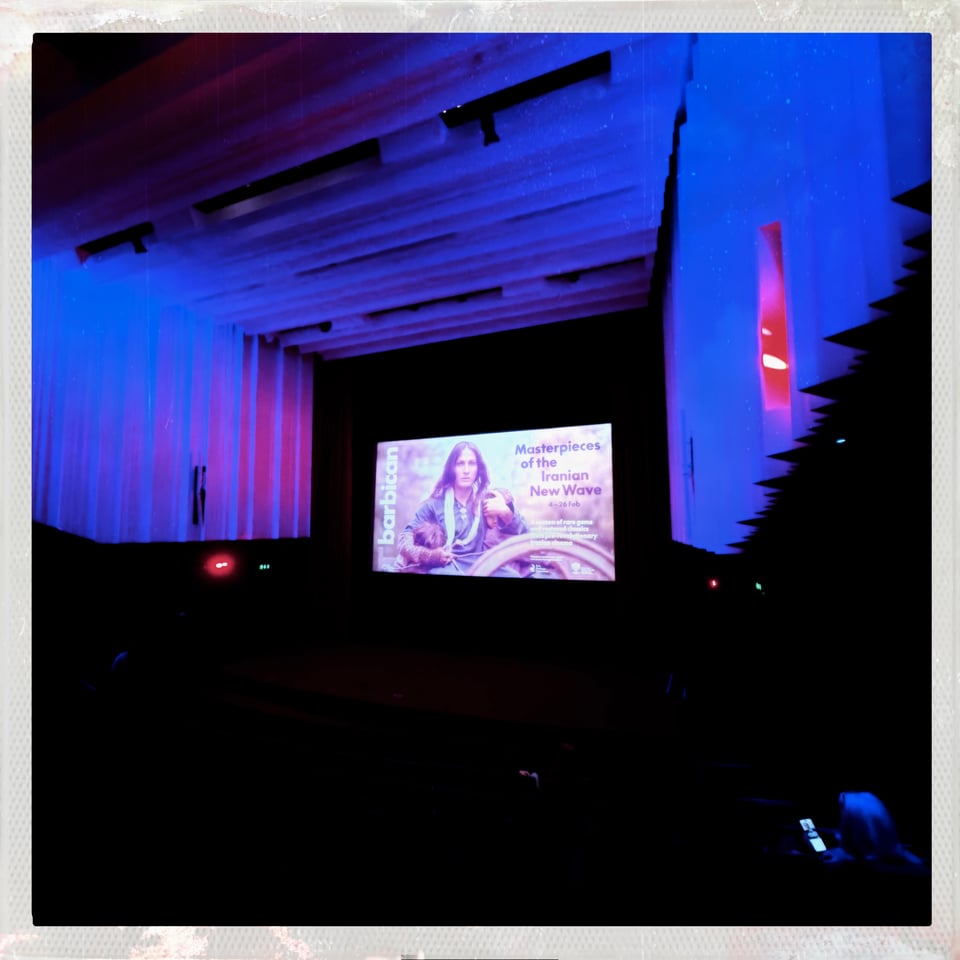
From there I darted to the Barbican (if you can dart on lovely London buses) to meet Dario for a calzone and an evening with Iranian New Wave Cinema. Introduced by Ehsan Khoshbakht the programme was a short film on dating commissioned by the Canadian Broadcasting Corporation, titled Courtship, and a main feature that wasn’t actually a new wave title but a mainstream melodrama deemed too sultry by the regime after the revolution, banned, and a print smuggled to Paris by the Shah’s brother, a fan. It’s name is Dancer of the City.
The film is reminiscent of operatic Bollywood Melodrama but also feels like a spiritual antecedent to Baz Luhrmann’s Moulin Rouge! (2001), largely due to the central character being a cafe/cabaret singer who is used as a pawn for men, though maybe not literally a courtesan. The film was amazing and not only for the cultural context of seeing such an open film from a place where censorship has been so stringent and punitive for so long [it has the daring vivacity that comes from seeing a Hollywood pre-code film, from before the red ink and scissors came out in force], but also because of some stunning cinematography, a debt to the conventions and power of classic silent cinema and Hollywood crime iconography, and also a stunning performance by the brilliant and beautiful film star
Fourouzan.
I am at big admirer of the curator Ehsan Khoshbakht who introduced the screening but I felt he under and mis-sold the film in terms of quality but also the narrative. The result though, was a film that defied expectations that were only set up during the pre-screening intro. The audience was interesting too. There seemed to be a lot of Iranian audience members, including a couple who chatted throughout the the film just in front of us, which added a specific cultural context to the experience. Although in some places it felt like the audience didn’t really know how to watch an old movie ripped from its context and time [something the Prince Charles Cinema, where I watched a film a couple of days later now address pre-film] and it reminded me of Dario’s popular Substack piece on contemporary cinema etiquette.
Thursday was a morning of work -
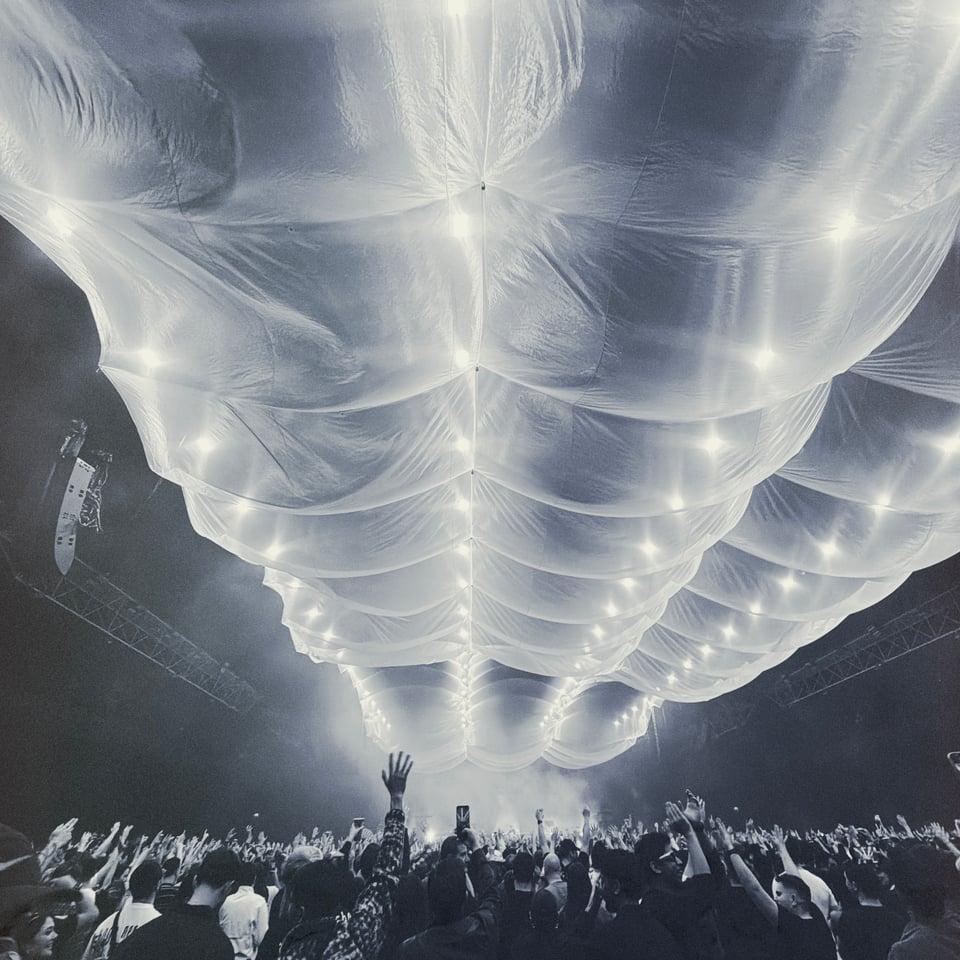
and then Fred again.. at Alexandra Palace [thanks Sophie!] for one of the final dates of his residency, with an amazing array of guests across his five-hour set -


Beyond it being a stunning gig, there was something of a thrill from getting a friend’s spare ticket late and realising in the build up what a sought after ticket I had. That sense was palpable in the audience on what was a euphoric evening in North London, not least for me.
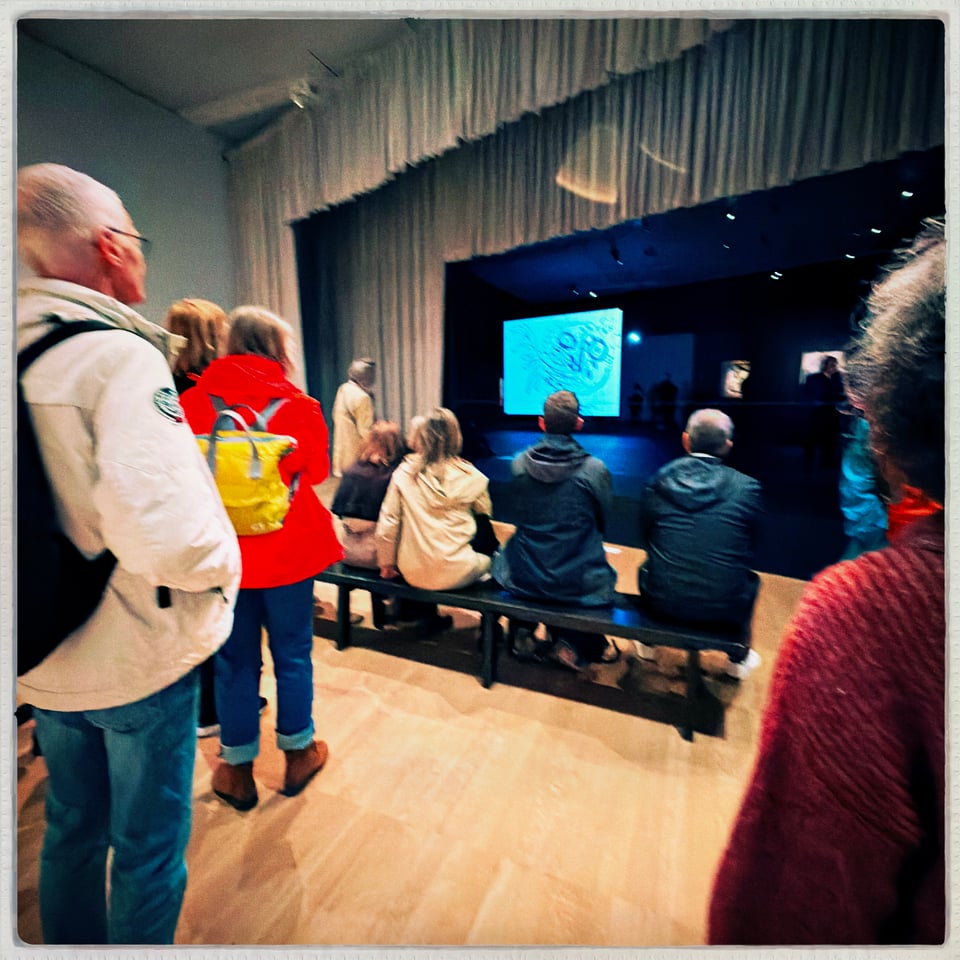
Friday I met back up with Dario and we worked alongside each other in the members bar at the Tate Modern before catching the excellent Theatre Picasso exhibit there. Beyond the encounter with Picasso’s work what fascinated me maybe as much was the curation [yep, I am a bit of a curation nerd I am coming to realise more and more]. The show is the result of a collaboration between contemporary artist Wu Tsang and author and curator Enrique Fuenteblanca and it sees them think through aspects of Picasso’s work and life thematically, as well as paratextually to his work in theatre and performance, to create an experience that stages his work in a vivid new context. I really liked the experience. I also loved that Picasso described his way of working as a ‘sum of destructions’. What phrasing.
From there it was a quick coffee and catch up with old friend [and now Oscar nominated!] James Dean at Curzon Soho, before a screening of Night of the Juggler (Butler, 1980) at the Prince Charles Cinema. After being regaled with tales of the Oscar campaign for James’s short film A Friend of Dorothy James joined us for the screening. Night of the Juggler is a brilliant movie. Dario and I then grabbed Cantonese before heading to a place he has been wanting to show me for a while, the new London Grindhouse cinema The Nickel. More on that below.
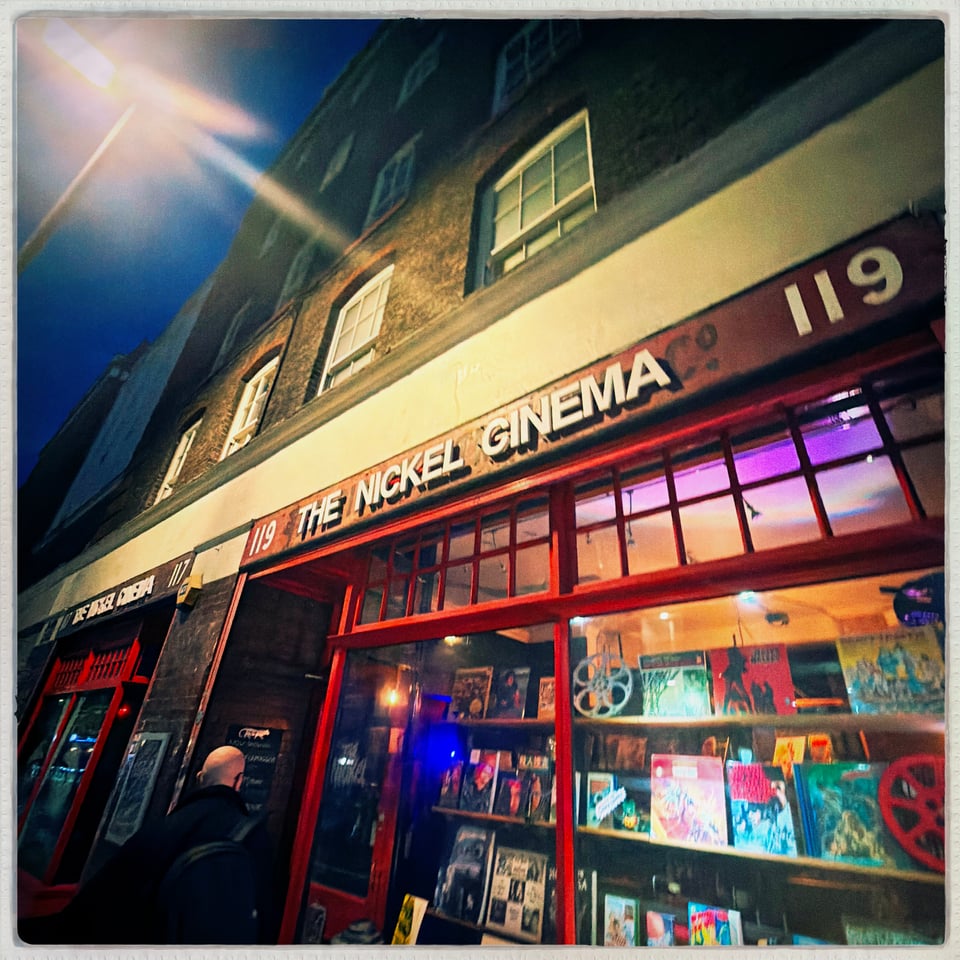
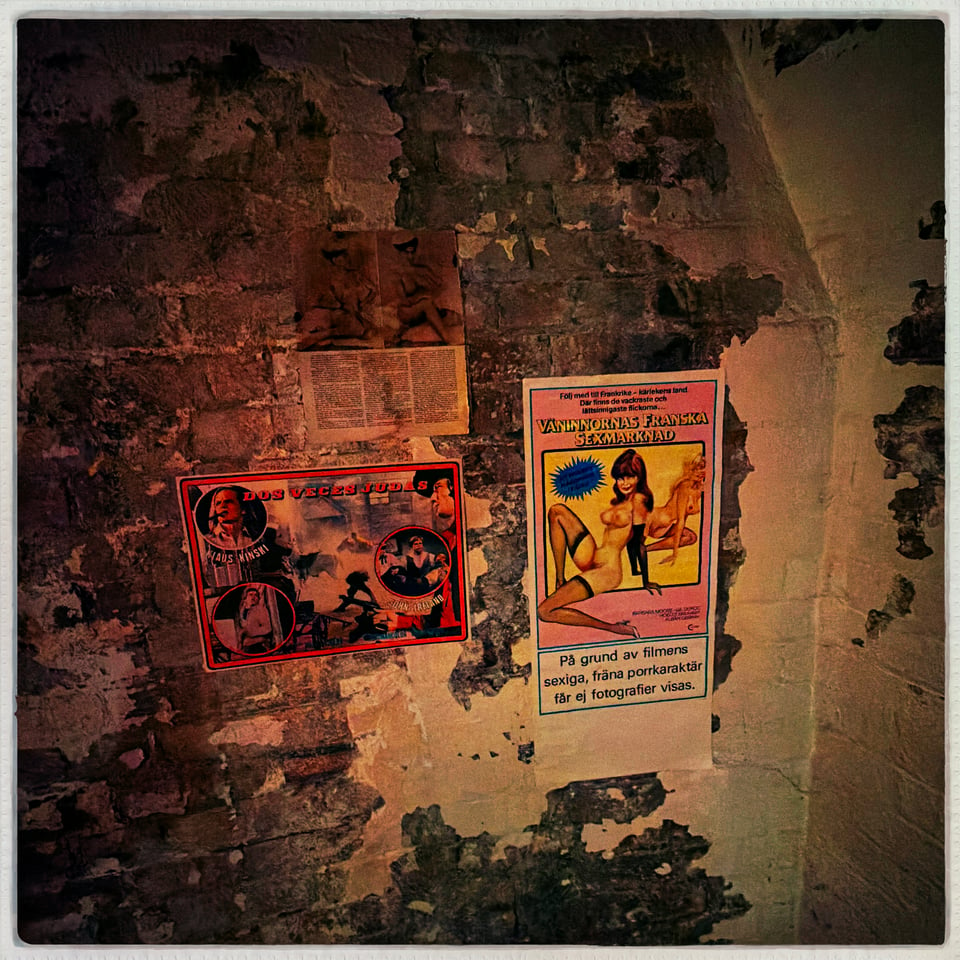
Saturday was up early and some more newsletter writing with coffee, before an early morning viewing of Mary Bronstein’s If I Had Legs I’d Kick You (2025) which was intense and fab. Rose Byrne superb and some wonderful visual and narrative ideas. Then a sharpish stroll over the river to the BFI to meet Melanie, one of my PhD students, ahead of Liberation Struggles, a collection of broadcast television from the 80s and 90s screening as part of the BFI’s Radical Television series. February 28 2026. What a day to see a programme of news and reportage about Imperial invasion, colonial oppression and dictatorship. Before heading to another cinema, Close Up, for an evening with an Iranian master and one of my favourite filmmakers, Abbas Kiarostami.
I’m finishing this newsletter on a static train in Paddington station, where I’m delayed due to a track fire somewhere along the route. I’m knackered and reflecting on a wonderful but exhausting - physically and emotionally - few days. I’ve been joined by an old friend and collaborator, Tim Plester, who is making his way to Falmouth to act in one of my student’s films this coming week. Time will tell if and when we emerge in Kernow. It’s lovely to see him, and work alongside him, following a few days of seeing good friends and working alongside one and, thanks to their hospitality, spending a lot of quality time talking and watching movies. Thank you Dario.
I have a melancholy feeling as I head home. Mostly tiredness after so much social battery usage. However the few days were wonderful. Not least the way that the curation of a little mini tour of London cinemas played out. We wanted to recreate [comfortably] that feeling of being at a film festival, and darting between screenings and grabbing bites on the go. This worked well, never feeling rushed, but using the space and time between screenings to reflect on the films and TV we watched but also to just chat about life, work, stuff. In 3 days together we saw films at Barbican, BFI, Close Up, the Nickel, Picturehouse Central and the Prince Charles.
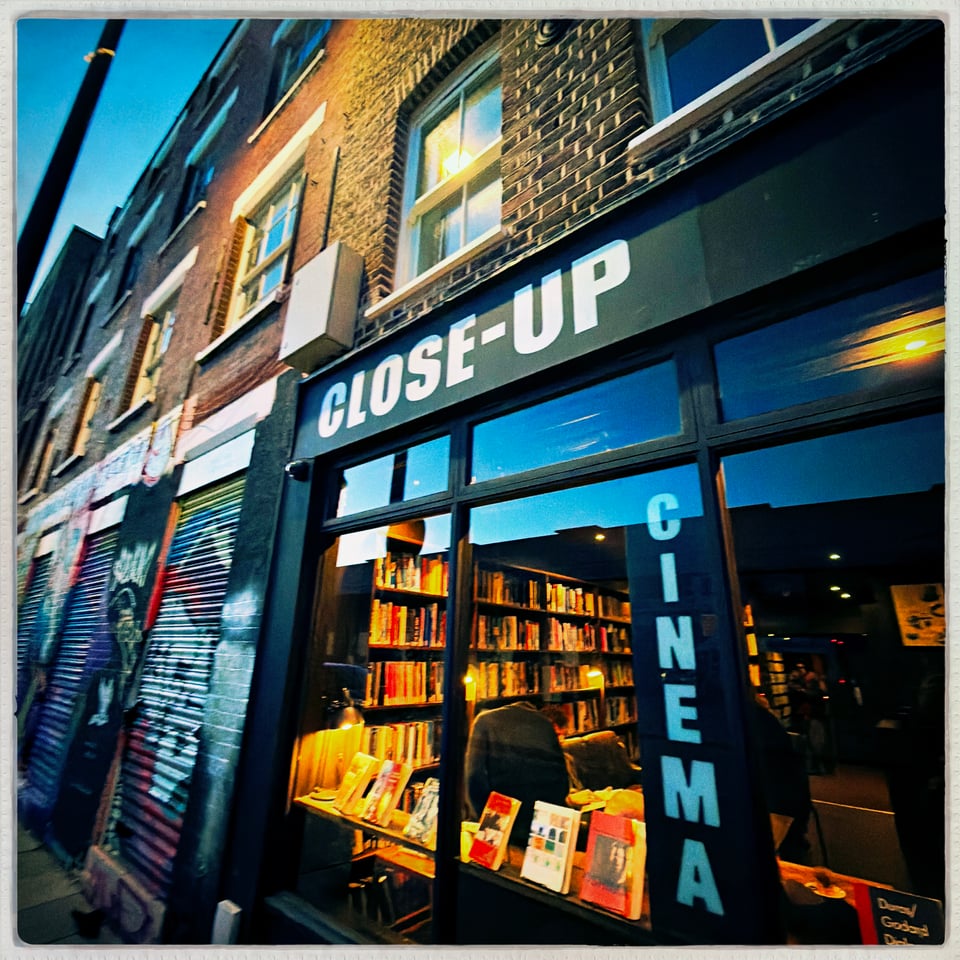
The final screening was also layered in melancholy. Our cinematic tour of London and the world began with Iranian curator Ehsan Khoshbakht introducing Iranian Cinema and that’s how it ended. Khoshbakht’s introduction for the screening of a short and mid-length Kiarostami pairing was expectedly subdued and laden with angst and fear, and sadness. What’s the point of cinema today? Any day? And yet, it was moving and flaked with hope. The programme was Bread and Alley (1970) and the longer A Wedding Suit (1976). I hadn’t seen either and both looked stunning on the big screen. The latter is an absolute gem of a film. Ripe with wit and tenderness and humanity. Trusting of its audience it is an absolute delight. Both films, like the intro were flaked with hope.
As am I. As I sit in the FCB cafe at Paddington, with my friend, looking out over the concourse. There’s a time scheduled for our train in an hour or so, so we will hopefully be at our destination safely today. I’m grateful that I can go home and what greets me is my beautiful family, and structurally all that’s awry is a drying wall from the splatters of childish errant paint spray.
Left Cultures
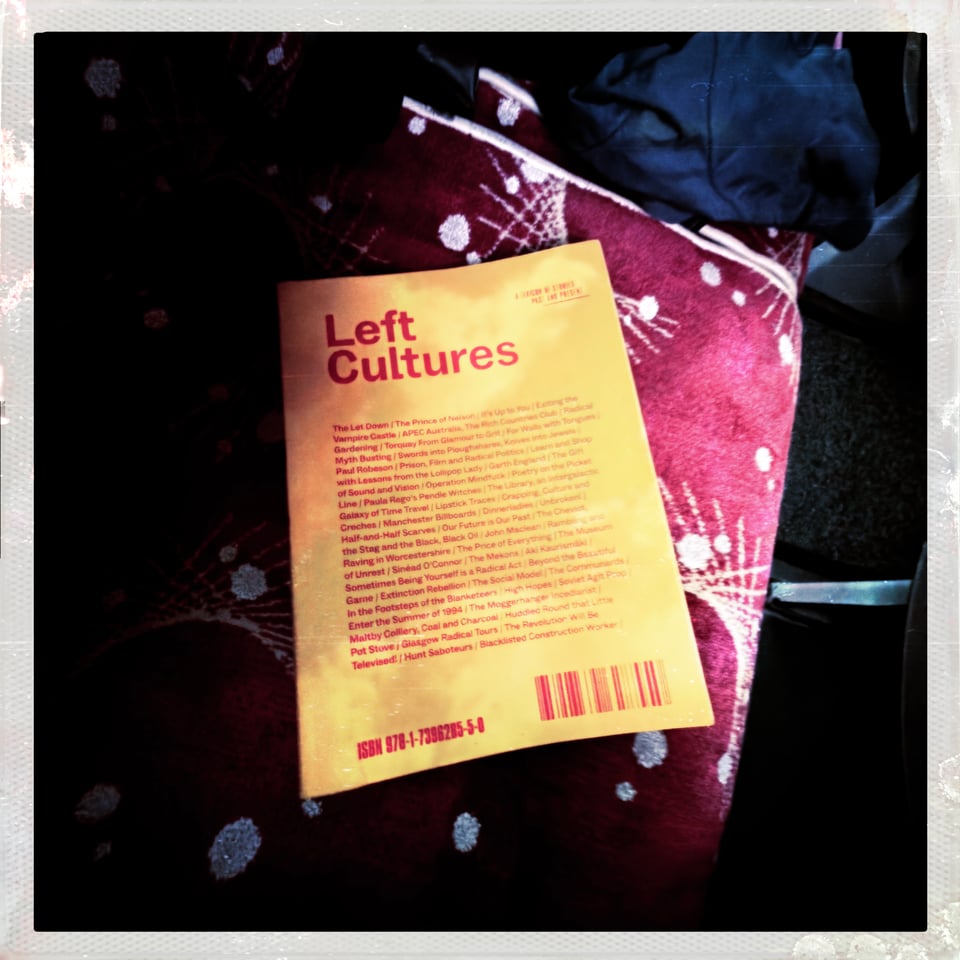
It felt apt in some way that I finished issue 4 of Left Cultures on a replacement bus service, given the pieces within its pages critiquing capitalism and celebrating socialism, working class experience and labour through the lens of culture. I love this magazine, formally and for its stories, and I was honoured to have a piece in this issue talking about the Finnish filmmaker Aki Kaurismäki. This was the first issue though where I took umbrage with some of the attacks on culture that some of the pieces contained. They seemed to suggest, sub-textually, that working class art should be and do x, and that other culture and art wasn’t as valuable. This smacked to me of that very 80s notion that classic poetry, literature, art and classical music was for the elites only, and had nothing to say to working class audiences, as if they couldn’t grasp the beauty of a summer’s day. All coal and milk theft and no Dickinson and Dedalus.
Those moments were in the minority. Elsewhere there was beautiful writing about Victoria Wood’s Dinnerladies, the anti-capitalist screed that is Jurassic Park, a reintroduction to The Mekons, the power of Sinead O’Connor and the continued resonance of Mark Fisher’s Exiting the Vampire Castle essay. And me. I re-read my piece as I went through the collection. It’s a piece of writing I’m really proud of, and it is a real privilege to have contributed to the Left Cultures lexicon.
RoboDoc: The Creation of RoboCop
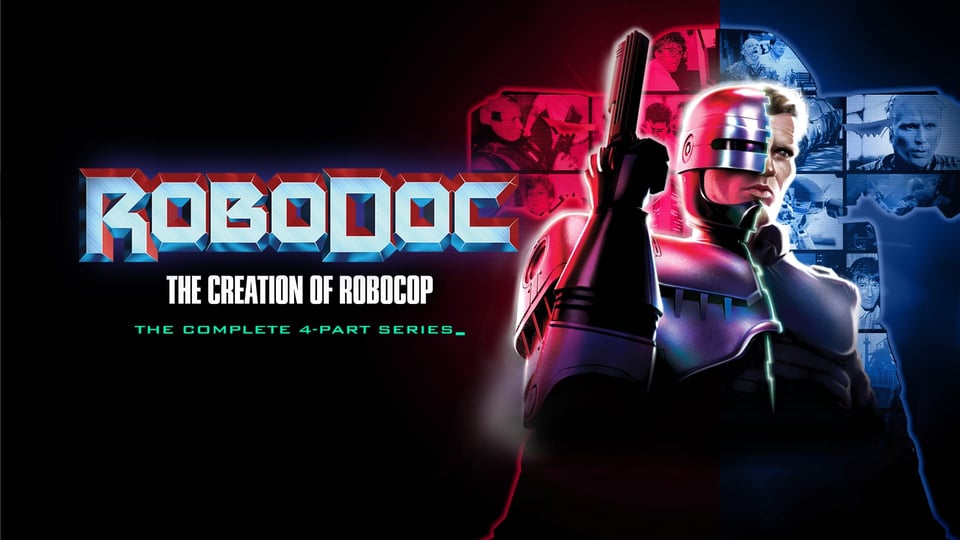
Prior to last month’s Pat’s Film Club screening of Oldboy (Chan-wook, 2003), at the now ritual pre-screening burger joint, my friend Dean was waxing lyrical about this 4-hour documentary about his favourite film, Paul Verhoeven’s RoboCop (1987). It’s also a favourite of mine and seeing that it was on Amazon Prime, I made it a priority for my Feb watching. It’s in 4-parts and you’d think that maybe the duration is excessive but I didn’t find it so. I loved it. It is a deep-dive for nerds but also a fascinating insight for anyone interested in filmmaking as a creative, collaborative and industrial endeavour. It also features all the people involved in making a masterpiece, all of whom are engaging and insightful. An amazing film documentary.
Burning Down the Haus:Punk Rock, Revolution, and the Fall of the Berlin Wall
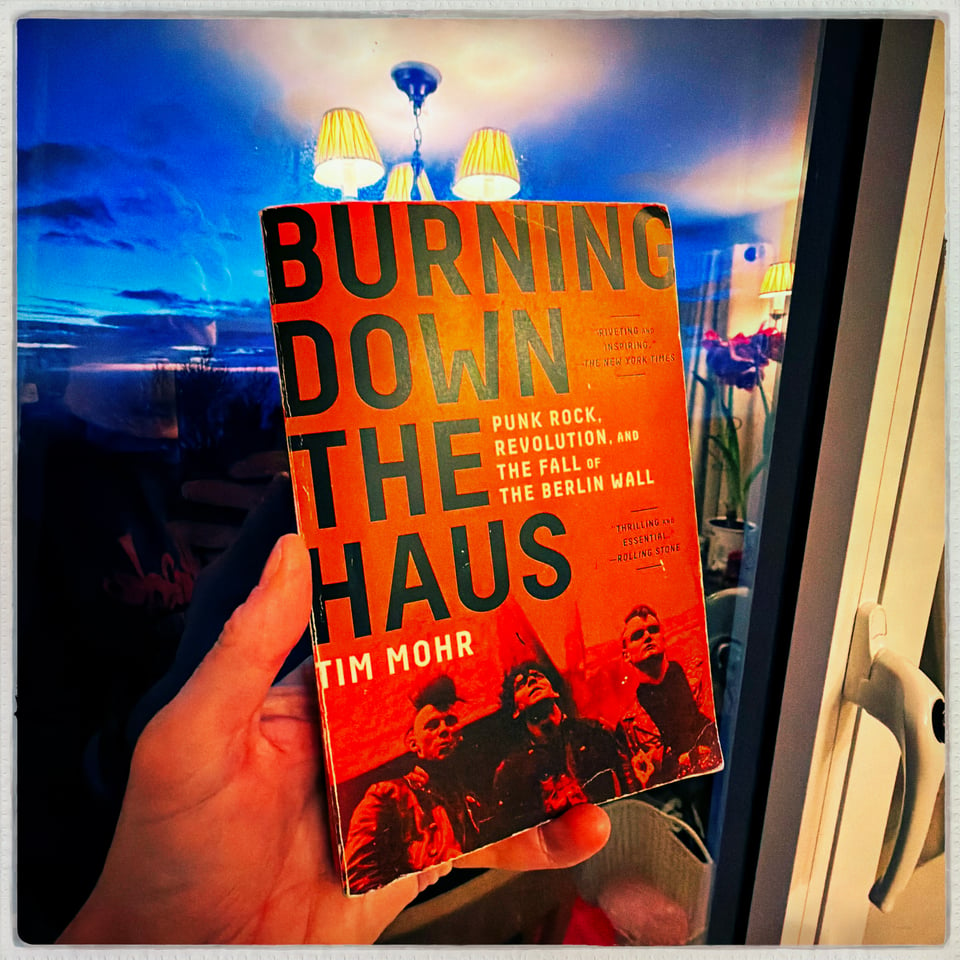
I started this book in November, in Berlin. It was a gift from my friend Kat (thanks Kat!) and it felt apt to start it in the place it was about. Particularly as the cinema where the music film festival I was attending is located in the East of Berlin, encircled by some of the sites mentioned in the book. The book is fascinating. As it started I was dubious by its claims of the extent of the role played by Punk in bringing down the Wall and in fairness it quickly moves away from that thesis to being a passionate history of the small ways that Punk helped contribute to a shift in culture that was part of an energy that made the regime in East Germany unsustainable.
It was also enlightening (though unsurprising) as to the extent that those who wanted to look different and listen to and make different music were targeted, harassed and punished by the Stasi and the State. The legacies of that era in East Berlin was also an intriguing part and it was refreshing to read how anti-capitalist the counter-culture was in East Germany in the 80s. They didn’t want to leave the East, for the most part. They didn’t want Western Capitalism to replace the dictatorial communism they lived under. They wanted freedom of choice, to live how they wanted, and also for a socialist state that cared for everyone, regardless of belief. Amazing to think in 2026 how far we are away from that and how the promise sold by the Wall’s fall was in many ways just another capitalist smokescreen.
Small Prophets
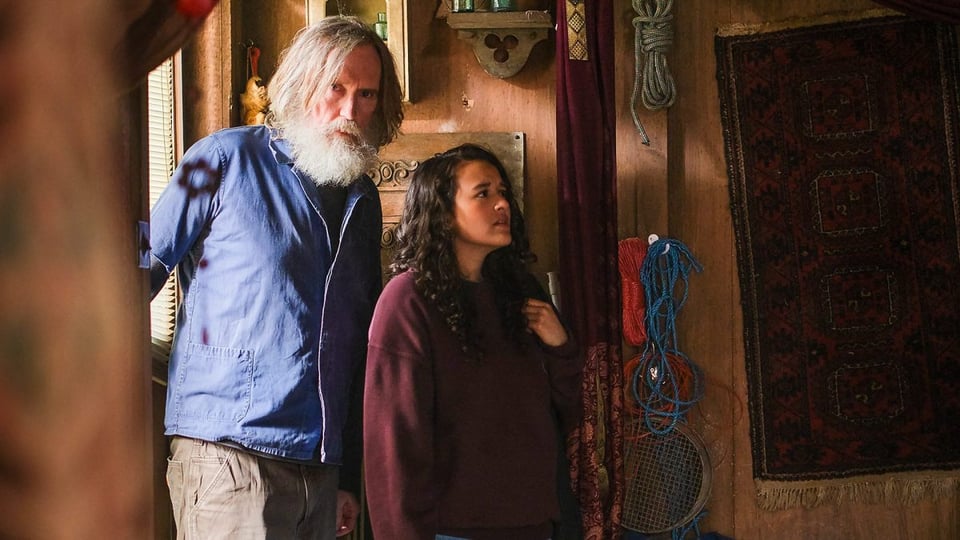
Beth and I watched this over half term, in a Harlech holiday cottage while visiting her family, on maybe the worst internet connection of all time [exaggeration klaxon]. It took sometimes 45 minutes to get through half a 29-minute episode, what with all the buffering. And yet. The humour and joy and sadness of the show still came through. There are moments where I howled, and chuckled in the days that followed - “almost always”. What an absolute televisual delight. So many beautifully drawn characters and relationships but the core friendship between Michael Sleep (Pearce Quigley) and Kacey (Lauren Patel), pictured above, is a thing of absolute wonder. We managed to watch the finale after our kids had gone to bed and the internet stability was a tad better. Tears flowed. So sad, and so beautiful. One of my favourite on-screen friendship portrayals for a long time.
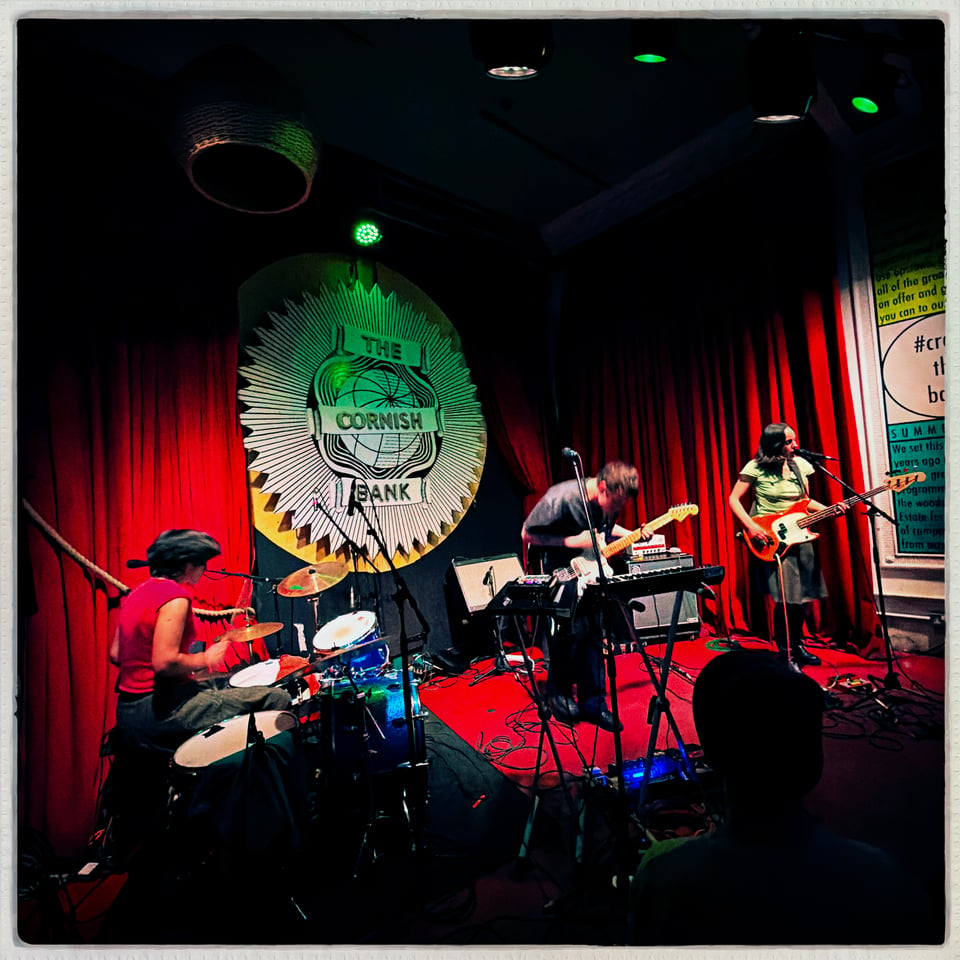
Gigs - The Orielles
Gigs - Fred again…
Unfamiliar Images: Devil Story
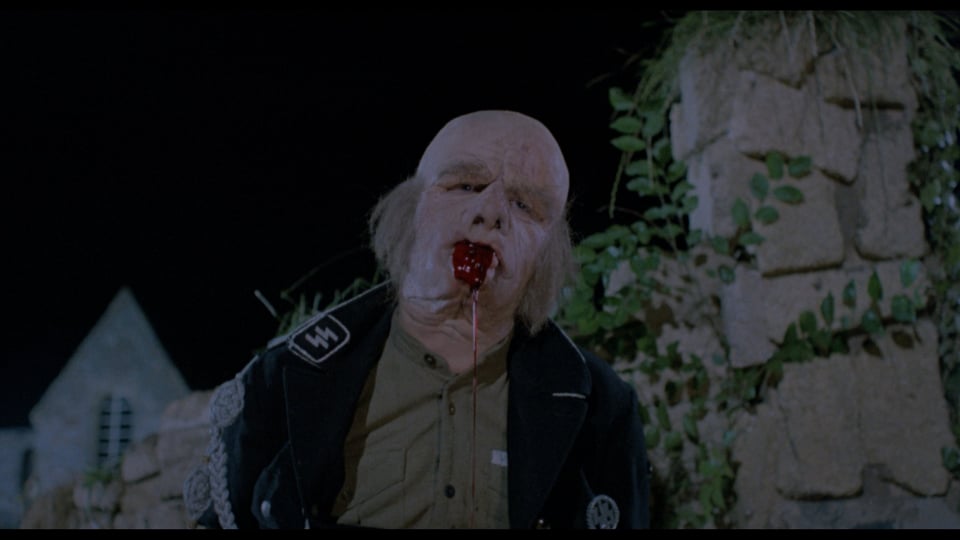
I may be bending my own arbitrary rules to say this film was unfamiliar to me [this month] but as with everything, there’s a story behind it. Last year Dario mentioned London’s new Grindhouse cinema to me, The Nickel, and said he wanted us to go when I was next in London. I was next up for London Film Festival last October and duly looked through the listings for an evening I knew would work and found this film, Devil Story (Launois, 1986). While on the train to London for that few days Dario messaged, having checked the screening time in terms of logistics of his day, and told me that it was actually screening the following week when I would be safely ensconced back in Kernow [Doh!]
When planning this recent London trip’s tour of cinemas The Nickel had to feature. Dario mentioned that one of my favourite films, Jim Jarmusch’s Dead Man (1995) was screening on the Thursday night, but as it looked like I was going to see Fred again.. I checked the other nights. And lo. There was Devil Story again. Fateful. If you believe in that sort of thing [they do in Devil Story, I think]. And, until I checked the Nickel listings last autumn I had never heard of Devil Story or its director Bernard Launois.
I am familiar with a lot of the films routinely bandied about as the worst ever. I love Plan 9 From Outer Space (Wood Jr., 1957) and made a short film honouring it [and other B movies] with Justin, They Came for a Day (2001). Our first short together. At our film festival Filmstock we had a night called Filmschlock, where we showed terrible movies including Uwe Boll’s House of the Dead (2003) and a personal favourite, Ice Cream Man (Apstein, 1995) starring the peerless Clint Howard. I never liked The Room (Wiseau, 2003), finding it too smug. But, I had never heard of Devil Story, and oh my is it bad. Gloriously, wonderfully bad.
I loved the experience of watching it with a sympathetic crowd in a dedicated space. I love the cinema of Ed Wood, and Tim Burton’s loving biopic of him and his work from 1994. One of the things I love is the passion in the filmmaking where he genuinely felt like he was making great art. That is what he thought cinema and filmmaking was, that was how to do it. I don’t laugh at him or his film. Devil Story feels like this to me. I watched with disbelief. I couldn’t believe that the filmmaker thought any of this was objectively good or even objectively worked.
Nothing in the film makes sense. Narratively or geographically and at times even technically. It’s so random, and yet, there is a plot of sorts. It goes from one thing to the next. It’s French Z grade horror, this surprised me too. I am used to American, or Italian, Z grade horror. I didn’t know there were French examples. I’ve spent a lot of time recently with the Gothic Erotica of Jean Rollin from the 70s, but this isn’t that. It’s Ed Wood meets Lucio Fulci (most of whatever budget there was went on foam tombs and copious squibs that were lovingly lingered over by the camera, value for money!). All the while I laughed, thinking, do they know what they are doing?And loving that they didn’t care, and that this film exists.
Unfamiliar Sounds: Westside Cowboy
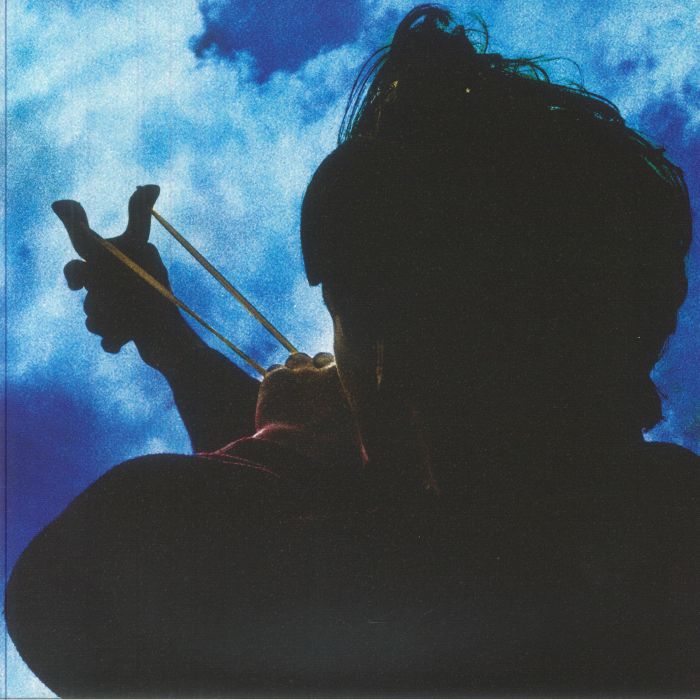
Andy at work was gleeful when he asked if I knew of this band and I said no. He loved recommending something I was unfamiliar with and I am grateful he did and does. Andy recommended the Weatherdrive that I talked about last month. Westside Cowboy are two EPs into their career and both are amazing snapshots of a band I am already deep into. Country/C86/early Sonic Youth [yes Andy, you’re bang on about that]. Track 3 on the EP pictured above, ‘Don’t Throw Rocks’, has been on heavy rotation and ruins me every time.
Links to Stuff I’ve read online, and podcasts I’ve listened to, this month and enjoyed - The Loneliness No One Warns You About [Helen Higgins, Substack] I Don’t Want To Be a Film Director: Béla Tarr’s Art of Refusal [e-flux] Love, love is a verb [Scatterbrained (Robin Turner), Substack] IFFR & Berlinale 2026 Round Tables [Moirée Podcast] “Time is a Better Curator” - Ethan Hawke Interview [Sight & Sound] Bardot at the Notting Hill Coronet [LRB] The Best Seat in the House? - Part 1 [Dario Llinares, Substack] Sasha Frere-Jones on Greg Tate [4Columns] “The guy you buy” [Dirt] “Young people will always create”: Why physical space matters to the Museum of Youth Culture [Crack] Ashley Clark on the World of Black Film [Film Comment Podcast] The Art of Documentary No.1 - Frederick Wiseman [Paris Review, Archive] The Constraint of Feelings and Thoughts! [Forough Farrokhzad, MUBI Notebook] A Trip to the Island [Ben Blaine ‘The Midpoint’, Substack]
Events, Gigs & Travel in March
March 8, Plaza Cinema, Truro - Pat’s Film Club presents: When Harry Met Sally (Reiner, 1989) & A Few Good Men (Reiner, 1992)
March 14, The Princess Pavilion, Falmouth - The Style Councillors
March 24, Verdant Taproom, Penryn - Sound/Image Cinema Lab x Brewing Folk Presents: Nos Fylm / Film Night
Events & Travels Further Afield in Time & Space
London - May 22-24
Sydney, New York, Los Angeles - June [Dates TBC]
Falmouth - British Popular Culture(s) Conference - July 9-11
Berlin - November [Dates TBC]