
The Mist Trail is closing. Here's what nobody is explaining.
Starting June 30, the Mist Trail will close Monday through Thursday from 7 a.m. to 3:30 p.m. for a rehabilitation project that will run through October 30. If you are visiting Yosemite this summer on a weekday, you will not be able to hike the most popular trail in the park during business hours.
The internet is treating this as a scheduling inconvenience. It is not. What is happening on the Mist Trail this summer is the most significant infrastructure project on one of the most visited trail corridors in the entire National Park System, and the story behind it is worth understanding.
What the trail actually looks like right now
The Mist Trail carries roughly 85,000 hikers per summer. On peak days, the National Park Service estimates up to 5,000 people walk this corridor in a single day. To put that in perspective: that is more daily foot traffic than most trails in the country see in a month.
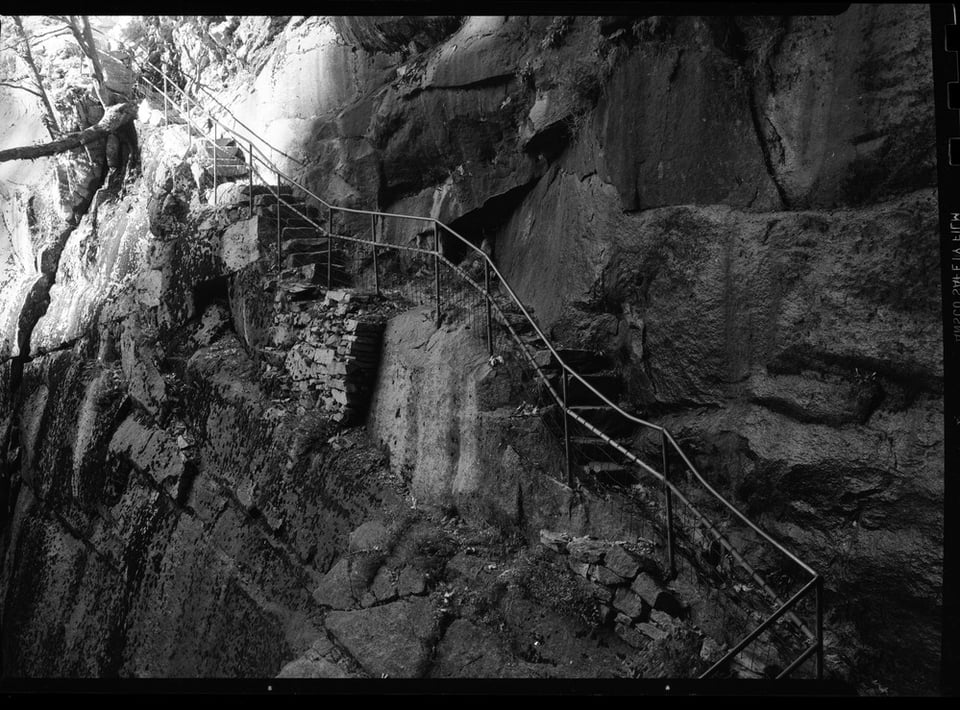
The first Euro-American trail through this corridor dates to the mid-1850s, making it one of the oldest constructed trails in any national park. The stone steps that take you up through the spray zone of Vernal Fall date to 1897, when they replaced the original wooden staircase. The Civilian Conservation Corps upgraded sections in the 1930s. Some of what you are walking on when you hike the Mist Trail is infrastructure that is nearly 130 years old, carrying traffic loads its builders could not have imagined.
Those steps were built roughly two feet wide. Two feet. For a trail that now sees 5,000 people a day in both directions. The math stopped working a long time ago.
The result is what you see if you hike the trail today: deteriorating asphalt patches on the lower sections, eroded granite treads, social trails branching off into fragile habitat where hikers have left the main path to pass slower groups, trampled streamside vegetation, and signage that confuses more visitors than it directs. The lower trail between Happy Isles and the Vernal Fall footbridge has been the site of more visitor accidents than any other trail segment in the park. Rockfall is an ongoing hazard in the corridor, most recently in early 2024 near the footbridge, when a rockfall from Grizzly Peak closed the trail between Happy Isles and the Vernal Fall footbridge.
This is not a trail that needs a touch-up. This is a trail that has been failing under its own success for decades.
What the rehabilitation project involves
The project has two phases. The work happening this summer is the active construction: widening steps, replacing deteriorated stonework, stabilizing retaining walls, improving drainage, and rerouting social trails back onto the main corridor. Each replacement granite block weighs roughly 200 pounds and is pulleyed down from a quarry above the trail. This is not fast work. It is not quiet work. And it cannot be done safely with thousands of hikers walking through the construction zone.
That is why the weekday closures exist. The trail will be open Fridays, Saturdays, Sundays, and holidays. The closures are Monday through Thursday, 7 a.m. to 3:30 p.m. During closure hours, hikers headed toward Vernal and Nevada Falls will be detoured onto the John Muir Trail, which reaches the top of both falls from a longer, less steep route.
The second phase is the planning process. The National Park Service released a Draft Environmental Assessment for the broader Mist Trail Corridor Plan, and the public comment period opens June 11 and runs through July 13. The EA evaluates two alternatives: improving the existing trail alignment, or re-establishing the historic Happy Isles Footbridge route that was damaged in the 1997 flood and never rebuilt. A Record of Decision is expected in 2027.
That public comment period matters. If you have opinions about how this trail should work for the next century, this is your window. The project page is on the NPS Planning, Environment and Public Comment site (parkplanning.nps.gov, project ID 105979).
Why this is actually a good thing
I understand the frustration. You planned a trip. The Mist Trail was the centerpiece. Now it is closed on the days you are visiting.
But consider what the alternative would be. The alternative is leaving the trail as it is: two-foot-wide steps carrying 5,000 people a day, eroded surfaces creating fall hazards, social trails destroying the streamside habitat that makes the corridor beautiful in the first place. The alternative is a trail that gets a little worse every year until something breaks badly enough that a full closure, not a weekday closure, becomes necessary.
This rehabilitation is a $5 million investment in a trail that defines the Yosemite experience for hundreds of thousands of visitors every year. Yosemite Conservancy committed $500,000 to the design phase alone. The park's Legendary Valley Trails program, funded by YC donors for 21 consecutive seasons, has maintained this corridor and others like it across the Valley floor. When you hike the Mist Trail in 2028, the steps will be wider, the surfaces will be stable, the drainage will work, and the streamside habitat will be recovering from decades of social-trail damage. That is worth four days a week of closures for one summer.
What to do if you are visiting on a weekday
The John Muir Trail detour reaches the top of both Vernal Fall (via the Clark Point cutoff) and Nevada Fall. It is longer and less dramatic than the Mist Trail route, but it has better views of the Valley and it is a genuinely good hike in its own right. You will miss the spray zone. You will not miss the waterfalls.
If you are visiting in the first two weeks of June, the trail is still open daily until June 30. If waterfalls are your priority, early June is the window this year regardless of closures.
And if you are visiting on a weekend, the Mist Trail is open. Plan accordingly.
The bigger picture
Yosemite has a $1.4 billion deferred maintenance backlog. The Mist Trail project is one piece of that. The Bridalveil Fall Trail was recently rebuilt for $13 million. The John Muir Trail through Lyell Canyon underwent a major three-year reconstruction starting in 2012. The Cathedral Lakes trailhead was relocated during the Tuolumne Meadows redevelopment. These are not cosmetic projects. They are the park catching up with decades of infrastructure that was built for a fraction of the traffic it now carries.
The parks that invest in this work now are the parks that will still be walkable in fifty years. The Mist Trail rehabilitation is not a disruption to your trip. It is the park doing exactly what it is supposed to do: protecting the resource so that future visitors can have the same experience you are planning for.
If you want to weigh in on the project, the comment period runs June 11 through July 13 at parkplanning.nps.gov.