Moving into May
My travel to the east coast and how it uncovered my artistic focus
We’re at that time of year where it feels like we’d never get here while also feeling like the year is zipping right along. I’ll spare you the Justin Timberlake “It’s Gonna Be May” meme, though it’s one of my favorites.
I’ve spent most of April finalizing my video for Digital Graffiti, which is coming up in a few weeks! I also did a little bit of traveling out to the east coast, which I had planned late last year, well before gas prices went through the roof. (More about the gas at the end of the newsletter.)
I only had a short time and a small budget when I stopped in Salem, Massachusetts. I decided on 2 museums, the Witch Board Museum ($10) and the Peabody Essex Museum ($25). Everything else would be sights I could see for free.
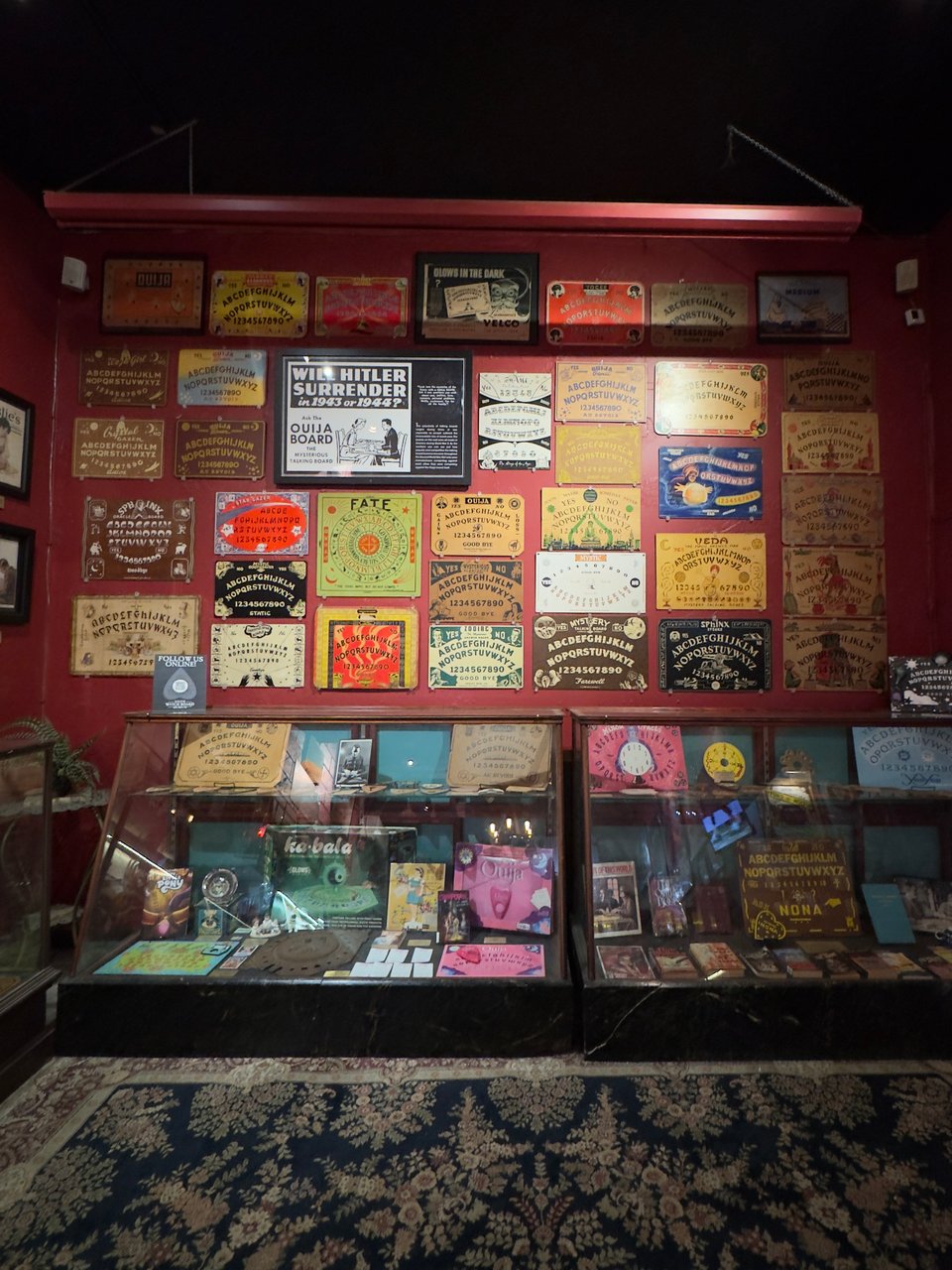
The second I met John, the owner of the Witch Board Museum, I knew I made the right choice making that one of my stops. He was so knowledgeable and passionate about his collection, and through talking about it we got to chatting about other things. I told him how much I loved vintage signs and he told me all about a giant flea market in Massachusetts called Brimfield that happens 3 times a year and covers over 7 acres. He spends hours and hours there hunting for anything related to Ouija for his collection: personal photographs that happen to include a board, magazine articles/covers, old boards, etc.
I had to speed run the Peabody Essex Museum because I thought they closed at 6, but they actually closed at 5 and I got there at 3:45. I was still happy I went and highly recommend it!
Next up was Boston. While I explored and waited for my friends to arrive from Providence, the tension I felt there between the old and new made me think about my own personal tension. Since diving into projection mapping more seriously last year, I’ve felt somewhat lost. I have so many varied interests, and I want to do everything. Concert visuals and immersive installations and sculptures and mural animations and…I love it all.
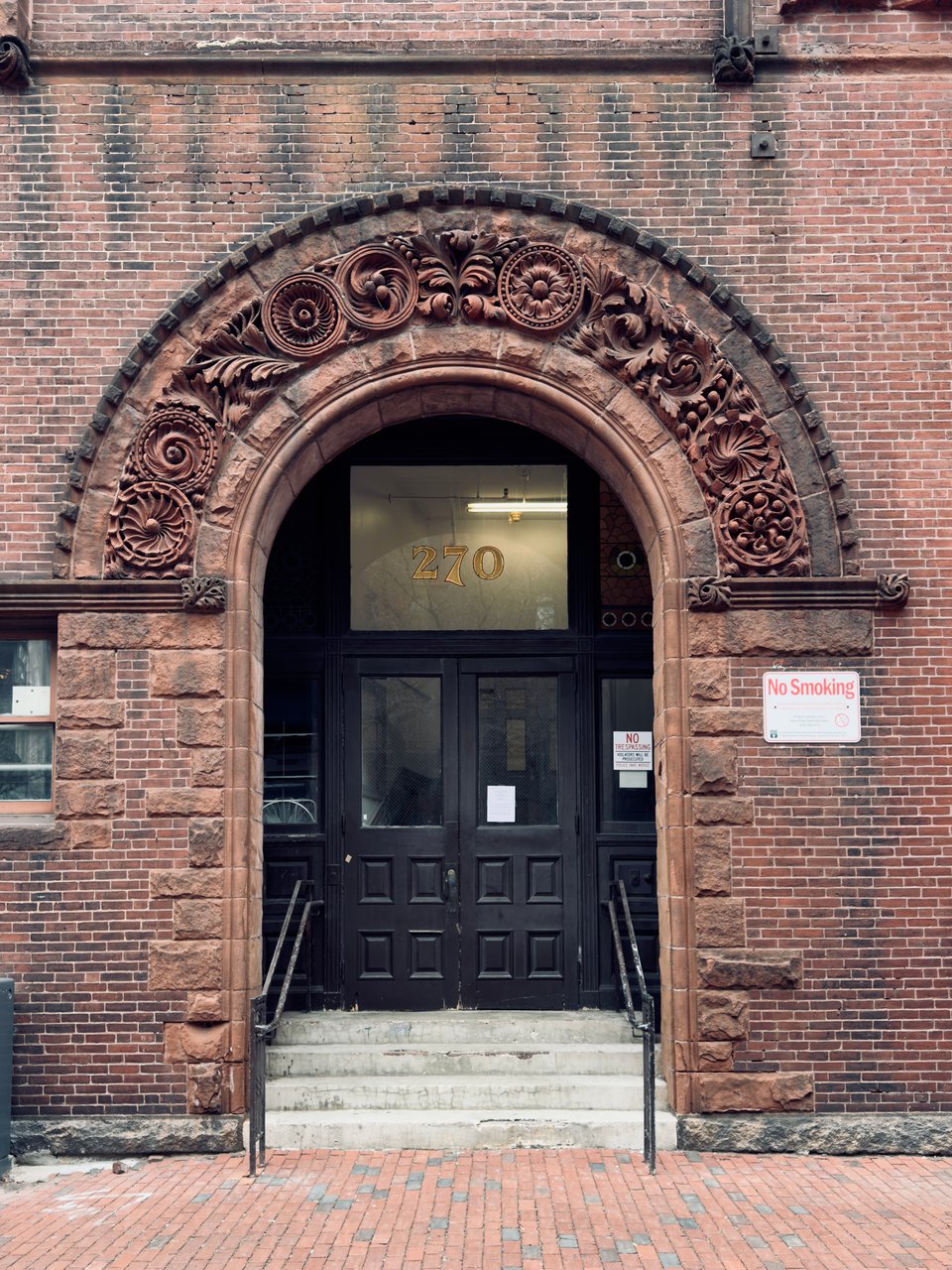
I thought more about my conversation with John while being amazed by what I came to think of as “casually ornate” detailing on so much of the Boston architecture.
Of all of the topics I could’ve brought up, I talked about signs. He had mentioned that he also collects KFC memorabilia and, knowing how rare the buckets that were on top of the restaurant signs are, I asked if he had a bucket in his collection. I talked about the thing that is really easy for me to talk about with almost anyone.
My love for old architecture and signs is actually how I first came to learn about projection mapping. In 2016, I discovered Craig Winslow and his illuminated ghost sign project which “restored” painted advertisements on buildings to what they may have looked like originally. In 2018, he partnered with the Neon Museum in Las Vegas to reanimate some of the signs in their neon boneyard in a project called Brilliant!, which you can still see today. The idea of reimagining our surroundings with light was what made me want to get into projection art.
It occurred to me that with most of the projection work I’ve done, I’m not really connected to the end result. It feels more like a display of my capabilities than my personal expression. There’s nothing wrong with that, necessarily, but a lack of connection makes it difficult to talk about my work in a way that would get me selected for grants and other opportunities.
One of the exceptions to that? The piece I created for the 2025 Monticello GlowFest (video linked below).
I spent weeks recreating concrete bricks and trying to figure out how to knock them down. It was ridiculously frustrating, but I was happy with the result and still am. I think technically it could be a lot better, but I love the story that I created to incorporate the surface.
Then it clicked.
Incorporating the building into the animation connects back to what I originally liked about the medium—the idea of reimagining our surroundings with light. Digging a bit deeper, it also connects to the idea that was at the heart of my location collage work: our environment, both natural and built, shapes who we are. We may come to ignore the neon sign, the ornate stone carving, or the big tree in the park because we see them so frequently, but we notice when they’re gone. Projection can bring a little magic to the every day surfaces and objects we overlook and perhaps prompt us to think more about our spaces. This is something I could talk about at length all the time. It comes naturally to me because I love it. This needs to be my focus.
So what’s my next step?
Diving back into 3D software! I’m currently learning about photogrammetry, which is creating a 3D model using photographs. Having a 3D mesh of a building (or any surface I want to project on) makes it easier to map videos to the surface.
I put a post-it note in my work area that says “reimagining our surroundings” to remind me of my focus. It seems silly, but my brain becomes an Etch-a-Sketch when I see cool things, like incredible concert visuals. I have to remember that I can appreciate them without needing to also do it myself!
As I mentioned at the beginning, more about the gas!
I’m incredibly grateful for a friend who told me about an app called Upside, which offers cash back on select gas stations and restaurants. Their initial referral got me $.30/gal off my first purchase in addition to the regular cash back offer, and along the way there were other bonus offers to claim. All in all, I received between $.14 and $.32 per gallon cash back on all my fill-ups, which totaled almost $13 for the trip. Not a massive savings, but when you’re traveling on a strict budget, everything helps!
Download Upside with my link or use my code Y8UGHH to get 30¢ per gallon extra cash back on your first gas fill-up and 20% extra cash back on your first restaurant or grocery purchase! https://upside.app.link/Y8UGHH
In next month’s newsletter, I’ll be sharing my experience from Digital Graffiti!
Until the next newsletter, be well!
Giesla
If you’re able and would like to help support my work financially, click the button below to make a donation! Any support I receive goes directly toward purchasing the tools I need as well as living expenses.
If you feel more comfortable giving to me directly, my Venmo is @giesla and CashApp is $giesla.
Thanks so much for your consideration!
DONATE NOW!
Add a comment: