Freak Scene #125: Solid Sound, Woody Guthrie and America at 250
Plus, Bruce K. Tull, co-founder of the Scud Mountain Boys, died last month at 71
This week in Freak Scene, some thoughts on Billy Bragg and Wilco finally performing songs from Mermaid Avenue in concert, and we mourn the death of Bruce K. Tull, who co-founded the Scud Mountain Boys in Western Mass. in 1991. Also, in conjunction with the United States at 250, I wrote for the Boston Globe about a unique, idiosyncratic New England music style that flourished here in the late 1700s and early 1800s before it was (almost) stamped out.
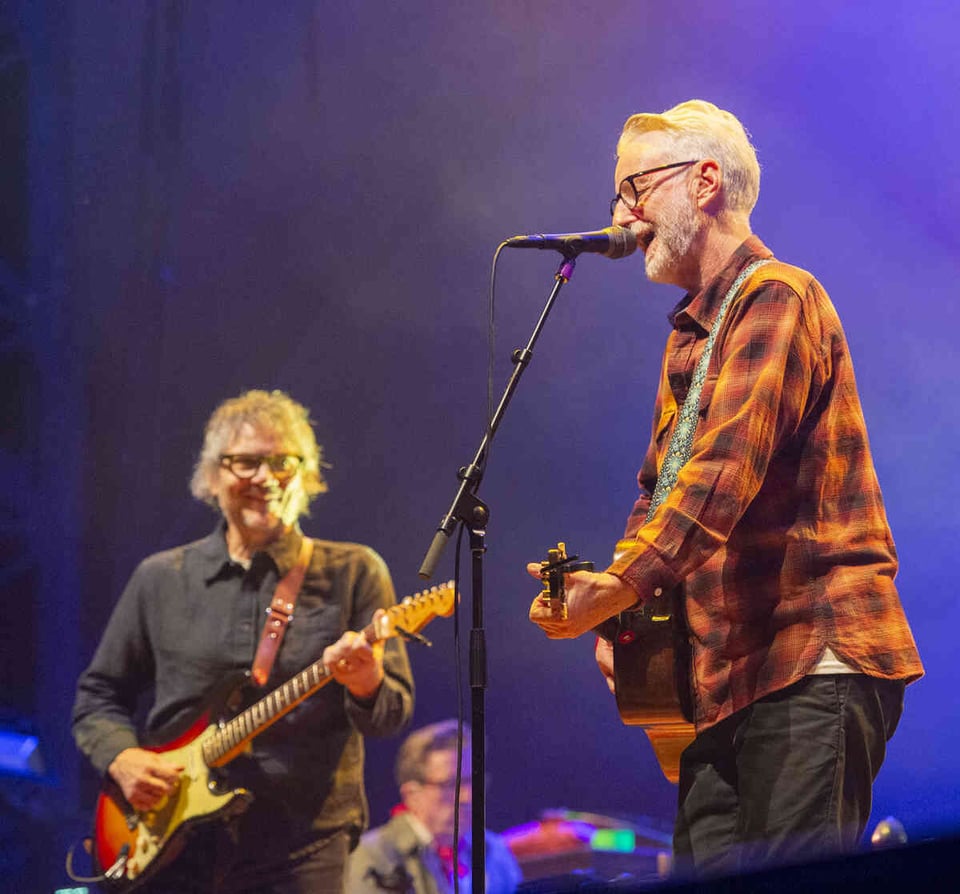
Tucked away on the Solid Sound website was a bit of foreshadowing about how the first night of the festival might end. That evening, last Friday at Mass MoCA, marked the first time Wilco and Billy Bragg had ever collaborated on a full live performance of Mermaid Avenue songs, comprising unpublished lyrics written by Woody Guthrie that Bragg and Wilco set to music on a pair of albums released in 1998 and 2000. In the Frequently Asked Questions section online, all the way at the bottom, the last entry was, “What are the lyrics to ‘This Land Is Your Land?’”
Sure enough, Friday night’s Way Over Yonder in the Minor Key set wrapped up with a singalong to Guthrie’s most famous song, featuring Wilco, Bragg, Natalie Merchant and various Guthrie descendants. Though the FAQ hinted at the outcome, it couldn’t predict how moving it was to hear 8,000 people singing “This Land Is Your Land,” or how inspiring it was to see Bragg and Wilco leader Jeff Tweedy — who had a fractious relationship during, and after, the recording sessions — putting aside old differences and coming together onstage with an alternate vision of America at 250.
They’re probably not spending Thanksgiving together, but publicly, at least, theirs is a vision of reconciliation — of growing past bygone conflicts as a way of standing against the dissonance presently crackling across the cultural landscape. By turns reflective and animated onstage, they played songs about hazily remembered late-night poetry readings, alluring movie stars, the fits and starts of young love and the wonder of the natural world, buttressed by a straightforward proposition tightly held: fascists are bound to lose.
Instead of ethnonationalist exclusion, Bragg and Wilco stood for acceptance. Instead of militarism, they represented peace. None of that was explicitly stated, but it didn’t have to be: the very act of singing Woody Guthrie songs is a rejoinder to the corrosive influence of power, and as their voices — our voices — rose like embers above Joe’s Field and faded into the North Adams night, it spoke to who we the people really are.
It was also a reminder that this land is indeed our land, in the sense that most of us want it to reflect the folks who inhabit it. Patriotism is a tricky business at the moment, when there’s a widespread belief that it means uncritically embracing the collective lies our society tells itself about American glory. Solid Sound on Friday stood for something else: an aspirational model that reaches for the best version of what America could be. In that America, a land of inclusion and shared abundance — World Cup America — we are free to dream away our troubles beneath a glittering night sky, to paraphrase the yearning ache of “California Stars,” and we celebrate unsung heroes like the namesake subject of “Stetson Kennedy,” a folklorist who worked to undermine and expose the Ku Klux Klan in the 1940s.
In that America, as in this one, music is a balm, but not a cure-all. During his solo set earlier in the evening, Bragg offered the opinion that music can’t actually change the world.
“Woody wrote ‘All You Fascists’ 80 years ago, and we’re still fighting the fuckers,” Bragg said. Music has a different role, he said, which is “the power to make you believe the world can be changed.”
It was easy to believe Friday at Solid Sound. There was no bombast, no vitriol, just a community of music lovers willing to invest in a simple, expansive idea of America that Guthrie himself put forward in 1944: this land is made for you and me.
Bruce Tull, Scud Mountain Boys Co-Founder, Dead at 71
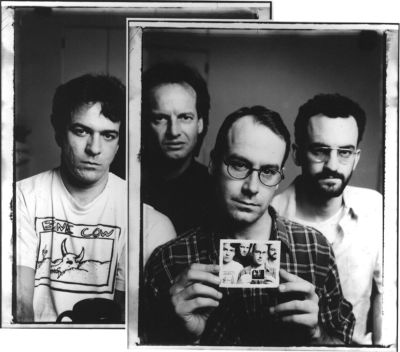
Bruce K. Tull, who played guitar and pedal steel in the Western Mass. alt-country band the Scud Mountain Boys, died June 22 in Tulsa, Okla., after a brief illness, according to news reports. He was 71.
An Oklahoma native, Tull co-founded the Scud Mountain Boys in 1991 with Joe Pernice and Stephen Desaulniers after arriving in Western Massachusetts to pursue a doctorate in economics from UMass Amherst. Tom Shea joined the band for its second album, Pine Box — one of three LPs the Scud Mountain Boys released in 1995-96. They broke up in 1997, when Pernice left to start the Pernice Brothers, but reunited in 2012 and released a fourth album, Do You Love the Sun, in 2013.
“He was super friendly, just a love of a guy,” Desaulniers says by phone. “A wonderful person and completely unique.”
Desaulniers and Pernice were playing music together and working at the Northampton outpost of the Black Sheep deli when a mutual friend introduced them to Tull. Soon the three of them were playing in an alt-rock band they called the Scuds, which evolved into the Scud Mountain Boys thanks to late nights sitting around the table in Tull’s kitchen on Woodmont Road in Northampton.
“We’d always end up at Bruce’s after hours, after the bars had closed, and we’d play all these country covers and songs that we had written, mostly Joe, that just weren’t for the rock band,” says Desaulniers, who left the band in 1996, but returned for the reunion.
In the early days, as the group cycled through one drummer after another, they planned to call it quits after finishing a handful of shows they had already booked. Tull was the one who suggested that they spend those last few concerts playing the country stuff. The first time they did it was at Northampton Brewery on a Sunday night. Tull wanted to bring the table from his kitchen, though the others noted that the brewery probably had one they could use.
“It really connected, right from the first show,” Desaulniers says. “They liked the Scuds, but this was different. They didn’t even have a name for alt-country yet, it was just something that was happening in places around the country.”
After the Scud Mountain Boys dissolved, Tull played with other bands in the area, and ran the soundboard for concerts at the Elevens on the corner of Pleasant and Pearl, before moving back to Oklahoma to take care of his mother. Though the Scud Mountain Boys never broke achieved the recognition of other alt-country bands, like the Jayhawks or Uncle Tupelo (and especially its offshoots, Son Volt and Wilco), the group’s influence occasionally emerges. Tull and the other band members were tickled when MJ Lenderman and Waxahatchie covered “Lift Me Up,” from the 1996 album Massachusetts, while on tour this spring.
“This is one of my favorite songs, from one of my favorite albums ever,” Lenderman said onstage in Boston.
Desaulniers said a celebration of Tull’s life, “or more likely a party,” is in the works, where the guitarist’s friends, bandmates and acquaintances can share stories. For his part, Desaulniers remembers Pernice’s brother, Bob, hanging out one night in Tull’s kitchen. “He said after, ‘You can live the rest of your life and never meet a guy like that,’” Desaulniers remembers. “He was a singular person, a real unicorn.”
Upcoming Concerts
With new album There Near due Aug. 28, Amherst trio Dinosaur Jr. — whose song “Freak Scene” gave this newsletter its name — play a hometown tour warm-up show Wednesday, July 8, at the Drake (tickets).
The Iron Horse hosts Laura Jane Grace with Brendan Kelly Aug. 26 (tickets).
There’s not much else happening this week, but check out what’s coming down the road in this concert calendar for paid subscribers.
That’s it now. Thank you for reading! Previous issues are available in the online archive. Freak Scene is free, but donations help make this happen and are gratefully accepted. If you’re able, please consider a paid subscription!

Add a comment: