The Evening Pour: Bitter Lake
|
Four Fingers News
The News, Neat.
|
| FRIDAY, SEPTEMBER 11, 2026 · DAY 196 |
| The Evening Pour |
Bitter Lake
Twenty-five years ago today, 19 men seized four airliners. Three hit buildings. The fourth went into a field in Pennsylvania because the people on board fought back. 2,977 people died.
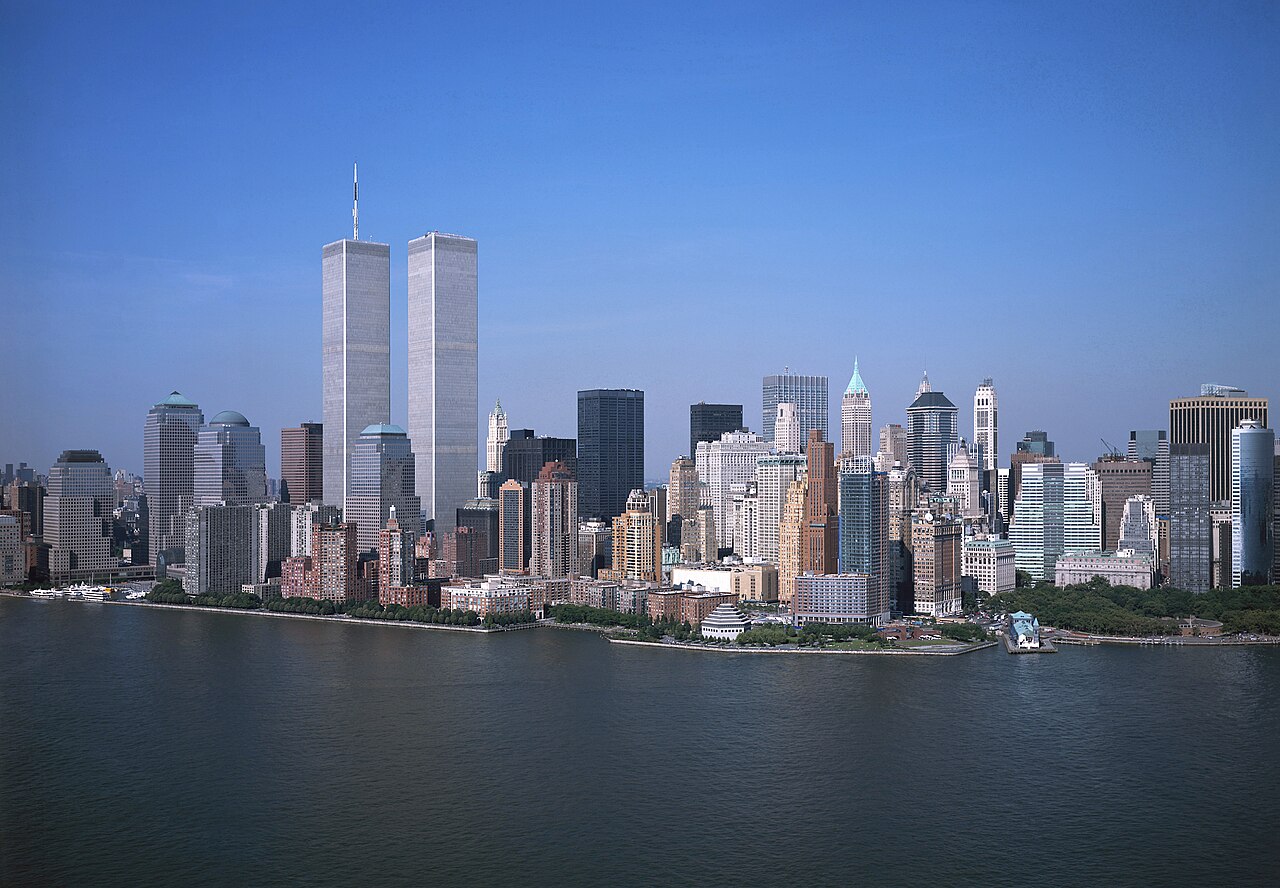 |
Lower Manhattan before the attacks. Carol M. Highsmith / Library of Congress. Public domain. |
The story we settled on was terrorism. A cave, a madman, a hatred of freedom.
Calling it terrorism doesn't explain how we got there.
A better starting point is February 1945, aboard the Navy cruiser USS Quincy, anchored on the Great Bitter Lake in the Suez Canal. A dying Franklin Roosevelt sat across from King Ibn Saud.
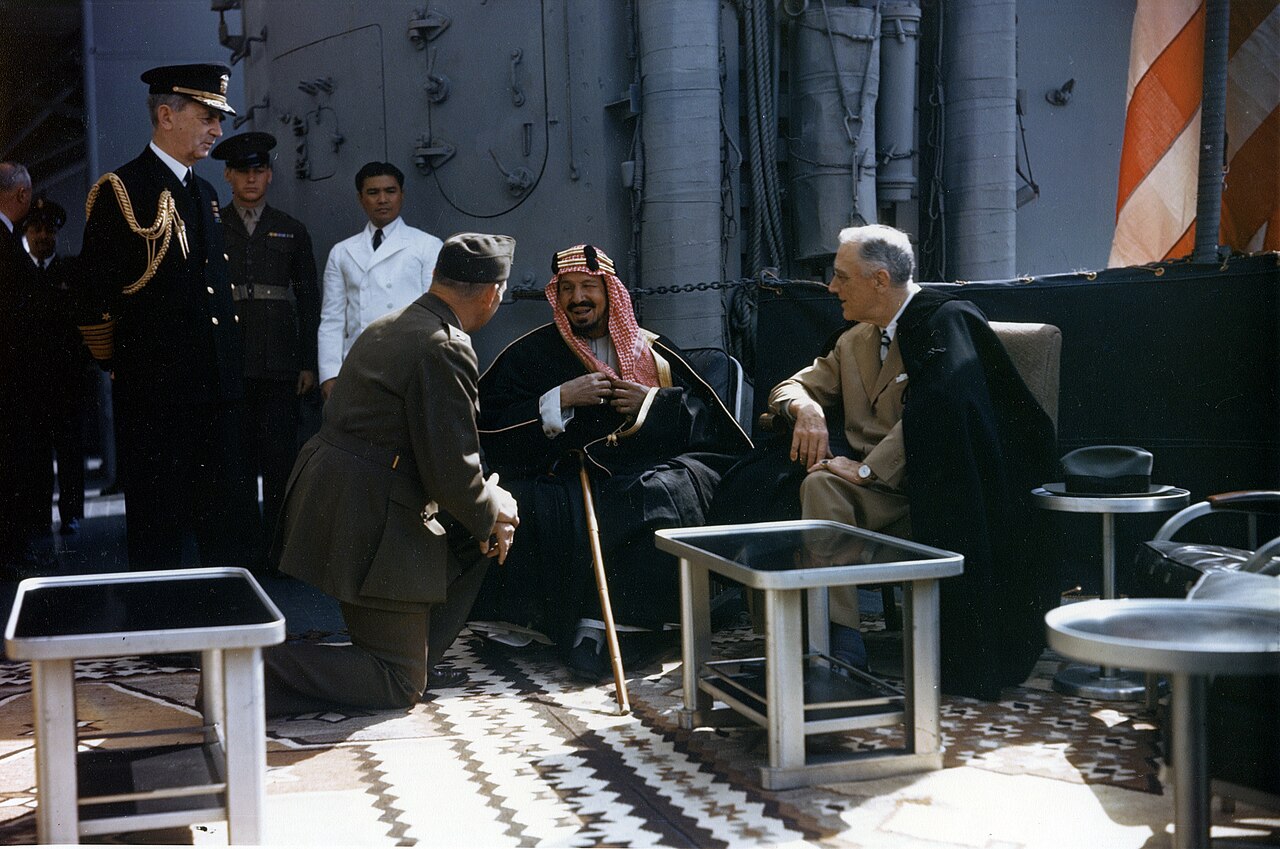 |
Ibn Saud and Roosevelt aboard USS Quincy on the Great Bitter Lake, February 14, 1945. U.S. Army Signal Corps / National Archives. Public domain. |
They signed a memo of the conversation, mostly about Palestine. There's no oil-for-protection clause. The broader understanding took shape over the next decade. America gets the oil. The House of Saud gets protection. What happens inside the kingdom is the royal family's business.
At home, the Saudis kept a bargain older than the United States. Since 1744, through two collapses and a reconquest, the Saudi family has ruled with the blessing of the Wahhabi clerics. The family holds the sword, the clerics hold the pulpit. Protect one and you protect both.
The export of that creed started before the money did. The Muslim World League was founded in 1962.
Then came 1973. Oil went from $3 to nearly $12 in a matter of months, and a modest missionary project became one of the best-funded religious movements in the world.
Riyadh spent tens of billions of dollars over the next three decades on mosques, schools and charities from Lahore to Sarajevo to Brooklyn. Not all of them preached the same thing. Plenty taught a narrow, brittle version of the faith. And the 9/11 Commission found that some of them became cover for people with worse intentions.
In 1979 gunmen seized the Grand Mosque in Mecca. The royal family responded by giving the clerics even more control over Saudi life.
That same year the Soviets went into Afghanistan. Washington and Riyadh split the bill for the Afghan resistance, dollar for dollar. America called it anticommunism. The Saudis called it religious duty.
The Arab volunteers who joined the fighting had their own networks and raised their own money. American aid mostly didn't reach them. Saudi private donors helped support them.
Osama bin Laden was one of those volunteers.
Wahhabism alone didn't produce him. The Saudi state clerics preached obedience and later condemned him by name. He drew on Saudi money and Saudi piety, but also on the revolutionary ideas that came out of Egypt's prisons. Muslim Brotherhood exiles brought those ideas into the kingdom, where Riyadh hired them to staff its universities in the 1960s and 70s.
He had a long list of grievances. When he declared war on the United States in 1996, the one in the title was American troops in the land of the two holy places.
Which is to say the Bitter Lake arrangement helped build the ideology and then handed it a target.
That doesn't require a conspiracy. For 56 years, both governments had reasons to keep the kingdom's domestic affairs largely out of the discussion.
That's harder to reckon with than a man in a cave. The story runs through 12 presidents of both parties, the Afghan program, and a relationship that's still the spine of American strategy in the Gulf.
Which brings us back to this week.
Saudi Arabia's watching the Houthis advance along the Red Sea. Hormuz is choked. Axios reports MBS called Trump twice Thursday to ask for American strikes on Yemen.
The same kingdom stripped its religious police of arrest powers in 2016. The prince has been clipping the clerics ever since. Whatever his reasons, the country that funded the export is now trying to change the product.
That meeting was 81 years ago. Roosevelt and Ibn Saud are long dead.
Their successors have updated the relationship plenty of times. Last November it got a fresh defense agreement with a price tag attached.
I don't think we've reckoned with what that relationship helped set in motion.
Gulf Ministers May Sit Down With Iran on Monday
Oman's trying to bring Gulf and Iranian foreign ministers to Salalah on Monday, Sep 14, for talks about the strait; the meeting isn't confirmed, and it's unclear which Gulf states would attend. Tehran wants the right to decide which ships enter the Gulf and to charge them for the privilege; the Gulf states want free passage, and the gap between those two positions is the whole negotiation. The economics are pressing on both sides of the table: Qatar has posted its widest quarterly deficit in nearly a decade and the Saudi economy contracted in the second quarter.
| War: Day 196 · began Feb 28 |
| Hormuz transits Thursday: 7 · 10-day average 15 |
| Crude tankers through: none |
| Brent: $104.61 · down 2.81% at Friday settlement |
| Bab al-Mandeb: 26 transits · 10-day average 27 |
| US diesel: $6.06 · third record in a week |
| US toll since Feb 28: 18 killed · 800+ wounded |
At 25 Years, the Anniversary Is Folded Into the Current War
Trump and Pete Hegseth marked the Pentagon ceremony for the 184 killed there in 2001 by tying it to Iran operations now: “We’re still sending terrorists where they belong, to hell, and tankers to the bottom of the ocean,” Hegseth said. At Ground Zero, the reading of names carried a seventh moment of silence this year, for those who died later of 9/11-related illness.
Ansarallah Finishes the Coast; Riyadh Asks Washington for Strikes and Is Told No
Houthi columns now hold the whole of Yemen’s Red Sea shoreline after Mocha fell without a fight, and Saudi aircraft hit Mocha airport twice. CBS News reports MBS pressed Trump for strikes; Trump declined direct action and offered intelligence and targeting support. UN envoy Hans Grundberg told the Security Council the war has entered “a new and more dangerous phase,” with more than 11,400 households displaced since Sep 3.
Saudi Arabia Shuts Its Hormuz Bypass After Drone Attacks
Saudi Arabia shut the East-West pipeline as a precaution after attacks Thursday, its Energy Ministry said. The Foreign Ministry says drones launched from Iraq caused injuries and damage; Riyadh says it’s holding off on retaliation at Baghdad’s request. The pipeline carries Saudi crude to Yanbu on the Red Sea, bypassing Hormuz.
A Green Friday Inside a Red Week
The S&P 500 closed at 7,656.98, up 0.9%, with the Dow and Nasdaq each up 1% as crude came off the boil and CPI landed where traders expected. Zoom out one week and every index is down — the Dow 1.6%, the Russell 2000 2.4% — and every index is still up double digits on the year except the Dow.
I-5 Express Lanes Close All Weekend at 11 Tonight
The express lanes shut at 11 p.m. Friday and reopen 5 a.m. Monday while crews tie Ship Canal Bridge drains into the permanent system for Revive I-5. WSDOT’s own framing is the useful part: there's no single alternate route that can absorb I-5 traffic. A second weekend closure follows Oct 2.
BRICS Opens Saturday With a Declaration Still Unsettled
The 18th summit convenes at Bharat Mandapam on Sep 12 with 11 member states, Xi, Putin and Pezeshkian in the room, and a New Delhi Declaration that has to clear governments disagreeing about two wars at once. The bloc’s foreign ministers already failed to issue a joint statement in May over the same Iran-UAE rift.
Seattle Has Until Sep 20; Darnold’s Hip Is the Variable
Sam Darnold went down five plays into the opener and Drew Lock finished the 13-10 win over New England. Mike Macdonald called the hip news good without setting a return date, and Seattle has until Arizona on Sep 20 before it has to decide. The Mariners entered Friday’s game at 69-78.
| Read the full dispatch |
You’re receiving The Evening Pour, an edition of Four Fingers News.