
foiaday 015
Walking through records retention schedules, which are FOIA goldmines!

Request 015 — 1/15/2026
What is a records retention schedule, anyway?
Brrrrrr, it’s Thursday, happy foiaday!
Good god it is cold outside here in Chicago. We went from torrential rain to spring temps (~40s/50s) to bitterly cold and yes-you-have-to-wear-gloves kind of weather.
We’re halfway through the month, sort of — it’s day 15! I’ve filed about 35-ish different requests for a boatload of different document types (and I’ll list those all out on Monday during our next weekly round-up!), and I haven’t gotten too many records back yet.
Today, I’m going to run through something I’ve been requesting with most of the FOIAs I’ve filed so far, and show just how it can be used for filing follow-up records requests.
Enter: the records retention schedule!
If there's a coworker or friend you think would benefit from this newsletter, feel free to forward it to them! If they subscribe, they'll also get a link to a template for the tracker I like to use to keep tabs on requests I've filed.
The names for the types of document might vary from state to state, or even place to place. For example, in Illinois, they’re called “records retention schedules,” but in Wisconsin, they’re “general records schedules,” which is what they’re also called at the federal level.
Records schedules, broadly, are essentially indexes of all the different record types kept by an agency, and for how long they’re kept before being destroyed or moved. If you’ve ever used a finding aid at a library or archive, it’s almost exactly the same kind of process — the records from the agencies themselves are stored somewhere, after all, and in Illinois, the Illinois State Archives is the repository to which all roads lead.
Brechner has a phenomenal resource of state-by-state retention policies that I’ve referenced from time to time when filing outside of Illinois. Knowing what your state archive’s policies are is a good primer to understanding how each agency might log what records they have in the first place.
So what does it look like? Here’s an example of the 2021 Chicago Board of Education records retention schedule, which I had requested a few years ago:
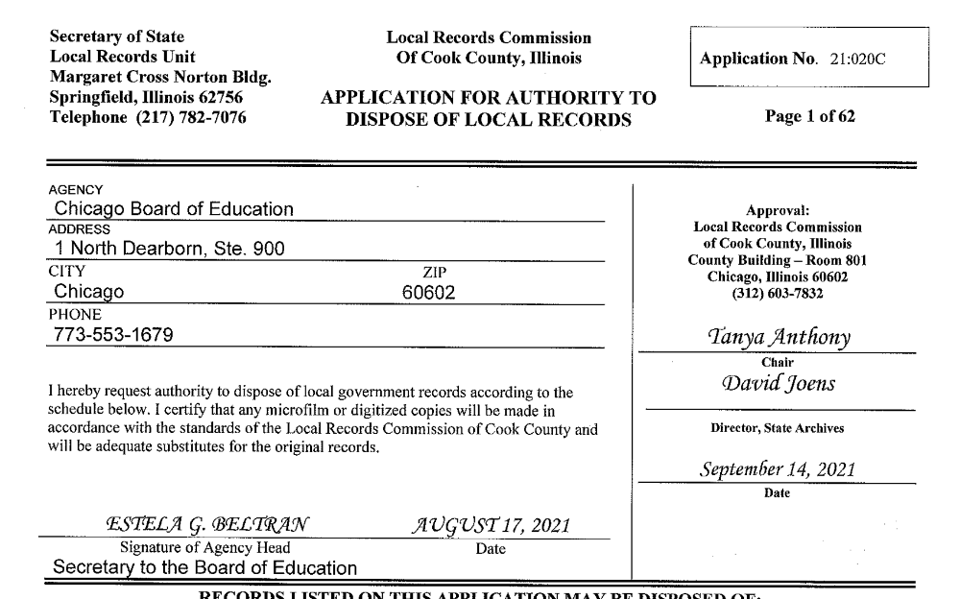
The document opens with a cover sheet of sorts, which has a standardized form filled out by the agency to be filed with the Illinois State Archives; in Illinois, that’s housed within the Secretary of State’s office.
Then we get into the meat and potatoes. Each document type is broken out with a description, the dates of the collection, the size (which determines physical space, boxes, shelf space, etc in the archive, unless digitized) and the way records are kept. There’s also a recommendation for the minimum amount of time that each record type is or should be kept, something that I believe can only be modified by filing a new schedule with the archives.
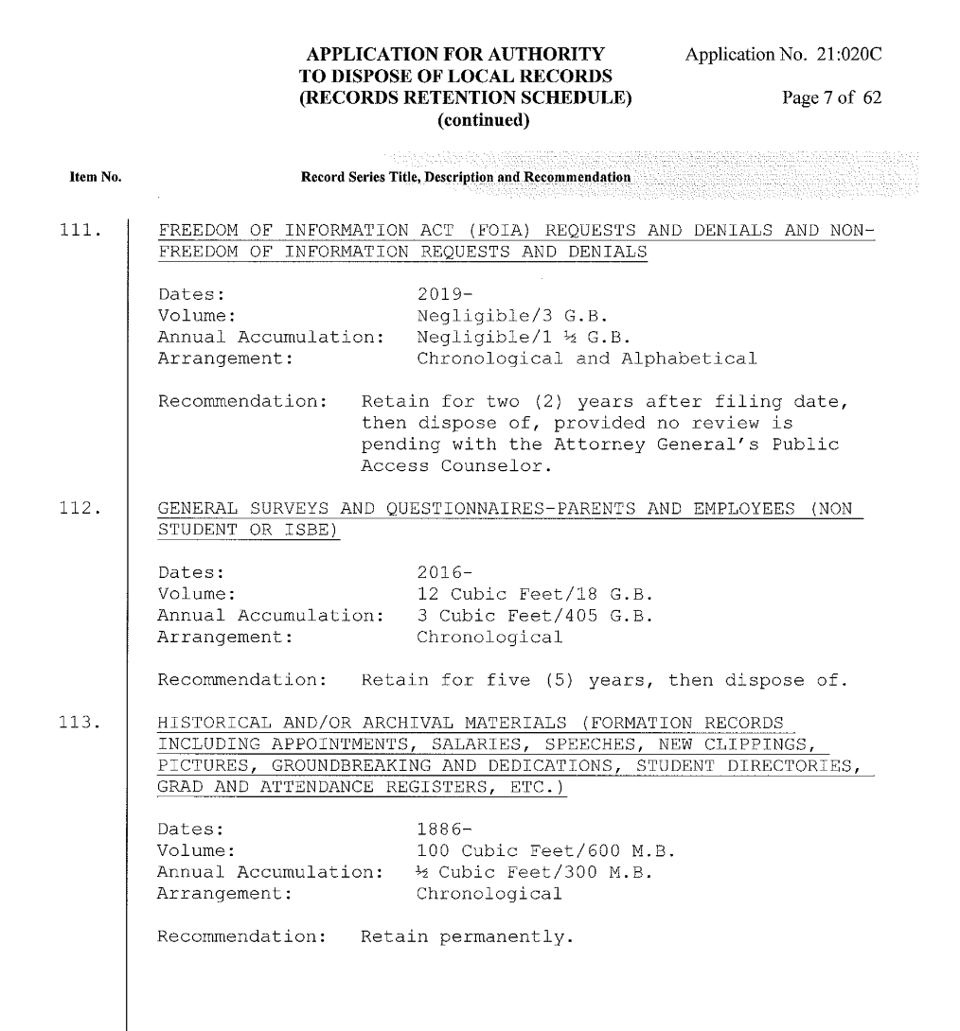
In this case, the Chicago Board of Education keeps FOIA requests and denials (like a FOIA log) for two years after the date of filing per the schedule. That doesn’t mean that records before that time are automatically pulverized, but it’s just the minimum suggested amount of time for that record type. (It probably means that the request I filed for this almost four or five years ago is no longer!)
On the flipside, historical or archival materials, like photos, yearbooks, clips, directories and more are kept permanently.
So yes, I hope you know this will go down on your permanent record.
Records retention records aren’t just great for FOIA requests, but archival research. If you ever find yourself in your state or local archive, they can be invaluable for research, in part because they’re designed for that. You might be able to dig up details about structures, people, departments, systems or programs that don’t exist anymore — these facility and land acquisition records, for example, go back to just a year after the Chicago Fire of 1871 (!):
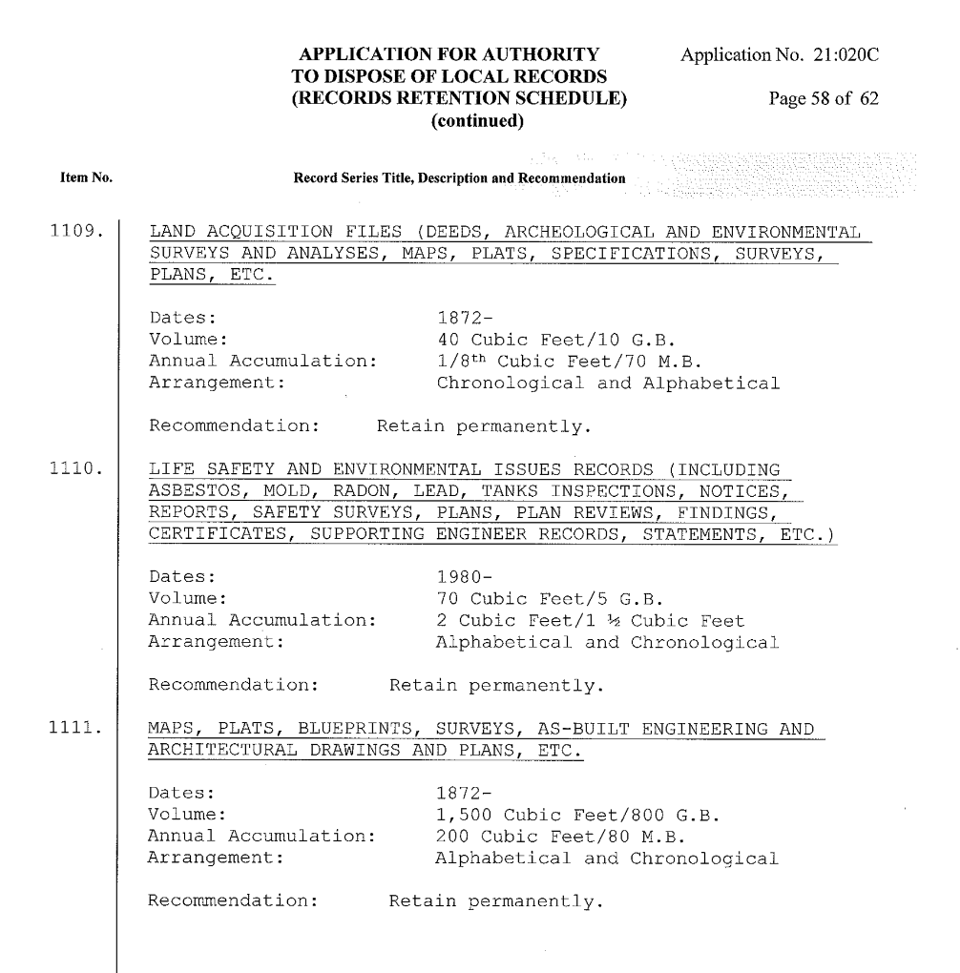
So that’s pretty sweet, if you ask me.
Just about two years ago, I requested a boatload of records retention schedules from every county in the state, all at once. (Mistake.)
I rigged a batch-requesting system I’ve used before to file requests en masse, and then limped through replying to responses from 102 FOIA officers around the state of Illinois during the holidays. (Nice. Great use of time, Cam!)
It means I have a good amount of records retention schedules on deck to pick through from different counties, and is great for getting a sense of what kinds of records government units actually generate and have in use.
For today’s request, I’m grabbing a couple record request ideas based on a schedule I got back from Clark County, a rural county in downstate Illinois right on the border with Indiana. (It’s actually closer to Indy than Chicago, for folks thinking about an Illinois excursion while visiting NICAR!)
I’ll be sure to toss these up into DocumentCloud by the weekend, but for now, I have the schedule on my GitHub along with a small smattering of other Illinois counties.
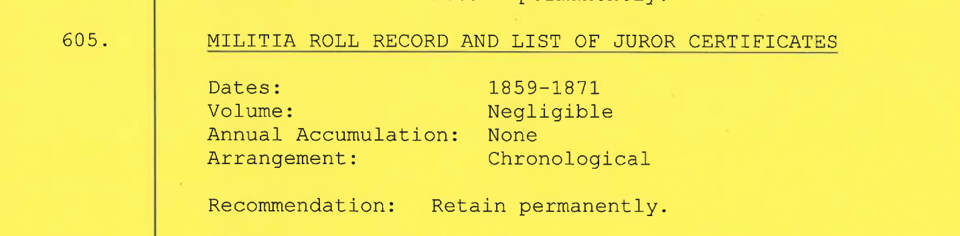
Let’s start strong with militia roll records (!) and then… maybe… payroll deets?
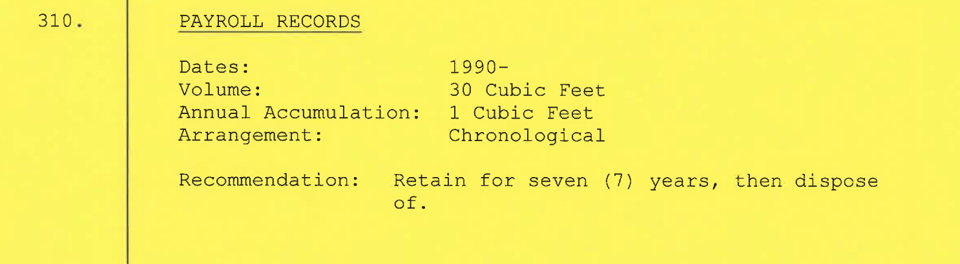
Yeah, payroll. I don’t think we can really beat militia records from the 1860s, honestly, so we’ll have to pump the brakes a little.
Here’s the language I use to request records retention schedules in Illinois, by the way:
The current records retention schedule in a digital format (.pdf if possible). This document may also be called the "Application for Authority to Dispose of Local Records" or "APP" per the Illinois Secretary of State's office (more here: https://www.ilsos.gov/publications/pdf_publications/lr34.pdf)
And here’s what I’m requesting from Clark County:
- All records available that fall under "militia roll records" as outlined by the records retention schedule item #605, which existed between 1859 and 1871. Any format that this document exists in is fine, including a scanned PDF or photos. (I'm happy to talk more about this record type over the phone, too.)
- Payroll records for the most recent fiscal or calendar year, including employee name, position, date of hire and any additional bonuses or compensation. Please include this in a machine-readable format like an Excel spreadsheet if possible.

Okay, folks! That’s it from me tonight. When I catch a spare moment (hard to come by these days), I’m going to process the rest of the retention schedules I got back from counties around Illinois, and maybe try and index them, either in DocumentCloud or up on GitHub + with a spreadsheet.
I don’t know. A girl can only dream about well-crafted, color-coded, beautifully organized compendiums of knowledge in big spreadsheets.
Take care! Happy filing!
Cam


Add a comment: