2026 Nᵒ41 - Only ninjas and robots
on working with the stories shared

London, 13th of October 2026
👋 Greetings, dear readers.
I hope you are enjoying the cozy vibes of October. It finally feels like autumn, and I’m all for it. The last few days I’ve been quite busy with several storytelling gigs that drained my energy, mostly because of the logistics of travelling to faraway schools, which consumed too many hours. So I’m having the feeling this week’s newsletter is going to be shorter than usual.
Last week I also had a couple of Playback Theatre rehearsals, which made me think about our role as actors when we are reenacting the story of someone who is close to us and we care deeply about.
Let me give some context first. When speaking about improv, Billy Merritt and Will Hines wrote a book where they divided improvisers into three categories: Pirates, Robots, and Ninjas. The book is called, you guessed it, Pirate Robot Ninja: An Improv Fable, and I truly recommend it.
I’ve been thinking lately about how in Playback Theatre we need to be Robots and Ninjas, but there is little room for the recklessness of the Pirate, although some of their qualities could prove beneficial for our reenactments.
When working in story or free form, we already use the term Ninja for those actors whose task is supporting the colleague playing the teller. Ninjas need to bring offers with precision, while also observing the scene with a bird's-eye view to determine what it needs to keep the flow. Even the actor playing the Teller needs to embody the way of the Ninja. Accuracy, economy and grace are vital for playing this role.
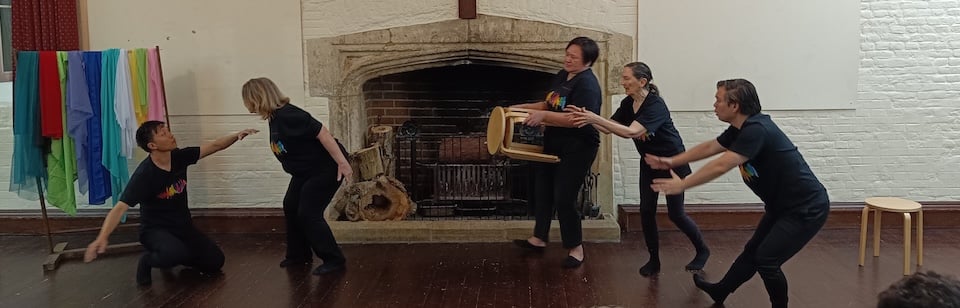
We also need to be Robots, though. In a sense that is different from, yet similar to, how Merritt and Hines apply it to improvisers. Our Robot needs to turn on when the teller starts sharing their story and process all the information given. In the same way a computer can only work with the data we give it, we need to work only with the details shared by the teller. No more, no less.
The challenge comes when the teller is someone close to us and we know a lot about them and their circumstances, so we might feel tempted to add things that weren’t shared. While that might be appreciated by the teller, these “inside jokes” can make the audience feel alienated.
Moreover, if the story is about struggle, as friends we might feel inclined to reenact comforting situations for the actor playing the teller, diluting the core of the story shared. While this is completely human behaviour, we need to stick to the facts shared and the feelings attached to them.
I’m saying this as an admission of guilt, since I myself have fallen into the trap of wanting a friend to feel comforted after a tough share and overdoing it during a reenactment. Even recently.
As Playback Theatre actors, we need to be as cold and objective as robots, working only with what was shared. Of course, the ninja within us will make the most of it through the different treasures Playback Theatre can offer. Taking the story to a place of metaphor, for example, is a way of reminding both the teller and the audience that we are more than that, more than mere conduits for a story that has been told. But, indeed, we’re not here to pass judgement, nor to offer solutions.
🫶 Stay hydrated, love to you all.
📆 What is coming up
🇬🇧 23rd of October - True Heart Theatre Open Rehearsal (London, UK). We are hosting another open rehearsal addressed to those who want to get in touch with Playback Theater. Register here to attend.
🇬🇧 13th of November - Acaprov at Shoreditch Balls (London, UK). With Halloween left behind, but on a Friday the 13th, the monthly Acaprov musical will be ready to serve thrills. Secure your tickets. 🎼
🇬🇧 20, 21, 22, 28 and 29th of November - Playback Theatre Core Training (London, UK). Are you finally considering getting into Playback Theatre? Join True Heart Theatre’s Level 1 core training to learn the basics of Playback and put them to the test with a showcase! Info and registration here.
📚 🎮 🎥 📺 The geeky dessert
👻 Spooky Season Edition 👻
Carrying on with the spooky season picks, although this week’s recommendation could transcend any genre because it’s a wonderful film.
Last weekend I finally got to watch Teenage Sex and Death at Camp Miasma, and I really loved it. Directed by Jane Schoenbrun and starring Hannah Einbinder and Gillian Anderson, the film depicts an intergenerational love story tied to a fictional slasher film franchise.
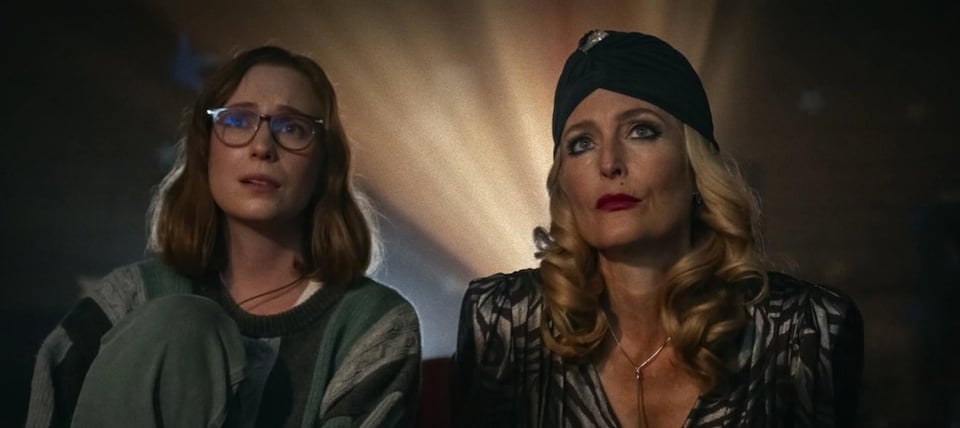
After enjoying their previous work, I Saw the TV Glow, I knew Schoenbrun wouldn’t disappoint, and they deliver another compelling film that scratches the David Lynch itch. The level of careful craft in this movie is insane, and it shows in its storytelling and mesmerizing photography. Anderson and Einbinder are both amazing in this metaphysical essay on queerness and horror. I don’t have enough hats to take off to this movie.
📨 That’s all for now
Thanks for reading Playing Back an Improvised Life, a newsletter by Ferran Luengo.
If you like it, spread the voice and share with someone who you think might enjoy it.
If you want to keep in touch, feel free to follow me on instagram (@luenkun).
Want to work with me or start a conversation? email me 😀
Want to support me? You can do it through my Ko-fi page

Ferran Luengo AI Disclaimer: Since English is not my first language, I may have used AI tools to proofread the text, limiting their use to grammar only. Everything in this newsletter has been written by me
Add a comment: