2026 Nᵒ20 - Bow for the audience, not to the audience
Reflecting on Spanish improv theater's stereotyping issue and lauding Ionesco's plays’ relevance today.

London, 19th of May 2026
👋 Greetings, dear readers.
Although I’ll be storytelling in London by the time you read this, I’m writing to you from my hometown, València. I flew back for a special occasion, a tribute to the person who gave me that radioactive bit of theatre, setting me on the complicated path of making a living out of this. All my love to Cesca Salazar.
I really made the most out of the trip. I got to do improv with people I hold very dear to my heart, picked up some published plays to add to my Valencian theatre stash, and caught up with my geeky friends in Castelló de la Plana, as well as my theatre family back there. I also saw several performances from friends, spanning a mix of theatre and improv.
One of those performances sparked the topic I wanted to bring up this week: what kind of audience do we strive for? While there is some diversity within the country, Spain still has a lot of work to do to consider itself truly diverse, especially when it comes to the arts and entertainment.
When I left Spain, the improv scene was still making jokes using all kinds of stereotypes, mostly punching down, and setting no boundaries around any topic whatsoever. Although I’ve seen and sensed some progress since then, every now and then you can still find shows stuck in time. That’s what I found last week at an improv show I hadn’t seen in seven or eight years, hoping it had changed a bit. How naive I was.

You could tell what kind of show it’ll be just by taking a look at the audience demographics. I entered a theatre mostly packed with white, middle-aged (like myself) women and men, the kind who tuck their shirts into their trousers. The audience left suggestions on pieces of paper at the start of the show, it’s easy to imagine how it went. I’ll avoid describing the show but just say that the expectations were met and content wise was a fest of stereotypes and sex jokes, quite cringe at certain times. I definitely could say it wasn’t a safe space for anyone outside that demographics. That made me sad because I personally know those (very good) performers, and they are capable to do better topic wise. To be fair, they had very clever moments of brilliant improv as well.
They’ve been doing the same show for 15 years, and whether accidentally or not, by doing the exact same things, they have curated a certain type of audience. They are successful, I’ll give them that, but they manage to make a show that is definitely not my cup of tea… nor the cup of tea of any vulnerable minority.
I’m not saying this to patronise anyone; it works for them and it’s their livelihood. I’m not even trying to pull out Augusto Boal’s statements about the need and responsibility of educating the audience. Nevertheless, we need to acknowledge that the price of a ticket shouldn't give an audience power and impunity, and we should ask for gentle accountability where it is due. Improv sometimes has a problem with anonymous heckling, and some improvisers still defend the idea that rejecting suggestions taints the experience.
As performers, we shouldn’t be there to serve the audience, but to bring them along.
There is a saying in Spain that people tend to eat whatever is put on their plates. Let’s not settle for the bland children’s menu of spaghetti with tomato sauce and chips.
Love to you all. 🫶
🎭 The Theatre bit
Eugène Ionesco’s plays are fun, and always a joy to watch, read, and/or perform. My introduction to his work was seeing a production of La Cantatrice Chauve (The Bald Soprano) when I was beginning my theatre journey. Later, I got to enjoy Rhinocéros and La Leçon (The Lesson), and I once played one of the two roles in the short play La Jeune Fille à marier (Maid to Marry). Ionesco wasn’t just a staple in the genre of the Theatre of the Absurd, but also an inspiration because he started writing when he entered his middle age. It’s never too late, kids!
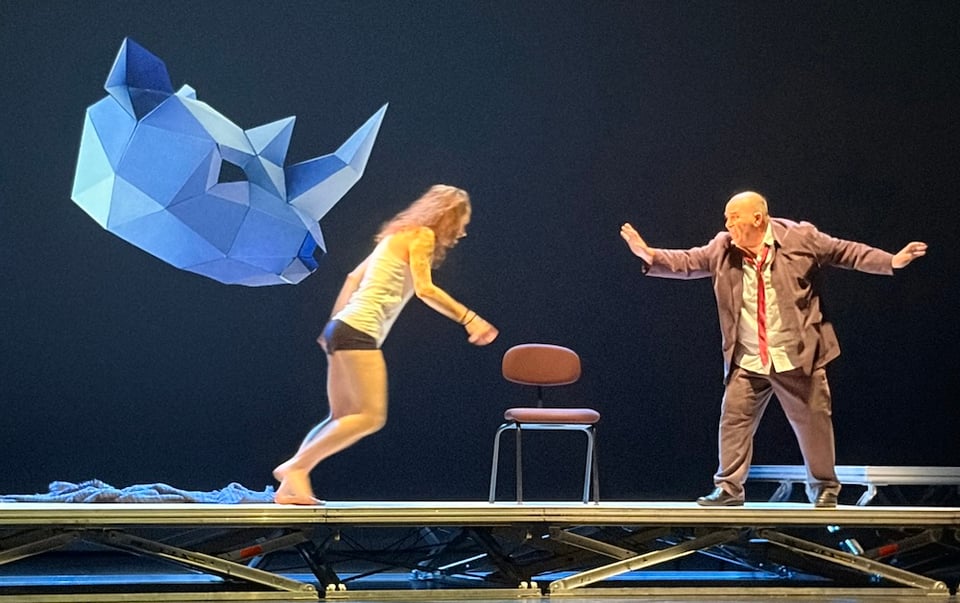
Last week, I got to experience Rhinocéros once again, thanks to a production by Aula de Teatre Carles Pons, my theatre cradle. It remains just as relevant today as the day it premiered in 1959.
The play is set in a small town where, one by one, all the inhabitants turn into rhinoceros. Only one man seems to question and address the issue, while his peers decide to go along with it, believing you cannot fight against the majority.
While playful in its usual absurdity, Ionesco’s play is a powerful commentary on the rise of fascism and far-right views in society. This is exactly what makes it so relevant today; we live in a time when so many ‘rhinoceroses’ are marching through the streets, wearing flags as capes and seeking to get rid of those who are different.
If you haven’t seen or read the play, do yourself a favour and dive in.
📆 What is coming up
🇬🇧 5th to 7th of June - “Is the Personal Story Political?” (London, UK). At True Heart Theatre, we are hosting a Level 2 training led by Michele Chung, focusing on the political dimension of long-form stories in Playback Theatre. Info and registration here.
🇬🇧 12th of June - Acaprov at Shoreditch Balls (London, UK). Join us once again for a brand-new improvised musical. What kind of inspiration will we find with summer within reach? Tickets here.
🇧🇬 20th-21st of June - Level 2 Playback Theatre Training (Varna, Bulgaria). Excited for going to Bulgaria for the first time to deliver my “Honouring Stories with your Voice” intensive. Looking forward to meeting the Playback Theatre community in Varna. Info here.
📚 🎮 🎥 📺 The geeky dessert
Speaking of rhinoceros, Rhino is a Marvel Comics supervillain who fights against Spider-Man on the streets of New York. Every now and then, he might cross paths with Daredevil and his archnemesis, Wilson Fisk, A.K.A. Kingpin. Ha! What a segue.
I’ve finished watching the second season of Daredevil: Born Again (the fifth, if we count the seasons produced by Netflix) and it’s phe-no-me-nal. The fatigue from the Marvel Cinematic Universe doesn’t translate to the small screen thanks to grounded shows like this one, filled with… let me check my notes… oh, yes, social commentary about the rise of fascism. Uh, how about that?
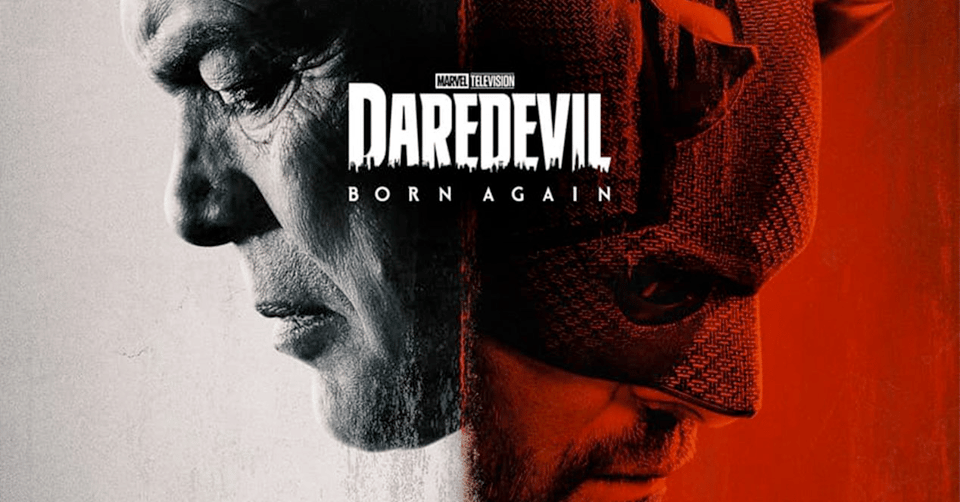
But a compelling script would be meaningless without the right people to lift it up, and both Charlie Cox and Vincent D’Onofrio do a great job portraying Matt Murdock and Wilson Fisk, respectively. Kudos to Marvel Television for pulling off a genuinely good drama.
If you want to check it out, it is available on Disney+.
📨 That’s all for now
Thanks for reading Playing Back an Improvised Life, a newsletter by Ferran Luengo.
If you like it, spread the voice and share with someone who you think might enjoy it.
If you want to keep in touch, feel free to follow me on instagram (@luenkun).
Want to work with me or start a conversation? email me 😀
Want to support me? You can do it through my Ko-fi page

Ferran Luengo AI Disclaimer: Since English is not my first language, I may have used AI tools to proofread the text, limiting their use to grammar only. Everything in this newsletter has been written by me
Add a comment: