2026 Nᵒ12 - Tell me where to go... or not
Back from my German tour; reflecting on the value of format in improv and Playback Theatre.

👋 Greetings, dear readers.
That’s a wrap on my mini German tour! 🇩🇪 I’m back in London after two intense weeks in the country where the words with too many consonants live. I cannot feel grateful enough for all the love I received from the various Playback Theatre communities there. In my luggage, among the dirty clothes, I’ve brought back rich experiences and memories of performing and facilitating. Thank you Katrina and Anne for hosting me in Berlin, thank you Hajü and Chrishy for hosting me in Hamburg. And… HELLO to the new subscribers I got thanks to this new adventure. I’m happy and honoured to be in your inbox and I’ll try to validate your decision of subscribing. 😄
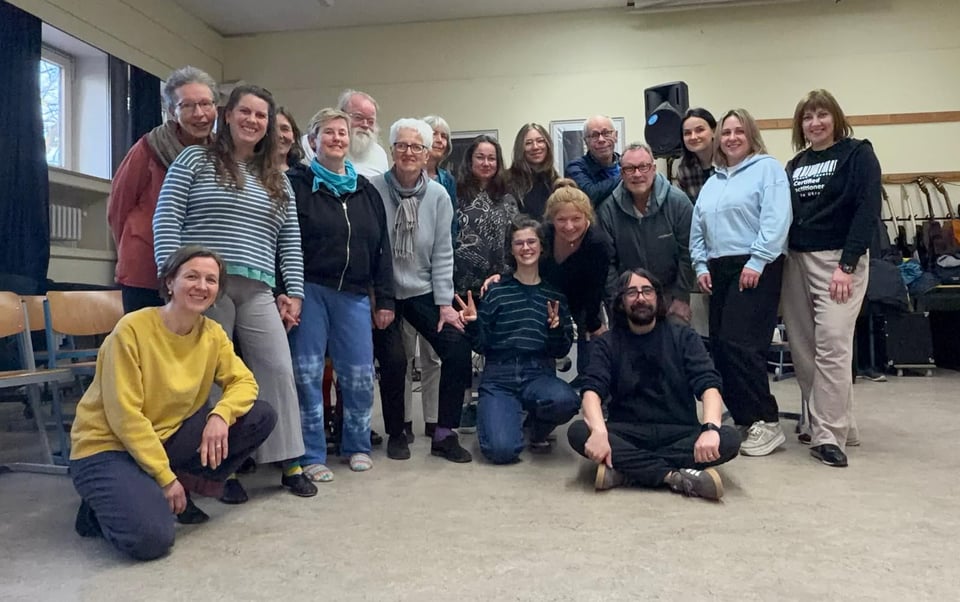
Since I’ve been busy travelling, my writing time has been quite short, however, I though I wanted to share a thing or two about the thrilling topic of format, which is relevant to both improv and Playback Theatre.
Humans have been improvising in front of an audience for centuries. The Ancient Romans first began improvising situational comedy with masked characters in the Fabula Atellana. This tradition later evolved during the 16th century into Commedia dell’Arte, which continues to be present and influence performance art today. So, essentially, the Italians invented not only the improvised sitcom, but where pioneering the concept of improv format (sorry, not sorry Americans).
Nowadays, both in improv and Playback Theatre, we have many different forms. Why do we create them? Is it because we have a complicated relationship with creative freedom? Do we actually need boundaries to contain our creativity in order for it to thrive? If you ask me, the answer is yes; they are a necessary way to learn how to walk before we start to run.
When I was a kid in art class, there was an exercise I loved: the teacher would give us a blank piece of paper with a random mark already drawn on it and ask us to incorporate that trace into a drawing. That simple constraint gave us the focus needed to move from the abstract to the specific.
In my time as a facilitator, I’ve encountered many people who shared with me this feeling of being lost when faced with absolute freedom. Damm you, “blank canvas” problem. Formats (or forms) are the skis that help us to slide down the hills of our creativity; they are the tracks for our train of thought.
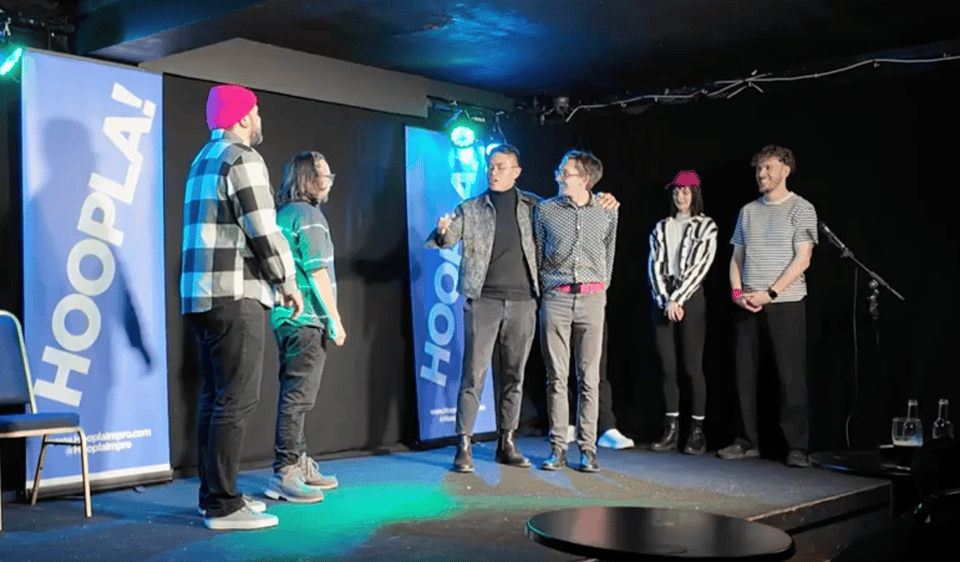
To give an example: in Acaprov, the improvised a cappella musical, we use a specific form in the shape of a clear narrative ar, a hero’s journey with certain stations along the way. Although we always aim to follow that structure, the journey occasionally takes detours, knowing we can always return to our path. Sometimes, a show takes on a life of its own and evolves into a completely different structure. But having always a contingency plan is useful.
Playback Theatre is different. It is a format that holds various forms, allowing us to choose the right one for every story. There is a free form, however: the story form. In it, the only path we have is the story itself, and it’s up to us to decide how to follow it. I’ve discussed this extensively, in previous newsletters, my favourite approach, so I invite you to dig into the archive for further insight.
The bottom line is that forms are extremely useful, and I encourage you to find those that work best for you. If you can’t find them, create them yourself! Of course, keep in mind that having no input whatsoever is also an option (the 'no-form' form?). The unknown is appealing, and discovery can bring us a great deal of joy.
📆 What is coming up
🇬🇧 3rd to 6th of April - Playback Theatre Core Training Intensive (London, UK). I´ll be co-running, with London Playback, a core training intensive during the easter weekend. A perfect oportunity to learn Playback Theatre from ground level. Get on the waiting list.
🇬🇧 10th of April - Acaprov at Shoreditch Balls (London, UK). You’d be a fool if you miss April’s new improvised a cappella musical by Acaprov. Hop into the fun.
🇬🇧 15th of April - Not GCSE Drama (London, UK). After a long hiatus, the clueless teenagers are back for another GCSE drama exam and they will do their best to use their creativity to get excellent grades. It will be at The Signal Pub, hosted by 🌲 The Forest 🌳 Improv Comedy.
🇬🇧 1st to 4th of May - Two Islands Playback Theatre Gathering (Buckden, UK). Join playbackers from UK and Ireland on a long weekend of camaraderie, connection, and, of course, Playback theatre. Check the information.
📚 🎮 🎥 📺 The geeky dessert
While in Berlin, I had some time to enjoy myself with a cup of coffee and catch up on my reading. I managed to finish Project Hail Mary by Andy Weir; I admit I originally started it to know what the fuss was all about surrounding its film adaptation.
I’m glad I went into it without knowing anything about the movie, other than that it involved space travel. If I had known more or watched a trailer, it definitely would have ruined a few surprises. Despite being heavy on scientific lingo, the book's tone is quite casual. It flows very well, which makes for an easy read.
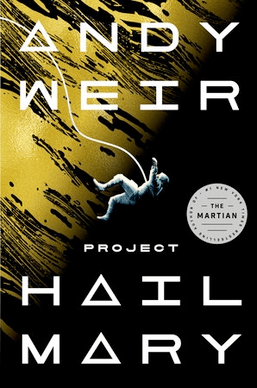
The story is quite simple, though; it rushes to meet its narrative beats unsurprisingly and without delay, despite splitting the structure constantly by jumping back and forth in time, which adds a nice flavour to the experience.
When I reached the end, I felt satisfied; the book does its job well. However, only time will tell if it becomes a lasting piece of science fiction or remains just a passing chapter in pop culture history
📨 That’s all for now
Thanks for reading Playing Back an Improvised Life, a newsletter by Ferran Luengo.
If you like it, spread the voice and share with someone who you think might enjoy it.
If you want to keep in touch, feel free to follow me on instagram (@luenkun).
Want to work with me or start a conversation? email me 😀
Want to support me? You can do it through my Ko-fi page

Ferran Luengo AI Disclaimer: Since English is not my first language, I may have used AI tools to proofread the text, limiting their use to grammar only. Everything in this newsletter has been written by me
Add a comment: