2026 Nᵒ08 - The complicated art of feeding back
Diving into the complexities of giving feedback

👋 Greetings, dear readers.
I hope this newsletter finds you well. Last week was half-term in the UK, so I had time to dedicate to developing a healthy morning routine of working at a coffee shop to have a sense of productivity. So hipster ☕. Productive I’ve been though; a couple of projects fell into my hands, which I will disclose in due time. This week I’m back trotting around London to perform at schools, so there goes my routine.
In this issue of the newsletter, I want to tackle the topic of feedback, since last week I had to debrief and give feedback on the True Heart Theatre performance in which I acted as director.
Feedback can be tricky. I had a whole module about it during my Applied Theatre Master’s degree, and it was also a topic during my Playback Theatre leadership training. Add to the mix several improv courses on teaching, and the result is a bunch of information that sometimes contradicts itself. I want to share some thoughts and things that I try to honour when giving feedback. Mind that what I’ll share is what works from me and I took from all this learning and my personal experience.
When shall you be giving feedback?
There are many takes on not giving feedback. Some might say that having no feedback is a sign that you are on the right path. It depends on the context.
That might be true if you are coaching or directing. However, if you are teaching a workshop and people are paying you, you better deliver.
Careful, though, with falling into toxic positivity. I’ve been in workshops where teachers are always saying how great everyone is doing, holding a “the client is always right” mindset. It is laudable to empower someone and make them feel good, and it’s adequate for beginners. But seeing this in advanced workshops makes you raise an eyebrow. I’ve even seen workshops in improv festivals where no feedback at all was given, making the workshop feel more like a jam.
If you are teaching a workshop on a specific topic, do give feedback and use it to channel the participants towards the goal you set up for it.
How do I give feedback
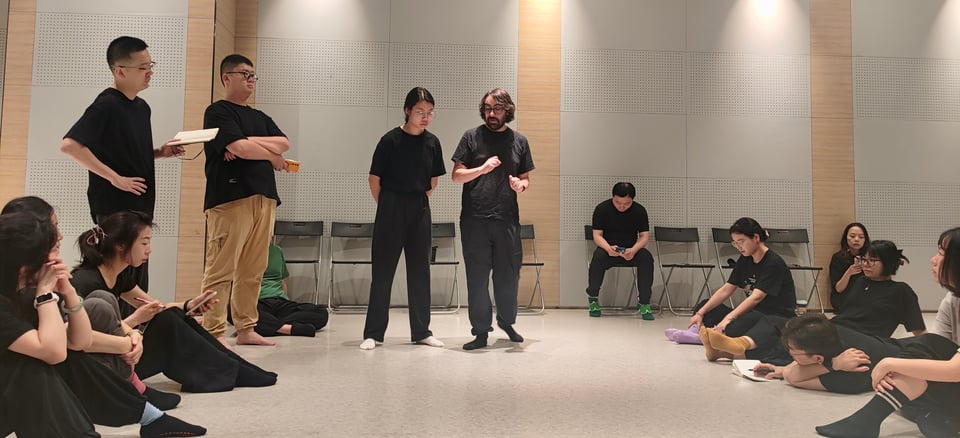
In a workshop setting, I always try to address the concept or behaviour, not the person. I try to be open with my statements to include every participant rather than exclude anyone.
When directing, sometimes I have to be specific with a person, and once I’ve locked it in, I go back to the wider approach. Of course, we need to be aware of the circumstances of the person we are giving feedback to. If individual feedback is due, check the atmosphere of the room to decide whether it might be better to deliver that feedback privately.
Timing is always important when you have to give feedback. I try not be spontaneous and think before doing it, which is a challenge for my neurospicy brain, that’s why I like side-coaching. If you have to side-coach, ask the participants if they are OK with that and respect their feelings. And, speaking of permission, in Playback Theatre it’s good to ask the teller if it’s OK we use their personal story to workshop.
Another thing I try to do is be specific with my feedback, which I’m confident I manage to do. Not so confident in finding an adequate tone for feedback. I must admit I struggle a bit with this for the sole reason that it’s difficult for me to tone things down when giving feedback about a topic I’m passionate about, so that might come across too straight forward. Again, thank you (?) autistic brain. When I’m co-facilitating, sometimes I get the feeling I’m the “bad cop”. However, with the due “compliment sandwich”, of course, I always try to give feedback from a place of honesty and love.
What’s your take on giving, or even receiving, feedback?
🎭 The Theatre bit
Thanks to my lack of stash of Valencian theatre, last week I had to rely on English theatre, ugh! I chose one of the early plays from Harold Pinter, The Dumb Waiter.
The Dumb Waiter is a play with only two characters (two hit-men waiting for instructions), so it’s always inspiring to see how the author manages not only the dialog, but a play which is a monoscene.
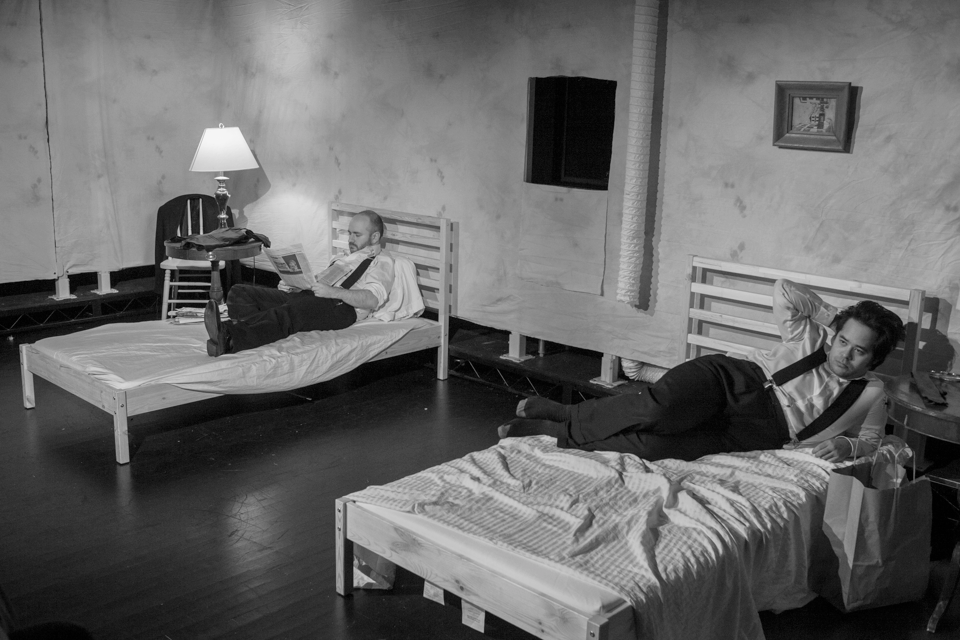
While I was immersed in it, I kept thinking that reading or watching this play could be very useful for improvisers to feel how it is to have a conversation well paced. With great rhythm too.
When we are locked into a location in a scene it’s good, every now and then, to get away from it using conversations that evoke something outside. Commenting the news or having conversations about past situations is helpful to give us a break from the here and now, which is also very important, don’t get me wrong.
I also like how Pinter, in this play, breaks the expectations of the audience with a dose of absurdity. In a world absurd enough, we need more witty absurdity.
📆 What is coming up
🇬🇧 8th of March - London Playback Presents: Come as you Are (London, UK). The Rosemary Branch Theatre welcomes back London Playback to reenact your stories. Here you can get your tickets.
🇩🇪 14th-15th of March - Playback Theatre Level 2 Intensive (Berlin, Germany). I’m going the capital of Germany to offering a two days intensive. Looking forward to it. If you are around check it out.
🇩🇪 21th-22nd of March - Playback Theatre Level 2 Intensive (Hamburg, Germany). And also, I’ll wave the Winter goodbye while offering the same intensive in Hamburg.
🇬🇧 3rd to 6th of April - Playback Theatre Core Training Intensive (London, UK). I´ll be co-running, with London Playback, a core training intensive during the easter weekend. A perfect oportunity to learn Playback Theatre from ground level. Get on the waiting list.
📚 🎮 🎥 📺 The geeky dessert
It’s been already 40 years since The Legend of Zelda was published, as from last week and I just want to send a nod to a franchise that has given me so many good moments.

I must admit, I haven’t finished every single Zelda game. To be honest, I caught up when I had my Nintendo 3DS and played Ocarina of Time, A Link to the Past (my favourite) and A Link Between Worlds.
Of course I absolutely adored Link’s Awakening, Breath of the Wild and Tears of the Kingdom on my Nintendo Switch. I hope to fill the gaps eventually, hopefully we see re-releases of Wind Waker (currently playing on Switch 2) and Twilight Princess.
Meanwhile, happy birthday Link and Zelda!
📨 That’s all for now
Thanks for reading Playing Back an Improvised Life, a newsletter by Ferran Luengo.
If you like it, spread the voice and share with someone who you think might enjoy it.
If you want to keep in touch, feel free to follow me on instagram (@luenkun).
Want to work with me or start a conversation? email me 😀
Want to support me? You can do it through my Ko-fi page

Ferran Luengo AI Disclaimer: Since English is not my first language, I may have used AI tools to proofread the text, limiting their use to grammar only. Everything in this newsletter has been written by me
Add a comment: