
A Year of Explosivity
2026-05-13
or, “a political ecology of thermodynamics” 🥵
🎂
Explosivity turned a year old (on April Fool’s Day)!
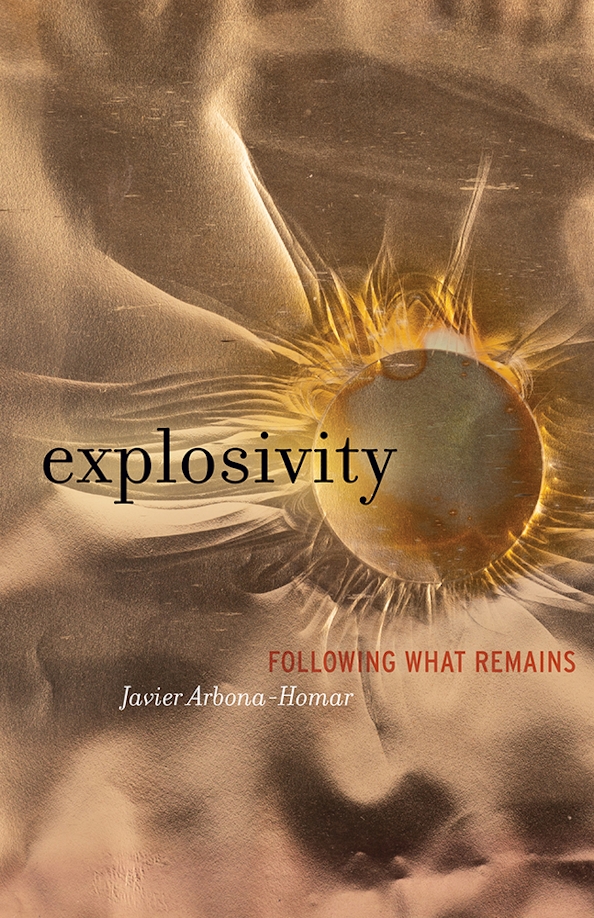
If this book is new to you, Explosivity: Following What Remains focuses on five major cases of historical explosions (from the 1860s to the 2010s) across the San Francisco Bay Area region in California, marking a period of global transition from gun powder to so-called high explosives. The text spans five main, collagist chapters that discuss these explosive moments in episodic fragments (remains of another sort) and bookended by a field-outlining preface, a theoretical introduction, and a methodological conclusion on archival ethics and artistically following the mobilities of remains — remains of all sorts, from the material to the narrated.
The cases go from a little-known 1866 nitroglycerin blast in downtown San Francisco all the way to a cannon blasting an adjacent residential subdivision during a Mythbusters’ television production on a police bombing range. But more than the additive character of the many explosive moments, the book was a way of developing a somewhat cohesive vocabulary that people could find useful and applicable in any geographic context. Also, it’s an explanation of why these (and many, many more explosions told in shorter vignettes) kept, or keep, happening.
Explosivity began as my Geography dissertation about the 1944 Port Chicago explosion (near Martinez, CA) and subsequent wildcat strike (Vallejo) against segregated munitions loading. What remains from Port Chicago inspired lingering questions about historic preservation, care of remains, and architectural memorials and landscapes that demanded broader treatment in book form; a difficult birthing process that required additional research, some of which I took on during a sabbatical at UCHRI in Irvine.
In addition, explosivity asks who? gets bombed; answers include racialized Chinese explosives workers, Black munition loaders in World War II, and later, and radical environmental activists. How do these events connect to a larger force of volatile exposures, their underlying toxicities, and the enduring dread and suspicion that remain? Explosivity helps to uncover and to name this ongoing exposure, but also the necessary force of forgetting. If this sounds valuable, in the links further down, you can listen or watch a couple of book presentations I did in the past year to learn more.
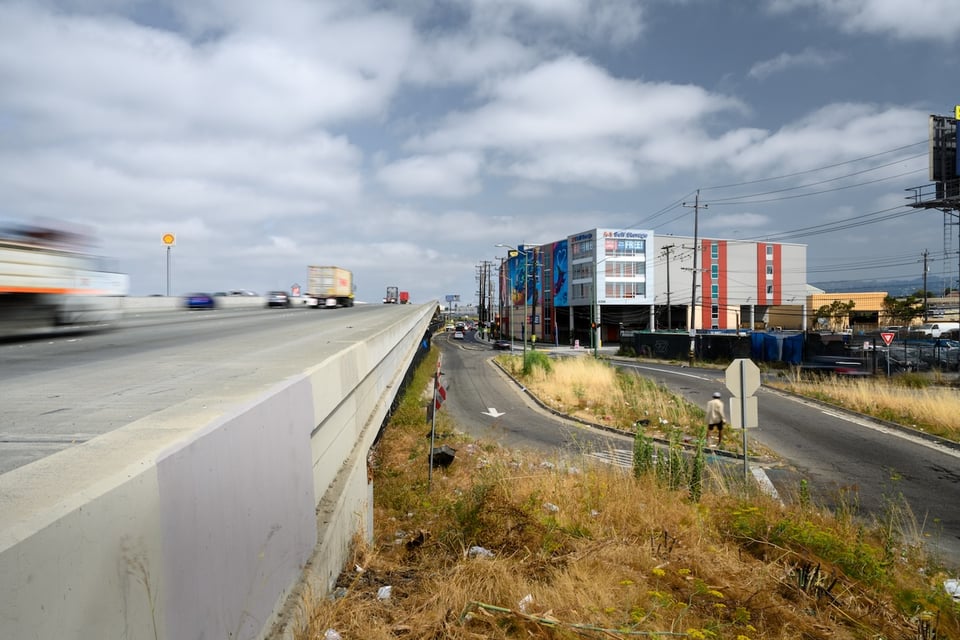
The book features striking landscape photography by Andrea Gaffney taken at case study sites. In this past year there have also been thought-provoking questions that came out of the book panels, public readings, and conversational events that are really exciting to keep researching into the future, and I’m working little by little on histories of dynamite’s material flows, logistics, and labor, among other writing projects. How can writing as practice repair that which has been pulverized?
The forthcoming issue of Environment and Planning D: Society and Space (volume 44, issue 3) features a book forum which builds on last year’s “author-meets-critics” panel at the American Association of Geographers (AAG) conference in Detroit (2025). The panel and book forum were convened by Desiree Valadares and Morgan Vickers, who write in the introduction to the forum (and I love this perfect encapsulation):
Explosivity reveals a political ecology of thermodynamics, in which the confluence of land, labor, racialization, and economic extraction pressurize, in what we might imagine as geographies of fragmentation.
In addition to the intro and editor’s letter in the issue, the insightful responses (in no particular order) come from Jenna Loyd, Austin Zeiderman, Kian Goh, and Peter Hudson, who all brought insights and questions I’ll continue to think about for a long time to come.
In my own response to readers, I wanted to take up the question about insurgent opposition to explosive power and explosivity (by piling on, with more explosions). I’m grateful to have had a chance to provide a kind of postscript to the book that was necessary, it seemed, and which lets me discuss why resist the capitalist imperatives for chemical combustion (and my sincere thanks to all the conveners, editors, critics, and staff who pulled together this forum). I argue that:
Drawing freely available nitrogen was a technical and economic fix for nineteenth century shortages of guano, after vast sums and effort were spent to take it, and the lives of people collecting it. But as an updated Marx can point us to, chemistry shortens necessary labor time, and thus reorders labor and social relations themselves (see Walker, 2016). Undoing explosivity leads back to undoing a century of colonialism in the 1800s of the deadly, destructive path of guano harvest and trade, by extension. In the long run, a radical politics of care and living must confront the capitalist imperative for chemically driven upheavals, not just seize upon these, however magical, seductive, and sensational chemistry may seem (see Huber in Romero et al., 2017: pp. 165–166).
If you require access and are behind a paywall, please let me know and I’d be happy to send a copy. Last year, for the curious, I had a book launch with the good pals at Shaping S.F. at the Quezada Center in the Mission—it’s up on the Internet Archive. And among other talks this past year, I presented Explosivity remotely (thank you to the FAA shutdown), broadcasting live to Columbia GSAPP and the Lectures in Planning Studies series; they put it up on YT:
Back over the course of last summer, posted in October, I also had the opportunity to have an extended book conversation with Emily Mitchell Eaton, author of the excellent New Destinations of Empire: Mobilities, Racial Geographies, and Citizenship in the Transpacific United States (2024) at The Abusable Past, online venue of Radical History Review. We wrote at length about mobilities, radical and decolonial methodologies, and geographic imaginaries. Read it here…
Shiloh Krupar wrote a lit review on “racial weathering” about “current scholarship and diverse case studies on weaponized weathering and violent climatizations, followed by breathing and storytelling to highlight abolitionist/decolonial responses,” stating that “following what remains” methods of explosivity, “vindicate the dead from cultural “memorycide” and the constant re-weathering of economic extraction.”
These were just some of the rewarding events this past year, but I also had live and virtual conversations with authors and students; it was great! And another podcast or two might yet be in store, plus maybe a panel more here and there… Stay tuned.
Last thing or two … I wanted to write more about Rohini Devasher’s work that’s featured on the cover and teaches me so much about registering explosivity, but this got long, so I’ll save it perhaps for a separate number. Some might be wondering if I’ll send a lot of updates on this platform; probably not!! Maybe once in a while ~ perhaps once or twice a year(??). And it’s fine to unsubscribe if it’s bothersome. ¡Maybe also sometimes en español! Thanks for reading.
Best regards.
P.S.
To order Explosivity, click to buy from the press. Or from EB Book Sellers. To order in Europe/UK use this link. To find in a library, WorldCat can help. And/or ask a librarian to order it; here is locating info from the LOC.
Contact me for any Qs and comments!
Don't miss what's next. Subscribe to Geographies of Explosivity: