The Ed's Up - A special Galápagos photo essay
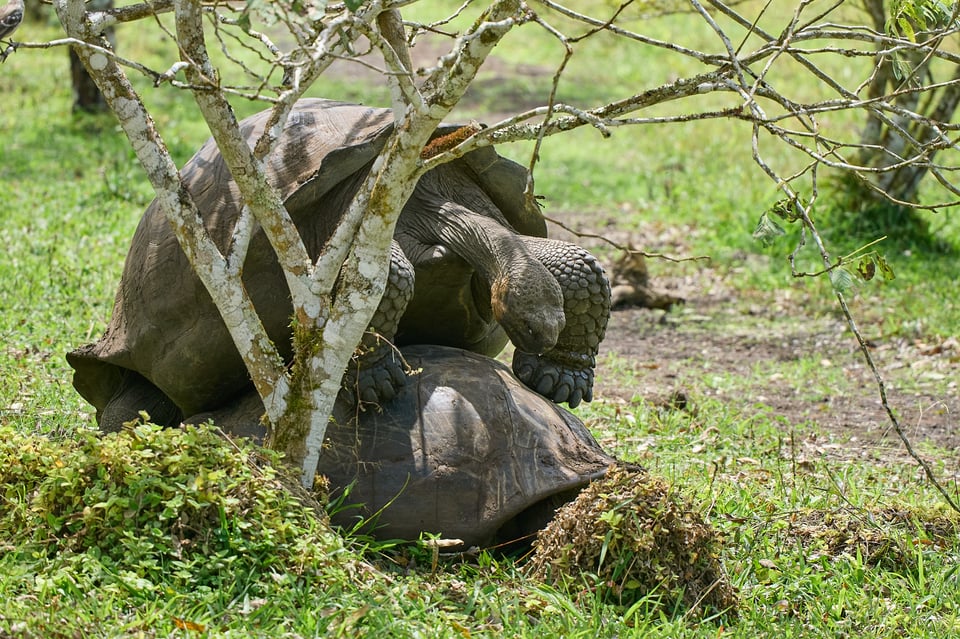
Five days into our trip through the Galápagos, I was on the island of Santa Cruz watching a giant tortoise mount another… backwards. He made breathy grunting noises while gamely thrusting into the head opening of the female’s shell, seemingly unaware that this is not how you make more giant tortoises. Our group of 30 birders and nature enthusiasts took our time to watch, chuckle over, and photograph the proceedings. Then, Juan Carlos Naranjo, one of our naturalist guides, called out from further up the trail: “I think this is a woodpecker finch.” And for neither the first nor last time during the week, I started running.
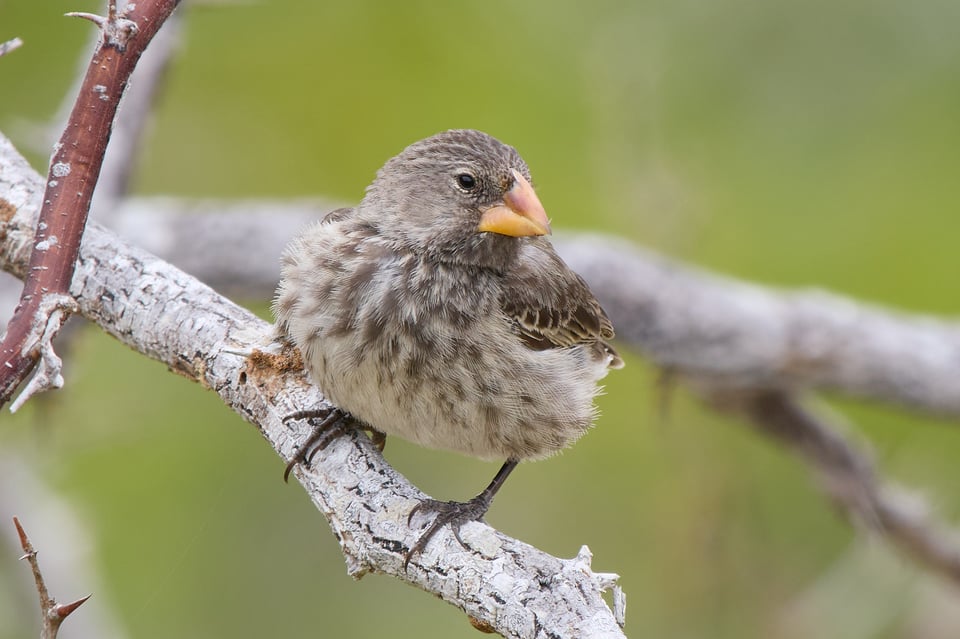
The Galápagos “finches”—they’re really tanagers—are icons of evolution. They descended from a single common ancestor who flew over from the mainland a few million years ago, and diversified into at least 17 recognized species. Telling these apart takes a little practice, and often involves gauging the size and shape of the birds’ bills. Misidentification is easy: Even some of the pictures in the Merlin app are of the wrong species. But the woodpecker finch, which is the one I most wanted to find, can be identified through actions alone. As soon as I saw one, I knew that I was looking at the right bird.
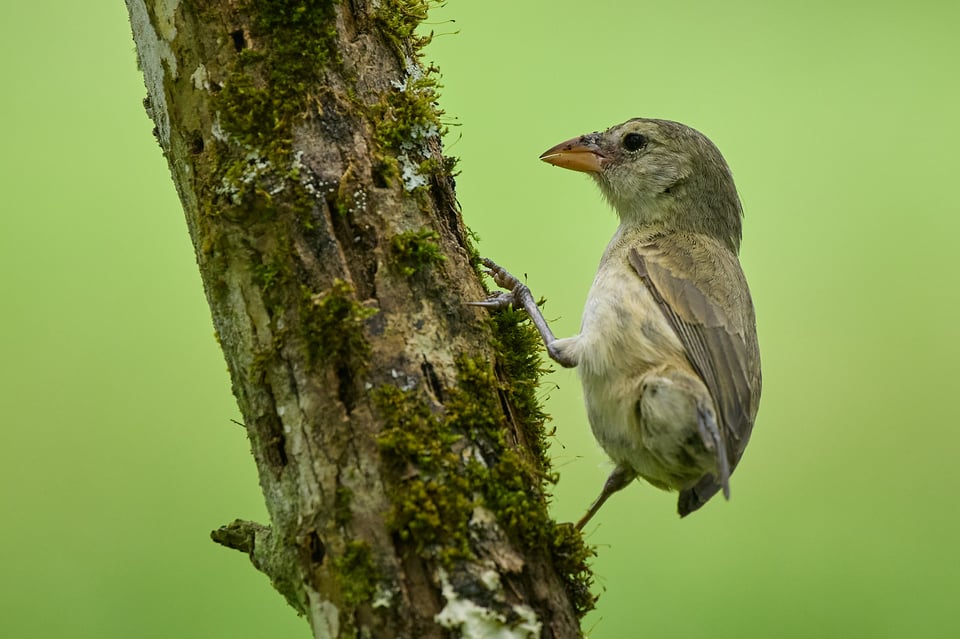
In front of me, the finch crept up the trunk of a small tree, peered into lichen-covered crevices, pulled off chunks of bark, and occasionally pecked at the wood like a… well, you know. We never saw the bird performing their best trick—using a twig or cactus spine as an insect-picking tool—but it didn’t matter. No other species on these islands behaves in this way—which is the point. Here, in a place with no nuthatches, creepers, or woodpeckers, a tanager adapted to fill the vacancies that those birds usually occupy. The woodpecker finch beautifully illustrates why the Galápagos has become synonymous with evolution’s boundless creativity.
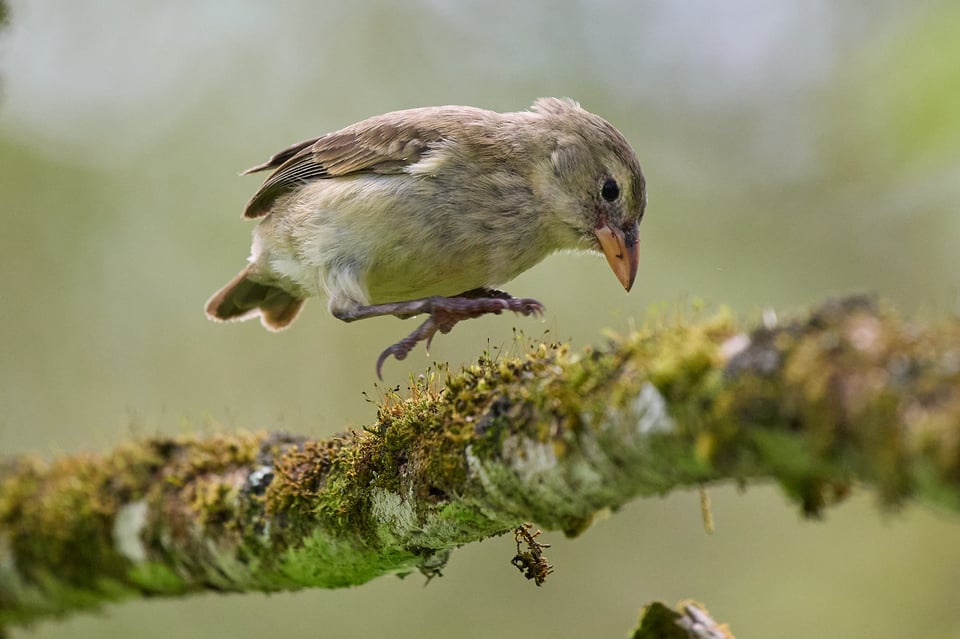
And our particular finch also illustrated why these islands are perhaps the greatest wildlife destination on the planet. Galápagos animals are threatened by very few predators, and have consequently become absurdly tame. They’re simply not bothered by human presence. Our finch, for example, hopped about an eye-level branch, about 12 feet away from us. Every single member of our party got a clear, prolonged, unobstructed view. We barely needed binoculars. We could just watch, eyes naked, smiles huge.
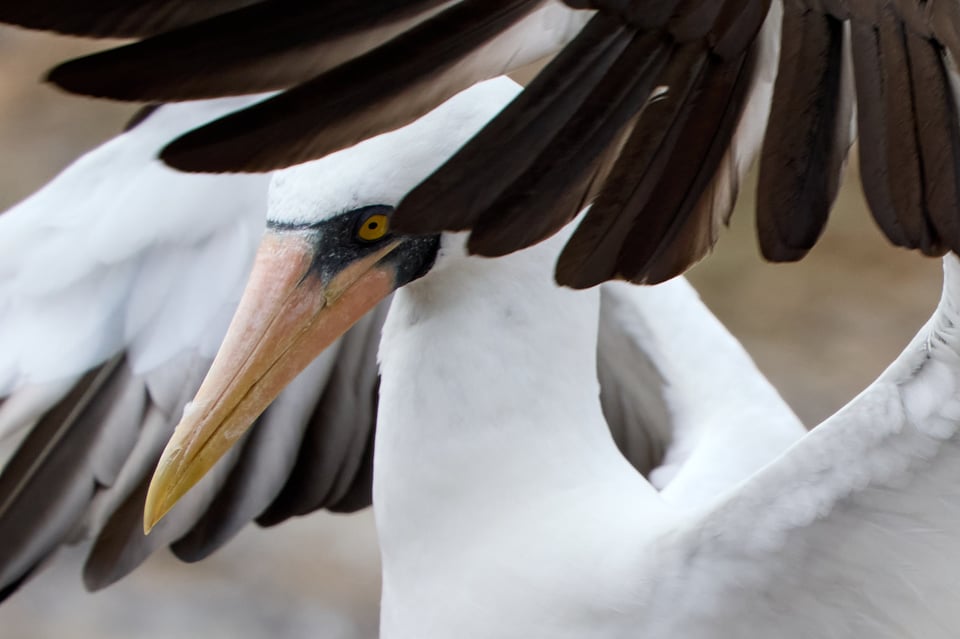
Our week-long trip through the Galápagos was full of such moments. Often, my telephoto lens was a liability, and I had to awkwardly back away because the animals I was trying to shoot were too close to focus on. We were all briefed to keep a respectful 6-foot gap between us and the animals, but that was often impossible because the creatures were lying across a trail and refused to move, or because they weren’t briefed about the 6-foot policy. On Genovesa, a Nazca booby waddled past my wife Liz and brushed a wing against her leg.
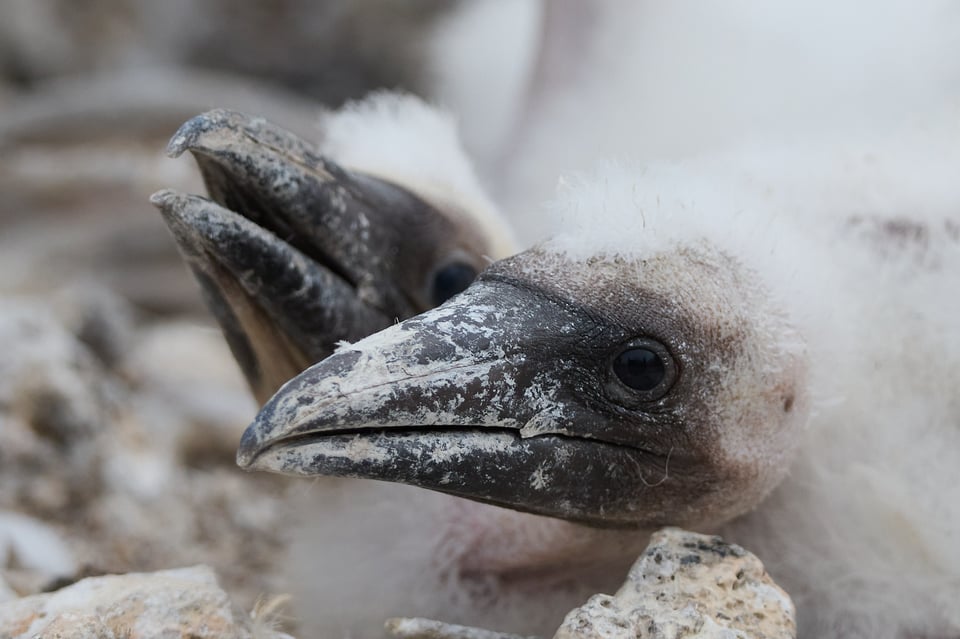
Another Nazca booby sat with two chicks next to the trail, completely unfazed as we marched past her.
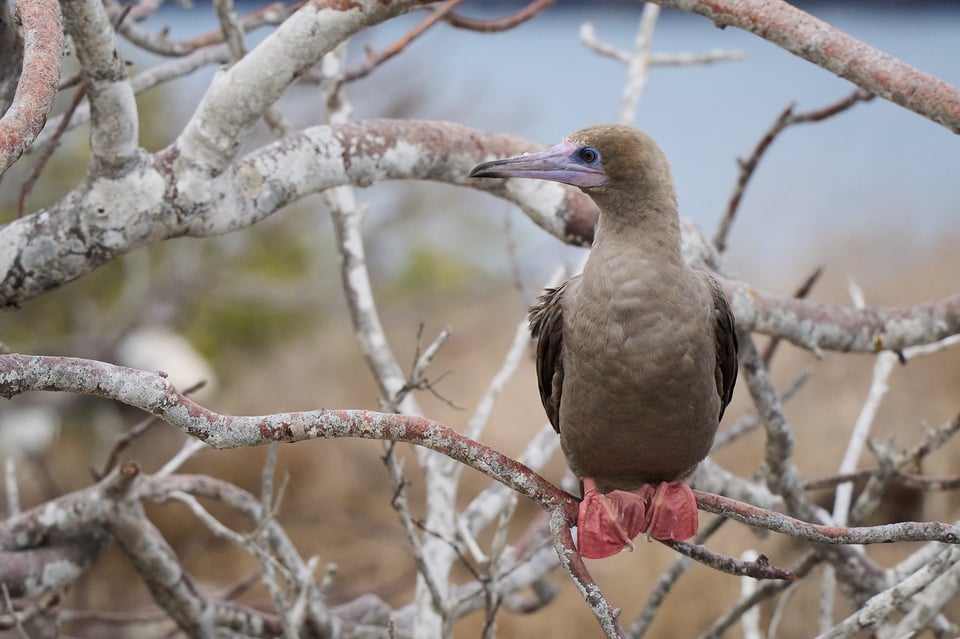
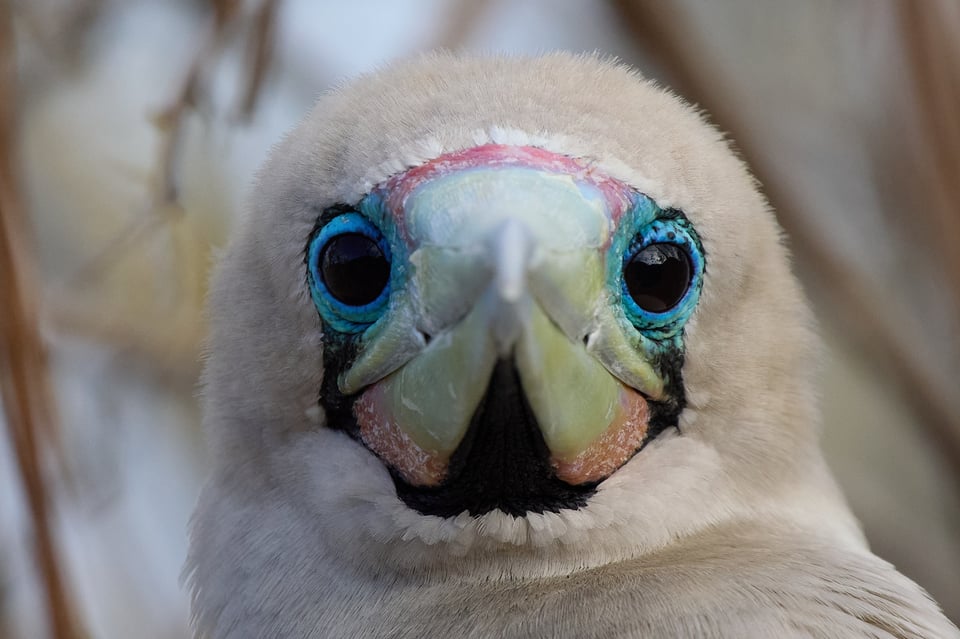
Elsewhere on Genovesa, my favorite island by some margin, hundreds of red-footed boobies lounged in the trees around us, giving us close-up looks at their coral-red feet and the anatomy that allows them, uniquely among boobies, to perch.
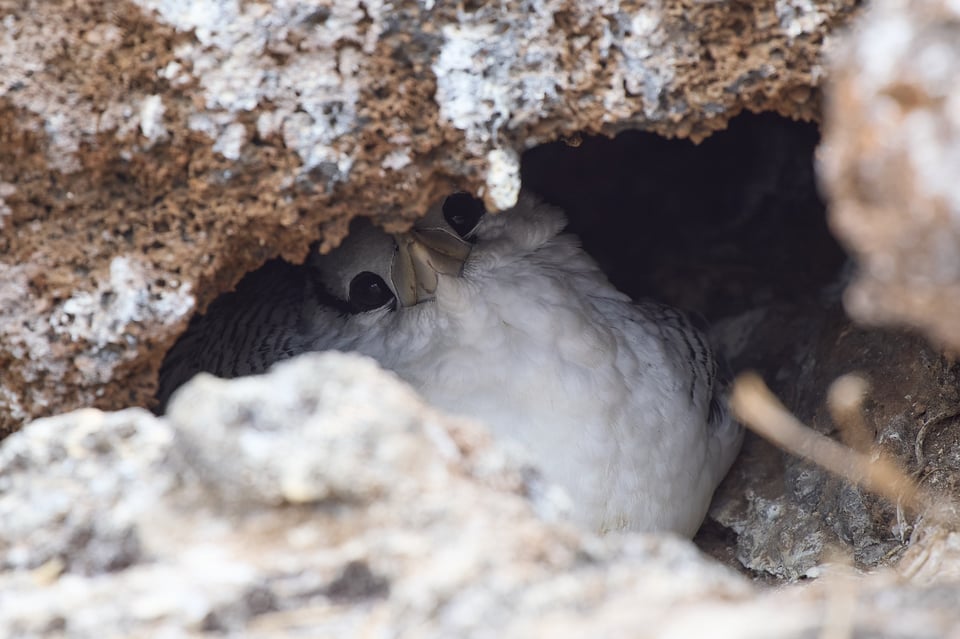
A baby red-billed tropicbird stared at us from the rocky crevice in which it was hidden.
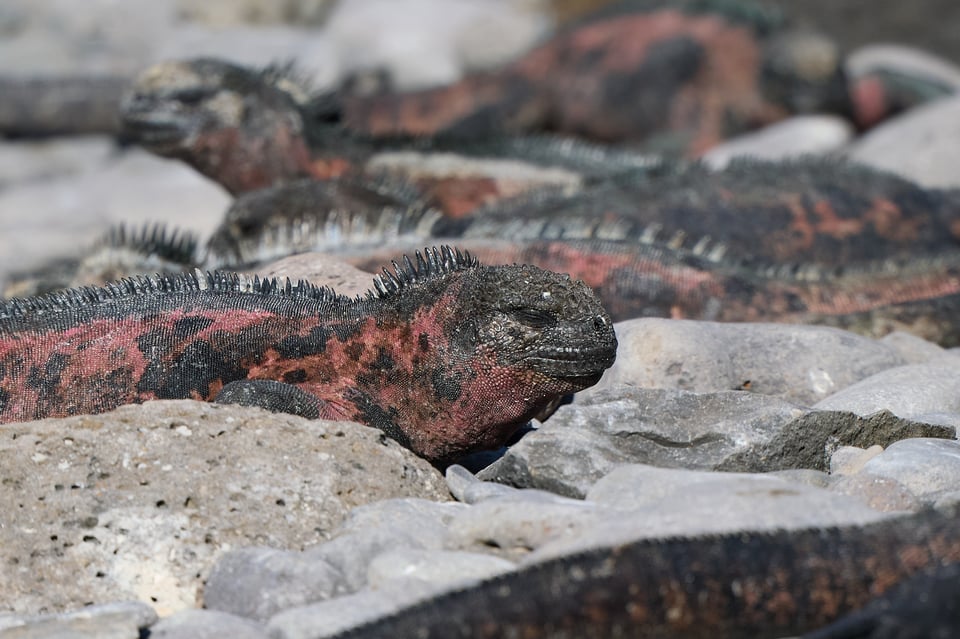
Marine iguanas were everywhere, and we had to repeateldy catch ourselves from treading on them by mistake.
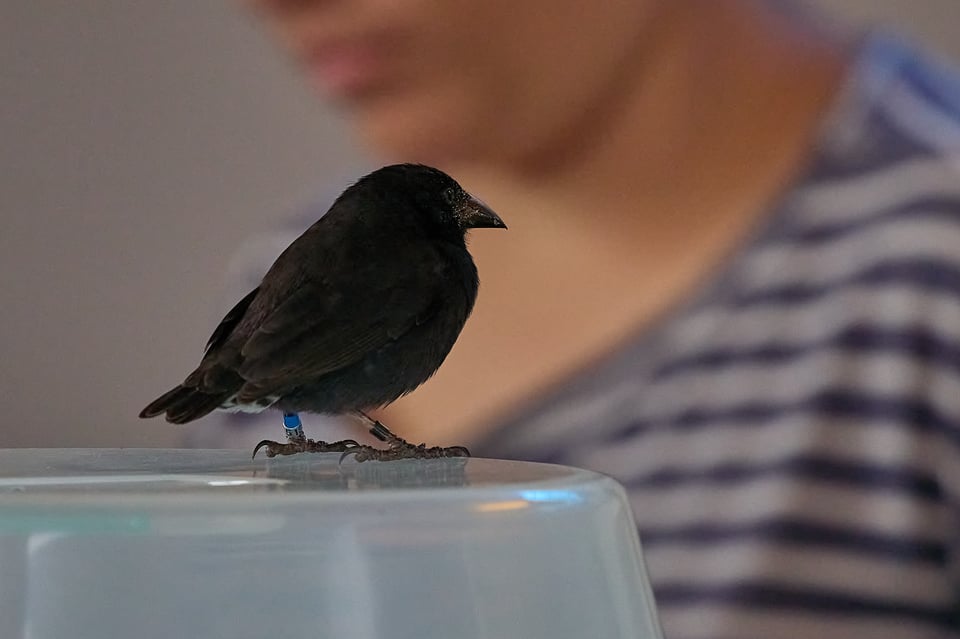
On Santa Cruz, after trying unsuccessfully to photograph a common cactus-finch flying past our heads, I found one of them perched at the snack counter of Charles Darwin Research Station.
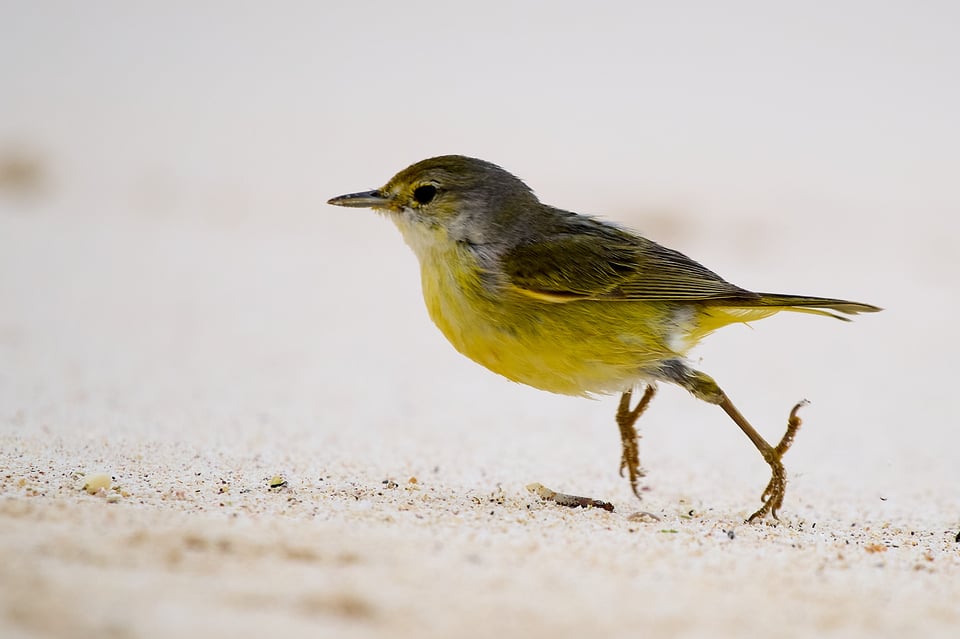
On San Cristobal, I had to lie flat on a beach to photograph a mangrove warbler scurrying between sea lions—a far cry from the neck-cramping, fast-twitch nature of normal warbler-watching.
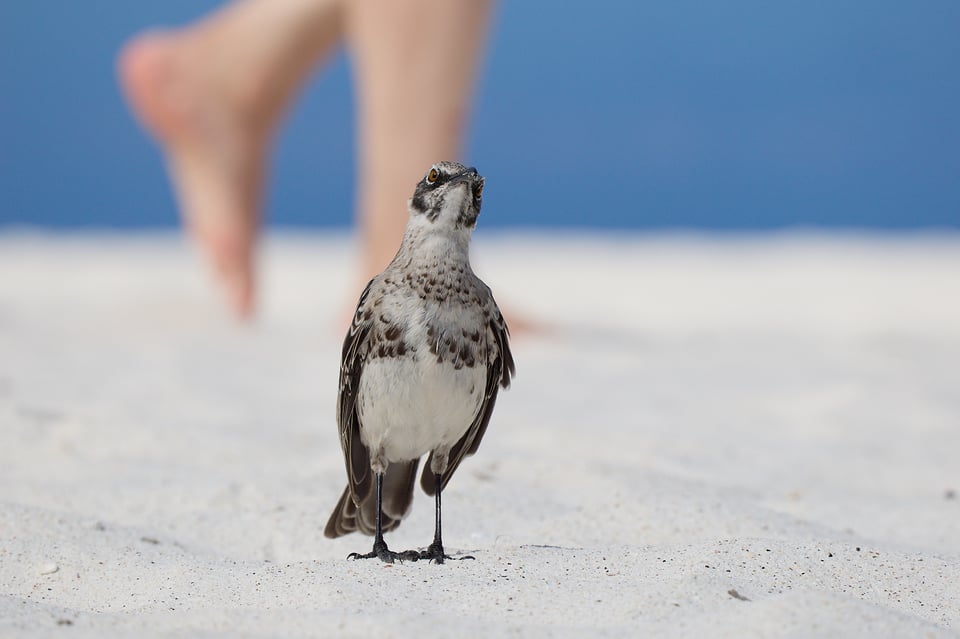
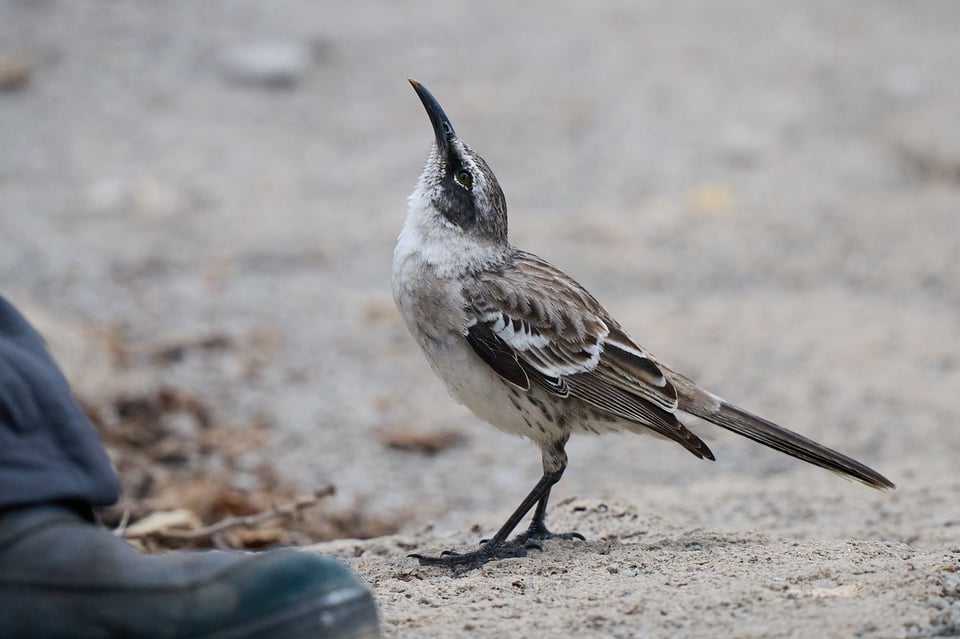
Many Española mockingbirds, who are the most inquisitive of the islands’ four mockingbirds, walked up to me as I was photographing them, cocking their heads with the same inquisitive gesture that my dog often makes.
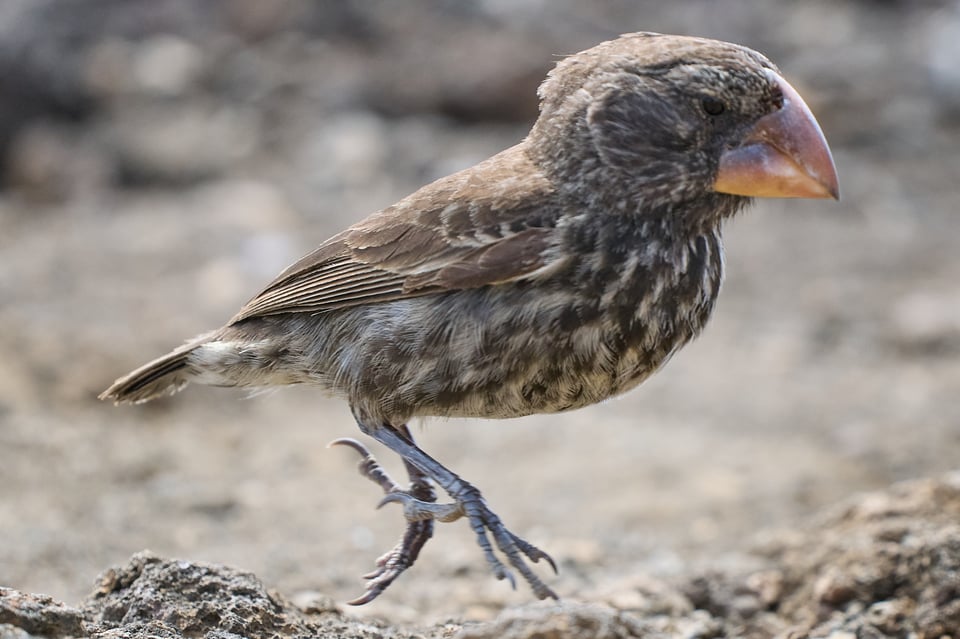
I often found myself just sitting down to observe the birds. On Genovesa, I knelt beside a large ground-finch—a kind of living Funko pop figurine—as they shoved a rock aside with their improbably large head and crunched through seeds that would crack my own molars.
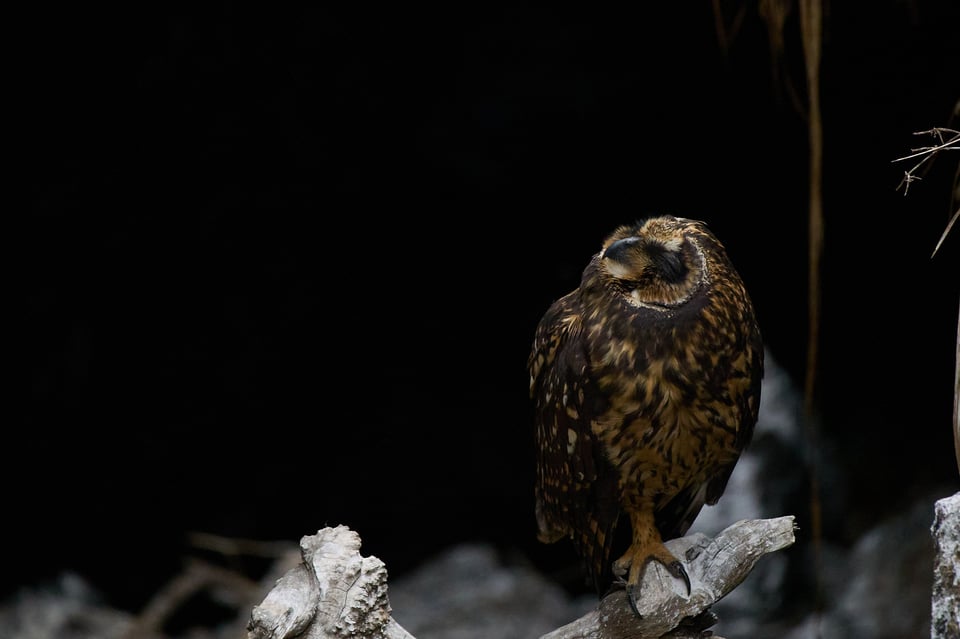
There are many places in the world with a greater diversity or abundance of wildlife. But there’s almost nowhere else where you can watch animals so closely or unhurriedly. Birding, at its best, can be intensely meditative, and birding in the Galápagos is especially so because it’s so damn relaxed. It offers a glimpse at what a biological utopia might look like, in which humans pose no danger to our fellow creatures, or vice versa.
It’s easy for birders to get swept up in lists, species counts, and the ongoing quest to find more lifers—species you’ve never seen before. But that’s absolutely not the point of visiting the Galápagos. On our week in the islands, we saw just 63 bird species, compared to 167 in just three subsequent days on the Ecuadorian mainland. But we got to see most of the Galápagos species repeatedly, at close range, in great lighting. We weren’t just checking them off a list based on a fleeting moment. We got to study them, linger with them, watch them behave, and get to know them as individuals.
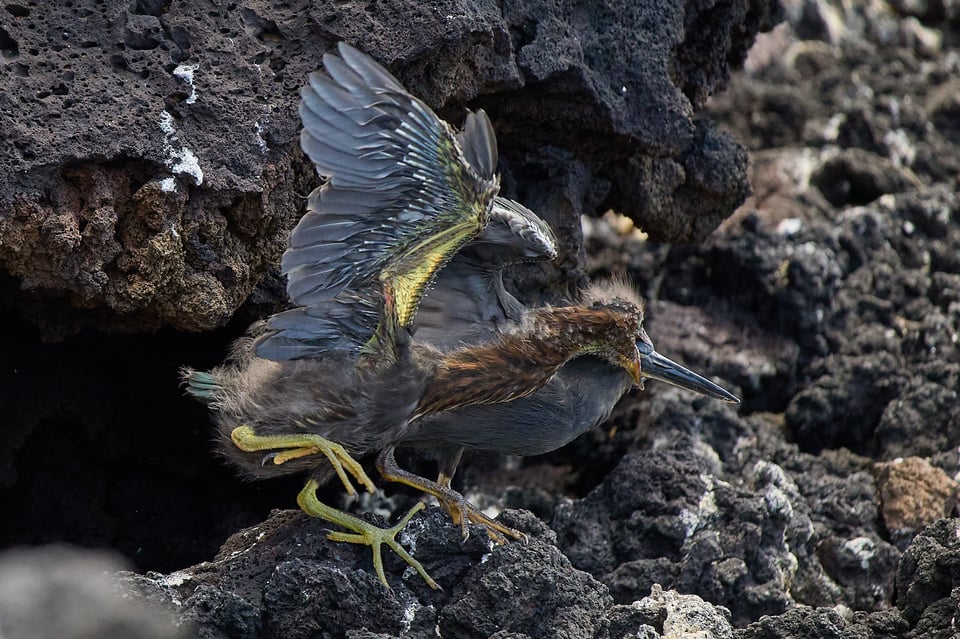
We watched a young lava heron clamp onto their parent’s beak in their quest for more food.
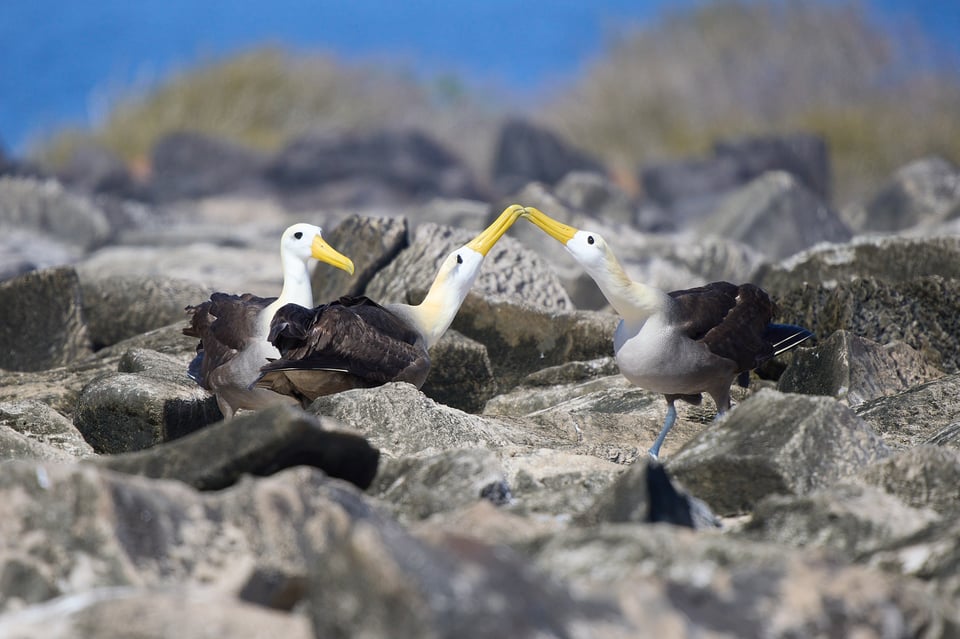
We watched waved albatrosses perform their delightful courtship dance involving head-tilts, wide-mouthed yawns, and bill-on-bill swordfights—and then we saw an albatross throuple perform the same rituals as a trio.
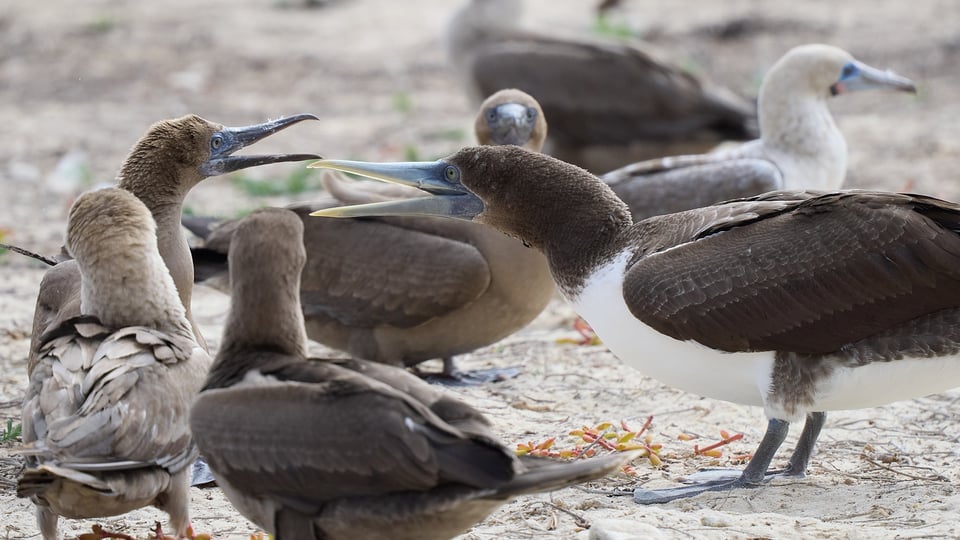
We watched a young Nazca booby bullying a schoolyard of red-footeds before their parents stepped in.
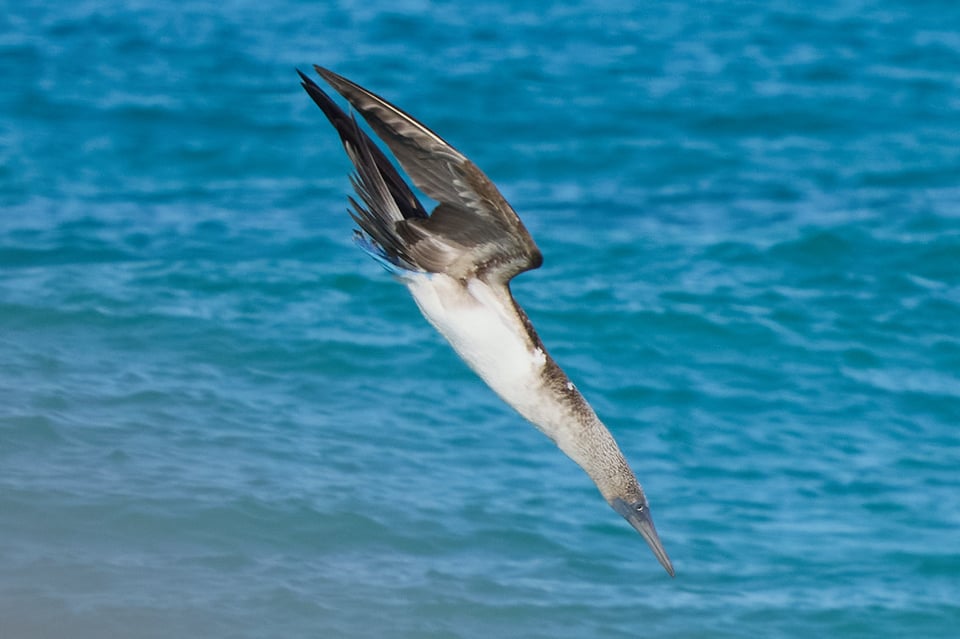
We stood on a beach and gawked as blue-footed boobies repeatedly plunge-dived into the shallow water, folding their wings back at the last moments to transform their bodies into living harpoons.
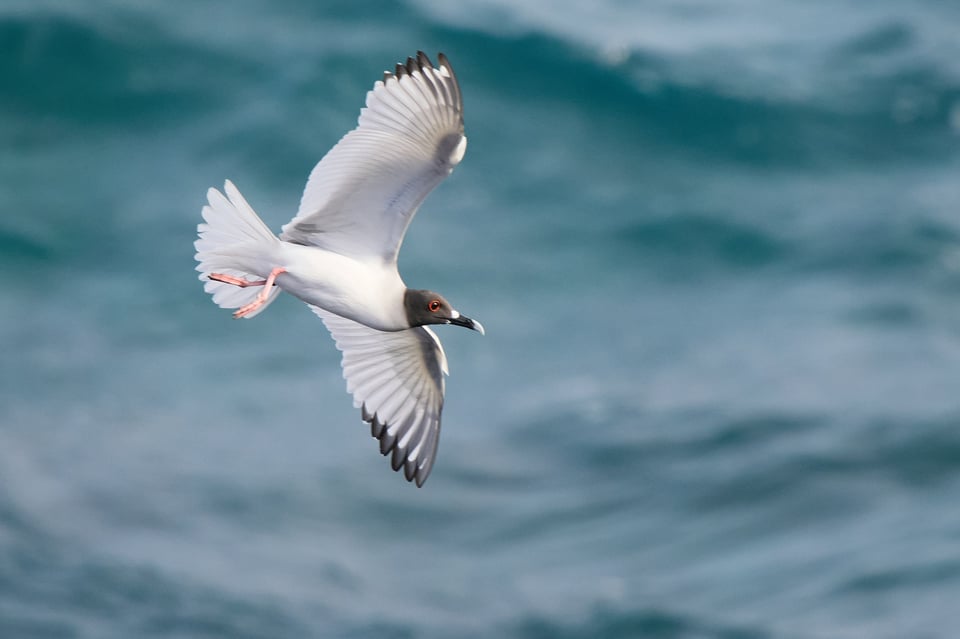
By night, we saw nocturnal swallow-tailed gulls haunting our boat like ghosts while Galápagos sharks sliced through the water below.
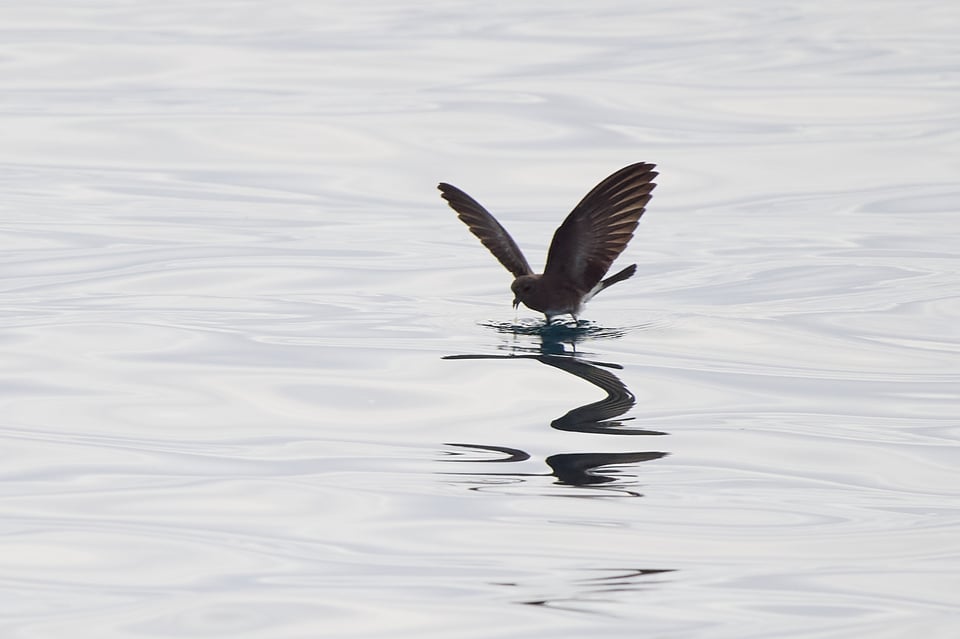
We saw Elliot’s storm-petrels dancing off the stern of our boat, tip-toeing in the glassy water to stir up food.
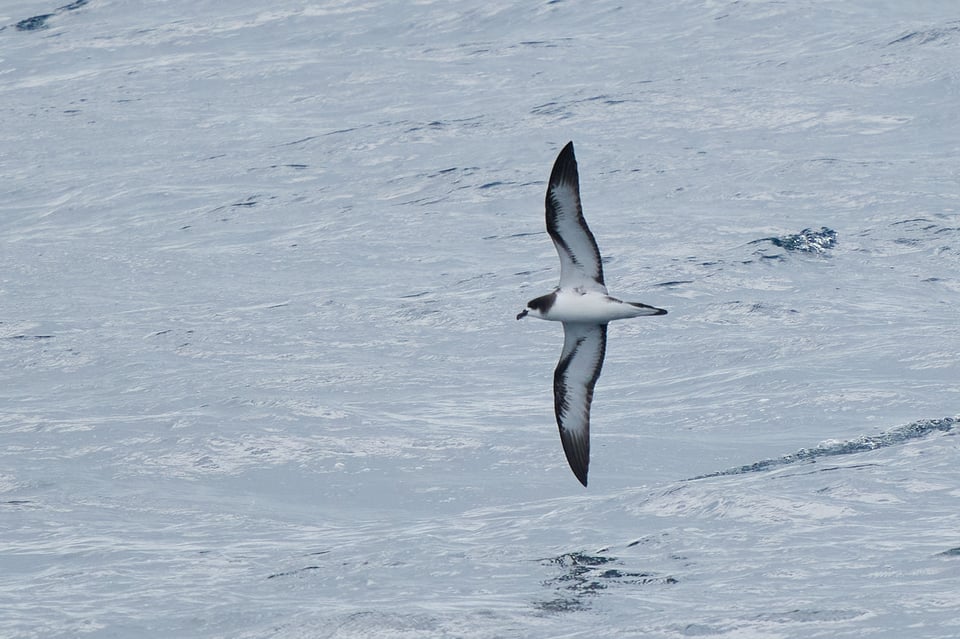
We watched Galápagos petrels effortlessly soaring in the distance, slicing over the waves with scarcely a wingbeat, and flashing like beacons whenever they banked to expose their white undersides.
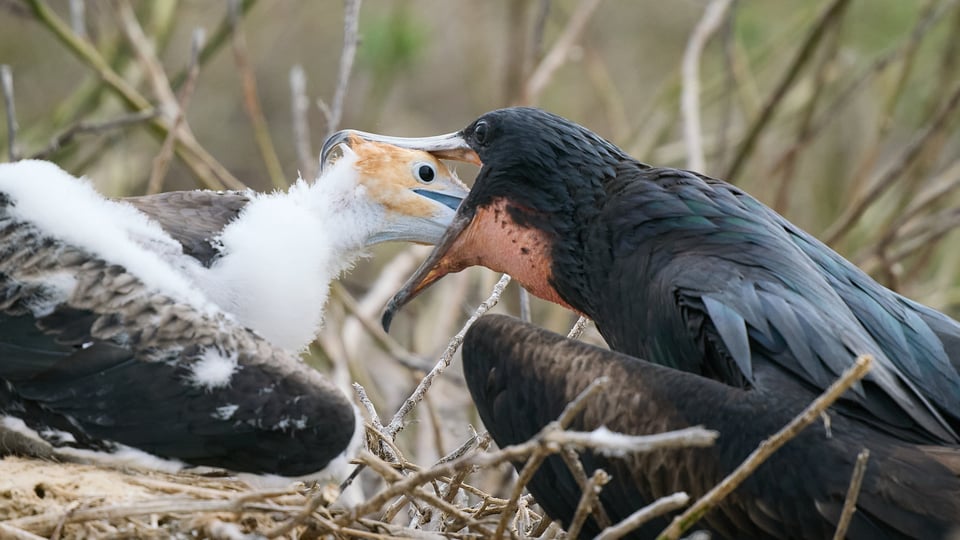
We watched great frigatebirds return to their nests to feed their young after a hard day of piracy; these birds harass other seabirds into relinquishing their catches.
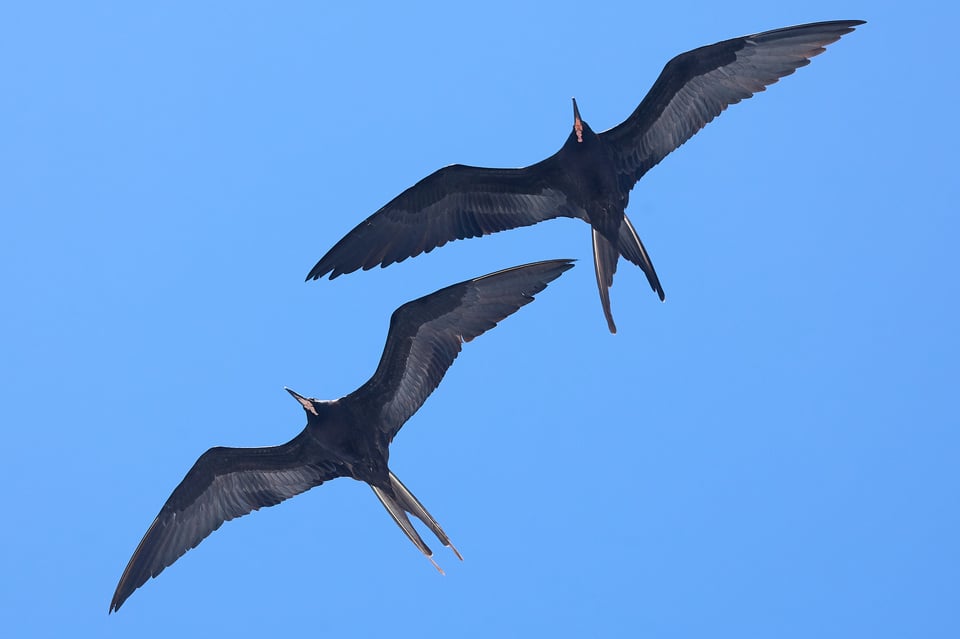
We saw magnificent frigatebirds every single day, on every island. But while the 1st magnificent frigatebird is a lifer, with all the excitement that entails, it’s the 189th individual who’ll really get you, as he soars right above the boat and lands on the roof, his extravagant tail-feathers dangling feet away from your head.
Birding has become so important to me because it involves actually participating in the natural world, instead of merely reading or writing about it in the abstract. The Galápagos is a place where participation just comes easily and naturally, and one that rewards the simple but radical act of being present and choosing to look. Whenever we gave the islands our attention, they paid us back in wonder.
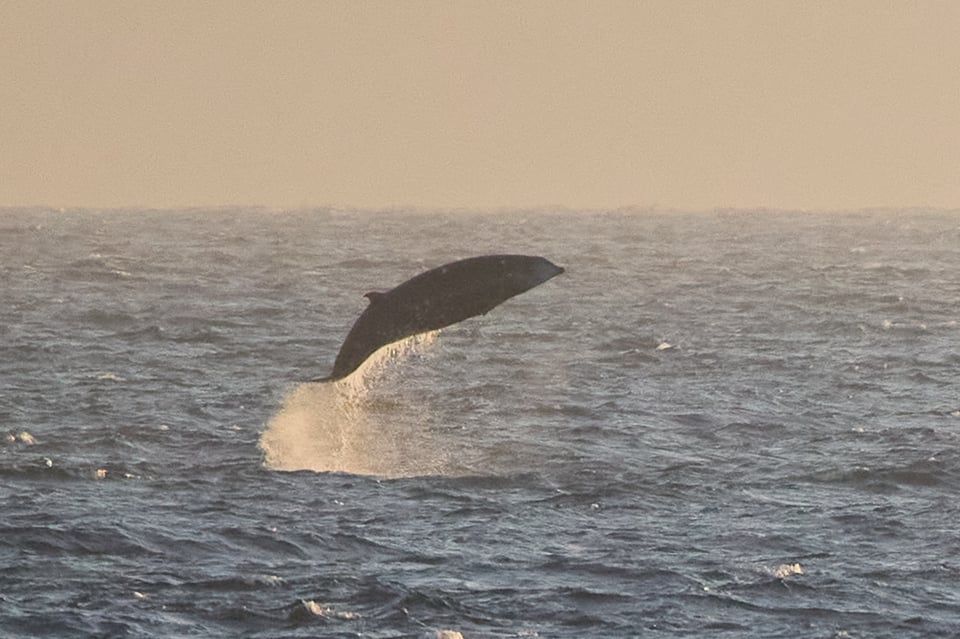
One of our guides, Michael O’Brien, was always on the top deck of our ship, looking for seabirds. (At the end of the trip, a frigatebird pooped on him and he seemed more delighted than repulsed, and annoyed only because changing his shirt meant several minutes not looking for seabirds.) On our fifth evening of these pelagic vigils, as the sun was setting, another guide, Louise Zemaitis, spotted a whale spout in the distance. Every eye went onto the horizon, and after a while, we saw a second spout. And then, a whale launched themselves fully out of the water, once, twice, at least three times. I managed to photograph the moment, which clearly revealed that we hadn’t seen a humpback or any of the usual suspects. We had, in fact, seen a goose-beaked whale (aka Cuvier’s beaked whale)—a species that dives deeper and longer than any other mammal and is very rarely seen. To see one breaching, much less clearly enough for an identifiable photograph, is mind-blowing.
I’m glad we were looking.