The Ed's Up - A Honduran Photo-Essay
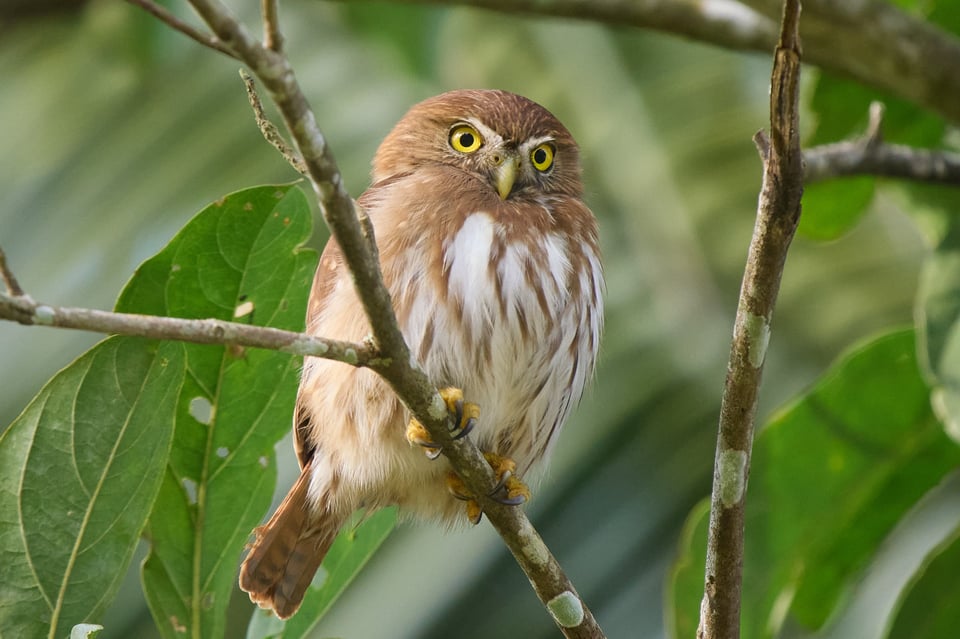
On the last of our ten days in Honduras, our frenetic group of birders is watching an equally frenetic flock of warblers when one of us, Karen Carpenter, spots an owl. It’s a ferruginous pygmy-owl. It’s… eating something!
That explains why the warblers are losing their mind. It also explains why we quickly follow suit. Owls are so special that finding one has an immediate magnetic effect. Our attention is instantly pulled away from whatever it was we were previously watching and towards the… towards the… wait, where are we meant to be looking? Even when our guide, Isis Castro, spots the owl and shines her laser pointer to the left of its position, I still can’t see anything bird-shaped. Words prove agonizingly unhelpful, as people gamely try to describe a specific constellation of branches and leaves in scene that consists entirely of branches and leaves. But then, I shift position by a few inches, and I find exactly the right window through several layers of foliage, and I finally see a tiny ball of rust-tinted feathers tearing away at an even tinier ball of feathers. And through that same narrow portal of greenery, a ferruginous pygmy-owl looks up and stares right at me.
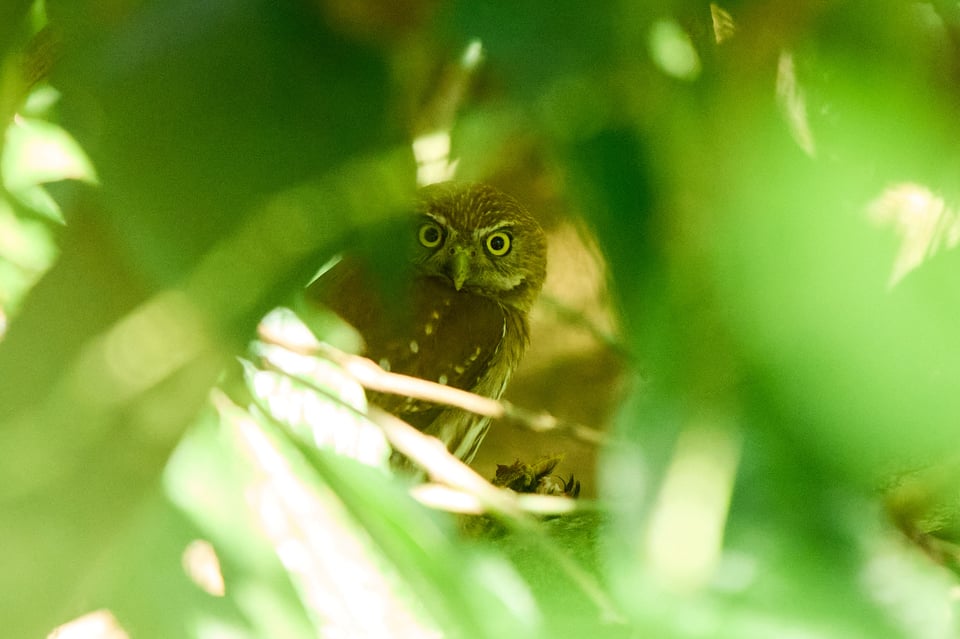
All birding is like this to a degree. You’re constantly repositioning yourself to get just the right angle on an animal that’s likely hidden or obscured. But in a Neotropical forest, the scenery is substantially more complex than what I’m used to, the potential for being obscured is far greater, and the viable sightlines are that much narrower. To help someone else find a bird, it simply isn’t enough to describe where it is; you often have to work out what they can see from where they’re standing, and maybe gently move them three feet to the right. When it doesn’t work, it’s enormously frustrating; when it does, it’s faintly magical.
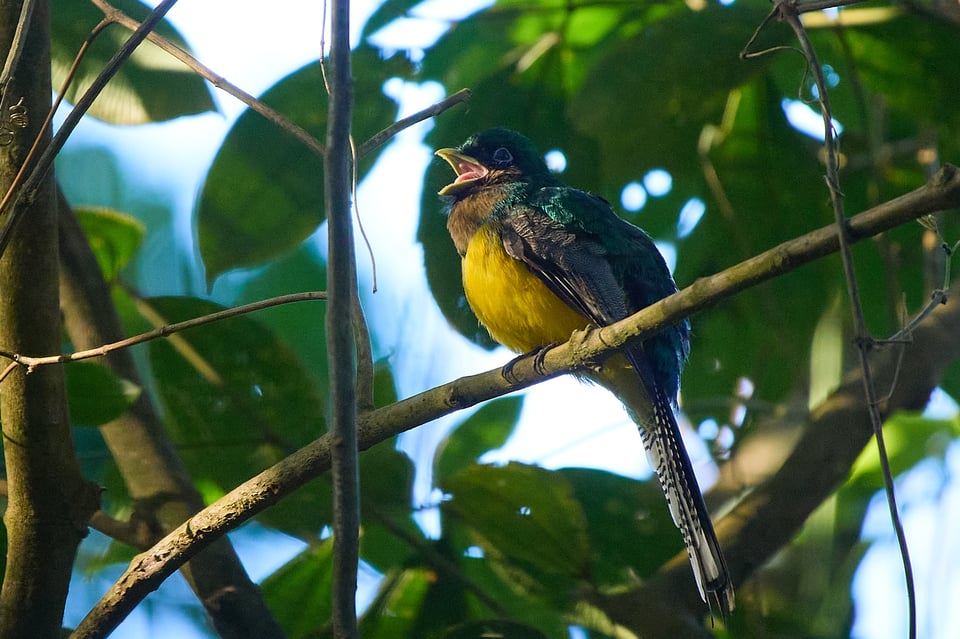
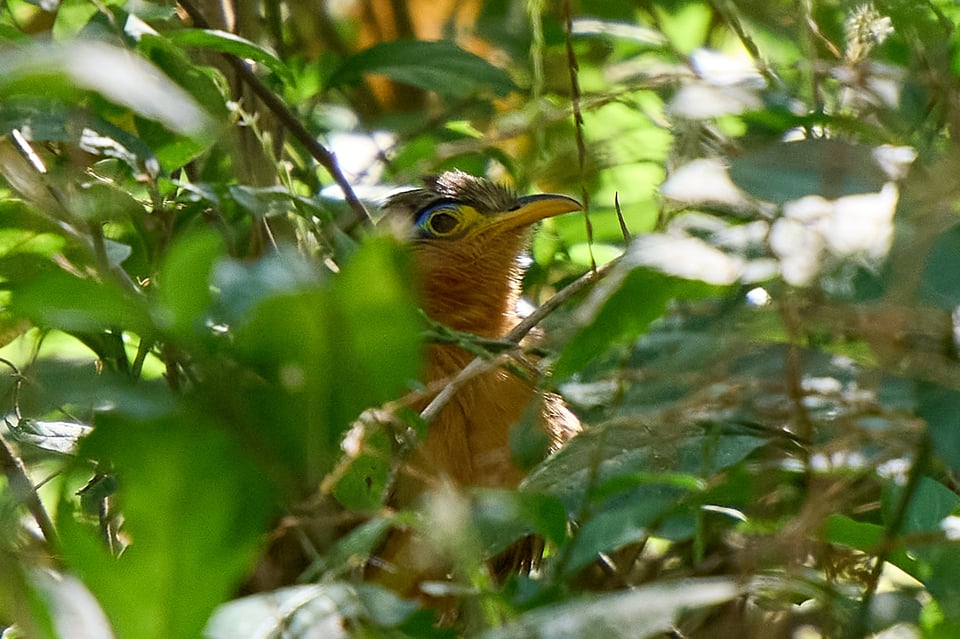
Birding is always about alignment—about going in the right place, being at the right time, and looking (or listening) in the right direction, so that your existence briefly connects with another animal’s. When alignment is harder to achieve, the resulting sense of connection feels that much more profound. If I wasn’t standing just right here, I wouldn’t be staring into the blue-and-gold eye of a lesser ground-cuckoo, paused motionlessly behind a thicket.
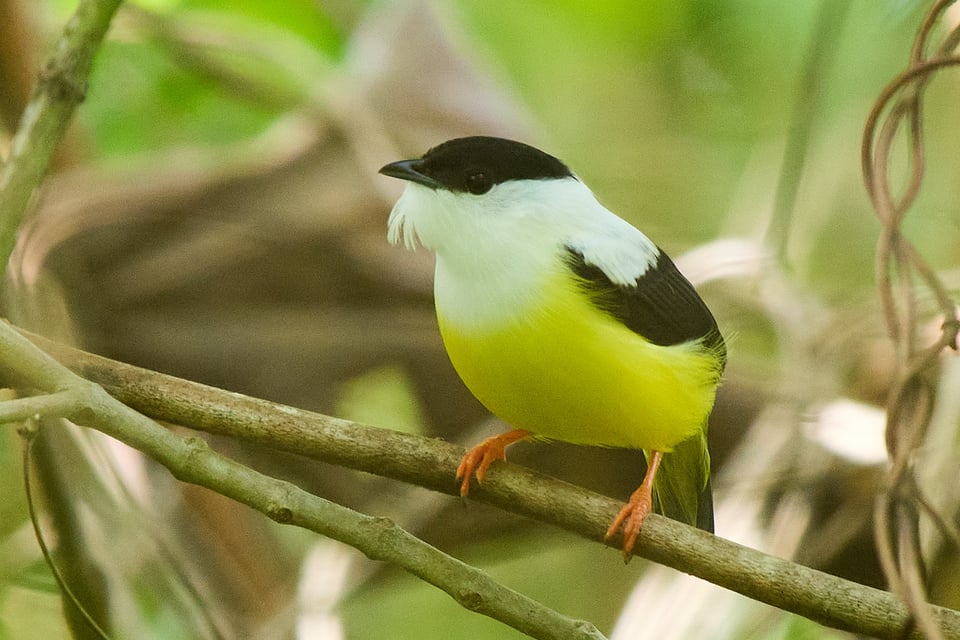
If my quads weren’t burning from holding a squat, I wouldn’t be watching male white-collared manakins flitting from branch to branch, dancing for a spectating female in their foliage-framed arena.
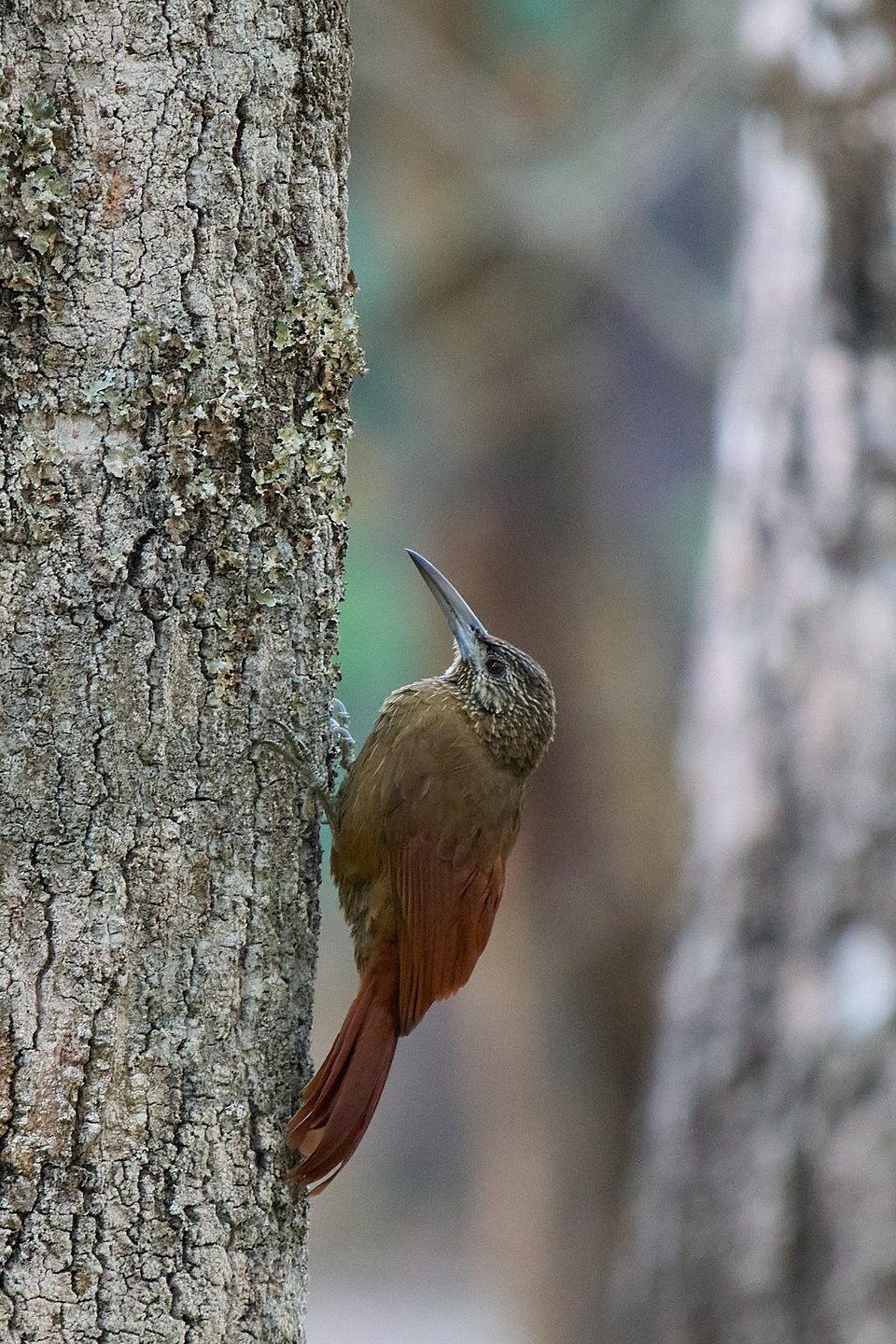
If I hadn’t sidled sideways, I wouldn’t be photographing a strong-billed woodcreeper shimmying up a tree.
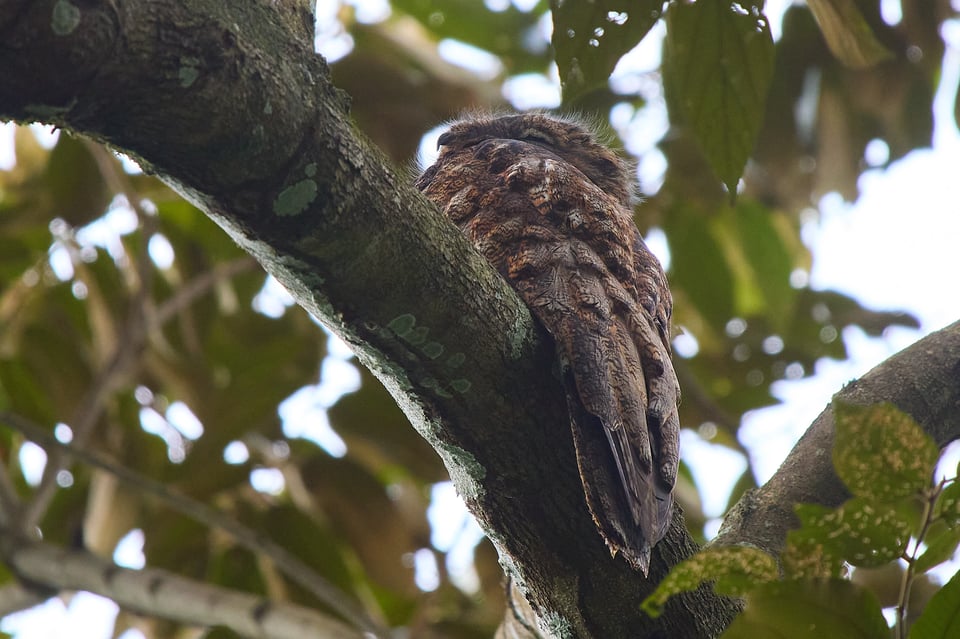
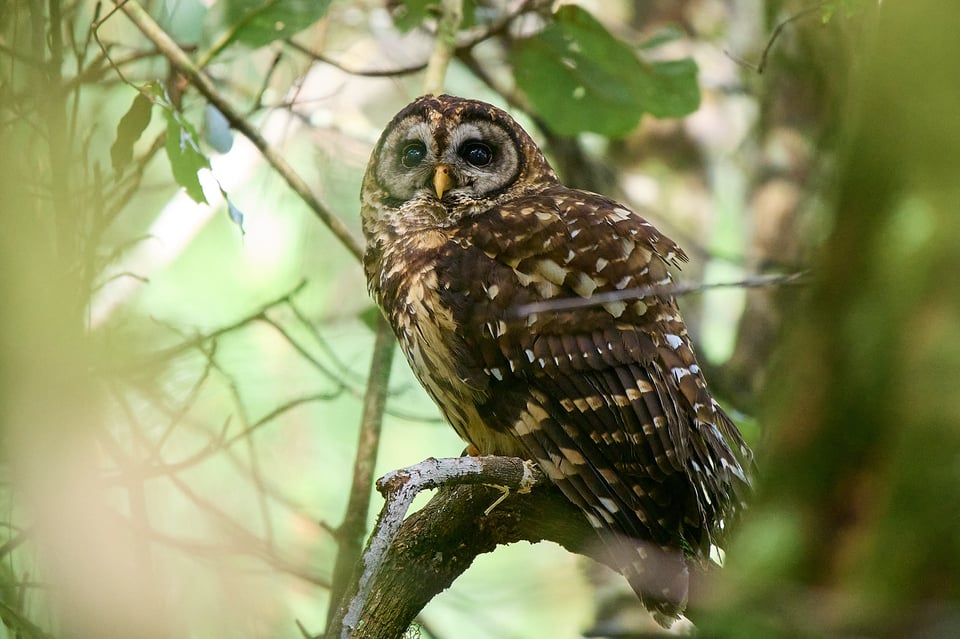
If I hadn’t scurried a little further down the track, I wouldn’t have a completely unobscured look at the magnificent face of a fulvous owl, with the entire universe seemingly reflected in its eyes.
The alignment challenge means that no single person can see everything, no matter how skilled or experienced they are. Ten of us went to Honduras together and everyone spotted something extraordinary because they just happened to be looking in exactly the right place. And there were many moments when even the ten of us were completely overwhelmed.
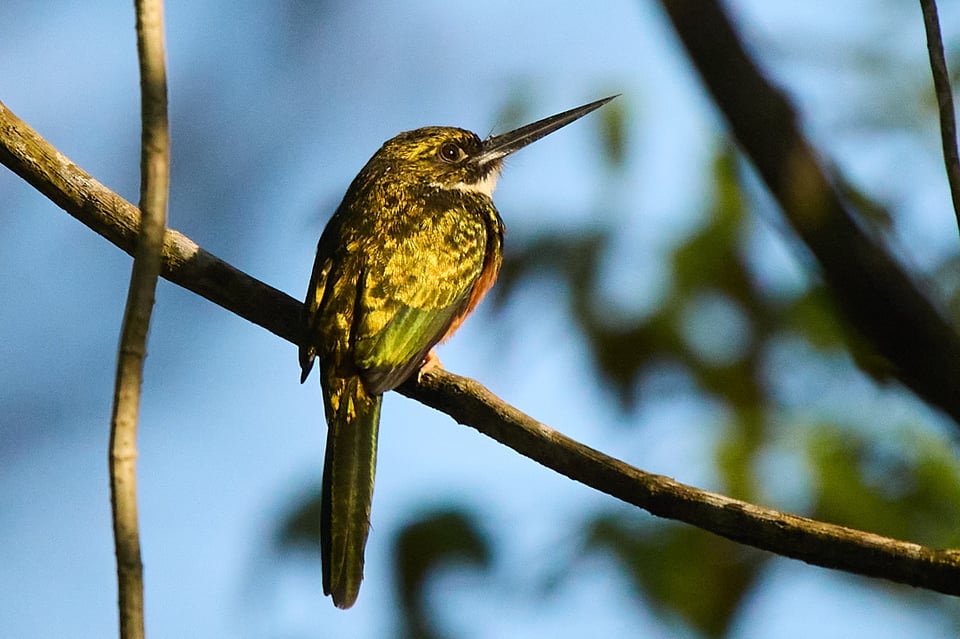
Birds often forage together in flocks comprising many species. In the Neotropics, these mixed feeding flocks can be so diverse and abundant that it feels like the entire field guide is streaming overhead. It’s utter chaos in the best way. You can spot the bird of your dreams only to have six people shout out the names of other dream-birds that are mere feet away. At its worst, a group of birders, can become a selfish scrum where everyone’s trying to fill their own lists or SD cards; at its best, as with ours, the group becomes a distributed and unified sensory network, collectively scanning the world and helping each other to find the riches within it.
Indeed, the collaborative nature of birding lay at the heart of our Honduran experience. Our phenomenal guide, Isis Castro, owner and co-founder of Choose Honduras, has spent years trying to build up the nation’s relatively young birding culture, and our time with her felt as much about capacity-building as it was about expanding a life list.
Isis organizes festivals to celebrate birds and to instill an ethic of environmental care among Hondurans. She reaches out to international experts like flycatcher guru Cin-Ty Lee, who convened the group for our particualr trip. She funnels donated equipment from visiting guests to locals who don’t have the resources to get their own; Karen, who found our hidden pygmy-owl, gave an old pair of binoculars to a young kid named Guillermo. She’s using her tours to train and pay Honduran guides, and to show them that there’s a growing market for their expertise. Ofelia Meza and 17-year-old Mattis Pagany each joined us for half of our trip each, and at least one other experienced local joined us at every major hotspot that we visited.
Honduras has all the makings of a premier ecotourism destination—despite what the U.S. State Department says, everywhere we went felt substantially safer than most major American cities—and I love Isis’s commitment to building that future collectively.
“Una golondrina no hace verano,” she tells me. One swift doesn’t make summer. “We need summer.”