Celebrating Spring with Sorrel!
Connecting human culture and ecological design: why common sorrel is the ultimate powerhouse for your food forest.
In permaculture, we often talk about working with nature, not against it.
In our region, spring is always a frantic race to work the land before the plants fully wake from their winter slumber. This year, the late-arriving warmth gave us a rare chance to focus on long-overdue structural projects.
Yet, you could tell nature was getting impatient with the slow-changing season!
Our asparagus patch is still shyly peeking out from its warm straw bed, and our pea plants, which usually thrive in the chill, lacked enthusiasm under the gray skies. I could only hope the pollinators hadn't decided to sleep in, because our fruit trees burst into full bloom despite the cold.
Even on the gloomiest spring days, that touch of pastel pink and white flowers in the landscape reminded me that spring was, indeed, on the way.
Regardless of how erratic the spring weather behaves, there is one plant that always shows up bright, early, and reliable in our food forest: our good old common sorrel patches. It is no wonder that sorrel is traditionally found in so many Eastern European spring recipes.
For this May (Beltane) edition, I want to introduce you to sorrel in the permaculture backyard.
I will share with you the story of Tamara and Julia and their special connection with sorrel. I will discuss why sorrel is a great perennial companion for your food forest, present four varieties you can grow, and show how to design with them.
The Human Thread: A Lesson in Resilience
To truly understand how to celebrate this plant, we have to look to cultures that have relied on its early emergence for generations.
Historically, Eastern Europe faced incredibly harsh, long winters where communities relied almost entirely on grains, root vegetables, cabbage, salted meats, and dried or fermented foods to survive. Because sorrel pushes through the frozen soil weeks before annual crops can even be planted, it provides the very first flush of fresh, living nutrition.
Packed with Vitamin C, iron, and antioxidants, eating sorrel was a literal medicinal tonic. It revitalized the immune system and cured the sluggishness of winter.
I imagine that, after months of eating heavy, dull winter starches, a burst of fresh, crispy green, sour leaves tasted like life returning to the kitchen! It is likely why sorrel became such an important plant in traditional Easter celebrations.
Although I have been growing sorrel in my garden for over 12 years, it is truly thanks to my Ukrainian friends, Tamara and Julia, that I learned to use this plant to its full potential.
For this couple of New Canadians living away from their homeland, the precious patch of common sorrel I gifted them a few years ago became a way to remind them of their home, family, and culture. The green leaves find their way into recipes of fresh salads, savoury sauces, dishes and the famous traditional Zeleny Borsch (Green Borsch).
When they harvest sorrel, they aren't just making dinner; they are carrying forward their family traditions and staying connected to this strong, ancient, and still very much alive Ukrainian sense of resilience.
Thanks to Tamara and Julia, I have also developed a new fondness for my garden sorrel and have now incorporated it into our own home diet and spring celebrations.
Traditional Sorrel Recipes
Here are two great, delicious traditional family spring recipes that they shared with me for this Seeding Stories Edition and that I had the chance to try in the last few weeks.
I invite you to give them a try and enjoy them too!
Recipe Tamara Sorrel Salad with Sour Cream and Eggs
This is one of those simple, comforting salads that tastes like spring — fresh, slightly tangy, and incredibly satisfying. It’s the kind of dish that doesn’t try too hard, yet always feels just right.

Recipe Julia Green Borscht with Sorrel (Spring Ukrainian Soup)
This soup tastes like the very first warm days after a long winter — fresh, vibrant, and full of life. Green borscht is not just a dish, it’s a feeling of home, where every spoon brings comfort and a quiet kind of joy.

Why It Belongs in Your Food Forest project
Now that you are curious about sorrel, you might be wondering how to add this plant to your own food forest guilds.
From a permaculture design perspective, sorrel (Rumex acetosa) is an absolute powerhouse. It requires almost zero inputs once established, thrives in our challenging clay soils, and steps up to fulfill multiple ecological functions just when the landscape needs it most.
Dynamic Accumulator: Sorrel sends down a deep taproot that penetrates heavy soils, mining nutrients and minerals from deep underground and concentrating them in its leaves. When the plant dies back, it mulches the surface with rich organic matter. It’s a fantastic asset, so plant it where nutrients are needed!
Early Ground Cover: Because it awakens in April, it quickly covers bare soil, protecting it from heavy spring rains and suppressing early annual weeds before they can take hold. Sorrel is remarkably well-behaved and will not aggressively spread via rhizomes, making it an excellent, disciplined choice for garden borders.
Insectary Support: If left to bolt in late summer, its tall seed heads provide excellent habitat and forage for beneficial predatory insects. On the other hand, deer and rabbits are not usually fond of the plant due to its acidic taste.
The Varieties to Choose From
Depending on your garden's niches, you might want to explore a few different types:
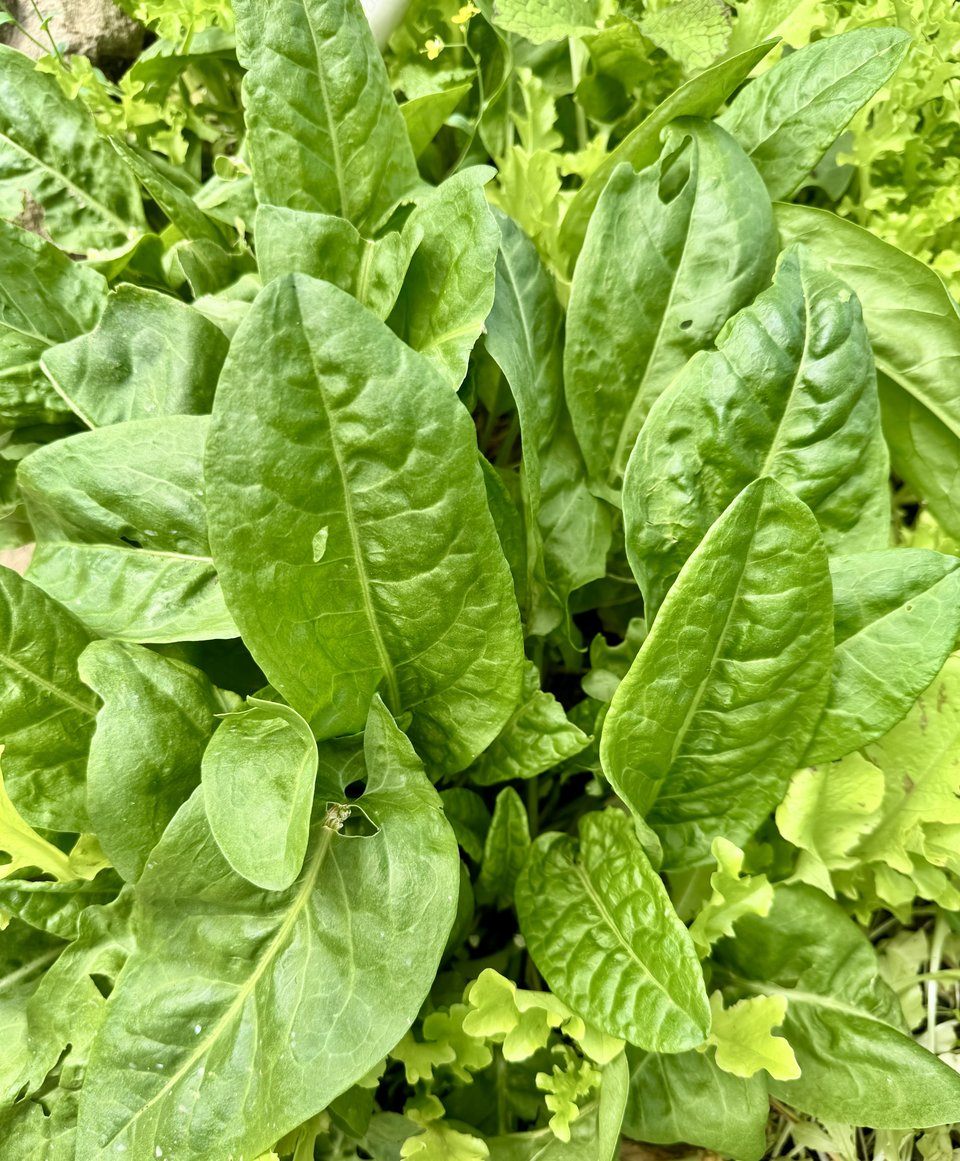
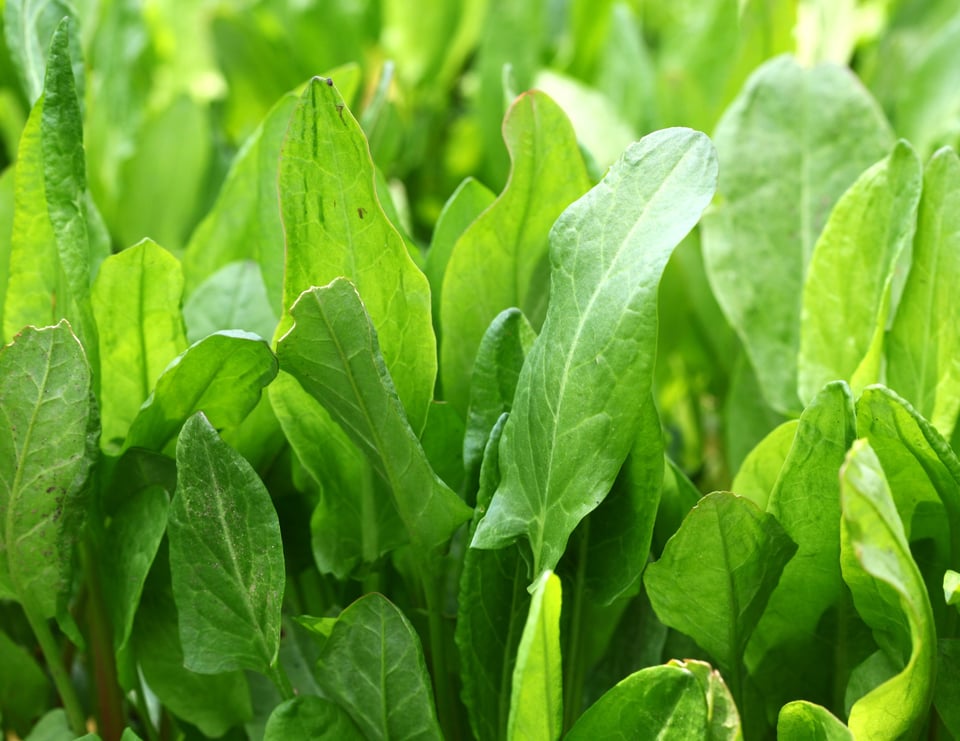
Common Garden Sorrel (Rumex acetosa): As seen on the first picture. This is the classic variety Tamara, Julia and I use. It features large, shield-shaped leaves with a robust, sharp, lemony punch. It handles full sun to partial shade and is incredibly vigorous.
French Sorrel (Rumex scutatus): Often called shield-leaf sorrel. It grows lower to the ground and is slightly more drought-tolerant. It is known to have a more refined, milder citrus flavour with a less stringy texture on mature leaves. I have not grown this variety yet, but it is a wonderful option to consider!
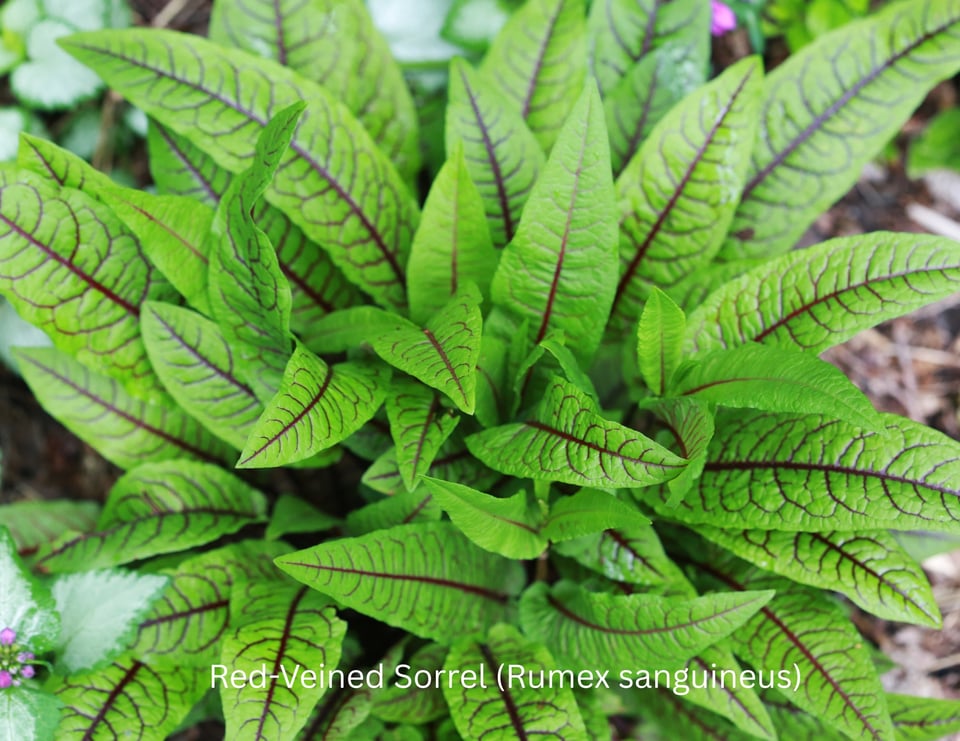
Red-Veined Sorrel (Rumex sanguineus): A stunning ornamental perennial. While it is edible when the leaves are very young—making it a gorgeous pop of colour as a plate garnish—it becomes bitter as it matures. In my experience, this variety isn’t quite as hardy as common sorrel, but it boasts excellent self-seeding qualities and looks beautiful along pathways or in the understory of fruit trees.
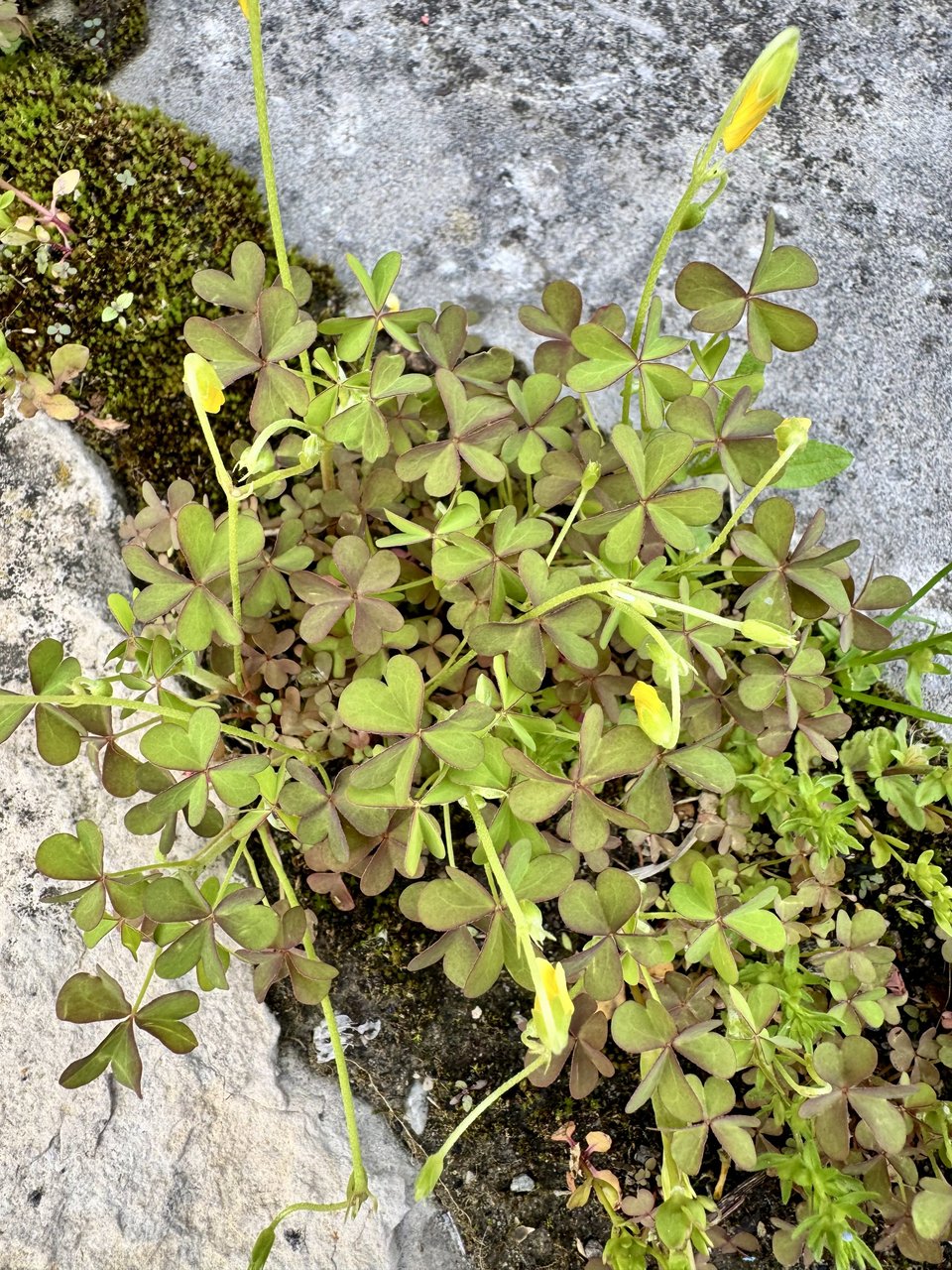
Wood Sorrel (Oxalis): You probably already have this variety growing wild in your yard, as it is native to North America. This small, clover-like plant produces delicate little yellow flowers in the spring and offers a lovely, bright nibble while weeding.
How to Design and Tend to Sorrel

Placement: Plant sorrel in Zone 1 or 2 (close to the kitchen or along main garden pathways) if you want to harvest it frequently for spring cooking.
Tuck it into Zone 3 or 4 (your food forest) to act as a resilient ground cover near the base of your fruit trees.
It thrives in full sun but handles partial shade under the canopy remarkably well. Plant some in your greenhouse for extra-late December harvests and early March harvests.
Propagation: While it can be painfully slow to establish from seed, it is incredibly generous when it comes to root division.
Every 3 to 4 years, you can easily divide the root crown in early spring or autumn to give patches to your own friends, family, and neighbours.
Management: To keep the leaves tender and coming all summer long, standard gardening advice is to cut back the flower stalks as they rise, pushing energy back into leaf production. In other words, harvest it often! By mid-summer, when my attention is directed to other plants, I choose to let my sorrel bolt to support our local insectaries. Still, it’s a good management tool to keep in your back pocket if you want a continuous culinary harvest!
Now that you know Sorrel, I invite you to look at your backyard garden and consider where you could add this very resilient and generous perennial this year.
By planting crops that return year after year, we do more than just feed ourselves. We build a food system that is sovereign, resilient, and deeply connected to our stories. The stories associated with our traditional human cultures and the earth's ancient story of natural rhythms.
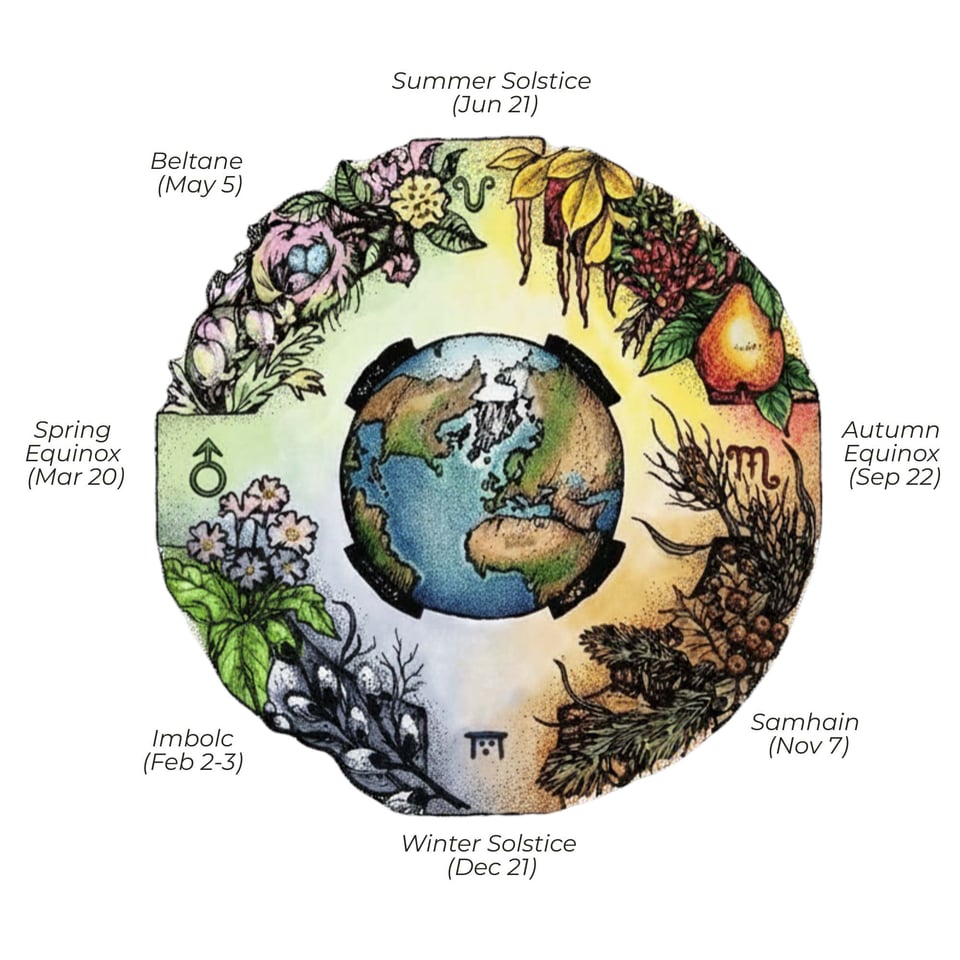
🌿 The Seeding Stories release calendar
This newsletter follows the Wheel of the Seasons calendar, arriving in your inbox eight times a year at the solar gates. Together, we explore permaculture living through a featured Perennial Peer, a plant that sustains us year after year—alongside the recipes, traditions, and resilience of the cultures that love them.
Imbolc (Feb 2-3) • Spring Equinox (Mar 20) • Beltane (May 5) • Summer Solstice (Jun 21) • Teltane (Aug 7) • Autumn Equinox (Sep 22) • Samhain (Nov 7) • Winter Solstice (Dec 21)