
Your product isn't too expensive
A $3 paper plate. A £16 knife. Same product, completely different price →
Well, hello, and welcome to this week's edition of the eCommercer.
This week on the podcast, we are talking about why some businesses can charge double for the same product and have customers thank them for it, while others are stuck in a race to the bottom wondering where their margins went.
And the answer, I think, is simpler than we make it. It's rarely the product that limits the price. It's the context around it. The way it's presented, positioned, and experienced.
So in this edition of the eCommercer, we talk about the psychology of this as well as look at some real world examples with a previous episode.
Have a great week, wherever you are in the world.
Until next time,
This Week's Episode of the eCommerce Podcast →
Why an Australian Company Charges $6 for $3 Paper Plates (And Customers Keep Coming Back)
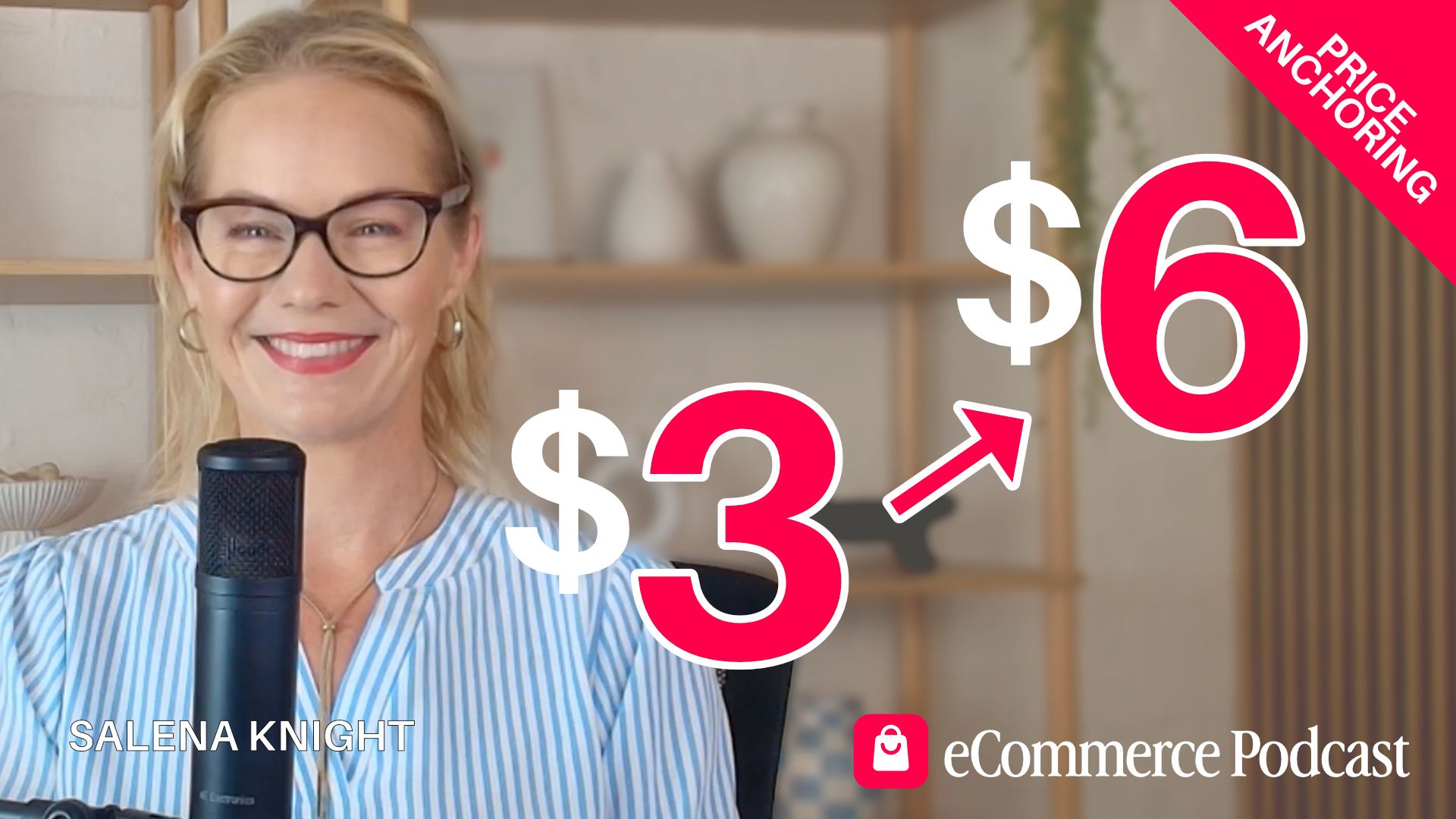
My conversation with Salena Knight was one of those chats I really enjoyed. Salena has spent 20 years in retail and she's noticed something counterintuitive about 2025, which was a genuinely tough year for consumer spending. The businesses that survived weren't the cheapest. They were the ones charging above the average.
Her favourite example is an Australian company called The Party People. They sell paper plates, piñatas, hats. Nothing proprietary. Nothing exclusive. Yet they charge $6 for plates you can get elsewhere for $3.
Their advantage is range and convenience. When you're planning a themed birthday party, you can get everything in one place. The plates aren't the product. The convenience is. And customers happily pay double because the alternative means a second order, another shipping fee, and the risk it won't arrive in time.
Salena looked at how this principle works with the structure of our category pages. We usually default to lowest price first or alphabetical. But the first number a customer sees sets their benchmark. It's behaviourally proven.
"When somebody comes to a category section, I will always have at least two really high-priced products," Salena explains. "And then I'll have the product that you really want to sell."
If your best-selling jeans are £200, put the £300 pair first. Yes, some people will leave. But as Salena puts it, "They probably weren't gonna buy anyway." Everyone else now sees £200 as a bargain.
When Salena owned her eco baby product stores, she developed a great framework to help customers who didn't know what they wanted. It starts from the principle that if you give someone more than three choices, they probably won't buy anything.
When someone walked in looking for a gift, her team asked three questions:
What type of person are they? Are they sporty? Crunchy hippie? Modern and minimal? This narrows the field dramatically.
What pain point do you want to solve? Framed practically — are they the kind of person who'd love a candle, or antibacterial soap? This reveals intent without overwhelming.
What's the budget? Now you can point them to exactly the right product.
From there, Salena would present three options: a high-priced item, a low-priced item, and a mid-priced item. And inevitably, people would buy the high-priced option.
The e-commerce application here is worth thinking through, that’s for sure. Most online stores dump customers onto a category page with dozens of options and expect them to figure it out.
This week’s action plan:
Audit your category pages. What's the first price a customer sees? If it's your cheapest product, you're anchoring low. Restructure so premium products appear first.
Identify your Party People advantage. What's the reason someone would pay more to buy from you? Convenience? Range? Expertise? If you can't articulate it, that's the real problem.
Apply the three questions. Whether in live chat, email flows, or your site navigation — guide customers to the right product instead of overwhelming them with choices.
Write down everything that annoys you. Use Salena's exercise to get clarity on what you actually need from your next hire versus what's just a personal frustration.
Talk about the mission before the job. Next time you're hiring, lead with why the business exists and who you serve. Let people self-select based on values, not just skills.
Salena's Links:
Company: Bringing Business to Retail → https://selenaknight.com
Related Episode →
The £16 Knife That Sold for £224
I actually mentioned Norm Farrar during my conversation with Salena, and for good reason. Norm's knife story is one of the best demonstrations of perceived value I've come across.
He was working with a knife company selling a £16 knife in a plastic clamshell for £49. Not bad. But Norm suggested putting it in a rigid box with a sheath and a message inside. Sales jumped to £124 with barely any drop in traffic.
Then he went further. Same knife, same £16 cost, but this time hammered steel and a wooden presentation case. The case cost £3 extra. The new selling price? £224.
"That's perceived value," Norm told me. "The wood case cost us a couple of bucks."
What I love about this alongside Salena's conversation is that both are making the same point from different angles. Salena shows that convenience and curation justify premium pricing. Norm shows that presentation and experience do the same. Neither changed the underlying product. They changed the context around it.
If you're stuck competing on price, I wonder if the answer isn't a cheaper product. It might be a better box.
Freebie of the Month →
Most ecommerce product descriptions either rank but bore people to tears, or read beautifully but never get found. The STORY-SEO Framework solves both problems at once. This free guide includes the complete method for writing product descriptions that rank on Google AND stick in memory, a step-by-step walkthrough with a real product example, an AI prompt you can use immediately, two real before-and-after case studies from a live ecommerce site, plus a gift product adaptation (the THEM Method) for anyone selling products people buy for others.
Be A Guest →
Got an eCommerce business with stories worth sharing?
Come be my guest on the eCommerce Podcast, where I chat with founders about the wins, the disasters, and everything in between. Your story could be the one that helps another founder grow smarter (or avoid your mistakes).