|
Well, hello, and welcome to this week's edition of the eCommercer.
My guest this week nearly bought a laptop without its keyboard. Not because a retailer lied to him, but because nobody told him the truth. It's the classic what's-in-the-box problem. The only place he could find the answer was ChatGPT, and not the retailer's website.
The Keyboard That Wasn't There
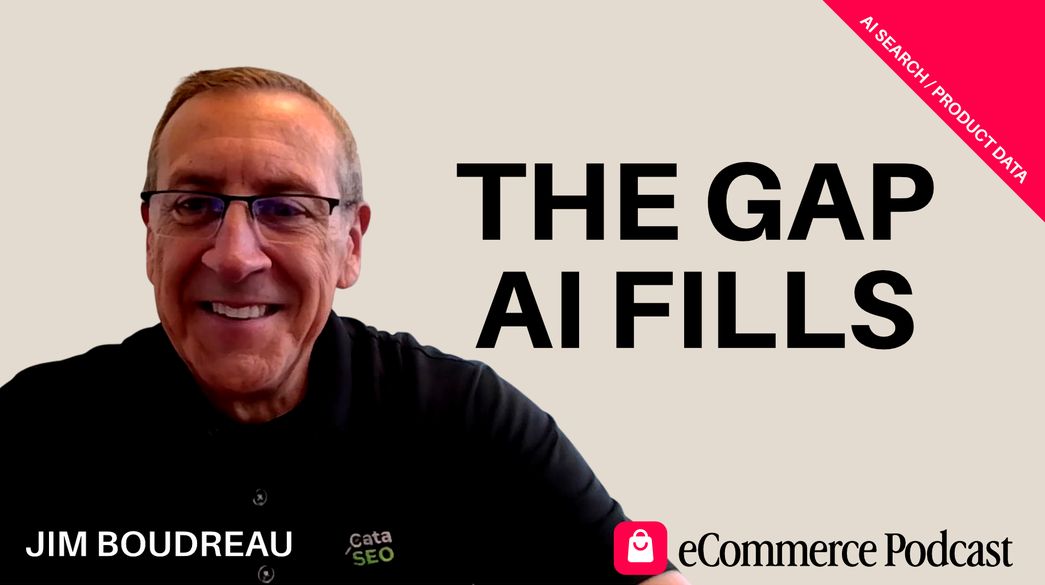
That's Jim Boudreau, founder of CataSEO, in ecommerce since 1998 and studying SEO since the early 2000s. For the last two years he's been building a tool that does the unglamorous work most stores never get round to, product by product.
He was shopping for a Microsoft Surface for a friend (serves him right, he should have got an iPad!). Every product photo, manufacturer's site and retailer's alike, showed the laptop with its keyboard attached. Nowhere did either page say plainly that it was sold separately. The only way he found out was by asking ChatGPT.
He'd had a near miss just like it the week before, buying monitors from the biggest electronics retailer in the US and unable to tell from the product page which cables were in the box. He bought extras just to avoid the risk.
| |
"You can't find anywhere except ChatGPT that this thing doesn't include the keyboard, because every picture on the Microsoft Surface site, on the electronic retailer sites, they all show it with the keyboard."
Jim Boudreau
|
Neither of those is really an SEO problem in the old sense. It's a completeness problem, and Jim's argument is that the two have become the same problem. The products that get recommended by ChatGPT, Perplexity or Google's AI Overviews are the ones with the most complete information behind them, not the nicest photography.
One Product At A Time
Jim's starting point is that catalogue-scale SEO is impractical by hand past a few hundred SKUs, so most stores give up and leave half their metadata unpopulated.
CataSEO works bottom up instead of top down. For each product it rebuilds the metadata (title, description, URL slug), the structured data AI reads for size, materials and care instructions, and the alt text, which should describe the picture rather than repeat the product name with "front view" and "side view" stuck on the end.
The same applies at category level, a real description instead of a title over an empty template, plus FAQs answering what customers actually type into Google and ask ChatGPT. And the advice most stores still ignore, never copy the manufacturer's description onto your product page. Running it through ChatGPT once, asked to add something the manufacturer left out, is a better start.
What AI Can't Give You
One of the things Jim said which I found interesting was this idea about earthquakes. If you train an AI on every disaster that's ever befallen the planet except earthquakes, and it will never predict one, because it only has what's already been written to draw on.
He reckons the "original thought" a founder builds up over years in a category is the bit AI genuinely cannot supply, and the bit readers, and increasingly AI engines, reward. Jim's using AI to draft two books of his own, not to write them for him, feeding it hundreds of pages he's already written so it keeps his style and sticks to the points he's decided matter.
The Honesty Audit
Jim's closing advice was the simplest of the whole conversation, and the hardest to act on. Go and look at a handful of your older products in the dashboard, not the storefront, and be honest about whether the tags, the meta description and the content are actually complete.
I think Jim's right that most of us eCommercers know our category better than almost anyone. We just don't tell Google or ChatGPT any of it. The gap isn't knowledge, it's that the knowledge never makes it onto the page in a form a machine can read.
The full conversation with Jim is live now, including the three template options for category pages, and the one question he says to ask before publishing any blog post, will the reader actually want to read this to the end.
|