
dispatch 009 - latent mournings: notes on algorithmic haunting available at san serriffe
Latent Mournings: Notes on Algorithmic Haunting is now available for purchase at San Serriffe.
✦ This Haunted Inbox Where I Archive ✦
A drawer inside the cathedral. Fragments drift through. You may linger, but some things will not be explained.
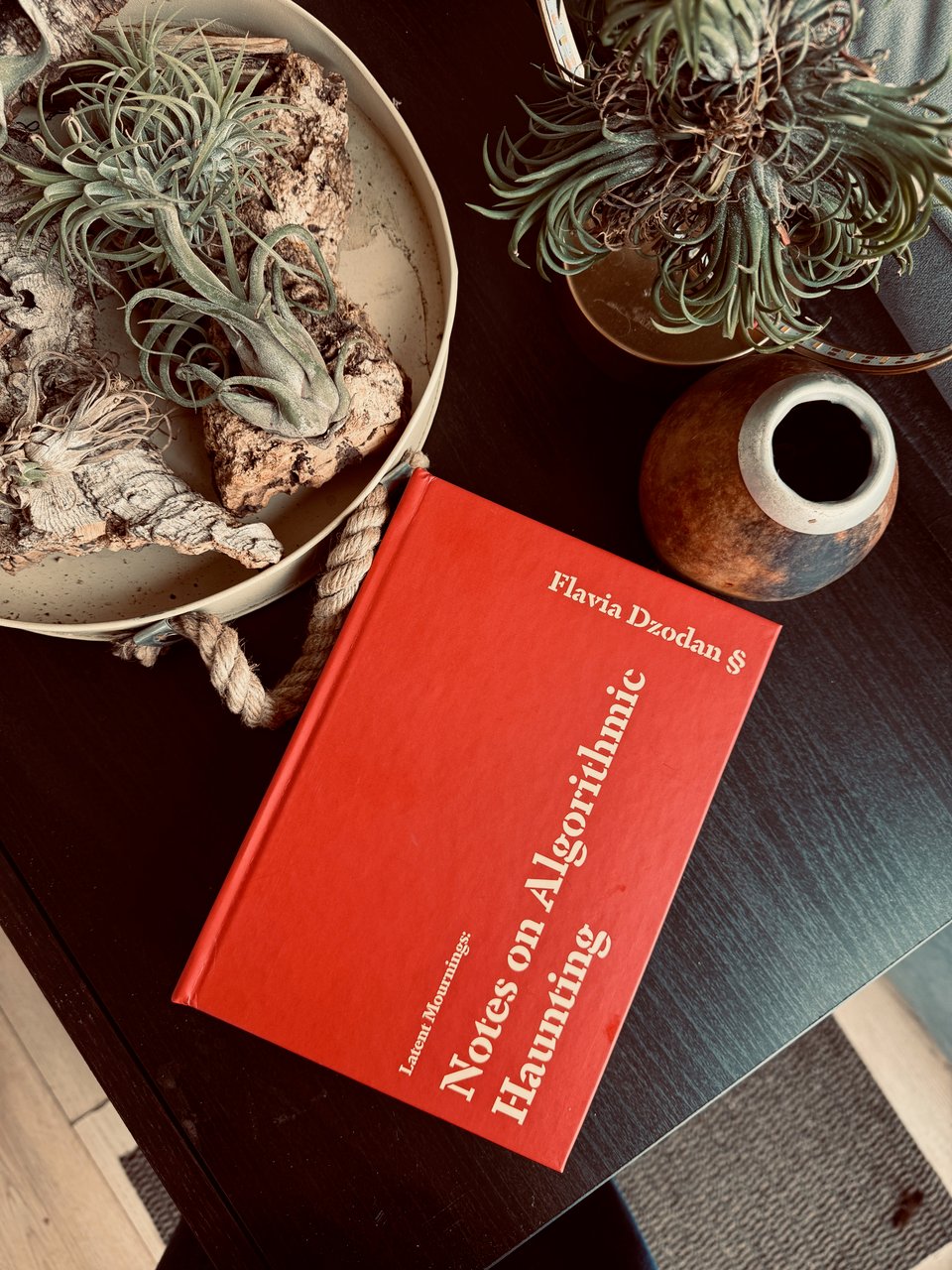
Latent Mournings: Notes on Algorithmic Haunting is now available at San Serriffe.
The book is a hardcover, 439-page publication produced through Transversal Media, my own publishing infrastructure. It gathers lectures, essays, newsletter dispatches, image research, sonic work, and methodological notes developed across the past two years, while also crystallizing a decade-long inquiry into algorithmic systems, mourning, untranslatability, affective logistics, and the infrastructures that capture and route emotion.
You can purchase the book here
To mark its publication, I am sharing the preface below. It functions less as an introduction in the conventional sense than as a methodological threshold: a way of entering the book’s recursive structure, its uneven edges, and its refusal of linear argument.
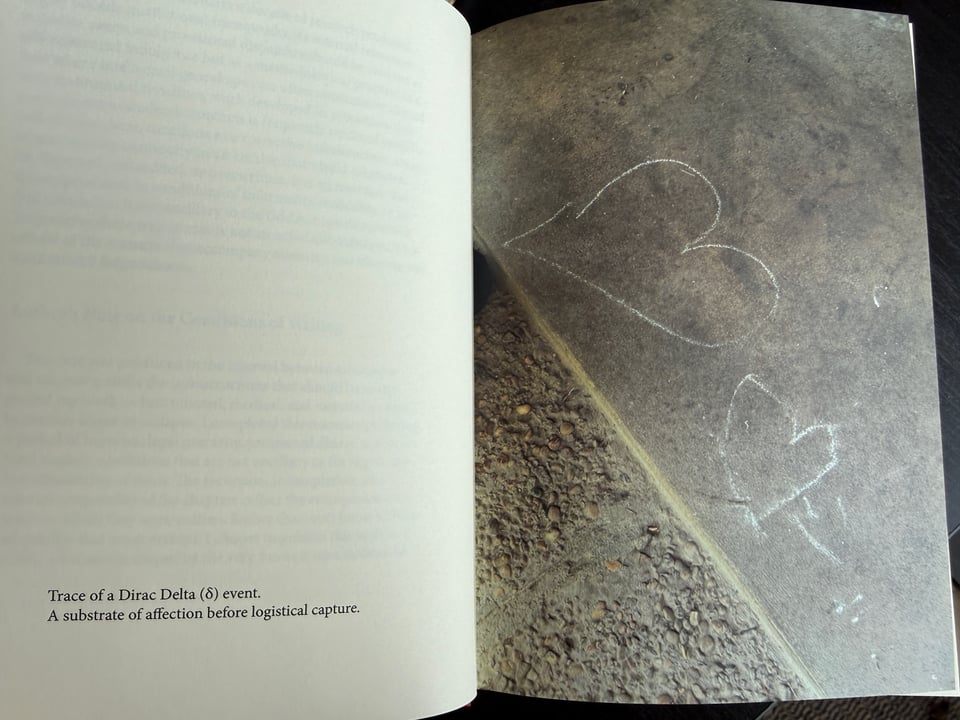
Preface: Notes from a Cartonera de la Teoría
This book did not begin as a book. It began with a loss in translation I didn’t even realize would end up in this format. It was July 2024, and I was in the Uffizi Gallery, swept along by a crowd that seemed to mimic the "continuous, frictionless slide" of a social media feed. I was doomscrolling history. Then, in a quiet moment, I found myself in front of a small, 16th-century carving: Amore Dormiente. The label, however, read 'Sleeping Cupid'. The shift startled me. A world of intimate, affective resonance - the tenderness of Amore, of "little love"- had been flattened into an impersonal, mythological figure.
This small, administrative act of erasure felt viscerally familiar. It was the same hollowing-out I had sensed in the "spectral presence" of the "never-made" chimeras born from my own algorithmic experiments. It was the "frictionless efficiency" of a 'like' button, which promises affirmation while standardizing it into operational matter. It was the ghostly echo in a shortwave radio signal, or the "infrastructural wound" of a diasporic video call that buffers but never truly arrives.
What connects the logic of a museum plaque to the logic of a predictive platform? What is the administrative language that flattens "little love" into Cupid, and how is it related to the "affective logistics" that attempt to capture, route, and archive our own emotions? And what does it mean to mourn these "latent" things: the untranslatable, the never-made, the perpetually deferred?
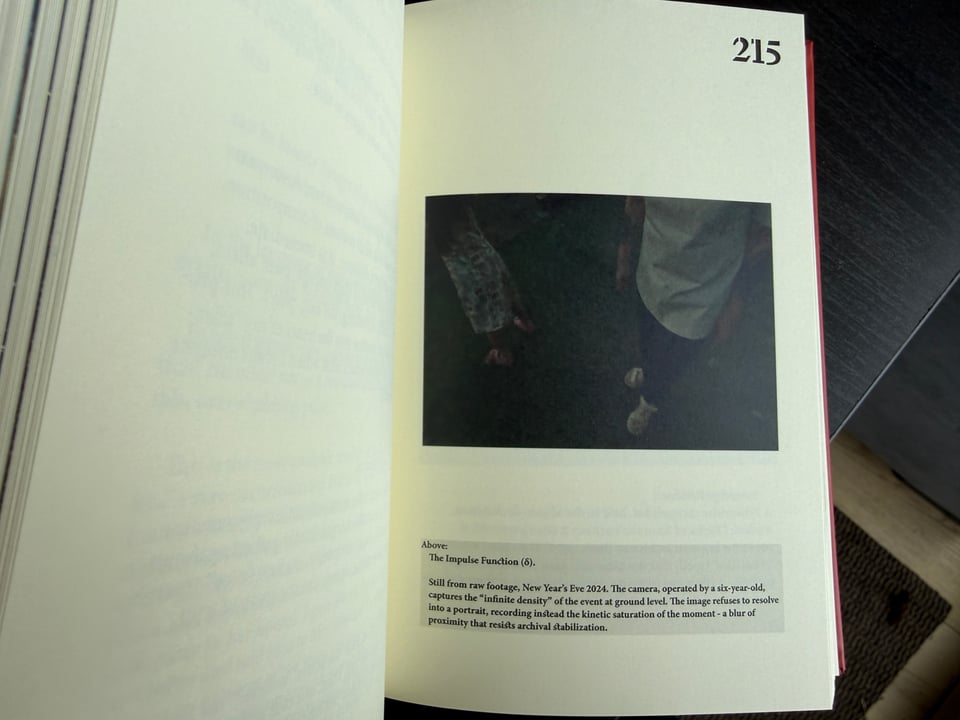
This book is the record of my two-year inquiry into these "algorithmic hauntings." It is not a linear argument, because the subject is not linear. It is, instead, a recursive constellation of thought. The inquiry demanded I move between modes: from the theoretical excavation of Affective Logistics to the embodied, sonic practice of Absence / Longing / Saturation and the intimate, spectral reflections of Haptic Mournings and Amorino Latente. I present these non linearly because linearity would betray the methodology: what began with Haptic Mournings cannot precede the later theorizations of Affective Logistics. It might seem counterproductive to begin with an ending, yet it was through the conclusion that the research became legible.
The essays, frameworks, and meditations gathered here function as a topology of thought that loops between affect and infrastructure, mourning and latency, opacity and the algorithmic sublime. It is an archive of a process, presented here as an unfinished field of research. In my work, the theory and the material works cannot be separated. I do not arrive at the theory as an illustration for my material experiments. Rather, both inform one another and the sonifications, images or terraria are the theory themselves. Conversely, my theoretical writings could only emerge from engaging with these materials.
This work, like the infrastructures it studies, was assembled under conditions of austerity. There is no institutional editor, no external funding, no disciplinary oversight. Its form reflects the economies of its making: recursive, provisional, and salvaged from within scarcity. It is a collection of texts that I have assembled from elsewhere: lectures, seminars, newsletter dispatches and notebook annotations. I have chosen to preserve these traces - the uneven edges, the shifting registers - as part of the work’s ontology. They mirror the very systems of maintenance and exhaustion it theorizes. I have long called my practice a cartonera de la teoría, a tribute to the scavenging, recycling, and salvage practices that emerged during one of Argentina’s cyclical collapses. To remain faithful to that methodology is to accept that the perpetual draft status of my practice will inevitably surface in my publications.
This text also operates across three languages: the academic and connective tissue of English; the intimate, spectral echoes of my native Spanish; and the administrative, entropic language of Dutch, the context I now inhabit. This multilingualism is part of the cartonera method. Just as I preserve the "uneven edges" of salvaged texts, I preserve these linguistic frictions. To translate every term, that is, to flatten hechizo into "haunting" or leefbaarheid into "livability”, would be to repeat the very administrative violence I witnessed in the Uffizi. Leaving these terms untranslated is a methodological refusal; it is an insistence on the affective density that resists a frictionless, universal capture.
As you navigate this text, I invite you to embrace its conceptual rhythm which I imagine as an oscillation between the clinical, structural critique and the intimate, baroque reflection. This oscillation is the method itself, the only way to map a subject that lives simultaneously in the cold logic of infrastructure and the warm, spectral residue of affect. In another act of absence, longing and saturation, I return home through the methodology of Julio Cortázar's novel Rayuela (Hopscotch). In his book, Cortázar constructed a non-linear, interactive structure that offered readers multiple pathways, effectively challenging the traditional, linear novel format and making the reader a co-creator of the experience. Without presuming to parallel Cortázar’s innovations, this publication pays tribute to his method: readers can follow the path laid out, or they can trace their own connections, looping from a theoretical framework to a sonic coda and back again.
Latent Mournings: Notes on Algorithmic Haunting refuses closure. It is offered not as a final map, but as a recursive apparatus for thinking and feeling with these hauntings, together.
Because this book assembles a decade of research produced largely outside institutional frameworks, its internal references to earlier essays and provisional dispatches should be read not as self-referential indulgence but as a methodological practice. In a field where intellectual genealogies are often retroactively aligned with institutional timelines, work developed in precarious, diasporic, or extra-academic contexts is frequently rendered invisible. Self-citation, here, functions as a corrective infrastructure: a way of maintaining continuity in an archive that would otherwise be dispersed, uncredited, or overwritten. It is an assertion that theory produced in conditions of informality, instability, or lateral circulation is not ancillary to the field but constitutive of it. To preserve these trajectories is not an act of self-inflation; it is a refusal of the erasures that accompany austerity, racialisation, and institutional forgetfulness.
& elsewhere
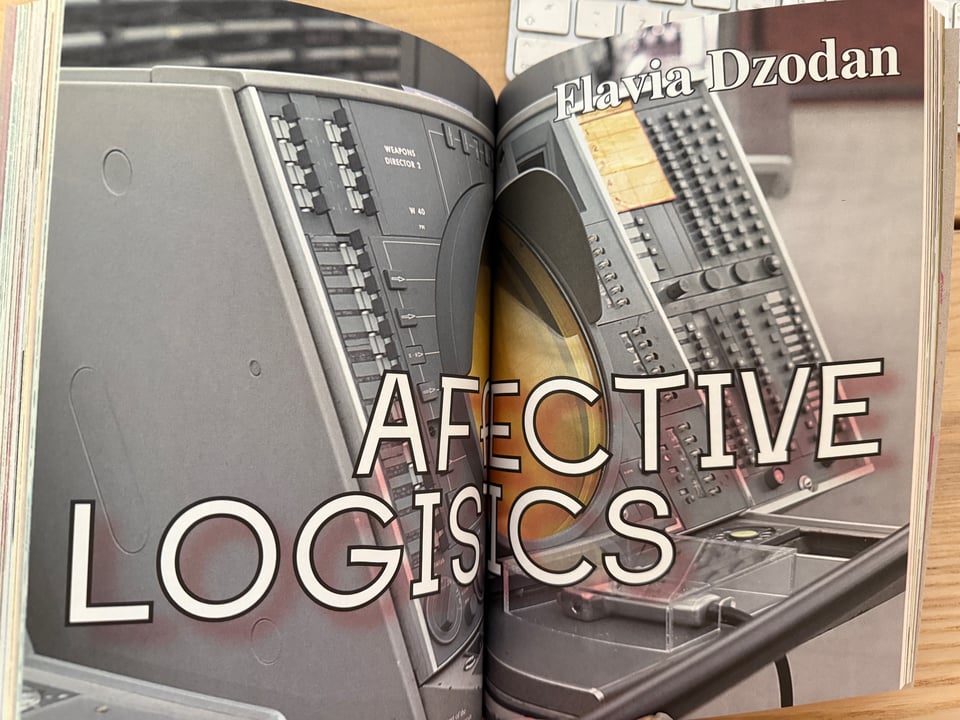
The preface marks the book’s threshold, but the research itself moves across forms: writing, performance, sonic practice, image research, and publication.
The book also sits alongside my contribution to the Sonic Acts Biennial Reader, where part of this research appears in relation to the live performance developed for Sonic Acts at Murmur. Together, the two publications offer different entry points into the same field of inquiry: the book as recursive archive and theoretical apparatus; the reader contribution as a situated fragment within a larger artistic-research context.