
The entire quote by R.A. Busby is:
I wonder what we’ll do when the permafrost thaws. When the wind begins to blow and dries the soil. When it sweeps across clusters of spores that haven’t taken a trip in the breeze since the last mammoth died.
By the way, you just inhaled some more.
This passage in Busby’s novel You Will Speak for the Dead is a pearl in my favorite literary art, and it’s never left my mind.
I thought about it again after binge-watching the recent Netflix mini-series Below. Given it’s nearly Halloween, and I go off the path in October newsletters to focus on some eerie aspect of our world, this month I’ll look at fiction that rises from the sea.
Before I go on, check out my own downloadable ebooks in their new Etsy Canada store.
Below
My partner and I watched the new Netflix mini-series Below in the course of one day. It was that good.
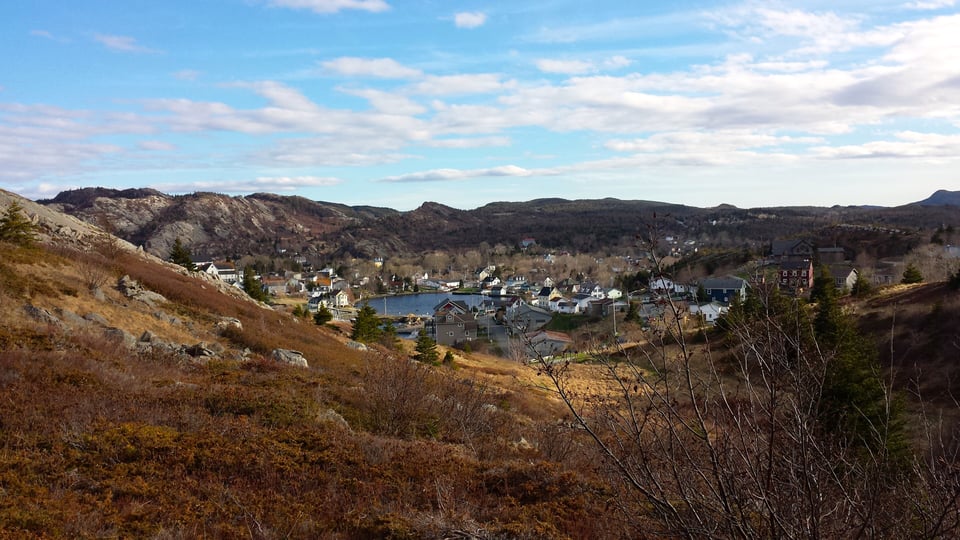
First, as Nova Scotians, we’ve been interested in visiting Newfoundland someday. It’s the province northeast of us, separated by sea. If we wanted to visit its southernmost island, we could fly there in less than two hours. We could fly to Goose Bay, in the Labrador region of the province, in about four hours. If we took ferries and drove, we’d have to go the long way through Quebec, not how the crow flies, and it would take us two entire days. Below was filmed mostly in Brigus, near St. John, which we could fly to fairly quickly. The tiny fishing village sits on the coast of a cozy harbor with ice-blue sky and waters. When watching the show, I couldn’t help but wonder just how many black flies they get in the summer.
I don’t want to spoil the series, but it’s so rare that I see a well-made film that strongly explores climate change. I was hooked. But even without that climate angle, the series is set in a unique, interesting place. It also phases quickly into eco-horror—possibly even cosmic horror—and has a good storyline, acting, and realism. Somewhat. Everything is real until it’s not, which is a trait of the eco-weird.
The scary part? Look no further than the quote leading into this newsletter: what gets unleashed when permafrost melts? Frightening enough is what warming does to oceans, sea life, currents, and migratory routes. Thawing glaciers result in sea-level rise. Marine heatwaves bleach the world’s coral reefs. Warming and acidified waters cause a loss of marine and coastal biodiversity, including extinction and lack of adaption, from the sea’s tiniest plankton to the largest of mammals. Marine life has to move into deeper, colder water to find a better habitat, but it could potentially find new predators in doing so. Ocean currents are accelerating, and some, like the Gulf Stream, can change, whether by weakening or becoming more severe.
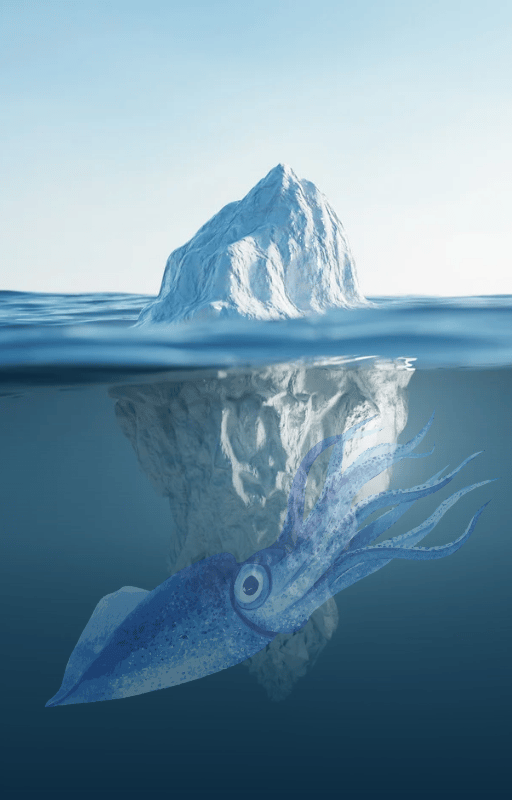
So what does thawing ice and permafrost reveal underneath? Perhaps there is no thousands-year-old dormant cephalopod waiting to end its dormancy and come up from the depths to devastate a small fishing village, but we know that gigantic species and their threats can be on par with the tiniest organisms.
According to UN’s Environment Programme (UNEP), a once-dormant pathogen that causes anthrax killed more than 2,500 reindeer in Siberia’s Yamal Peninsula.
The Arctic, which spans 14 million square kilometres across eight countries, is covered by a layer of thick permafrost, a frozen mixture of soil, rocks, ice and organic material. However, the Arctic is warming four times faster than the rest of the globe, with thawing permafrost potentially setting free ancient bacteria and viruses, experts say.
Some researchers are especially worried about the thawing of long-dead Arctic animals, whose bodies may house dormant microbes. The Siberian outbreak was traced to a reindeer burial ground; many of those animals died more than 70 years ago from anthrax.
The world’s permafrost contains an estimated 1,500 gigatonnes of carbon, about twice as much as the atmosphere. As permafrost thaws, its carbon is broken down and released into the atmosphere as carbon dioxide or methane. Those greenhouse gases warm the planet further, melting more permafrost in a potentially catastrophic cycle.
Watch BBC’s video, “Could Melting Glaciers Unleash Ancient Viruses? Microbes can be frozen for millions of years and become quickly active again when the permafrost around them thaws. It doesn’t matter if they come alive in a polar area far away from you or me; they can quickly migrate around the world.
By the way, you just inhaled some more?
A few watery Dragonfly spotlights
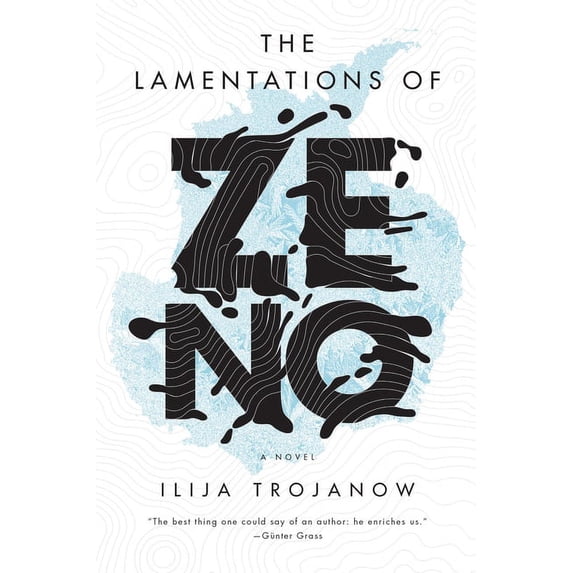
This month, for the ecofiction series, I rebooted my interview with Ilija Trojanow, author of The Lamentations of Zeno. As the polar ice-caps melt, one man’s existential lamentations mirror our own personal and global crises. Zeno is not even a character we might like very well, but in a way, his collapse is like our planet’s, which reminds us that these dirges are natural. And the style of the novel is brilliant, seeping into us like cold meltwater. We are living in desperate times, and to gloss over the reality of it hints at a different sort of denial. Ilija faces it head on. What’s that old saying: when you hit rock bottom, there’s nowhere to go but up.
One of my first interviews at Dragonfly.eco was 13 years ago with Tony White; he had written a story called Shackleton’s Man Goes South while a writer-in-residence at the Science Museum in London. You can read the story at the Science Museum’s blog.
With “Shackleton’s Man Goes South”, Tony White has written a bold novel-cum-manifesto, a prophecy, satire, and warning, and a gripping polar allegory for the era of global warming and human trafficking. In the steps of Swift, Blake and Aldous Huxley, he brings a puzzlemaster’s ingenuity, a political observer’s despair, a voracious appetite for geo-political knowledge and a storyteller’s sense to create a stark vision of a future that may be coming sooner than anyone can bear to think.’ -Marina Warner
Clara Hume’s Bird Song. My own novel written under my pen name.
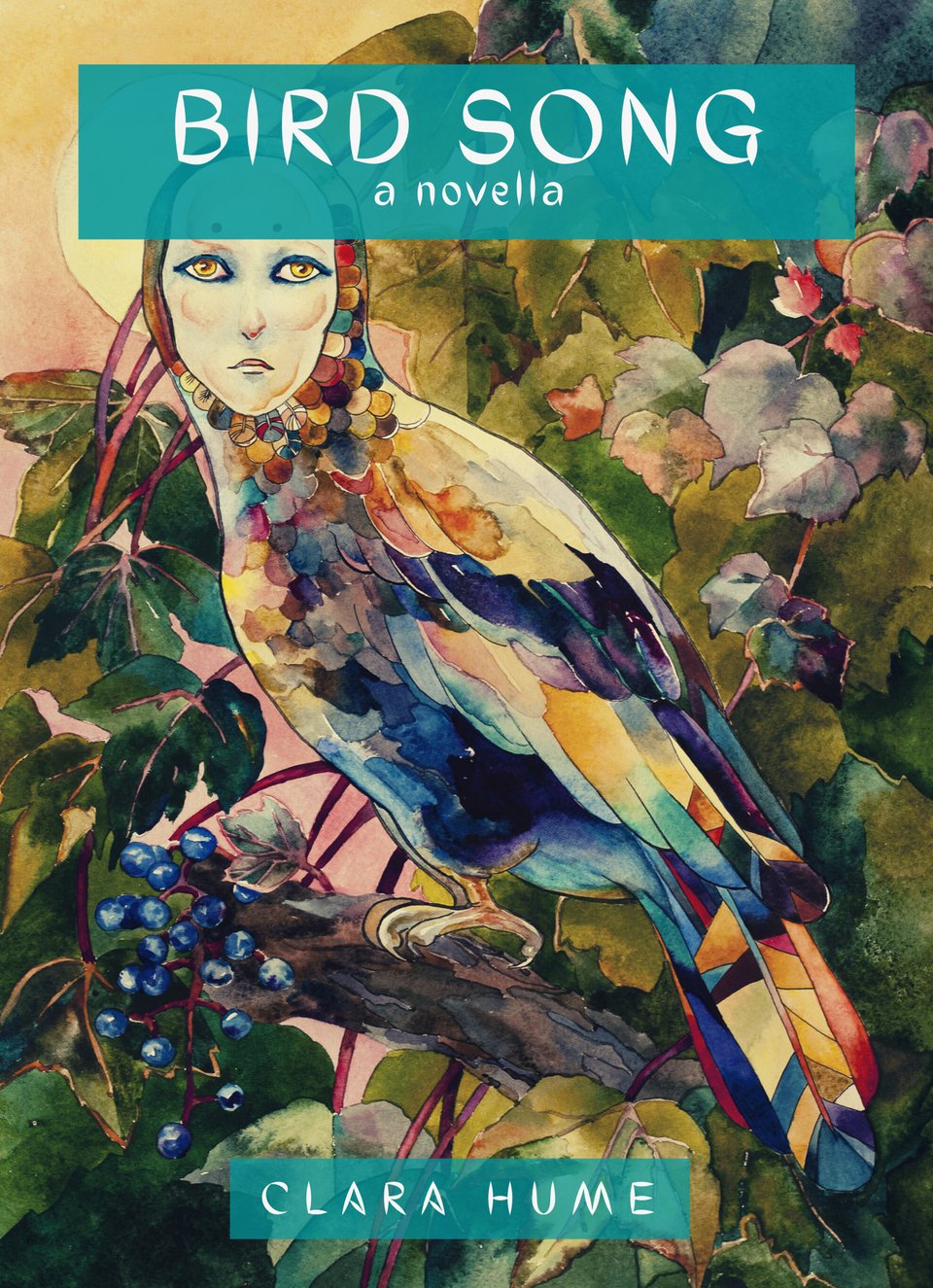
Clara Hume’s novella Bird Song draws you into a dream-world whose chorus lures you—like the sirens themselves—into a seductive dance of paradox and choice. Taking its cue from Homer’s Odyssey, this contemporary allegorical tale follows the journey of young Thelsie—a schoolgirl in the rough poor district of east Chicago struggling with life-choices. One morning she wakes on a beach of a paradise-like magical island. Feeling safe for the first time, she meets two siren sisters who lure and crash sailing ships to save their world from corruption and despoilment by settlers wishing only to conquer Nature. When the island’s paradoxes force her to make difficult and risky choices, Thelsie finds her voice and her path in life. Bird Song teases apart the extreme voices of mono-cultural colonialism and uncompromising protectionism to find the connective tissue of compassion in the voice of mediation. A beautiful and seductive coming-of-age fairy tale of self-discovery. —Nina Munteanu, author of A Diary in the Age of Water
A Diary in the Age of Water, Nina Muntaeanu. Diary is eye-opening, even if you already understand and acknowledge the great climate catastrophe happening before our very eyes. The biological definitions and metaphors within the novel are salient and engrossing. They shape the reader’s understanding of the natural world and how humans are part of that world but don’t usually make the smartest decisions about how to live in it. This is fiction to be reckoned with.
Suyi Davies Okunbowa’s Lost Ark Dreaming. Off the coast of West Africa, decades after the dangerous rise of the Atlantic Ocean, the region’s survivors live inside five partially submerged, kilometers-high towers originally created as a playground for the wealthy. Now the towers’ most affluent rule from their lofty perch at the top while the rest are crammed into the dark, fetid floors below sea level. There are also those who were left for dead in the Atlantic, only to be reawakened by an ancient power, and who seek vengeance on those who offered them up to the waves.
See more at the world ecofiction series.
Resources
Rewilding Our Stories: A Discord community where you can find resources, reading, and writing fun in fiction that relates strongly to nature and environment
Reddit: Rewilding our Stories. A new subreddit that needs your voice and a new moderator.
Book recommendations: a growing list of recs
Eco/climate genres: They’re all over the place, and here’s an expanding compendium
Inspiring and informative author quotes from Dragonfly’s interviews
List of ecologically focused games
List of eco/climate films and documentaries
Eco-fiction links and resources
Book database: Database of over 1,100 book posts at Dragonfly.eco
Turning the Tide: The Youngest Generation: Fiction aimed toward children, teens, and young adults
Indie Corner: The occasional highlight of authors who publish independently
World Eco-fiction Series: Climate Change and Beyond: This series travels the planet exploring fictional stories close to natural landscapes and wildlife, often with environmental concerns.
Artists & Climate Change. This site is no longer being updated but still has a wealth of info. I was a core writer for their team, and I’m both honored and grateful. Look for my “Wild Authors” series there.
You just read issue #67 of Dragonfly.eco News. You can also browse the full archives of this newsletter.
