Dragonfly.eco News logo

Dragonfly.eco News

Archives
Subscribe

Dragonfly.eco News Dragonfly.eco News

Archive

March 2024 - In nature, nothing exists alone

The newsletter is moving back about a week each month until the end of the year due to timing with Earth Day and family visits.

World eco-fiction spotlight

This month I talked with local author Tiffany Morris about her books, particularly her most recent novel Green Fuse Burning, “a transformative Indigenous eco-horror novella from [a] Mi’kmaw writer". I thoroughly enjoy Tiffany's poignant prose as she weaves planetary ecological horror with Mi'kmaw intergenerational grief in a story about an artist completing a residency in a cabin in a strange swamp forest.

From Tiffany:

Free post
#40
March 25, 2024
Read more

February 2024 - Not all those who wander are lost

All that is gold does not glitter,
Not all those who wander are lost;
The old that is strong does not wither,
Deep roots are not reached by the frost.

-JRR Tolkien, "The Riddle of Strider"
The Lord of the Rings: The Fellowship of the Ring

Welcome!

This past week, three things happened that reminded me of the quote above. The phrase "All that glitters is not gold" stretches back to the 12th or 13th century and has been repeated often in song and story. Last weekend, we went to Halifax's Neptune Theatre to see Rosencrantz and Guildenstern Are Dead, starring Billy Boyd and Dominic Monaghan (Pippin Took and Merry Brandybuck, hobbits from Lord of the Rings). So I had Shakespeare and Tolkien on my mind. Then that night I decided to get an album for my husband for Valentine's Day and sat down to think about a good experience to share. In the wee hours of the morning, I'd decided on Led Zeppelin IV, which has "Stairway to Heaven". So, three things came together: Shakespeare who wrote the line in The Merchant of Venice; Led Zep, whose song "Stairway to Heaven" has the line, "There's a lady who's sure all that glitters is gold"; and of course Tolkien.

Free post
#39
February 16, 2024
Read more

Special Edition - Imagine 2200: Climate Fiction for Future Ancestors

Dragonfly has a small update between regular newsletters, but I think everyone will be happy to read it! I was happy to play a tiny part in spreading the word about Imagine 2200: Climate Fiction for Future Ancestors, a climate fiction contest from Grist. Imagine 2200 celebrates stories that offer vivid, hope-filled, diverse visions of climate progress. Read all 12 stories in the 2024 collection. Two of these stories are syndicated at Dragonfly.eco. You can also read my interview with Grist's Climate Fiction Creative Manager, Tory Stephens.

Stories at Dragonfly:

Cabbage Kora artist: Mikyung Lee

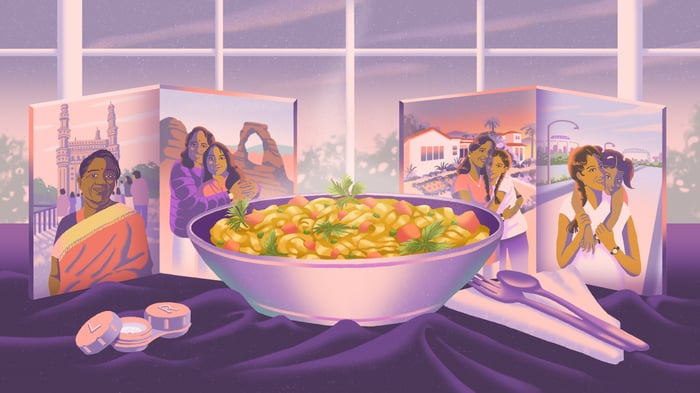
Cabbage Koora: A Prognostic Autobiography by Sanjana Sekhar. Across generations and a changing world, an Indian family preserves its traditions through food, dance, and connection.

Free post
#38
January 25, 2024
Read more

January 2024 - Light a candle in the darkness

There are so many sources of dismal news, so many depressing scientific developments; I think it’s crucial to look for a light in the darkness, to emphasize that we as a species still have a chance to chart a course to a better future rather than a dystopia.

-John Kixmiller on writing and performing Protectors of the Wood

Happy new year

Welcome to a new year and a new newsletter! I run Dragonfly.eco, a site that explores wild worlds and words, rewilding the novel, and genres dealing with ecological and climate changes. As many might guess, there's a lot of books within these genres that seem hopeless and dystopian, but equally there's many novels with redemption arcs, marginal voices as heroes, decolonization, solarpunk (and other punks), Indigenous and other futurisms, alternative histories and reimagining, and more that look toward a better world we can make possible. It might not seem possible to always change the tide, but it is hard to change anything if we are gloomy and uninspired. Stories can motivate us to do something, to look up. I have always drawn my inspiration from The Flight of the Hummingbird - a Quechen story.

Free post
#37
January 15, 2024
Read more

Dragonfly News: December 2023

Two versions of reality can exist at the same time, at least in the quantum world. In the non-quantum world, the mirror of truth becomes smoky. As the LA Times said, “Dualities pervade nature…This doesn’t mean that ‘everything is relative,’ or that there’s no objective reality.” We have become increasingly so divisive over perspective beliefs, whether or not they are based in objective reality. I stand strong in my beliefs, because they are based on science, but I sill like to hope they we can “all get along”. To do this, I root for what makes us happy together—commonalities, not division. I also dislike stereotypes, because they fail to recognize healthy diversity among people of different religions, ethnicity, age groups, skin colors, sexual orientations, genders, and places—and they prescribe inaccurate assumptions, leading to hatred and removals of basic rights and freedoms for perceived differences. I realized long ago that the commonalities we share can be simple: food, music, memories, stories. These things, I think, can bring about empathy, peace, open-mindedness, and downright civility, which is sorely missing right now. When I think of a strong message for my December newsletter, it is to celebrate our commonalities, help those in need, become empathetic and open-minded, and give peace a chance.

Eco-fiction is a genre of stories that are usually based on objective truths: climate change, for instance, which is a fact on the ground with plenty of data that proves it’s happening. Eco-fiction also embraces a multitude of other observable facts, from plastic-ravaged oceans, endangered and extinct species, effects of colonization on historical and modern day people and lands, dangers of chemicals in our food chain (water, soil, air), and so much more. It’s a science-based genre but is still fiction and thus imaginative, taking place not just on Earth but in fantastical, magical, weird, or technologically altered worlds, which provide analogies and critical self-examination. The genre lends to horror and the weird, just as well, because what’s actually happening in our world is horrible and weird and sometimes we don’t know how to make sense of it. And ecological fiction is wholly inclusive. The stories provide literary ecosystems, wherein human nature and “other” nature are not opposite parts of the story but must cohabitate. Many genres are evolving due to multiple ways of telling these stories: speculative, Indigenous, cultural, water stories, crime, children’s and YA fiction, science fiction, fantasy, horror, weird, romance, historical, magical realist, and so much more. New genres have evolved that may rely heavily on the ecological, including solarpunk, lunarpunk, tidal punk, hopepunk, and a variety of beautiful futurisms, which take power over the stolen past of a people and imagine alternate realities or better futures that the people—rather than colonial powers—lead: Africanfuturism, Taínofuturism, Indigenous futurism, Métis futurism, and many others.

Gratitude

Free post
#36
December 16, 2023
Read more

November 2023

My heart is full right now. Maybe it’s just the simple things in life that make moments meaningful and bright: becoming immersed in the sunshine patterning through the John Boy Waltonesque lace curtains behind my writing desk, overcoming the fear of disposing of mice that we trap under our bathtub (not sure how they get in), enjoying the ambience and warmth from fire in the wood stove that we use to heat our house, wearing warm socks, being aware of the ever-present beauty and danger of the natural world—even in our meadow—and gazing upon the unimaginable and distant light from dead stars on cold, clear nights.

I’ve been watching the television series “Alone”, despite not liking most reality television. I’m not a fearful prepper or a survivalist. But I’ve always found the deepest connection with nature. “Alone” is different as far as reality tv goes. Ten contestants, who are experienced survivalists, trackers, hunters, anglers, foragers, herbalists, etc. carry provided cameras to document living completely alone in a selected area, miles apart from any other person on the show. They have strict rules and limitations of what they can take and what they can do. The episodes I’ve watched so far have taken place on northwestern Vancouver Island, Patagonia, and Mongolia. Having been to Vancouver Island and other remote places in British Columbia (though not as remote as where the show takes place), I find myself missing the tall cedars and hemlocks and magical mountains.

Rafting on the Atnarko River in fall 2014, at the beginning of a salmon run, watching for grizzly bears near Bella Coola, BC. You can read more about my experiences in Tales from the River: An Anthology of River Literature, originally published by Stormbird Press and currently available from Porchlight Books and other outlets.

I like the show for its peoples’ resilience and insights. But what I like the most is how they overcome fear of big predators, how they adapt their knowledge of building shelters and finding food to actual survival, and how they enjoy the stunning beauty of nature around them. The show has made me rethink my own fears, like how, when I tried to learn to surf once, I never really got over my fear of the ocean or how I’m squeamish about dead mice, or live mice for that matter. When I used to trail-run in British Columbia, and after a few encounters with black bears (from a distance only) and one spooky feeling in a forest that had signs warning of a cougar in the area, I slowly became more afraid of running alone and haven’t gotten back into trail-running or even hiking without others. I’m looking into BOW Nova Scotia, though it seems to just have 1-2 retreats a year and the fall one in September was canceled due to Hurricane Lee. Other things: do more foraging. Our meadow alone is a rich place for berries, plants, and someday nuts from trees we planted. I’ve also done lots of archery in the past but am out of practice and want to get back into it.

Free post
#35
November 19, 2023
Read more

October 2023

Created with Canva

Of myths and memes

Last October, I took a dive into weird fiction. This year I want to look at strange things like memes that evolve into frightening myths. Don’t get me wrong. Autumn is about as beautiful as they come, as far as seasons go. It’s at once yellow, brown, and blue, a low sun painting meadows with haunting orange light. Leaves slowly sail downward, like small birds gently gliding to the ground. But there’s also the inevitable darker side: shorter days, longer nights, a chilly bite in the air, the first frost, celebrations of saints and the dead, and glowing faces of carved pumpkins.

I want to talk some about memes and mythology. While cultural memetics can be analogized with biological evolution, memes existing in the host of a mind don’t have to be factual to spread. The virus can be folklore to some and absolute truth to others. The meme’s replication, or mimicry, can die out or spread widely. It’s the latter that is something to fathom as you are alone on a rain-splattered night, sitting by the fire with shadows forming odd shapes on the wall, wind moaning outside. And before I go much further, this does relate to eco-fiction, because authors create new myths in our warming and increasingly absurd world. An article from The Conversation gives one example, in which Robbie Arnott’s Limberlost captures the mythological and empirical orientations of the novel’s characters and shows how these perspectives influence the story and potentially its readers. New myths in eco-fiction (and art) is something I will get into in a future newsletter. This month I’ll plant the seed.

Free post
#34
October 13, 2023
Read more

September 2023

Thanks to readers

I’ve been getting more new subscribers than usual lately, and I appreciate ya’ll. I’m still around on some social media but have ceased using it except for rarely—I prefer direct and personal communication (family and group chats, phone calls, get-togethers, emails, a writers Discord, etc.), so however you are finding me, thanks for reading. This newsletter covers eco-fiction in various kinds of media, including novels, anthologies, graphic novels, films, and games. You can find out more here. As I wrote at Impakter, the genre is made up of fictional tales that reflect important connections, dependencies, and interactions between people and their natural environments. I continue to be immersed into how we tell stories about our changing world, in an ecological sense—though many more facets are inherently connected. Our human story is in there too, which adds layers of weird, tragic, mysterious, imaginative, and beautiful complexity.

Writer call-out

Rewilding Our Stories has a new writer call-out. The second contribution call is for personal narratives, ranging from 500-2,000 words, about any climate-related disasters you’ve experienced. This exercise is ongoing indefinitely and has no deadline. Submissions will appear at the site once they’re approved. All submissions must be free of typos and engaging, and may be subject to editing. Because this site is voluntary, no monetary payments will be made. You may send a brief biography with social media, and links to your piece will be shared on the companion Discord.

Free post
#33
September 15, 2023
Read more

August 2023

I have not done any creative writing lately, which is weird. But weird is the news of the day. Our spring began with a drought caused by low precipitation over the winter. By late May, as we had my mother-in-law visiting and were getting ready to visit my family in the states, wildfires began burning just south of us. The same night the wind shifted north, and ash began falling, we had to take our 17-year-old cat to the pet emergency hospital because he suddenly couldn’t walk. Turns out he had saddle thrombosis and had to be put down—our sweet, goofy, loving cat that we got as a gift to ourselves for our wedding, the cat we’d raised for so long. We cried together in the parking lot, numbly drove home to realize the wildfires had not come our way, and rushed the next day to visit my family, which was a very hot but fun-filled trip where my best memory was wading in a creek with my family. The day after our return, my father-in-law and his partner came to visit. We did puzzles on the farm table, had a bonfire, took our first trip to the Annapolis valley of rich, fertile beauty, and hiked along a beach for hours. Our visitors left, and then came the rains. And by rains, I mean floods, which killed four people and blocked parking lots and roads. We could not go to town due to flooded roads but felt we lucked out compared to many. Our friend’s 35 beehives washed away while he developed a new pond on his property. Since that time, we’ve had more rain events, including another coming this weekend. The continued weird thing is that this rain is not normal, and neither are the extreme thunderstorms, something we had not experienced so far in our four years on the east coast. So, creative writing? I guess I need to sort my thoughts. This is the first time I’ve written publicly about our storms, our losses, our sense of strangeness.

Courtesy and thanks to our friend Kostiantyn Makohoniuk, who lives five minutes down the road. Taken: July 22, 2023. We had 250mm (9.8 inches) of rain in a 24-hour period. Kostia’s house was okay, but his duck creek turned into a flood, which tore apart all his beehives and crept over halfway up his greenhouse.

All the beautiful bean plants I planted after the wildfire, but before the floods, grew tall and lush. Yet, there are no beans at all. I’m not sure if it’s a pollination issue or is due to heat waves and/or too much rain. This morning we picked up eight pounds of beans grown in the local valley by Wolfville’s farmer’s coop. That’s a start in case the garden beans never come out. I lament the loss of people, plant, and animal life as well as homes and roads.

To a lesser degree, like Ali Smith noted in her novel Autumn—about only 100 harvests left in Britain—the slower attrition of climate change continues to disrupt seasons, which, if we live by them, also changes the rituals of our days. Without beans, how can I make shucky beans for holiday meals this fall and winter? With so much drought and new fire hazards, how can we celebrate summers, which builds ties with friends and neighbors, without bonfires on starry evenings? With increasing floods and storms, how can we maintain our shelters so our structures don’t rot? With so much rain corrupting roads, how do we get anywhere? So, this seems to be the most I’ve written about my personal life for a while. I’m behind on the backyard wildlife posts and journal blogging. There’s a certain numbness and grief, I guess.

Free post
#32
August 16, 2023
Read more

July 2023

The above quote is by a writing friend who passed away. This month I’d like to acknowledge three people I’ve worked with who have sailed that boat to the west, each leaving behind a huge legacy. One is John Atcheson, whose quote in the newsletter byline is from a bear story he told me once, which ended up in an interview where we discussed his great novel A Being Darkly Wise. John died in a car accident in January 2020. My long-time friend Michael Rothenberg passed away in November 2023 after a struggle with cancer. We had worked together for decades, and last summer I reviewed his most recent book of poetry, In Memory of a Banyan Tree. A month after Michael’s death, poet and Wisconsin democrat Tom Hibbard passed away. We had worked together nearly as long as I knew Michael. I published excerpts of his poetry to Dragonfly occasionally and a few years ago published his poetry chapbook, The Sacred River of Consciousness (now out of print). It’s hard to say goodbye, especially when you don’t get to because of the sudden nature of tragedy and happenstance.

Each of these writers made an impact on me, and they imbued their stories with the power, awe, and even fear of the wilderness around us. The bear story John told me, and the novel he wrote, remind me of deep summer and the twilight zones we enter at midnight when a campfire licks our faces and a billion stars hang above and the bourbon has flowed, enlivened with fresh mint from the meadow. I like these times with friends and family during the deep summer time, but knowing that that they can flicker out at any given moment also gives way to the notion that we should appreciate them always.

July spotlight

Courtesy University of Western Australia Press
Free post
#31
July 15, 2023
Read more

June 2023

Michelle Obama is the second person I’ve known of who likens long-time friends to her kitchen table. Author Barbara Raskin also wrote so much about her kitchen table that I wanted to someday get something like it—imperfect, chipped, coffee-ringed, and a place for conversations throughout the years—a place where friends laugh, cry, have epiphanies, change diapers, drink coffee, drink wine, discuss politics, and eat feasts or even just pick at crumbs while reflecting on the mundane. I bought an old farmhouse table when moving to Nova Scotia. Of course, I’ve not been here my whole life, but intimately remember other such tables: my mother’s antique table handed down to her from my father’s Aunt Evelyn, my mamaw’s table where three or four families would crowd around the huntboard in the background, on which steamed a buffet of Appalachian food, my Aunt Helen’s little table where us kids always sat, the breakfast nook on Johnson Avenue, my best friend Amy’s fold-out kitchen table near where her siblings, and even me (like a part of the family), had our heights etched into the doorway’s wood, growing higher every year. It’s also where we tried our first beer.

My little kitchen table surrounded by jasmine and light.

What this has to do with ecological fiction is that Michelle Obama also talks about the light we carry, which has a lot to do with kitchen tables and the love she finds around her. It’s a light that exists despite pain and fear, and, to me, this same light is what we need to share in our stories. Yes, things are bleak. Yes, there’s a lot of ruinous people, with power and control, who spread disinformation and buy media so they can further promote hate, and, yes, there’s people who hurt us individually too. We all experience it, some way more than others. But when we share stories, we have to “go high” and rise above the darkness. Our novel’s characters don’t have to be perfect, but they can be courageous. We shouldn’t scare everyone into powerlessness, but show that the action to climb out of terror brings about fearlessness and inspires hope that we can strive toward a better world for all. Cautionary tales are fine and well, but rather than gratuitously lingering in the suffering, we need to tell that truth and then overcome. Because we can.

The balance is that for each hateful act, there’s also something kinder, and I am not trying to be too mushy when I say that kitchen tables are places we share both love and pain with our friends. Friends come and go, but the memories stand.

Free post
#30
June 15, 2023
Read more

May 2023

Saturday night I waited until the black flies went to bed in the grass, or whatever they do, and then slid out the front porch door with a bottle of wine and a mug. My new pink jasmine’s perfume wafted through the screen from the sun room, peepers sang purposefully from down at the lake like they’ve been doing since March, and the on-and-off rain and clouds floated away as the stars came out one by one. I called my mom, and we had a long talk about the old days, about my mamaw and papaw (her parents) from their eastern Kentucky holler. They’ve long passed away, but if I could spend one day with them, I would jump into it arms wide open. This feeling represents a sense of ongoing nostalgia, solastalgia, and, yet, appreciation.

Book of the Month and World Eco-fiction World Spotlight

Dr. M Jackson

In 2015 I had a great talk with M Jackson. We explored disappearing things. She was a National Geographic Student Expedition leader at that time, and her nonfiction book While Glaciers Slept had just come out. Seven years later, it’s my book of the month! We had a great talk about the book, about life, about things and people gone, like her parents who had died and glaciers that were disappearing. I felt like I’d met a good friend, even though we wouldn’t talk again until just recently. In our conversation back then, despite the unimaginable losses when experiencing death, we both understood that optimism in life is a necessary thing, a sweet thing, even. She said:

Free post
#29
May 16, 2023
Read more

April 2023 - Earth Day Edition

Earth Day

Earth Day is never one day for me. It is every day. And every year I say the same thing. But it’s become a tradition to do a project on Earth Day. Last year, for instance, we erected a bat box in our meadow in order to provide a roost for bats as well as to reduce mosquitos. Bats in Nova Scotia have been declining in population due to white-nose syndrome, which affects little brown bats, as well as habitat loss. If you want to learn more, my interview with bat specialist Karen Vanderwolf is in Ecology Action Centre’s spring issue.

Well, the bat roost we built on a 15-foot pole last Earth Day is no longer there. Despite a great base with cement and the pole extending a few feet into the ground, the whole thing snapped and fell over during Hurricane Fiona last fall. This year, our project is to build a new roost on a stronger and wider wooden pole, with a pully system so that we can easily check for bats. We found out that the previous roost did not attract bats but possibly wasps. According to Karen, it can take a couple years for bats to find home-made roosts like ours.

Free post
#28
April 13, 2023
Read more

March 2023

Welcome to Dragonfly News, where you can find out what’s going on in the world of eco-fiction.

Dragonfly’s News

Some cool news is that Dragonfly.eco’s database finally hit over 1,000 books! The stories are all wild. They represent a diversity of places and voices from around the world that reflect upon or imagine how we connect with our natural environment. Sometimes that connection is lost due to colonization and industry. Sometimes it’s found due to new experiences and rewilding.

I began walking and hiking in the past two weeks, and though this activity spawns a lot of creativity, it also brings out something else akin to madness. You can read more about my walking challenge on my blog. Since I wrote the blog, we’re almost to Lake Superior and I’ve walked about 150,000 steps since March 6 (four days to go in the challenge). I had one day off due to a sore back.

Free post
#27
March 16, 2023
Read more

February 2023

Welcome to Dragonfly News’s February newsletter, a place to explore new—and sometimes classic—content in the world of eco-fiction, a broad and diverse genre whose storytelling relies on the natural world.

New artwork at Dragonfly

I posted last year that a redesign might be coming soon at Dragonfly.eco but that I wasn’t sure about drastic changes all at once. Changes will happen in small steps, but I recently created a new header in Canva that combines a couple breathtaking images that capture the mood and aesthetic illustrating what Dragonfly.eco is all about.

Another piece of exciting news is that we’re going to celebrate our 1,000 book post very soon. I’m at 996 right now! It’s taken over ten years to get this far.

Free post
#26
February 16, 2023
Read more

January 2023

Welcome to Dragonfly’s first newsletter of 2023, and thanks for continuing to read. Each month, this newsletter shares an overview of what’s new in the world of ecofiction, a broad and diverse mode of storytelling that reveals our connections with various aspects of the natural world. I run Dragonfly.eco, which turned ten last year and which celebrates and explores such fiction.

Monthly Book Recommendation

Bloomsbury

I’m reading Elif Shafak’s The Island of the Missing Trees, which I think just might be in my top five favorite novels ever. Partly set in Cyprus and in London, the book draws in the reader with three unique narratives, my favorite being the fig tree’s. We learn a lot about how trees communicate in this novel. But, also, I have enjoyed fiction set in Greece and surrounding islands in the past; probably the first I remember reading was John Fowles’ The Magus. Both Fowles and Shafak aptly describe the islands’ beauty and horror. In Shafak’s novel is a scene at a tavern where honeysuckle vines, chili peppers, lantern lights, a fig tree growing through the roof, a parrot, Mediterranean foods, and patrons drinking wine congregate. It’s a place where wilderness and people mingle, where young lovers find themselves, an atmospheric place I want to be. Place-writing is so important to me, but everything else about this epic novel moving around in time and space is fresh and interesting. I read for these experiences and can’t recommend this novel enough.

Free post
#25
January 15, 2023
Read more

December 2022

This newsletter is a look back at the year, and a look forward to 2023. How original, right? But this year, Dragonfly.eco celebrated its 10th birthday. I came very close to reaching 1,000 books in our database. And, though the past two years or so have seen lots of world changes, some good and some terrible, and things have gotten me down, I know, as I always have, that we cannot give up fighting the good fight. No matter how powerless and invisible we sometimes feel. No matter the monsters waiting to pounce. Good stories continue to save my faith in humanity. They help us find the strength to carry on. It’s an age-old tradition. We tell stories. Dragonfly.eco continues to promote brave tales of those who light candles in the darkness: who speak up for our natural world, who celebrate it, who lament the loss of it, who explore our place in the ever-changing Earth and its wild places. These tales help to heal our losses but also motivate more action to fix what’s left.

Recommended book of the month

Speaking of amazing stories, Tor’s Africa Risen is a new anthology edited by Sheree Renée Thomas, Oghenechovwe Donald Ekpeki, and Zelda Knight. I am enjoying the book vastly. I usually skip reading introductions, but not this one. It reminds us that the continent of Africa is where humanity began, and those humans were the first to make sense out of the world and tell stories about it. We have a lot to learn from the first myths and from modern, refashioned myths and stories from the geographical place of our origins. The anthology is speculative in nature, with an ideal mix of science fiction, fantasy, and eco-stories from Afrofuturistic and Africanfuturistic perspectives.

Tor Publishing
Free post
#24
December 16, 2022
Read more

November 2022

Welcome to another issue of Dragonfly’s news. The theme this month is change, of which November is a harbinger. By now, you probably get it: My life revolves around seasons. Autumn is my favorite, and I was fortunate in late October to visit family and travel through beautiful leaf changes in New England. Even more meaningful was spending time with those I love. Hanging out with people I’ve known my whole life, or theirs, I feel older, but I haven’t changed that much, not since I first fell in love with Winnie the Pooh. I still dig toasty marshmallow evenings and falling into leaves.

Monthly Book Recommendation

Macmillan Publishers

My niece sent me a book over the summer, and it took me a while to gather the courage to read it. Of course, once I did, I couldn’t put it down. The book is Steph Jagger’s Everything Left to Remember: My Mother, Our Memories, and a Journey Through the Rocky Mountains. With her mother’s Alzheimer’s progressing rapidly, Steph treated her to various national parks in the US. They camped, rode horses, watched the sky, hiked, fell in love with the Old Faithful geyser, and so much more. What an awe-inspiring memoir.

Free post
#23
November 14, 2022
Read more

October 2022

Lovecraft said that a weird tale “has something more than secret murder, bloody bones, or a sheeted form clanking chains.” Whatever that something more is reflects art deeper than jump scares and shock gore. Instead, according to Jeff and Ann VanderMeer, editors of The Weird: A Compendium of Strange and Dark Stories, Lovecraft said weird stories represented the pursuit of some indefinable and perhaps a maddeningly unreachable understanding of the world beyond the mundane, a “certain atmosphere of breathless and unexplainable dread” or “malign and particular suspension or defeat of…fixed laws of Nature.” In the past several years I’ve been reading stories that dig deep into the weird, especially when they deal with nature and the uncanny.

October World Eco-fiction Spotlight

Free post
#22
October 6, 2022
Read more

September 2022

It is officially my favorite time of year: pumpkin ale, deer eating all the peaches, apples falling, and golden light and colors.

Thanks for continuing to read Dragonfly.eco’s newsletter. Please be aware that our first big vacation in three years happens next month, so my goal is to put the newsletter out early, but if I can’t do it before we travel to a family reunion, I will publish it later in the month.

What’s New?

Free post
#21
September 15, 2022
Read more
  Newer archives Older archives  
Powered by Buttondown, the easiest way to start and grow your newsletter.