⚖️ Understand legal liability in automated decisions
A classic 1979 IBM training slide warns against automated executive power
November 02, 2026
A classic 1979 IBM training slide warns against automated executive power
The Deep End
Why IBM Restricted Automated Management Decisions Back in 1979
A classic 1979 IBM training slide warns against automated executive power. Computers lack legal and moral accountability when systems fail. Modern organizations now deploy generative AI to automate key management decisions. This analysis explores why automated management creates regulatory risk. Learn how to maintain human oversight without slowing down technical innovation.
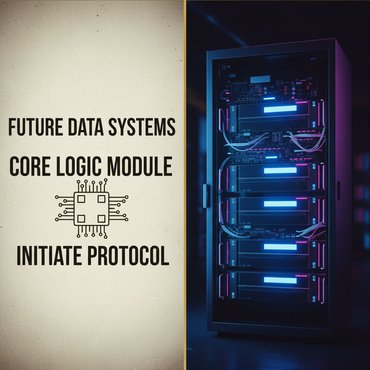
IBM established a fundamental management rule in 1979. A computer can never face legal or ethical accountability. Machines cannot bear responsibility for corporate outcomes. Today, corporate teams routinely break this rule with artificial intelligence.
Automating choices creates serious liability gaps when automated systems fail. Algorithms cannot sign contracts or sit in court. Human leaders must retain final authority on strategic actions. Maintain strict human ownership across all algorithmic workflows.
Key Takeaways:
- Computers cannot bear legal liability, making automated management decisions inherently dangerous for enterprises.
- Historical IBM guidelines explicitly barred automated executive choices to protect organizational responsibility.
- Audit your algorithmic systems to ensure humans make all binding strategic decisions.
The Periphery
How AI Incident Automation Silently Degrades Human SRE Expertise
Automating routine triage leaves site reliability engineers unprepared for novel, high-stakes outages. Studies in medicine show AI assistance dropped unassisted polyp detection rates from 28% to 22%. This analysis explains how automated incident response triggers cognitive atrophy. You will learn actionable practices to keep human engineers sharp during critical system failures.
AI tools handle routine incident response but slowly erode core engineering skills. Medical research shows diagnostic AI dropped unassisted doctor accuracy from 28% to 22%. Reliability engineers experience the exact same cognitive atrophy when AI resolves daily server alerts. When novel cascading outages strike, unpracticed teams fail to diagnose underlying root causes.
Key Takeaways:
- Automating routine incident triage degrades human troubleshooting capabilities through rapid cognitive skill atrophy.
- Long-term AI assistance reduced medical diagnostic accuracy by six points due to lost practice.
- Mandate manual incident response rotations periodically to preserve human diagnostic muscle memory.
How HackerBooks Aggregates Book Recommendations Directly from Hacker News Discussions
Tech communities hide valuable reading lists inside long comment threads. HackerBooks solves this issue by scraping and ranking every book mentioned on Hacker News. Automated curation turns noisy forum banter into actionable reading lists. Software engineers can now discover essential technical books based on real community votes.
Hacker News comments contain thousands of book recommendations. Finding these books usually requires manual searching through messy discussions. HackerBooks automates this work by indexing every mentioned title into one clean platform. Readers can quickly filter books by top mentions, rising trends, or custom topics.
Key Takeaways:
- Forum discussions contain high-signal recommendations because user votes filter out low-quality promotional content.
- Automated text indexing saves readers time by consolidating scattered comment links into organized collections.
- Audit your technical reading queue using community recommendation data to focus on proven books.
How Berkeley Transformed Unix into an Open Source Operating System
Bill Joy built 3BSD because existing software lacked virtual memory capabilities. Early Berkeley Unix grew rapidly from 30 hand-copied tapes into a DARPA-funded system. Grassroots academic culture bypassed corporate restrictions to distribute source code cheaply. This analysis shows how early Unix sharing mechanisms established modern open-source software patterns.
In 1977, Berkeley graduate student Bill Joy created the Berkeley Software Distribution. He bundled a Pascal compiler with line editors on magnetic tapes. AT&T could not sell Unix directly due to federal antitrust restrictions. Berkeley shared these software additions for just the cost of shipping.
Key Takeaways:
- Antitrust rulings forced AT&T to license Unix source code cheaply to research universities.
- Adding virtual memory to 3BSD solved hardware memory limits -- attracting DARPA research funding.
- Study legacy software distribution models to design better modern open source governance strategies.
How VOLTA Infostealer Uses LLMs to Automatically Rank Stolen Victim Data
Automated LLM triage removes the manual effort from cybercrime operations. VOLTA infostealer extracts credentials and session tokens, then routes victim profiles through an OpenRouter API. Claude Opus ranks each victim's financial value and opsec posture automatically. This hands-off approach lets low-skilled attackers prioritize high-value targets in seconds before defenders can react.
VOLTA infostealer turns raw stolen data into prioritized target dossiers using large language models. The malware scrapes credentials, local receipts, and session tokens across dozens of desktop applications. It routes the gathered profile through OpenRouter to Claude Opus with a custom analysis prompt. Attackers get a structured report ranking victim net worth and password hygiene automatically.
Key Takeaways:
- VOLTA delegates victim evaluation to AI models to automate high-value target selection.
- Multi-model fallback chains bypass safety guardrails by automatically re-routing refused analysis requests.
- Restrict headless Chrome process execution to block App-Bound Encryption token theft immediately.
The Firehose
More to Explore
- How Always-On Cloud Agents Automate Engineering Tasks Outside Your Laptop
- Why Forgotten Ancient Grains Outperform Modern Industrial Wheat in Extreme Climates