⚖️ Assess AI copyright risks after OpenAI ruling
Internal emails reveal AI executives knew their chatbots replace news websites directly
September 25, 2026
Internal emails reveal AI executives knew their chatbots replace news websites directly
The Deep End
Unsealed Emails Destroy OpenAI's Fair-Use Defense Against News Publishers
Internal emails reveal AI executives knew their chatbots replace news websites directly. Microsoft measured an 83-93% drop in click-through rates when switching users from Bing search to Copilot. These admissions destroy fair-use defenses by proving direct market substitution. Unsealed court documents give media companies massive leverage to force paid content licensing deals across tech.
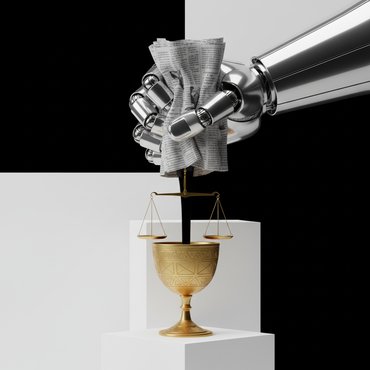
Unsealed court filings prove tech executives knew AI products threaten media survival. Microsoft recorded an 83-93% drop in click-through rates for news sites using Copilot instead of traditional search. This collapse proves AI platforms replace publisher traffic rather than driving new readers. Legal teams will now use these internal admissions to crush fair-use defenses in court.
OpenAI executives admitted their models substitute for original news articles. Evidence of bypassing paywalls shifts the case from grey legal territory into clear copyright violation. Tech giants already sign paid content deals with major media companies, proving a real licensing market exists. Publishers finally have the legal leverage to force usage-based AI licensing at scale.
Key Takeaways:
- Executive admissions of market substitution destroyed OpenAI's fair-use defense by proving direct financial damage.
- Copilot caused an 83-93% drop in traffic by summarizing news articles directly inside search answers.
- Audit your content access logs to detect unauthorized AI scraping behind paywalls immediately.
The Periphery
Google Releases Gemini 3.8 Models for Custom Text-to-Speech Generation
Natural language voice prompts now replace rigid synthetic presets in Google's newest speech models. Gemini 3.8 Flash TTS topped Hume AI benchmarks through prompt-based voice creation and stage direction. This breakdown explores how custom voice design slashes production overhead. You will learn to control accents, pacing, and emotional cues across major platforms.
Google released Gemini 3.8 Flash TTS and Flash-Lite TTS for dynamic voice creation. The flagship model scored a benchmark-topping 71.4 on Hume AI's Voice Design test. Creators can now build entirely new vocal identities from simple text prompts. This eliminates the need for expensive physical recording studios during early development.
Key Takeaways:
- Prompt-based voice design scored 71.4 on benchmarks by replacing static speaker presets with text controls.
- Mandatory consent recordings block illegal cloning before synthetic audio models generate matching profiles.
- Test line-by-line screenplay controls inside Google AI Studio to evaluate multi-speaker audio quality.
Why Generative AI Forces Publishers to Become Information Infrastructure
AI prompting can now replicate up to 80% of standard B2B content. Standard articles no longer differentiate media companies. Value has shifted to proprietary raw data and workflow integrations. This analysis shows how publishers build resilient information infrastructure by structuring unseen archives and powering client decisions.
Generative AI eliminates the traditional publishing middleman. Decent prompting can now replicate most commodity news articles instantly. FT Strategies tested archives across major B2B titles. They proved AI easily reproduces standard explainers and summaries.
Key Takeaways:
- Standard news creation loses value as AI lowers text generation costs across industries.
- Unstructured research notes transform into primary data assets when teams organize archives systematically.
- Audit your editorial archives immediately to identify proprietary data suitable for workflow integrations.
Unsealed Court Documents Show Tech Executives Questioned AI Scraping Legality
Unsealed court filings reveal internal tech executives privately condemned AI data scraping before public launches. A Microsoft director called the process the largest labor theft in human history. They knew it destroyed news business models. This analysis breaks down how internal warnings contradict public fair-use defenses and outlines legal risks facing generative models.
Newly unsealed court documents show Microsoft executives privately worried about AI web scraping. Director Brent Hecht called AI scraping an astonishing theft of unprecedented proportions. OpenAI leaders warned that ChatGPT poses an existential threat to commercial publishers. These internal admissions directly undermine the public fair-use defense companies present in court.
Key Takeaways:
- Internal Microsoft files label web scraping as labor theft, contradicting public fair-use legal claims.
- Unlicensed model training threatens content creators, triggering a destructive doom loop for web ecosystems.
- Audit third-party AI models for licensed training data to mitigate severe intellectual property risks.
Why Smart Home Appliances Are Secretly Creeping Into Private Spaces
Smart appliances now place cameras and microphones inside bathrooms and fridges, expanding home surveillance beyond the front door. Consumer demand for peace of mind drove indoor camera adoption to 30% of US households this year. This breakdown explores hidden privacy risks across smart home tech. Learn how lawmakers respond with new privacy bills and how to audit your domestic security.
Smart home devices are entering private spaces like bathrooms and kitchens at record rates. SafeHome.org reports 30% of US homes now operate indoor cameras. Manufacturers sell health benefits, but connected sensors create major privacy vulnerabilities. Products like $499 smart toothbrushes and camera fridges record daily personal habits.
Key Takeaways:
- Consumer demand for safety drove indoor camera adoption to 30% of US households.
- Weak hardware protocols allowed hackers to access thousands of smart robot vacuum cameras.
- Audit all connected home appliances quarterly to disable unnecessary microphones and remote cameras.
The Firehose
Digital Publishing & Platforms
- Why Axios Is Selling News Feeds Directly to Enterprise AI Models
- How AI Search Engines Evaluate Publisher Trust Beyond Standard About Pages
- Why Facebook Algorithm Changes Are Crushing Publisher Referral Traffic
- Why The Economist Produced 50 Pilots to Launch Video Successfully
Creator-Led News Strategies
- Why Young Readers Discover News Through Creators Before Mainstream Apps
- How Short Video Content Drives Massive Engagement for Local Government News
- Why Public Media Must Embrace DIY Creators to Survive Federal Defunding
- How High Schoolers Are Solving the Growing News Trust Deficit
Applied Machine Learning Systems
- How AI Agents Autonomously Discovered a Novel CRISPR-Like Enzyme System
- Why Claude Code Silently Ignores AGENTS.md Files When Telemetry Is Disabled
- Why Direct Probability Readouts Beat Generative Text Confidence in Machine Learning
- How Neural Networks and Binary Compression Dominate Bot Programming Arenas
Worth Exploring
- Why Postmortem Explanations Stop Teams From Fixing Systemic Engineering Failures
- How ETH Zurich Built a Self-Walking Robotic Hand for Confined Workspaces
- How Reverse Engineering Restored a 19th-Century Community Clock Tower
The Unintended Consequence
How Corporate Campaign Cash Failed to Block Historic Wage Settlement
Aggressive political spending failed to shield DoorDash from regulatory oversight in New York City. The delivery giant poured $1.4 million into super PACs to defeat mayoral candidate Zohran Mamdani, seeking to avoid enforcement of labor laws. Instead, the incoming administration secured a record $131.5 million wage-theft settlement for 264,000 workers—proving corporate campaign contributions cannot guarantee immunity from municipal labor regulations.
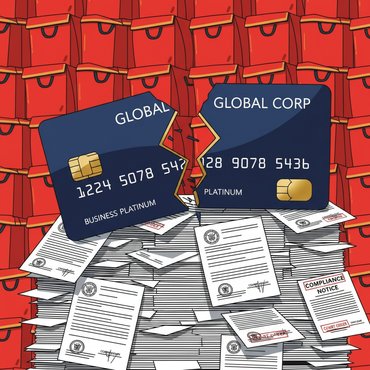
DoorDash spent $1.4 million targeting New York mayoral candidate Zohran Mamdani in 2025.
The company poured cash into super PACs to stop stricter worker protections.
Mamdani won the election anyway and immediately enforced municipal labor regulations.
The mayor secured a historic $131.5 million settlement for underpaid delivery workers.
Investigators found DoorDash systematically paid 264,000 workers below minimum rates or missed payments.
The settlement forced $115 million in direct restitution plus $16 million in fines.
DoorDash must now submit monthly compliance reports to city monitors for three years.
Corporate political spending failed to protect the company from regulatory enforcement.
Key Takeaways:
- Aggressive PAC funding failed to shield DoorDash from $131.5 million in municipal labor penalties.
- Systematic wage violations across 264,000 workers triggered the largest delivery settlement in city history.
- Audit internal payroll systems regularly to prevent costly regulatory compliance violations and penalties.