🧠 Understand how Wikipedia combats AI content
Discover how editors spot synthetic prose and keep factual information trustworthy.
October 29, 2026
Discover how editors spot synthetic prose and keep factual information trustworthy.
The Deep End
How Wikipedia Battles AI Content and Preserves Human Knowledge Integrity
AI-generated drafts made up 20% of new Wikipedia submissions in late 2025. Volunteer editors now deploy automated detectors to flag synthetic prose and broken citations. Search algorithms constantly change and threaten reader traffic. This analysis shows how open communities protect human knowledge bases from automated spam.
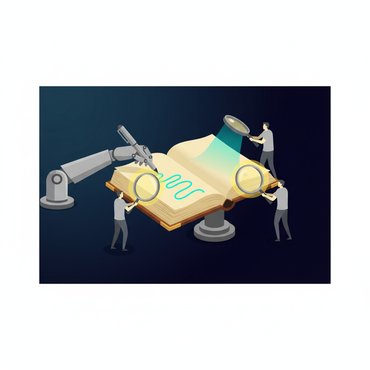
Automated text generators recently drove 20 percent of new Wikipedia submissions. Volunteers formed WikiProject AI Cleanup to delete synthetic prose and fix hallucinated citations. Machine text degrades search quality and undermines public trust in digital references. Editors now combine community policies with strict structural analysis to remove spam.
Flawed citations pose a major risk because AI models cite real sources incorrectly. New verification tools scan references directly to confirm whether source material supports claims. Publishers must adopt similar validation systems to protect content accuracy against automated errors.
Key Takeaways:
- Synthetic submissions reached 20 percent of new drafts, forcing Wikipedia to institute direct AI bans.
- Hallucinated citations create subtle errors when AI models cite real sources for incorrect claims.
- Audit incoming content using automated source verifiers to detect inaccurate references at scale.
The Periphery
How AI License Plate Tracking Turns Normal Road Trips Into Suspicious Activity
Police agencies use automated plate readers to track driver movements nationwide. AI algorithms flag normal road trips as suspicious patterns without warrants or probable cause. This analysis shows how automated tracking prompts unconstitutional traffic stops. It explains why public pushback against vendor Flock Safety is rising past 46% nationwide.
Police departments use license plate readers to monitor everyday drivers. AI systems flag normal travel patterns like cross-state road trips as suspicious. Officers then execute traffic stops without initial probable cause or warrants. Privacy advocates warn these broad sweeps threaten basic constitutional rights.
Key Takeaways:
- AI tracking turns normal driving routes into suspicious patterns through algorithmic heat maps.
- Public opposition reached 46% as major police departments cancel automated surveillance contracts.
- Audit local law enforcement surveillance policies to protect driver privacy rights.
Why Federal Courts Banned Pirated Data But Approved AI Training
A federal ruling forced Anthropic into a $1.5 billion copyright settlement over pirated Claude training data. Judge William Alsup banned storing unauthorized shadow libraries in central archives. He ruled training LLMs on legally acquired books counts as fair use. This landmark ruling creates a clear legal blueprint for commercial AI data sourcing.
Federal courts just drew a hard line between AI training and raw digital piracy. Anthropic agreed to a $1.5 billion settlement after scraping pirated books to train Claude. Judge William Alsup ruled that storing unauthorized texts in central servers violates copyright law. This decision forces AI developers to audit their training datasets immediately.
Key Takeaways:
- Anthropic's $1.5 billion settlement stems from storing pirated books in central training servers.
- Legal book acquisition protects AI training under fair use rules by transforming absorbed ideas.
- Audit all model training data sources to remove unauthorized shadow library downloads.
Why Waiting to Give Feedback Destroys Workplace Trust and Performance
Delayed feedback destroys manager-employee trust because unexpressed frustration accumulates over time. Holding onto performance issues until quarterly reviews blindsides employees and prevents early resolution. This analysis details the 72-Hour Rule for workplace feedback. Applying a strict 72-hour feedback limit stops minor issues from exploding into major conflicts. Leaders build stronger teams by resolving professional friction immediately.
Managers avoid awkward performance conversations to keep the peace. They log minor errors silently until the quarterly review arrives. This delayed critique blindsides employees and ruins workplace trust. Sitting on feedback transforms small mistakes into major trust crises.
Key Takeaways:
- Delayed performance feedback blindsides employees because unaddressed frustration builds silently over months.
- Holding criticism until formal reviews destroys workplace trust -- early intervention enables immediate course correction.
- Address employee performance issues within 72 hours of occurrence to prevent resentment.
How AI Redefines Engineering Leadership Beyond Administrative Work
AI automation cuts routine administrative glue work, forcing engineering managers to pivot toward high-level strategy and quality control. Tech companies now flatten middle management layers as AI handles status tracking and summary tasks. This analysis shows how managers can redefine their core value by directing AI-generated output rather than managing manual workflows.
Managers spend massive amounts of time collecting status updates and drafting notes. AI tools now automate this administrative glue work in seconds. Leaders can no longer justify their role through manual information routing. They must focus on high-impact areas like team alignment and architectural safety.
Key Takeaways:
- Automation eliminates routine status reporting: AI agents extract updates directly from developer tools.
- AI code tools generate high volume, forcing managers to audit low-quality slop continuously.
- Audit your software quality harness to filter bad AI code before review.
The Firehose
Enterprise AI Agent Development
- How Reddit Built an AI Prototyping Harness for Company Adoption
- How Platform Teams Build Scalable Golden Paths for AI Agents
- How LangChain Solves Key Architectural Problems in Company AI Agents
- Why AI Agents Increase Developer Workloads Instead of Reducing Them
Frontier AI Model Breakthroughs
- Google DeepMind's Genie 4 Generates Real-Time Interactive Multimodal Worlds
- AI Swarms Complete First Machine-Checked 15,000-Page Mathematical Proof
- How Simulated Sleep Stops Catastrophic Forgetting in Language Models
Modern Media and Journalism
- Why Publishers Are Launching Apps to Salvage Declining Web Traffic
- Why Showing Sources Increases Audience Trust in Digital Video News
- Why Legacy Broadcasters Drop Technical Staff for On-Ground Reporters
- Why Political Parties Are Building In-House Digital Newsrooms
- Why Independent Investigations Dominated the British Journalism Awards Shortlist
Horror Media and Psychology
- Why Controlled Fear and Shared Horror Media Drive Consumer Engagement
- How the Ben Drowned Creepypasta Reshaped Digital Horror and Online Folklore
- How Horror Films Help Audiences Process Modern Cultural Anxiety
Worth Exploring
- Why the Government Withholds Secret FISA Rulings Before Surveillance Votes
- How an Open-Source Local AI App Solved a Ten-Month Job Hunt
- Why Reversing Daily Work Routines Uncovers Hidden Business Insights
- How 21st Century Rock Flourishes by Crossing Traditional Genre Boundaries