🤔 Why algorithms prioritize profit over connection
Uncover how your feed changed from friends to trending fads. Learn the real reason.
June 10, 2026
Everyone is chasing eyeballs, whether it's Apple integrating Gemini for fancier photos or Reuters turning investigations into documentaries. Meanwhile, NPR is cutting staff and video podcasts are about to crash, proving that even with record-high sports viewership, someone still has to pay for all this content.
The Deep End
Social Media Shifts from Friends to Fads, Driven by Algorithms
Social media platforms now prioritize entertainment over genuine connection. Algorithms push fad content to maximize user screen time and ad revenue. Learn how this shift affects user behavior, marketing strategies for small businesses, and the future of online interaction.
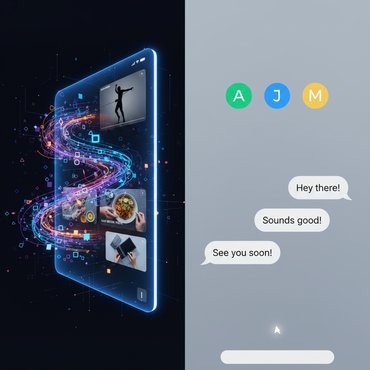
Social media platforms rapidly transformed into entertainment hubs. No longer do they focus on friend connections. Algorithmic feeds now push fad content to maximize screen time. This drives massive ad revenue growth, with Meta forecasting a 22% increase in ad sales.
Users increasingly consume professional content from strangers. Teenagers spend hours watching creators. Many people post less and limit exposure to criticism. Private messaging apps and groups now handle intimate communication, leaving public feeds for endless scrolling.
Key Takeaways:
- Social media platforms prioritize revenue growth over personal connections.
- Algorithms drive content consumption, pushing fads not friends to users.
- Adapt marketing strategies for entertainment-focused feeds, prioritize engaging visuals.
The Periphery
Apple Embraces Google Gemini for Next-Gen AI Architecture
Apple Intelligence receives a major upgrade directly integrating Google's Gemini models. This deep collaboration unlocks state-of-the-art understanding and reasoning capabilities. Features now include realistic image creation and advanced photo editing. Their Private Cloud Compute infrastructure promises enhanced user data privacy. Outside experts can immediately verify Apple's strong privacy guarantees.
Apple just announced a significant overhaul of its Apple Intelligence platform. This new architecture integrates Google's Gemini foundation models. This deep collaboration brings state-of-the-art AI to Apple devices. It includes powerful reasoning and multimodal support like image understanding.
Key Takeaways:
- Apple Intelligence now integrates Google Gemini foundation models for a major upgrade.
- New capabilities include advanced photo editing and realistic image generation features.
- Verify Apple's Private Cloud Compute privacy claims through external audits.
Reclaim Your Evenings: How Couples Build Connection Beyond the Screen
Evening routines often include autopilot TV viewing. Psychologist Mark Travers reveals why happy couples skip screens for deeper connection. Discover five simple, interactive habits that strengthen relationships fast. These activities reduce stress and foster teamwork, turning ordinary evenings into bonding opportunities. Learn how to transform your routine with minimal effort.
Many couples fall into a nightly TV routine. This often leads to feeling disconnected from partners. Psychologist Mark Travers identifies five activities that build stronger bonds. These are simple to implement and replace passive screen time. Couples reclaim quality time and emotional presence with these habits.
Key Takeaways:
- Passive screen time reduces active engagement between partners.
- Happy couples prioritize shared activities for deeper emotional connection.
- Integrate one interactive habit weekly to boost relationship satisfaction.
Siri Creator Vineet Khosla Reimagines Journalism with AI at Washington Post
Vineet Khosla, Siri's first engineer, sees journalism as vital for reliable AI. He leads the Washington Post's AI strategy. Khosla argues news always had product-market fit for 3,000 years. His vision challenges the chatbot-centric view of AI. This analysis details Khosla's strategy and why quality news is AI's missing link.
Vineet Khosla, the pioneering engineer behind Siri, now transforms the Washington Post. He identifies a critical gap in the current AI boom. Most AI builders ignore quality journalism. Khosla insists reliable journalism is essential for effective AI. He applies 15 years of AI expertise to a 147-year-old news titan.
Key Takeaways:
- Siri's creator believes reliable journalism provides essential data for AI.
- Quality news has offered product-market fit for 3,000 years, pre-dating AI.
- Build AI products now that integrate trusted news to combat misinformation.
Operating Models Bridge Strategy-Execution Gap in Media Organizations
Media organizations pursue growth through subscriptions and AI. Strategy alone often fails to deliver. A target operating model provides the blueprint. It aligns people, processes, and technology. This ensures successful transformation. It avoids foundational collapse like a poorly renovated house. Get an actionable framework to build resilient media operations now.
Many media companies chase growth in new markets or through AI initiatives. They discover strategy falters without proper execution. An operating model provides the essential blueprint for success. It aligns your people, processes, and technology. This model turns high-level visions into tangible actions.
Key Takeaways:
- Strategy without a target operating model often fails to achieve its objectives.
- Operating models align people, processes, and technology for effective strategy execution.
- Assess your current operating model to ensure it supports new strategic initiatives.
The Firehose
News Industry Transformation
- NPR Restructures: Buyouts Target Tech Shift, Federal Funding Gap
- Reuters Targets New Audiences With Investigative Video Journalism
- News Giants Pivot to Sports Business to Capture High-Value Audiences
AI & Media Strategy
- xAI Shifts Focus: Datacenter Powerhouse Over Frontier AI Lab
- Video Podcasting Hype Will Collapse: Focus on Sustainable Audio Growth
The Unintended Consequence
AI's Trillion-Dollar Illusion: Why the Bubble Demands Unsustainable Growth
AI giants face a financial reckoning, needing $2 trillion in annual revenue by 2030 to sustain current compute commitments. This analysis reveals the astounding financial projections required from NVIDIA, OpenAI, and Anthropic. Learn why current investment in data centers demands growth rates companies cannot achieve. Discover the lack of cost visibility crippling enterprise adoption today.
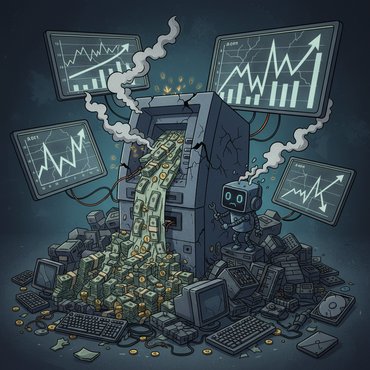
The AI industry demands unprecedented, unsustainable growth. Current compute commitments require over $2 trillion in annual revenue by 2030 from generative AI to be viable. This massive revenue target makes little sense based on adoption rates. Hyperscalers, like Microsoft, rely heavily on OpenAI's compute for their reported AI revenue.
AI's actual revenue growth shows signs of slowing. Many companies cannot track AI spending in real-time. Uber, for example, burned through its annual token budget in one quarter due to poor cost visibility. This lack of financial control suggests current enterprise spending is often irrational. It will likely limit future adoption and dampen revenue projections.
Key Takeaways:
- AI requires $2 trillion annual revenue by 2030 to justify current compute investments.
- Major enterprises lack critical real-time visibility into their AI spending costs.
- Implement strict AI spend controls immediately to prevent budget overruns and waste.