🛡️ Protect service containers from credential exploits
A compromised engineer's laptop opened access to internal service containers, enabling hackers ...
October 31, 2026
A compromised engineer's laptop opened access to internal service containers, enabling hackers ...
The Deep End
Inside the $6.3 Billion Binance Hack: How Compromised Credentials Bypassed Crypto Vaults
A compromised engineer's laptop opened access to internal service containers, enabling hackers to steal $6.3 billion from Binance in history's largest crypto theft. Security teams froze nearly half the stolen assets, but attackers exploited systemic authorization flows rather than private keys. This analysis details how state-sponsored threat groups bypass traditional vault security to target administrative infrastructure.
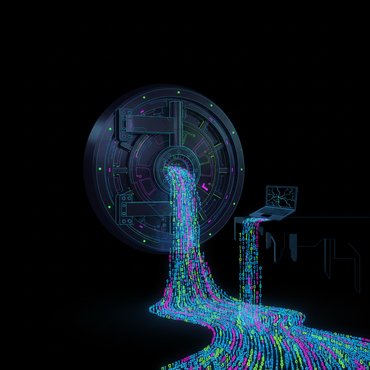
Attackers stole $6.3 billion from Binance in the largest crypto heist ever. A compromised engineer's laptop granted initial access to internal service containers. Hackers bypassed vault private keys entirely by manipulating system authority. Security teams froze over $2.4 billion, but billions remain in hostile hands.
Intelligence analytics link the massive breach directly to North Korea's Lazarus Group. Threat actors no longer focus on cracking complex wallet encryption. Instead, modern attackers target the systems and credentials managing administrative withdrawals. Security teams must audit infrastructure permissions before attackers exploit administrative access again.
Key Takeaways:
- North Korea's Lazarus Group stole $6.3 billion by exploiting compromised internal service containers.
- Targeting administrative authorization flows allowed hackers to bypass encrypted wallet keys completely.
- Audit internal service permissions immediately to prevent unauthorized administrative container access.
The Periphery
Why Delegating Prose to AI Destroys Writing as a Thinking Tool
Readers naturally detect the uncanny valley of AI prose, driving engagement down immediately. Relying on large language models for drafts bakes synthetic phrasing into your text that human editors struggle to purge. This analysis details why writers must craft their own sentences to preserve original thought and build lasting authority with human audiences.
Readers instinctively recognize the uncanny valley of AI-generated prose. Bland phrasing and corporate filler turn audience interest into instant revulsion. Text generated by software lacks the distinct human voice needed to hold reader attention. Relying on AI drafts bakes synthetic structures into your final work.
Key Takeaways:
- AI-generated text creates prose revulsion because readers instinctively detect synthetic tone patterns.
- Editing AI drafts fails to remove uncanny phrasing because structural habits persist.
- Write your own first draft to strengthen thinking skills and preserve authority.
Why Political Campaigns Are Weaponizing AI Before Voters Demand It
Campaign ads now attack data center tax breaks and AI risks, though under 1% of voters rank tech as their top issue. Politicians leverage these niche topics to tap into voter anxieties around energy bills and job losses. This analysis breaks down how midterms set the stage for aggressive tech regulation before the next election cycle.
AI is quietly reshaping political campaigns across America. Tech ad spending ranks sixth among Democratic campaign topics, beating out traditional issues like crime. Voters rarely name AI as their primary concern in polling. Candidates use data center tax breaks to trigger broader voter fears about rising electricity bills.
Key Takeaways:
- Midterm campaigns weaponized AI issues to trigger voter anxiety over rising local energy bills.
- Anthropic filed for an IPO despite an eighty billion dollar loss to fund infrastructure.
- Audit your enterprise AI dependencies to prevent security breaches and unexpected regulatory compliance costs.
How Retail Media and AI Drive UK Advertising Growth
UK ad spend surged 11% to £12.3 billion in Q2 2026. Retail media networks and social platforms captured most of these new budgets. Meanwhile, traditional display revenues collapsed by 20.7%. Learn how ad dollars are shifting toward closed platform ecosystems and where to reallocate your budget.
UK ad spending hit £12.3 billion in Q2 2026. Retail media jumped 31.2% to hit £1 billion in three months. Social media ad revenues also surged 22.2%. Tech firms and AI startups drove this boom to win new customers.
Key Takeaways:
- Retail media surged 31.2% -- direct buyer data is draining dollars from open web ads.
- Open display ad spend fell 20.7% as advertisers abandon non-platform web inventory.
- Shift digital ad budgets into retail networks and search to capture high-intent buyers.
How H.264 Video Compression Shrinks Data Volumes by 99 Percent
Uncompressed 1080p video streams consume 370 megabytes per second, breaking standard storage and network capacity limits. H.264 solves this bottleneck by removing invisible spatial details and repeated temporal frames. Spatial quantization, chroma subsampling, and motion vectors shrink raw files by over 99 percent. The final video retains sharp visual clarity on low network bandwidth.
Raw 1080p video requires 370 megabytes per second of memory bandwidth. A single 50 gigabyte Blu-ray disc holds just two minutes of uncompressed content. H.264 fixes this problem by discarding high-frequency spatial details that humans cannot see. Quantization converts pixel coordinates into frequency maps to strip out invisible high-frequency noise.
Key Takeaways:
- Spatial quantization cuts file sizes by discarding high-frequency details imperceptible to human eyes.
- Chroma subsampling cuts bandwidth by half through storing color components at quarter resolution.
- Evaluate video codec settings to balance visual compression efficiency against playback decoding power.
The Firehose
AI Model Technical Efficiency
- How Mistral Large 4 Redefines Open-Weight AI Efficiency and Security
- Why Google Gemini 4 Carbon Outperforms Competitors at Lower Inference Costs
Media and Enterprise AI Adoption
- Why Media Outlets Must Stop Treating AI as a Single Monolith
- Why AI Text Generation Ruined Writing as Corporate Proof of Work
- How Hearst UK Moves AI From Random Experiments to Governed Workflows