🔍 Why visual forensics matters for media trust
Generative fakes and eroding trust force newsrooms to prove their claims visually
August 12, 2026
Generative fakes and eroding trust force newsrooms to prove their claims visually
The Deep End
How Visual Forensics and AI Rebuild Trust in Modern Investigative Reporting
Generative fakes and eroding trust force newsrooms to prove their claims visually. Visual investigations combine satellite imagery with digital forensics to establish indisputable facts during crises. For example, AI models recently detected over 500 bomb craters in designated safe zones. This analysis reveals how open-source reporting exposes war crimes, scales investigative capacity, and restores reader trust through methodological transparency.
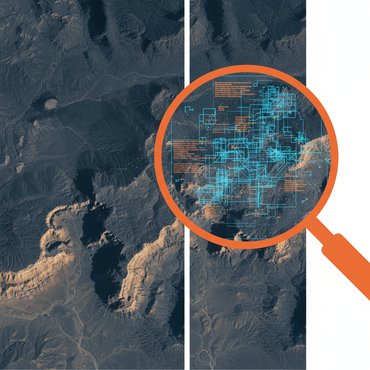
Modern investigative journalism relies on open-source digital forensics to uncover hidden truths. Investigators mapped 500 bomb craters in Gaza using satellite imagery and AI models. Showing raw evidence and verification methods directly restores audience trust against deepfakes. Digital evidence creates permanent accountability even when immediate political action stalls.
Visual teams combine geographic mapping with precise chronological timelines to verify claims. Computer vision algorithms scan massive video datasets so reporters focus on verification. These techniques expose systematic attacks that traditional reporting often misses entirely. Newsrooms must adopt open-source tools to survive in an automated misinformation era.
Key Takeaways:
- Open-source visual forensics restores media credibility by making digital verification methodology fully transparent.
- AI algorithms accelerated Gaza crater analysis, allowing human reporters to verify 500 bomb locations.
- Cross-reference satellite imagery with verified video timelines to establish indisputable facts during investigations.
The Periphery
Why Targeted Farmland Restoration Mitigates Global Biodiversity and Carbon Loss
Concentrated land use makes beef and dairy responsible for 41% of agricultural biodiversity loss worldwide. Just one-third of global farmland generates two-thirds of all farming carbon and nature damage. This analysis details how targeted land restoration addresses dual environmental crises simultaneously to protect global ecosystems.
Agricultural land conversion heavily damages global ecosystems. Oxford researchers found that beef and dairy production causes 41% of farmland biodiversity loss. Livestock farming generates eight times more carbon loss per calorie than plant crops. Restoring key agricultural areas offers immediate environmental relief. The environmental damage concentrates heavily in specific regions like South America and sub-Saharan Africa. Returning the top 30% of impacted farmland to nature recovers 170 billion tonnes of carbon. That restoration equals 15 years of global fossil fuel emissions. Policymakers must combine climate and biodiversity targets on high-impact land.
Key Takeaways:
- High land requirements make beef and dairy responsible for 41% of agricultural biodiversity loss.
- Concentrated geographic damage causes two-thirds of agricultural carbon loss on one-third of farmland.
- Prioritize habitat restoration on high-impact farmland to maximize carbon capture and species protection.
How Digital Migration Ended Japan's Million-Copy Manga Era
Digital reading apps sucked away print buyers, driving Weekly Shonen Jump's circulation below one million copies for the first time. Japan now has zero million-seller print magazines. This shift highlights a major industry transition from print anthologies to phone screens. Publishers must now redesign content discovery tools to prevent readers from falling back on familiar series.
Japan's print publishing icon just crossed a historic threshold. Weekly Shonen Jump's print circulation dropped to 985,000 weekly copies this quarter. The magazine downsized from its 1994 peak of 6.53 million physical copies. No print magazine in Japan maintains a million-copy distribution today.
Key Takeaways:
- Smartphone app adoption drove Weekly Shonen Jump's print run below one million weekly copies.
- Digital platforms cause choice paralysis: readers re-read classics instead of testing new series.
- Audit digital storefront recommendations to promote original, unproven titles alongside top hits.
Why Media Subscriptions Must Move to AI Platforms and Messaging Apps
Publishers face shrinking direct traffic as audiences migrate into AI interfaces and messaging apps. Portable subscriber credentials protect recurring revenue and expand premium content reach. Spotify Open Access already proves how cross-platform authentication keeps paying users engaged outside native apps. Media companies must standardize these access layers now.
Media consumption is shifting away from publisher websites and towards third-party platforms. Readers now ask questions inside ChatGPT, Gemini, and WhatsApp. Publishers must let paid subscribers unlock premium reporting directly within these external tools. Spotify already uses open access protocols to authenticate existing subscribers across external podcast apps.
Key Takeaways:
- Publishers lose traffic because readers prefer platform-native AI interfaces like ChatGPT over destination apps.
- Cross-platform authentication preserves subscription revenue: tech platforms gain premium data without costly content licenses.
- Standardize industry authentication requirements before pitching tech companies a unified minimal viable access product.
How Global Newsrooms Shift From AI Guidelines to Structural Architecture
Traditional human oversight fails as AI output volume overwhelms newsroom editors. A survey of 448 newsrooms reveals 57% lack AI representation. Exhausted editors face cognitive surrender when reviewing fluent AI text. News organizations must now bake editorial principles directly into technical infrastructure. Moving beyond basic guidelines protects brand trust and mitigates systemic bias.
Newsrooms face severe editor burnout from verifying constant AI content. A study of 448 media organizations found 57% have no dedicated AI lead. Overworked staff default to cognitive surrender when AI text looks fluent. Relying on simple human review creates dangerous hidden bottlenecks.
Key Takeaways:
- Overworked newsroom editors suffer cognitive surrender: fluent AI outputs mask underlying factual errors.
- A 448-newsroom survey found 57% lack AI representation, leaving staff without structural policy guidance.
- Audit newsroom AI workflows to embed automated provenance tags directly into database systems.
The Firehose
Digital Publishing Shifts
- How Zero-Click Search Engine Summaries Redefine Publisher Referral Traffic
- Why Niche Print Magazines Thrive as Social Media Algorithms Fail
Computational Systems & Algorithms
- Why Compression Algorithms and LLMs Are Mathematically the Exact Same Thing
- How Interactive Simulators Model Complex Dutch Railway Networks in Real Time