💡 Understand why solar power is overtaking nuclear
Rapid capacity additions pushed solar generation past global nuclear output for the first time ...
October 19, 2026
Rapid capacity additions pushed solar generation past global nuclear output for the first time ...
The Deep End
Why Rapid Solar Expansion Just Surpassed Global Nuclear Energy Production
Rapid capacity additions pushed solar generation past global nuclear output for the first time in mid-2025. Massive cost drops enabled solar to add 510 gigawatts in a single year. Meanwhile, nuclear capacity stalled due to persistent project delays averaging nearly eleven years. Energy leaders must adapt grid strategies as variable solar power replaces base-load generation.

Solar energy reached a historic milestone in early 2025. Monthly solar generation exceeded global nuclear output for the first time ever. Developers added 510 gigawatts of solar capacity in 2025 alone. Operating nuclear capacity actually shrank outside of China during that same period.
Extreme construction delays continue to drag down the nuclear power sector. Recent reactors took an average of eleven years to build and launch. Cheap battery storage deployment jumped sharply to support incoming variable renewable power. Energy planning requires immediate focus on grid flexibility and storage capacity.
Key Takeaways:
- Rapid annual additions of 510 gigawatts drove solar generation past global nuclear output.
- Nuclear market share dropped to 8.8% -- long construction delays averaged nearly eleven years.
- Prioritize grid-scale battery installations to handle rapidly growing variable solar energy generation.
The Periphery
Why New York's Game Ownership Bill Threatens Publisher Subscription Models
Digital storefronts sell revocable licenses instead of permanent software copies. This setup allows publishers to erase titles like Ubisoft’s The Crew overnight. New York's Power To The Players Act mandates offline modes before server shutdowns. This legislation redefines consumer rights, forcing studios to abandon forced obsolescence models.
Lawmakers are targeting digital storefronts that sell temporary access instead of real software ownership. Ubisoft wiped The Crew from user accounts in 2024 after closing online servers. New York's new bill requires studios to ship offline modes before ending server support. This legislation mirrors a growing legislative push across multiple states to protect digital consumers.
Key Takeaways:
- Revocable software licenses allow publishers to erase games like The Crew overnight.
- Mandating end-of-life offline modes forces major studios to overhaul live-service software architecture.
- Audit digital rights management protocols to ensure compliance with emerging consumer protection laws.
How to Elevate AI Workflows Through Altitude, Depth, and Range
User mental models cap AI utility at simple task execution, ignoring exponential model growth. Higher abstraction prompts unlock durable workflows by automating high-level business goals instead of micro-tasks. This guide outlines four ambition vectors—Speed, Altitude, Depth, and Range—that transform routine prompts into expert-level solutions.
AI models expand faster than human habits adapt. Most professionals still treat tools like Claude as basic search engines or copyeditors. Shifting from task execution to outcome ownership creates durable, automated workflows. For example, asking AI to keep applications crash-free replaces hundreds of manual bug reports.
Key Takeaways:
- Prompting for outcome-level objectives builds durable workflows because models handle end-to-end task execution autonomously.
- Demanding expert statistical tools over markdown tables prevents surface-level AI roleplay from degrading analysis quality.
- Audit your current prompts to reframe single tasks into high-level strategic outcome requests.
Why Figma Built Executable Code directly into the Design Canvas
Figma's new Code Layers feature runs real code directly on design canvases. Fast AI builders forced this shift by skipping design ideation to ship working apps instantly. Code Layers lets teams compare multiple coded approaches side-by-side on one shared surface. Early tests show agencies iterate 30% faster with half the documentation.
Figma launched Code Layers in open beta to bring live code onto design canvases. Product teams can convert design frames into code or import GitHub repositories directly. The system generates real pull requests straight from the visual canvas. Teams compare multiple coded solutions side-by-side without leaving their shared workspace.
Key Takeaways:
- Code Layers runs live code on canvases because solo IDEs kill collaborative design.
- Standardized data definitions drove Tableau agent accuracy from 45% up to 85%.
- Audit your team's model dependencies quarterly to swap costly defaults for cheap alternatives.
How AI Velocity Is Threatening Commercial Desktop Software Models
AI coding tools accelerate open source software development to unprecedented speeds. A new open source image editor gained 1,500 feature updates within five days of release. Rapid developer contributions now match commercial feature output without subscription fees. This shift threatens paid software models and forces legacy vendors to rethink their pricing strategies.
AI development tools are eroding the commercial moat of proprietary desktop software. A free open-source image editor logged 1,500 code improvements in its first five days. Over 7,000 developers joined the project almost overnight. Single creators can now build feature-complete software products without massive capital reserves.
Key Takeaways:
- AI tooling accelerates open source software development, rapidly eroding traditional commercial software moats.
- Automated coding workflows drove 1,500 feature updates in five days, outpacing enterprise engineering teams.
- Evaluate open source AI tools today to protect your commercial software strategy against disruption.
The Firehose
AI Impact on Business & Product
- How to Audit and Fix Your Brand Presence in AI Search
- How AI Shifted Product Management Bottlenecks From Code to Judgment
- Why AI Synthetic Respondents Erase Nuance in User Research
AI Research & Evaluation
- Why Machine-Generated Math Proofs Trigger Existential Grief in Researchers
- Why Current AI Benchmarks Miss 90 Percent of American Jobs
- Why Neural Networks Are Far More Interpretable Than We Thought
Systems & Software Engineering
- How Anthropic Cuts Code Reverts by 40% Using Automated Review
- How Pele Renders Themeable Diagrams Up to Five Hundred Times Faster
- How Modern CPUs Unlock Peak 90s DOS Software Rendering
Worth Exploring
- Why Psychological Defeat and Tool Aversion Hold Professionals Back
- How Malware Distributors Target Automated Media Servers Like Sonarr
The Unintended Consequence
How Common Food Dyes Can Turn Biological Tissue Temporarily Transparent
Soaking biological tissue in tartrazine solution matches the refractive index of water to proteins. This simple optical shift renders opaque raw chicken translucent within twelve hours. Independent researchers now use common yellow food dye to probe internal structures without expensive equipment. Here is how refractive index tuning makes low-cost biological imaging possible at home.
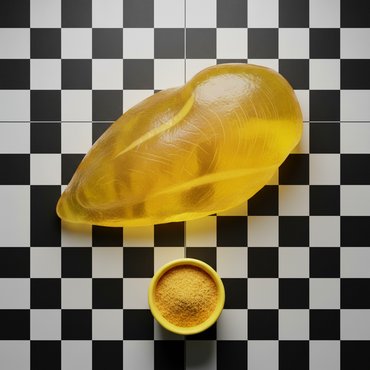
Light scatters when passing between water and protein inside biological cells. Absorbing dye molecules like tartrazine shift the refractive index of water closer to 1.45. This alignment prevents light rays from bouncing around inside raw tissue. Home scientists can achieve visible transparency using a basic 0.19 M dye bath.
A twelve-hour soak in tartrazine made two-millimeter chicken slices translucent enough to read grid lines. Traditional tissue imaging relies on expensive laboratory clearers and complex chemical protocols. Cheap food dyes democratize biological observation for independent researchers working outside traditional labs. Standard physics models explain this refractive shift without destroying underlying cell structures.
Key Takeaways:
- Tartrazine dye elevates water's refractive index to match cellular proteins, reducing light scattering.
- A 0.19 M dye bath rendered two-millimeter raw chicken slices translucent after twelve hours.
- Test low-concentration dye solutions on thin tissue samples before attempting high-molarity protocols.