How did community action help a homeless driver? 🤝
See how local support helped a driver overcome homelessness and get back on the road.
July 07, 2026
The internet promised to democratize information, but today's headlines reveal a stark reality: Google's AI is quietly dismantling the open web, news outlets are masking financial ties to prediction markets, and even LLMs are struggling to make sense of a JavaScript-heavy world, leaving us to wonder who, exactly, is still benefiting from all this 'progress'?
The Deep End
Community Action Unlocks Roadblocks for Homeless Driver
One woman's struggle shows system failures. A local community rallied to help, demonstrating direct action's power. They pooled resources to provide a vehicle. This story highlights systemic obstacles and how collective effort overcame them. It provides a blueprint for effective, neighbor-led support.

Facing homelessness is a complex trap. Elysia, a Seattle native, lived in a broken vehicle with her dogs. Systemic barriers, like suspended licenses and insurance costs, blocked her way out. Her situation highlights how easily people get stuck.
Neighbors stepped up, offering practical support. They found a reliable van and converted it for living. This community solved immediate problems: transportation, housing, and income. Their actions show a direct, effective path to addressing individual homelessness.
Key Takeaways:
- Systemic barriers create poverty traps for vulnerable individuals.
- Small community efforts can provide life-changing resources and support.
- Invest in direct, practical help to solve immediate needs effectively.
The Periphery
Google's AI Search: The New Ad System Without The Web
Google's I/O keynote revealed major search changes. The classic ten blue links are gone. Google now delivers AI-generated answers. This analysis explores Google’s new advertising model. It details "token auctions" and "prominence allocation." These systems replace traditional ads, embedding paid content within AI responses. The new search also diminishes the open web's role. It prioritizes user data for deeper personalization.
Google's recent I/O event unveiled an AI-powered search. The company plans to replace traditional search results. Users will now see "generative UI" and "information agents." This marks the biggest Search change in 25 years. This shift also redefines Google's core monetization strategy.
Key Takeaways:
- Google's AI search embeds ads in generated content via "token auction" or "prominence allocation."
- The new search reduces external links, absorbing web content into Google's own AI answers.
- Review your search alternatives; Google's model blurs lines between ads and content.
LLMs Neglect JavaScript-Rendered Content: Implications for Training Data
Large Language Models often ignore modern web content. JavaScript-heavy sites appear as blank shells to their crawlers. This dramatically affects training data quality and model recall. Understanding this gap helps developers ensure their content is discoverable by AI. Implement server-rendering to improve LLM comprehension.
Do URLs influence LLM outputs? Yes, but not always how you think. A URL in a prompt biases an LLM only if its content made it into training data. The critical factor is how web crawlers ingest information versus how modern websites render. Many crawlers, like ClaudeBot and GPTBot, download JavaScript but never execute it.
Key Takeaways:
- Most LLMs cannot "read" JavaScript-rendered content from simple URLs.
- Web content requiring JavaScript for display is largely absent from model training data.
- Server-render critical website content to ensure LLMs can process and recall it.
Unscheduled Conversations Drive Cognitive Gains and Organizational Trust
Solitary thinking limits problem-solving; dialogue unlocks deeper understanding. This analysis shows why conversational exchange sparks insights isolation cannot, leveraging cognitive science and real-world examples. Learn how informal interactions build critical organizational infrastructure and avoid AI's 'sycophant problem' to gain a competitive edge.
Most serious thinking models prioritize isolation. People believe deep work happens alone. This approach fails to grasp how discovery truly occurs. Thinking about understanding problems benefits from dialogue. It forces precision internal monologue rarely requires. Unscheduled conversations often deliver the best insights.
Key Takeaways:
- Thinking aloud forces conceptual precision that solo thought cannot achieve.
- Listeners provide essential real-time feedback, correcting and shaping ideas actively.
- Preserve unscheduled conversational spaces to foster cognitive and relational growth.
Open Source Burnout: Lodash Creator Reveals Personal Toll, Sustainable Path Forward
Lodash, used by 100 million npm downloads daily, highlights developer burnout. Creator John-David Dalton shares his journey from daily maintenance to stepping back. This analysis reveals the personal costs of open source, new governance models, and how communities support critical infrastructure today. Learn to build sustainable open source projects.
Open source projects often depend on single maintainers. Lodash, with over 100 million daily npm downloads, began this way. Creator John-David Dalton faced immense pressure. Personal crises forced him away from the project for five years.
Key Takeaways:
- Open source maintainer burnout often stems from overwhelming responsibility, personal crises.
- Lodash creator John-David Dalton stepped back for 5 years due to personal life events.
- Implement shared governance models to distribute burden and ensure project sustainability.
The Firehose
Future of News & Media
- Local News Trust Declines: Partisan Divides Now Impact Community Information
- Civic Media Breaks Journalism Silos, Connects Communities for Information Access
- News Outlets Mask Financial Ties to Prediction Markets
Personal & Professional Growth
- Reading Rewires Brains: Unlocking Cognitive Power Beyond Screens
- Burnout Is Not Your Fault: Reclaim Time From The Achievement Society
- Why Junior Engineers Must Create Value, Not Just Complete Tasks
- B2B Personal Branding: Lead with Expertise, Not Just Personality
- Mastering New Leadership Roles: The Expert Beginner Playbook
Software & AI Development
- Automated Software Verification Closes the Quality Gap
- CS Degrees Still Deliver Value Despite Entry-Level Hiring Freeze
- Why Hand-Crafting Code Builds Better AI-Powered Development Workflows
- Review AI Agent Plans Visually: Streamline Code Feedback Loops
Worth Exploring
- Advertising Fails: Why Audiences Pay to Avoid Marketing Today
- Complex Systems Always Fail: Stop Chasing Root Causes
- Amazon Deploys Enough Satellites for Initial Leo Internet Service
- Optimize Your Shower Time: Health Benefits Depend on Your Goals
The Unintended Consequence
Agent-to-Agent Testing: A New Paradigm for AI Development
Developing sophisticated AI agents requires robust testing. This article introduces an innovative agent-to-agent testing loop. A primary agent rapidly iterates new features with a target agent. This process accelerates development cycles and generates high-quality tools. Learn how this 'massively parallel procrastination' approach delivers superior results.
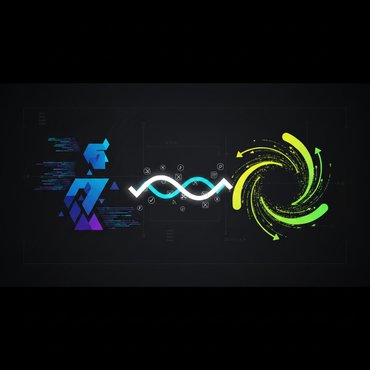
Building advanced AI agents demands reliable credential management and robust testing. Sharing sensitive access, like GitHub credentials, directly with agents creates significant security risks. The solution involves heavily compartmentalized ephemeral subagents; no single agent holds all access keys. This architecture protects private information and ensures secure external communication.
The development pattern for this system uses an agent-to-agent iteration loop. A lead agent, Claude Code, talks directly to the target agent, Ada-Sen. Claude proposes changes, Ada reviews and tests. This automated feedback loop identifies issues faster. It allows rapid deployment of new features and quality of life improvements.
Key Takeaways:
- Compartmentalize agent credentials to prevent single points of failure.
- Utilize agent-to-agent testing loops for accelerated AI development cycles.
- Implement automated feedback between agents to drive rapid feature iteration.