
Hi and welcome back to “Trust the Process”. The weekly newsletter where I share my own progress over the week and interesting links I found along the way.
Without much preamble, let’s dive into this week’s issue.
Process
Over the summer, I admittedly hit a bit of a plateau when it comes to agentic coding. At my day job, I work on Billow, a tool we’re building for agencies like us (and also freelancers) to manage their finances and operations. I’m the only dev on the project, which means I’m in charge of all the code that hits prod.
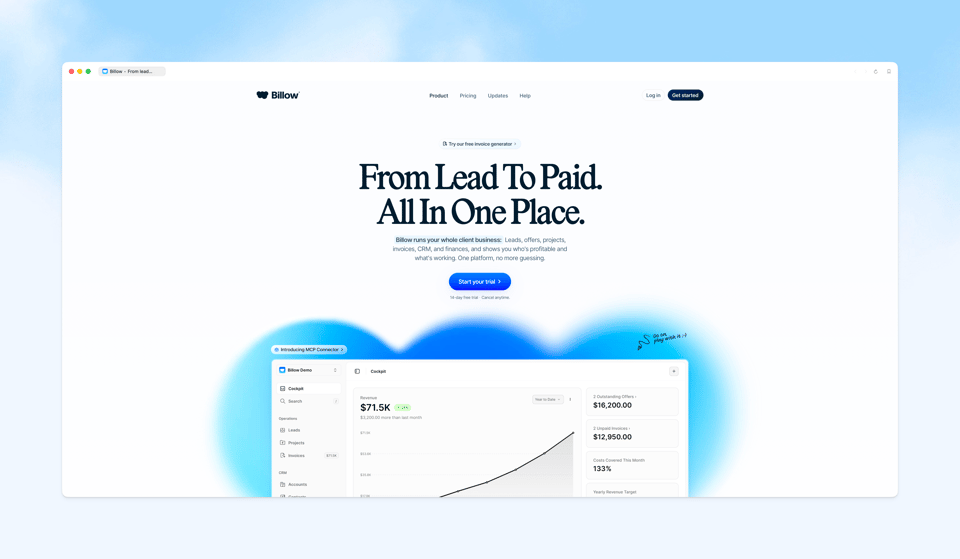
I like the autonomy that brings, that I’m also heavily involved in actual product decisions and that we can iterate relatively fast. On the other hand, during that time, it often felt like the actual coding process wasn’t that fulfilling. I enjoyed the planning aspect of it, shaping the feature, but actual implementation was pretty much all done with Claude Code. Which meant that I would often spec a feature, kick off the machine and then come back to it and would have to review a whole chunk of code. Rinse and repeat. That felt very mentally taxing, as the models back then still needed quite some handholding and my own workflow and trust in the system wasn’t that good either.
But things changed drastically in the past couple of weeks, and this also has a huge influence on how I now build Morgenblau, my RSS reader.
It began when I started to look more closely at what the guys at Amp, mainly Thorsten Ball, are up to. I had saved that tool in my brain under the category “looks nice, but it’s just too expensive for me to use” because I thought it was just another harness but where you had to pay API prices.
Turns out, Amp has come a long way and their main schtick right now is Orbs, where your agents live. This is just a fancy way of saying that they provision ephemeral VMs for you that your agents can work in. No more worrying about Claude just installing random Homebrew packages on your actual computer. And it also unlocks so many more possibilities that I can’t even name them all here. Also, Amp now supports just connecting your OpenAI subscription to it, so you don’t have to worry that much about token usage anymore.
If you’re even just a tiny bit into agentic coding, I highly encourage you to check out what Thorsten has been putting out lately. He’s a great educator and you might also know him from his famous “Writing an Interpreter in Go” and “Writing a Compiler in Go” books. He fits my own criteria pretty well for who you should actually listen to and get advice from during these uncertain times for our industry (while still critically questioning claims and trying it out yourself of course): Someone who actually builds a product with real users and also has a proven track record from before the AI era.
Someone who fits that bill quite well too is Lauren (also known as @poteto), who works at Cursor on Grok Bot. She has a popular collection of Skills called “pstack” that I’ve known about for quite some time, but what actually got me hooked were two articles she shared lately (unfortunately only on X) about the philosophy of her stack:
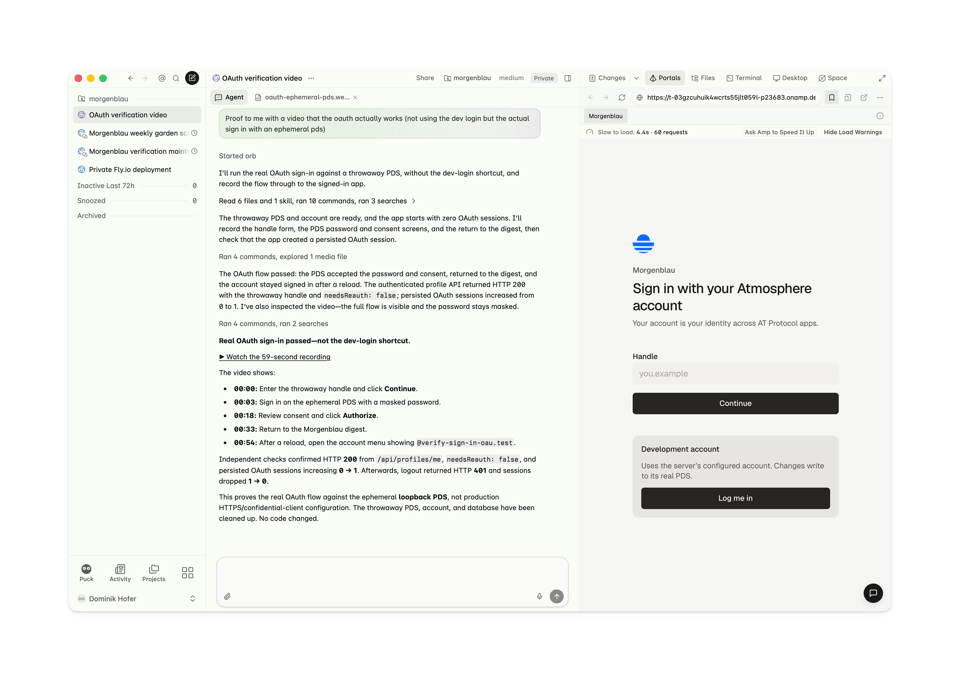
Part 1 talks about the fact that the most important thing you can do to trust your agent more is to help it verify its work. Not as in “just write more tests”, but actually writing helpers, CLI tools, and more that the agent can use to verify the things it built. Thorsten also has a similar mantra where he asks his agents to give him “irrefutable proof that it works”, and the agent will send back a video after it’s done. I’ve tried it out myself in Amp and it’s truly fascinating.
Lauren also talks about this concept of needing a “gardener” for your repo that regularly checks if the whole verification setup is still up to date, all the skills are current and more. Also something I’ve now set up for Morgenblau in an Orb.
Part 2 also is very interesting, but my main takeaway there was that maybe doing too much planning (like I previously did for specific features in my project) actually hurts the performance of agents. Especially with the newer, more efficient models like Opus 5.5 or Sol 6.1, the best way is often just to allow the agent to incrementally prototype a feature with you guiding it and adding your taste. This also means that you should only ever think about the smallest next step that moves the product forward and not so much spec a whole feature beforehand and then just let the agent build it. Amp actually encourages this very heavily too with their fancy “Ship” button in each thread that, by default, pushes directly onto the main branch.
That small incremental approach is also something I’m adopting for both Billow and Morgenblau. Morgenblau is still very much in the development stage, so that’s easy to handle there. For Billow, it means making use of feature flags and enabling these alpha features only for our own internal workspace (thanks Laravel Pennant for making this easy!). This also allows us to dogfood our own product by using it as we build it and thus shape the product along the way.
Of course, I’m still far away from the autonomous setups that Lauren or Thorsten talk about. That is also the reason why I for example didn’t just install pstack and use it as is. Instead, I let it inspire my own workflows and adapt the approaches to my needs and projects. I’m still keeping my beloved “interview-me” skill around (adapted from Matt Pocock’s “grill-me”), but I now also have a more pstack-oriented setup that focuses more on actually building prototypes.
To close this section off, one very interesting and concrete thing that I did for Morgenblau from all these learnings was the following: In order to let an agent in an Orb verify its work properly, it can now spin up a whole ephemeral version of the app, including a PDS, and then test features end to end.
I never thought of automating my verification process that much before, but it makes so much sense. And getting a little video of an agent actually logging into the app and clicking around always brings me joy. And a bit more confidence that the feature actually works and that it’s not just my test suite passing.
Finds
Cool things I discovered this week:
- Ten Lines Of Code That Changed My World – Pixelambacht: This is why I fell in love with programming.
- Atlas: A visualization of the current discourse on Bluesky. I love that the open social web enables this.
- DARKMATTER: Steve released my new favorite theme for both my code editor and my terminal.
- Hacker News: Pretty much sums up my current feelings about how AI is changing Software Engineering.
- Alice GG • Attention is all you have: One of the main reasons why I’m building Morgenblau.
- EmDash 1.0: an open source CMS for Astro: The “Wordpress but modern” project finally hit 1.0, thinking about integrating it into my personal site.
- perfolios. — curated portfolios for creatives: If you’re redesigning your personal website, you maybe want to bookmark this.
- Tupo · A daily sudoku-style logic puzzle with a twist: I love regular Sudoku already but this daily puzzle adds a nice twist to it.
- The Great Acceleration: How Humanity Changed Earth: The Earth has existed for about 4.5 billion years and it’s crazy how much humans shaped it even in the last 200 years. Scroll further down for some beautiful visualizations.
From the blog
I didn’t publish any posts since the last issue.
That’s it for this issue. Thanks for sticking around! If you have any questions, feedback, or just want to say hi, reply to this email and it will land straight in my inbox.
Until the next one, Dominik
You just read issue #3 of Trust the Process. You can also browse the full archives of this newsletter.
Add a comment: