
I’ve been in deep appreciation the past few days of the enormous weight that’s been lifted off my shoulders by the funds everyone contributed towards us buying an oven. It’s still a budget oven, but one that I hope can catapult us towards even bigger and better ovens. And most importantly, it enables me to bake boradinsky rye bread and my grandmothers’ honey cake (medovik). These are two spiritually important slavic staples that the menu would just not be complete without.
I could opine about how it can be quite hard to ask people for money, but everyone who contributed so generously and so quickly after we launched our fundraiser unraveled my fears about making such a request. We met our goal within 24 hours of me posting to instagram, and have had a few more donations trickle in, which has brought us close to $6,000. I am in awe.
And so incredibly grateful. It is such a gift to receive such generosity. Thank you to everyone who has cheered us on.
As for the boradinsky rye bread and medovik, I’d like to give each of these a moment of recognition, too.
This rye bread for me, emobodies the meaning of the phrase “labor of love.” Not that all cooking and baking isn’t that, but the dough for this bread is particularly a pain in the ass to work with. It is sticky and muddy and doesn’t take shape the way a sourdough magically coheres into a mass that, ultimately, sticks to itself. This rye dough sticks to itself, and everything else it touches. The dough is 80% rye flour, 20% wheat, and because rye flour gets its structure from complex sugar connections (compared to wheat flour which gets its structure through gluten proteins making connections), and because it requires more water than a wheat dough, the resulting dough is far stickier. This article from Modernist Cuisine describes it way more scientifically that I will attempt to do here. This also makes it forgiving to work with, as you don’t really need to worry about shaping your dough enough before baking. You kind of just scoop it into loaf pans and bake and it magically turns into loaves.
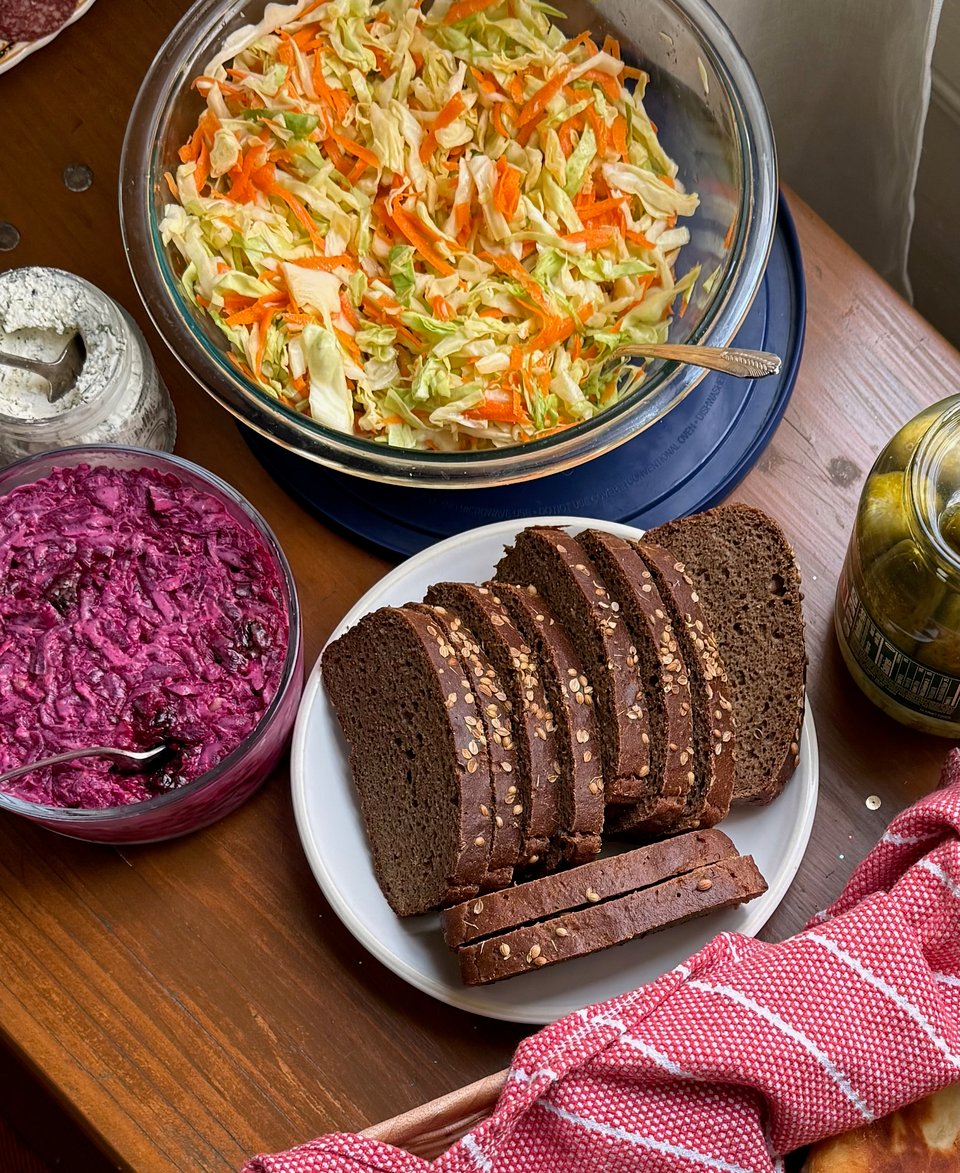
This bread is quintessential. And therefore worth every bit of annoyance it occasionally elicits in me. In Russian, we refer to it as “chorney chleb”, or black bread. I grew up hearing my dedushkas grumble “a gde chleb?” if bread was not immeditely visible within the spread of salads and zakuski on the table. This is the Italian bread equivalent for Slavic cuisine, used for sopping up the sour cream and tomato juice left behind from a summer salad, and for those last few precious drops of borsch that you can’t quite scoop with a spoon. For those who miss it, I can’t wait to bake it for you. For those who have never had it, I can’t wait to bake it for you.
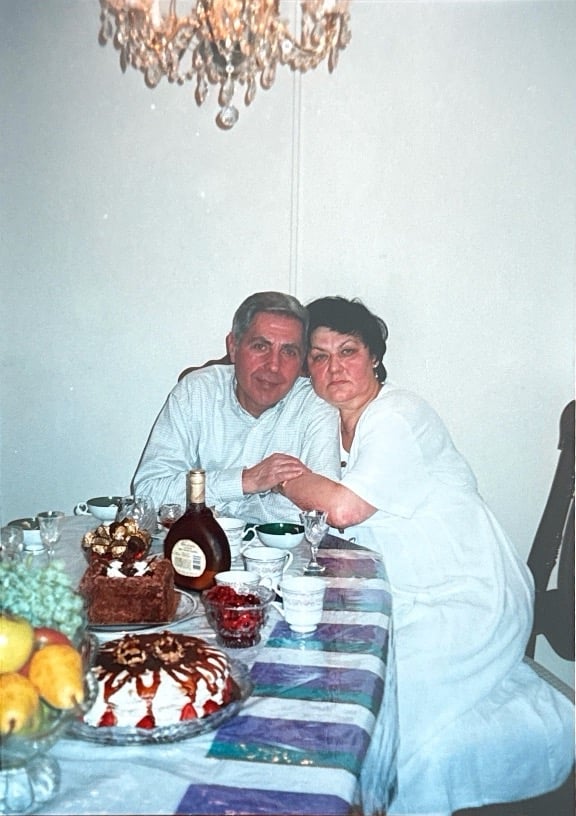
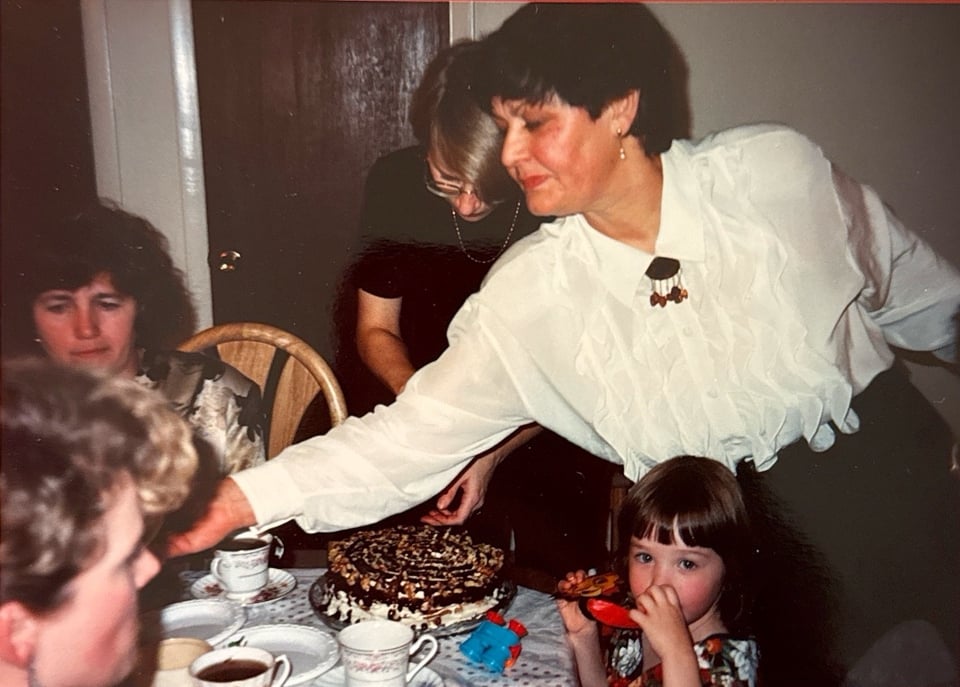
And as for the medovik, this was a staple on every celebratory table when I was growing up. Baba Gilda was the orchestrator of this miracle, realized from just a couple of tablespoons of butter, two eggs, two tablespoons of honey, flour, sugar, and sour cream (lots of sour cream). This cake feels like alchemy. Originally baked in spite of the scarcity of all the things cakes typically lean heavily on (butter, eggs, sugar), it still ends up being a showstopper, many-layered, and distinctively honey-flavored. This is emblematic of many Soviet-era cakes, light on butter, eggs, and sugar but somehow still satiating and special. I can’t wait to share this one with everyone too.
And we are getting closer to being able to share these delicious things. I am currently hounding the health department to inspect me, am waiting on the new oven to arrive so we can lock things in for the fire marshall inspection, and am working on getting other systems set up for opening. In the meantime, if you’re looking for a way to support us while we work towards opening please check out our merch sale! The sale will be open through the end of this week, so get your bandanas and shot glasses while you can!
Katya
You just read issue #10 of Dom Zakuski. You can also browse the full archives of this newsletter.