The Power of Planets in Shaping Your Future
People have always looked up at the night sky and felt that the cosmos carries a kind of order, one that mirrors the rhythms of human experience. Whether you approach astrology as a spiritual practice, a symbolic language, or simply a tool for reflection, it offers a structured way to think about change. Planets, seasons, and cycles create a narrative framework that can help you notice patterns in your choices, relationships, and resilience. This article explores how planetary symbolism can illuminate your strengths and blind spots while keeping your agency at the center of the story.
A Celestial Blueprint, Not a Cage
Astrology becomes most useful when it’s treated as a map rather than a mandate. A map can show mountains, rivers, and roads, but it doesn’t force you to travel a single route. In the same way, planetary archetypes suggest tendencies in how you process emotions, where you seek security, and what motivates your ambition. The chart can highlight where you might overextend, where you may hesitate, and what environments help you thrive. If you want a practical starting point, take a moment to decode your horoscope chart and write down three traits you recognize immediately, plus one that surprises you; that single exercise can open a new, more honest self-conversation.
The Inner Compass of the Sun and Moon
Two of the most personal symbols in astrology are the Sun and the Moon, often described as your core identity and emotional baseline. The Sun speaks to vitality, values, and what makes you feel proud to be yourself. The Moon points to instincts, comfort needs, and the ways you self-soothe under pressure. When you understand both, you gain clarity about why you sometimes feel torn: one part of you wants recognition, while another part wants safety. That tension isn’t a flaw; it’s an engine that can power growth, especially when you learn how to give each part a healthy outlet.
Mercury’s Lens on Decisions and Dialogue
Mercury is often associated with thought patterns, language, and the way you interpret daily life. Its symbolism is less about “being smart” and more about how you gather information, filter it, and deliver it. Some people process quickly and speak spontaneously; others think in pictures, pauses, or layered meaning. When stress rises, Mercury themes show up as overthinking, miscommunication, or scattered focus. Improving Mercury’s domain usually looks mundane: better questions, clearer boundaries in conversations, fewer assumptions, and a willingness to repeat what you heard before responding.
Venus and Mars: Desire, Drive, and the Art of Choice
Venus and Mars are frequently discussed as love and passion, yet their influence reaches beyond romance. Venus reflects what you find attractive, what you value, and how you receive pleasure and harmony. Mars describes assertion, initiative, and how you move toward goals, especially when obstacles appear. Together, they reveal whether you pursue what you want directly or indirectly, whether you avoid conflict or confront it, and whether you confuse intensity with intimacy. Noticing these patterns can help you choose partners, projects, and commitments that fit who you are instead of who you think you should be.
Jupiter and Saturn as Teachers of Timing
Jupiter and Saturn often appear in life stories as turning points: one expands, the other refines. Jupiter represents growth through exploration, optimism, and meaning-making; Saturn represents maturity through effort, responsibility, and realistic assessment. When Jupiter themes dominate, you may say yes to opportunities that broaden your world. When Saturn themes dominate, you may be asked to build structure, accept limits, or define what “enough” looks like. The most grounded progress happens when you let Jupiter inspire the vision while Saturn designs the scaffolding that makes it sustainable.
The Outer Planets and Long-Range Reinvention
Uranus, Neptune, and Pluto move slowly and are often linked with generational shifts, deep transformation, and collective change. Their symbolism can still feel personal when it lands on sensitive areas of your chart, especially during major transitions. Uranus correlates with disruption and liberation, breaking routines that have become too tight. Neptune corresponds to ideals, imagination, and also fog, helpful for compassion, risky for denial. Pluto speaks to endings that clear space for rebirth, pushing you to confront what you avoid and reclaim power that was handed away.
Houses: Where Life Events Gather Meaning
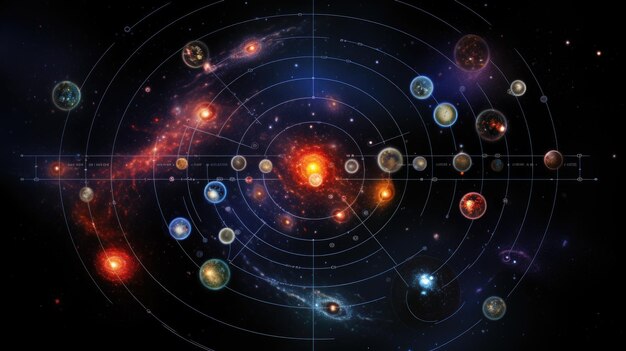
If planets are the “what,” houses are the “where.” They represent life arenas such as career direction, friendships, family foundations, creativity, and inner healing. Two people can share the same planetary sign placements yet experience them differently if those placements fall in different houses. This is where context becomes everything: ambition feels different in the workplace than it does in private, and courage looks different in relationships than it does in financial decisions. When you examine the chart this way, you learn to separate the raw impulse from the environment that shapes its expression.
Movement Through Time and Turning Points
Astrology often becomes vivid when you look at cycles, how planetary movement interacts with your chart over months and years. Transits and progressions are used to describe seasons of initiation, consolidation, and release. Instead of predicting specific events, a practical approach is to track themes: increased responsibility, renewed confidence, emotional sensitivity, or appetite for change. When you watch patterns over time, you can plan better, choosing when to push, when to rest, and when to revise. Many people find that observing planet position effects over a few months sharpens self-awareness more than any single reading.
Using Astrology as a Personal Development Tool
The healthiest use of astrology supports self-responsibility. It can help you name your needs, own your habits, and understand your triggers without blaming fate. A good reading should leave you clearer, not fearful; more curious, not dependent. Try using the chart as a journaling framework: pick one planet or one house each week and ask what it wants you to practice in real life. Over time, you’ll notice that insight becomes action, and action becomes change. That’s where the real astrology life impact shows up, not as a dramatic prophecy, but as a steady, meaningful recalibration.
Conclusion
Your future is shaped by countless factors: choices, relationships, opportunities, setbacks, and the stories you tell yourself about what’s possible. Astrology, at its best, offers a symbolic mirror that can help you see your patterns with more compassion and precision. The planets don’t remove your freedom; they give you language for understanding the forces you already feel. When you treat the chart as a guide for reflection and intentional living, you can move forward with greater clarity, better timing, and a deeper respect for your own evolving path.