
The Architecture Behind OpenClaw
Inside OpenClaw's architecture, a GUI for parallel agents, and tonight's live stream: bootstrapping Rails with Claude Code.
This Week's Video
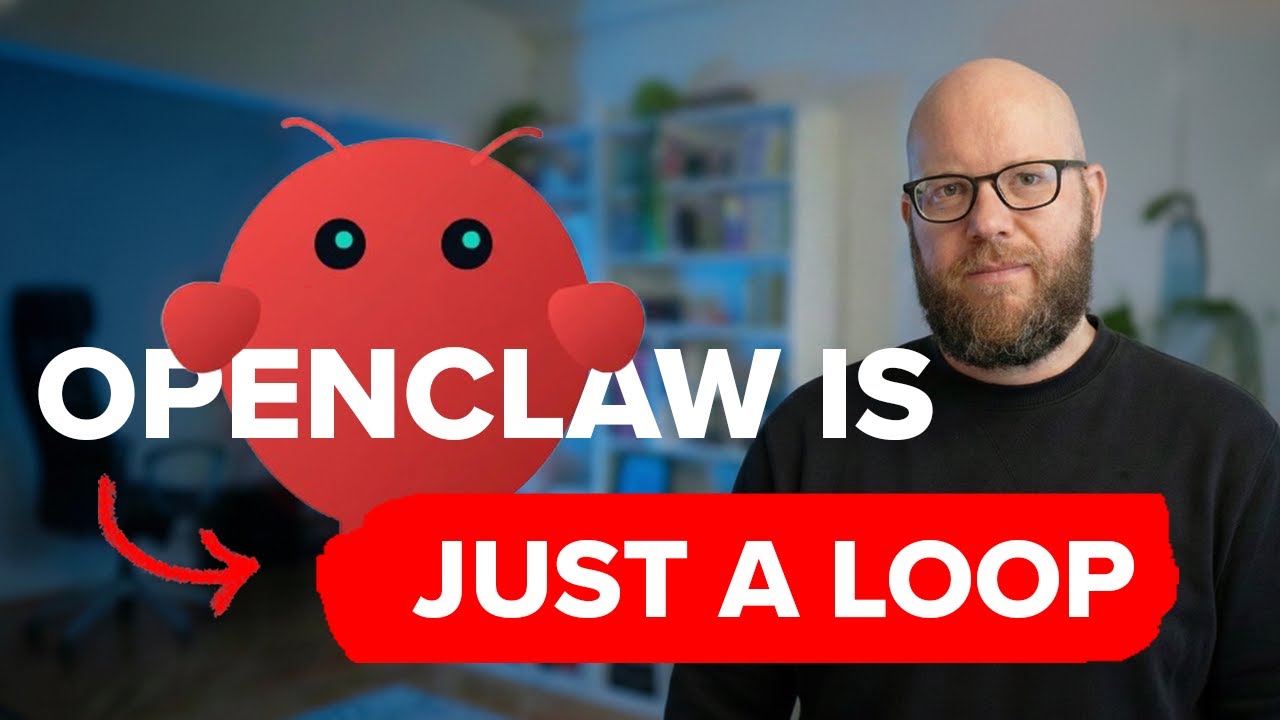
If you've been following along the AI space you've probably at least heard of OpenClaw. Formerly known as ClawdBot, formerly known as Moltbot. There's been a lot of hype going around. People reporting their workflows where their agent buys a Twilio phone number and calls them at 3am. Someone who set up an automation to text their wife every morning.
To cut through the hype this week I'm covering how this actually works under the hood. It's actually a great example of agentic architecture. If you want to learn more about how it works check out the video
Live Tonight
This evening I'll be doing my first live stream at 7:00pm Eastern. I'll be starting a fresh Ruby on Rails app with Claude Code. If you're curious to see how I kick off a project with AI tune in. I'll also post the live stream after the fact in case you miss it. My goal is to bootstrap a new Ruby on Rails app, set up auth using Rails' has_secure_password and getting it deployed to Railway. Tune in or catch the recording after.
Conductor: A GUI for Parallel Claude Code Sessions
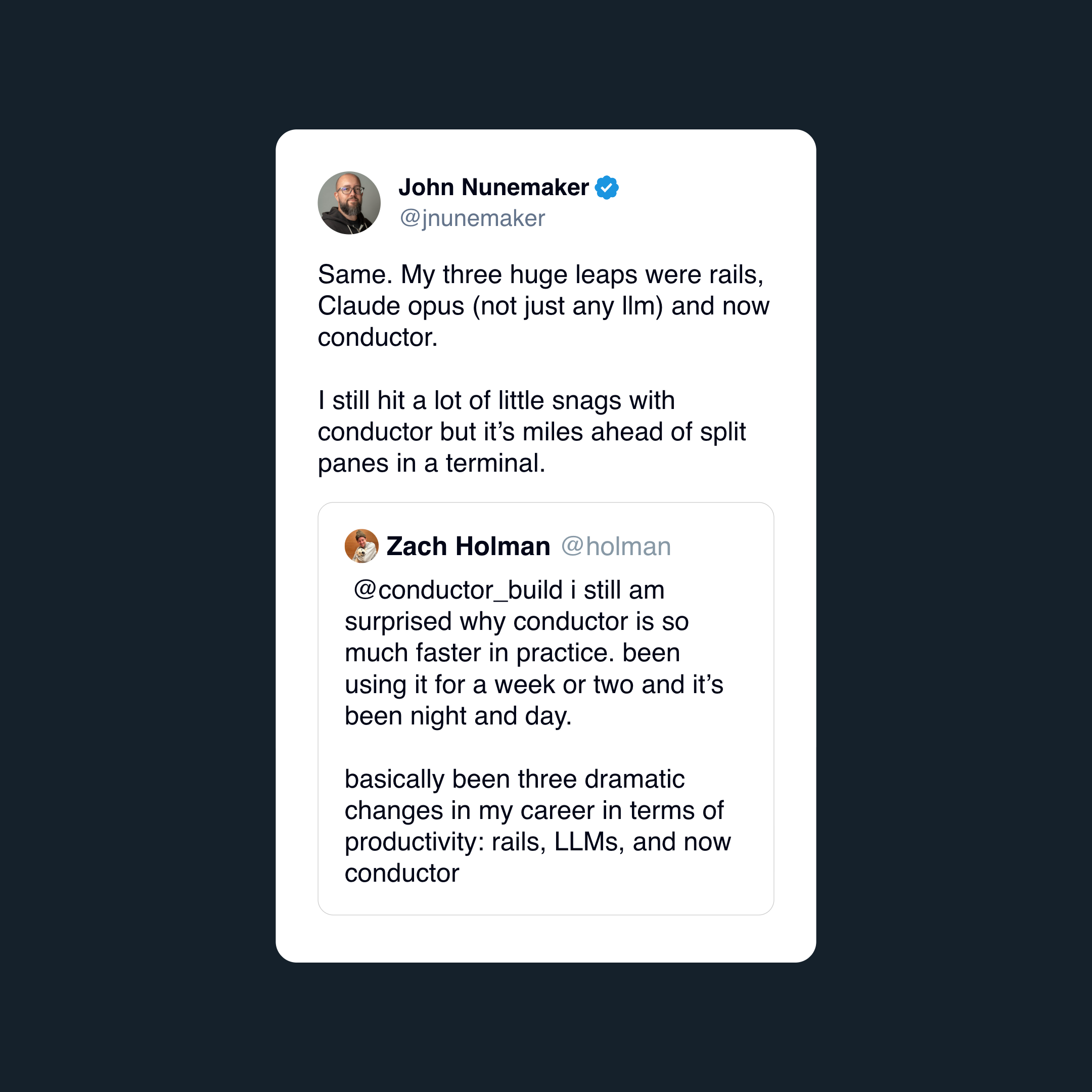
Last week I covered git worktrees for running multiple Claude Code agents in parallel. This week I tried Conductor, a tool John Nunemaker mentioned that wraps the same concept in a GUI.
The setup was painless - within a few minutes I had multiple worktrees running separate Claude Code sessions for different features. Under the hood it's still git worktrees, but you don't need to remember git worktree add or git worktree remove commands. Everything's visual. If you watched last week's video and thought "this is useful but I'll never remember the syntax," Conductor is worth a look. It's particularly nice if you're less comfortable in the terminal or just want to reduce friction when spinning up parallel workstreams.
I might do a deeper video on this soon - let me know if that's interesting.
Quick Hits
XCode users can now get the full power of Claude Code via the Claude Agent SDK. Read more
Claude Code hooks can now run in the background. This is particularly useful if you want to have something run as part of a hook but it shouldn't block. One example use case, running a formatter as a PostToolUse. Just set async: true as part of your hook definition.
You can now share Claude Code sessions with others. Potentially useful to work through things with a teammate.
That's it for this week. If you're working on integrating AI into your development workflow and want to go deeper, I offer 1:1 coaching.
Hit reply if you have questions - I read every response.
– Damian


Add a comment: