
Citrus Generosity
2026-02-04
On Sunday, the high was 85 degrees fahrenheit making it the hottest February 1 in 23 years.
I think about the Long-Tailed Brush Lizard and the Anna’s Hummingbird that visit the tree outside my kitchen window. My visitors are most likely younger than five and this warm February is normal for them.
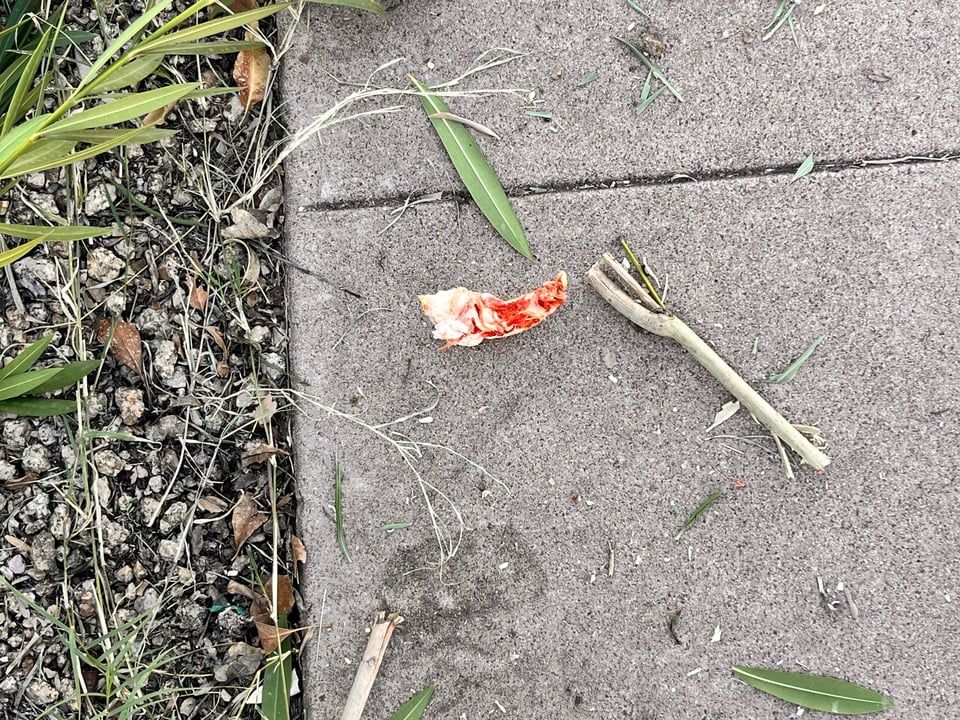
The citrus trees in my neighborhood are starting to show off their wares. Every few yards of my walk I pass lemons, oranges, and grapefruits nestled in dark green leaves. Some trees groan under the weight already, others only show a smattering of underripe orbs. On the edge of the sidewalk, a rough section of grapefruit lays as if someone has eaten and run. I keep walking.
February and March are a generous time in Phoenix. If you have a citrus tree, you’re overburdened, and share. If you don’t, you accept the overabundance of others. People trade oranges for lemons, grapefruits for limes, until everyone has what they want. Passersby snatch a lemon off a tree and (usually) no one cares. There’s plenty. Too much for the humans, so the woodpeckers, finches, rats, and raccoons take their turn. This citrus generosity makes me believe there is more generosity in myself and my neighbors.
Citrus trees can live to be one hundred years old, which means many of the trees in my neighborhood witnessed the previous hottest February 1, in 2003. That was a year before my parents moved us to the desert and I thought I’d experienced the hottest heat of my life.
It requires less and less imagination to accept that the current climate is not just a little bit hotter, but a true crisis. The Sonoran Desert region has always been hot and its inhabitants have always made do. But people who have the means are leaving Arizona in droves after years of transplants, like my family, flocking to it for opportunity. Animal migration shifts, too, but what about the trees?
Opportunity has an additional definition for me now: Extraction. And those who’ve had the least impact on worsening the climate crisis will probably be the last ones here, making a life in the desert. I circled back to take a photo of the grapefruit slice, wondering who enjoyed it and how long the tree will bear fruit.
Become a Patron of Good Enough
All readers enjoy the same newsletter, but as a Patron you support the work that goes into creating TGEW and get access to premium features that offer additional engagement for those who want more.
Premium features include:
A weekly chat on the Tomato Tomato Discord - resuming TODAY at 3pm EST (link below the paywall)
Discounts on my zines, workshops, and office hours
The full archive
Infrequent personal behind-the-scenes updates
Don't miss what's next. Subscribe to The Good Enough Weekly: