
Daily Log Digest – Week 4, 2026
2026-01-19
Your reality is someone else's content
your reality is someone's content - by Adam Aleksic #culture #communication #social-media
I’ve written before about how there are two types of communication: the ritual kind, meant for connecting with other human beings, and the transmission kind, optimizing for distribution of information. Every new technology since the telegraph has continued to prioritize transmission at the expense of ritual. All that matters is how much you can communicate, to how many people—everything is done for views.
But ritual is what gives life meaning. There’s a reason it feels better to talk with a friend on a picnic blanket than watch your friend’s TikToks for the same length of time. Either way, you’re getting the same amount of information about your friend, but only the picnic feels special.
These are only the most obvious examples. I think the viral Sydney Sweeney ad last summer was another example of clip farming, just less on the nose. The real advertisement wasn’t the weird genetics joke, but the subsequent discourse around the advertisement. The purpose of the campaign was to make people uncomfortable enough to talk about it online, and now American Eagle stock is up 100%.
The more we rely on the transmission view of communication, the less incentive there is to treat other people with care. Companies like Cluely can raise millions of dollars by promoting academic dishonesty, and crypto scammers can inflate the value of their shitcoins by popularizing racist memes. If the point is distribution above connection, it’s okay to hurt other people as long as your message gets across.
Friction was the feature
Friction Was the Feature - John Stone's Blog #ai #slop
Today, a candidate armed with an LLM can parse dozens of job postings, lift phrasing from each, and generate a set of keyword-optimized cover letters in no time. They can auto-tailor their resume to each posting. They can submit 30 applications in one sitting.
This is better, right?
Not for anyone, actually. Applications soar; recruiters drown. So we bolt on more automation: applicant tracking systems, resume parsers, AI interview schedulers. We convince ourselves we’ve built a better machine, but we haven’t redesigned the only machine that matters: the system matching the right people to the right work.
…
We automated the production of artifacts but haven’t fixed judgment. The result is a marketplace of immaculate verbiage with very little meaning, of noise without signal.
Everyone looks more “efficient.” Very little about it feels effective.
Recruiting is just one place where friction used to be the feature. When the marginal cost of creating words falls toward zero, any system that uses those words as a proxy for quality begins to fail.
For a long time, we treated certain artifacts as measures of effort or quality. A thoughtful cover letter. A carefully written reference on behalf of a colleague. A multi-page strategy doc. They were hard enough to produce that their existence told you something about the person behind them.
Once AI arrived, those artifacts quietly turned into targets. We told people to personalize outreach, respond to more emails, and write more detailed documents. LLMs optimize for those metrics beautifully. But as they do, the metrics stop tracking the thing we actually care about: competence, sincerity, fit, progress.
This is what I call “Goodhart’s inbox”. We’re surrounded by messages and docs that perfectly satisfy the surface criteria we asked for. But the more we optimize for these outputs, the less focused we are on outcomes: whether anyone is actually understanding each other or moving work forward.
2026-01-20
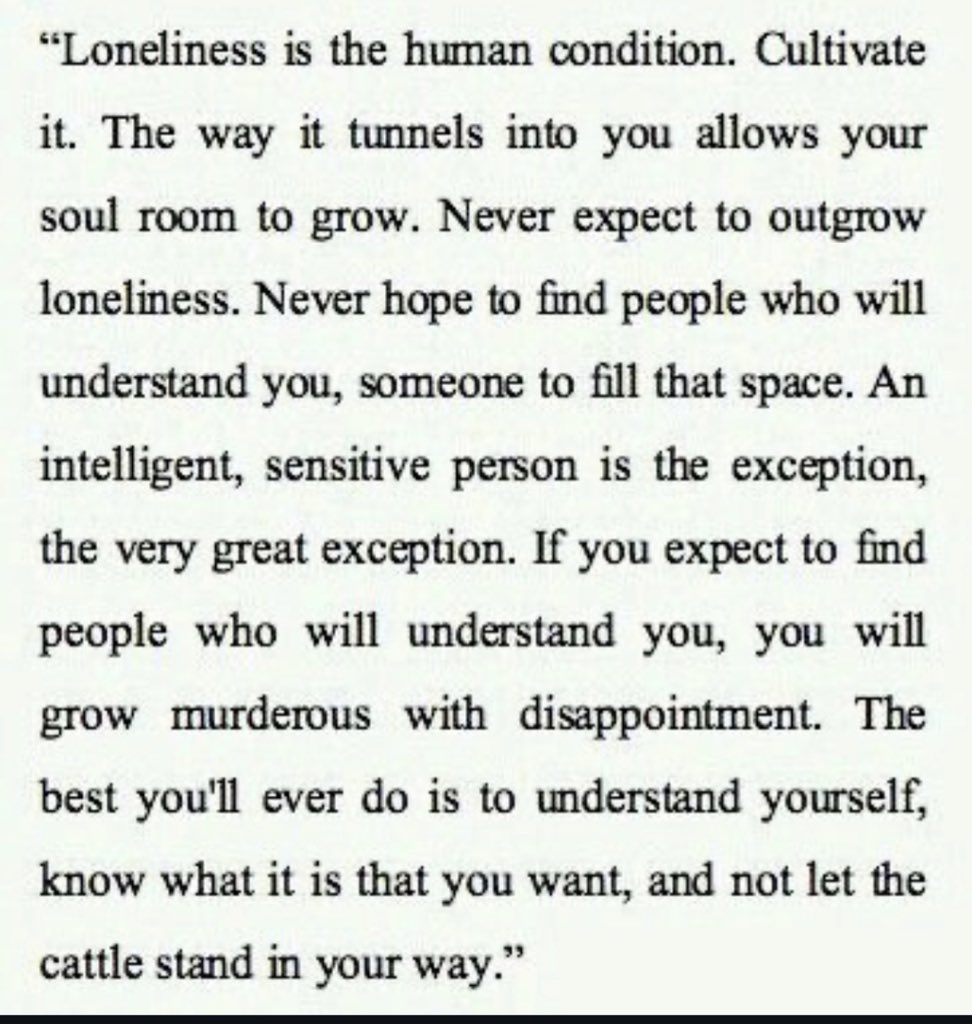
Loneliness
2026-01-21
Cafe Recommendations in Tokyo's Sangenjaya district
The Sprudge Guide To Coffee In Tokyo's Sangenjaya District | Sprudge Coffee
I love guides that go beyond focusing just on cities, but instead focus on specific neighborhoods. Bookmarking this one for my next trip to Tokyo.
Just two brief stops on the Tokyo Metro away from the incessant energy of Shibuya sits the district of Sangenjaya—a youth-oriented neighborhood characterized by its station-side maze of winding alleyways crowded with bars and hidden eateries, a thriving community of both local and international students milling in the streets, and a collective of young creatives opening up shop. Fueling this ever-present undercurrent of vitality in Sangenjaya are countless cafes, each seeking a precarious balance between preserving traditions and pioneering innovations.
…
Sangenjaya exists, sandwiched between buzzing neighborhoods like bustling Shibuya and youth-oriented, trend-loving Shimokitazawa, as a laid-back location where the quiet magic happens. More than just the hometown of one of Tokyo’s most lauded roasters, Sangenjaya plays host to a coterie of atmospheric and innovative cafes, all of which provide delightful spots to sip, snack, and soak in the charm of one of Tokyo’s most beloved enclaves.
2026-01-22
Using ChatGPT in relationships
The new relationship dealbreaker: using ChatGPT | Dazed
A sore subject rather than a make-or-break in her relationships, Kaya has also had several heated conversations with someone she’s dating over his “constant” use of AI chatbots. In the future, she predicts she’ll start to distance herself from people who rely on them.
For similar reasons, 30-year-old Ross is already there. “It does put me off people,” the content editor says, explaining that if they went on a date with someone who openly used ChatGPT, they wouldn’t see them again. “When someone has the app, I think less of them.”
Thinking less of somebody just because they have ChatGPT is probably a bit much. But relying on it for articulating your thoughts is a bit messy. I suppose I would be okay with it if it is used to tighten up a piece of informational content. But using ChatGPT to argue with your friend or partner on text is a huge red flag. I would reconsider my relationship with that person if that happens.
2026-01-23
Oliver Burkeman on "Unclenching"
The Imperfectionist: The freewriting way of life
Freewriting, as you may know, is the technique whereby you set a timer, open a text file or notebook, then just write whatever comes to mind, even if it looks like absolute garbage. It’s been central to my process of clarifying and expressing ideas for a while now, despite the fact that it challenges every bit of my perfectionistic, control-freakish soul. More recently, though, I’ve started to see it as a microcosm for a whole way of being in the world. Because I think the principles of freewriting contain an entire philosophy for living a meaningful, vibrant, productive life – whether or not you happen to be a writer or use the technique itself.
This is because freewriting is a form of what I’m going to call (perhaps regrettably) unclenching – a psychological “move” that involves relaxing in the midst of anxiety and uncertainty. Surrendering control, but thereby unleashing a vastly greater capacity for action, creativity and aliveness.
In the end, I suppose that this unclenched approach to life works because it reflects how things actually are. We all are freewriting our lives, inevitably, whether we like it or not. Even the most hidebound plan-maker and routine-follower is still choosing, again and again, to keep following those plans and routines, in each new moment that arises. And even the most anxious worrier, forever trying to rule out future uncertainties, remains subject to the fundamental truth that anything could happen at any moment.
Unclenching into life demands that we relax in the midst of the uncertainty and insecurity, because “in the midst of the uncertainty and insecurity” is where we always are. The reward is the aliveness, agency and sense of purchase on life that comes from no longer pretending otherwise.