
Daily Log Digest – Week 27, 2026
2026-06-28
Everything Is Perfume Commercial #beauty
Loved this bit from Jessica DeFino's latest newsletter
**Q: I’ve spent many years of my life fixated on the way I look, but now that I’ve divested a lot more from beauty culture I find myself more and more confused as to what I should do now. It may sound like a silly question, but I genuinely don't know what I should value. Do you have any suggestions?
A:** Truth, love, freedom, equality; beauty in nature, art, and people other than yourself; creativity and expression (these things exist outside of eyeshadow); play; political action and activism (feminist policy! freedom for trans folks! socialized healthcare! living wages! labor protections! whatever!); literature; the Real; the environment; music; connection, community, collectivism; travel; learning about local birds; being a good friend; family (given or chosen); God; finding trinkets at the flea market; foraging for mushrooms; cooking; baking bread to distribute to neighbors and the needy; history; herbalism; quilting; erotic pleasure; witchcraft… Just a few ideas. There’s so much to find beyond your face.
2026-06-29
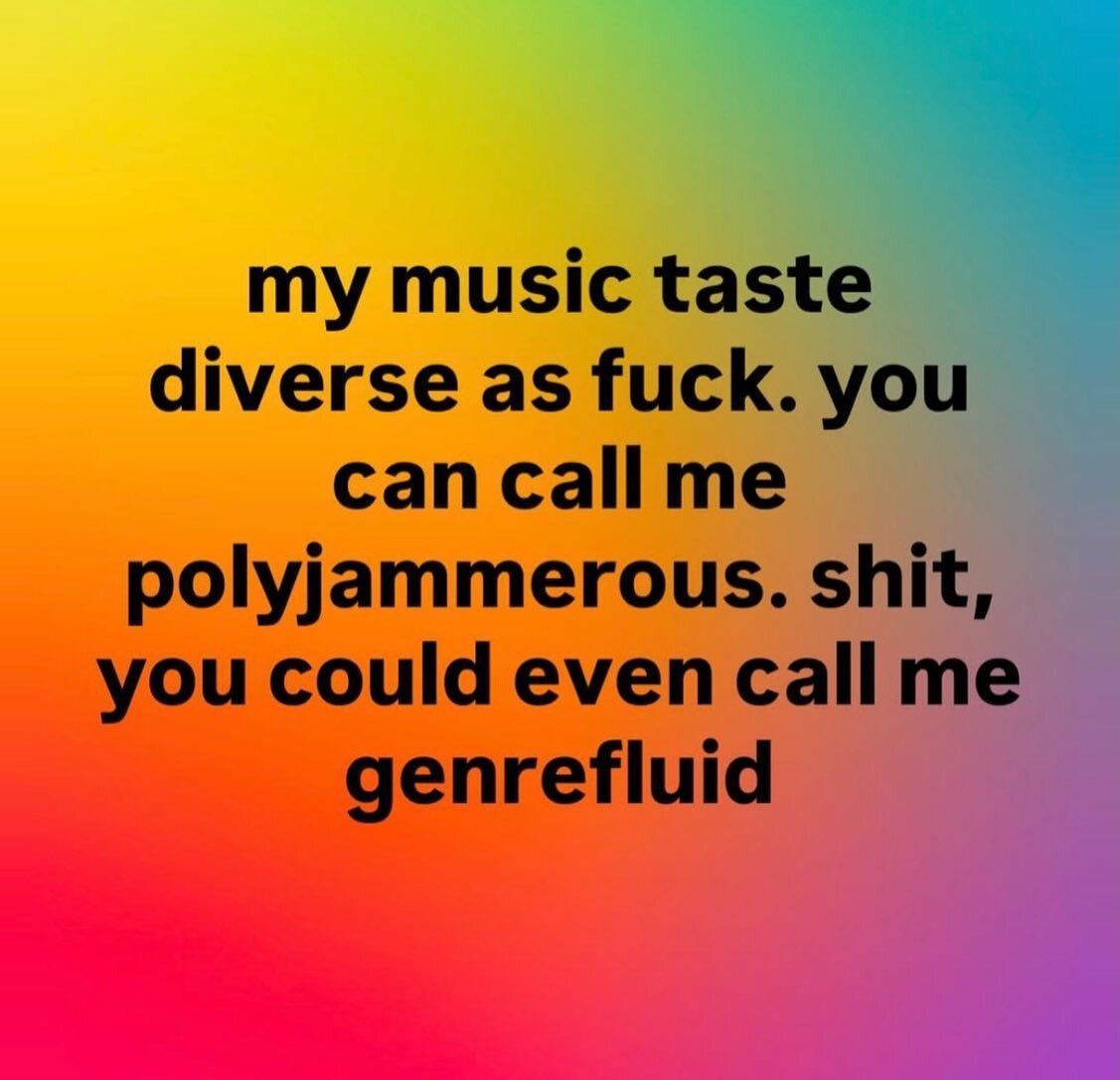
Polyjammerous and Genrefluid
Accurate for me tbh! #music
2026-07-01
Slop
slop ecology #culture
Publig mirrors Mike Pepi’s brilliant theory of slop materialism, which argues that instead of asking “what is slop?” we should rather be asking “when do we slop?” Unfortunately, Pepi falls into the classic trap of claiming that “slop” is exclusive to AI, which is kind of like saying drug overdoses are exclusive to fentanyl. In truth, both exacerbate an existing problem: that there are misaligned actors structurally incentivized to create low-quality content for their unsuspecting consumers.
Cultural critics like Sean Monahan and Ruby Justice Thelot make excellent arguments that “slop” has always existed. Hallmark movies, penny dreadfuls, and pulp magazines were all “slop” of their time, in that they prioritized profit over meaningful communication. Under this framing, in the words of Max Read, “slop” is something “fully optimized to its domain to the point of texturelessness or characterlessness.” I’ve also expressed a similar definition in my earlier Notes on Slop here.
The issue with regarding slop as a noun, rather than a verb, is that it decenters the productive process. Once we know we’re consuming a degraded substance, the blame rests either on the creator for producing it, or the user for participating in it.
“Slop” isn’t really your fault if you’re addicted to your phone. It’s not really the fault of the Lithuanian 24-year-old making racist videos that are good for engagement. It’s not even quite the platform’s fault. “Slop” is instead an ecology, including everything from the annotation workers in Nigeria to the data centers on indigenous land to the way you scroll on social media. Nobody is to blame, and everybody is to blame.
Personal Taste
‘Have I been influenced, or is this actually me?’ How personal taste fell out of fashion #culture #algorithms
What are you into? What floats your boat? What music, films, clothes, art, books – anything, really – do you actually like? Do you find these questions more difficult to answer than you would have done 10 years ago? How about 20? You do? You’re not alone.
It has become impossible to ignore: personal taste has been seriously debased – if not completely destroyed – by technological advancement. We know the internet has radically altered the way we form our opinions and beliefs. Now we’re waking up to another sobering truth: it has wrecked our capacity to form our own preferences.
It used to go something like this. We experienced the outside world – including arts, culture and fashion – via a combination of community, geography, mass and specialist media, and serendipitous accidents. Exposed to a range of styles, genres and ideas, we would decide what appealed to us, and then attempt (with varying degrees of success) to consume and engage with those things.
This is no longer the case. We increasingly encounter most aspects of the world through a single aperture: streaming and social media platforms. Or, more specifically, the algorithmic feeds of streaming and social media platforms, plus algorithmically optimised search engines and e-commerce sites, from Amazon to Vinted. In many cases, these are programmed to show each individual specific content based on data gathered from their own activities and those of other users – content that will ideally keep them on the platform for as long as possible. On Spotify, that can mean serving customers songs with superficial similarities to the tracks they didn’t skip last time; on Instagram, it might result in multiple appearances from an influencer whose videos have previously held our attention for a couple of minutes. We now experience reality via a limitless stream of content tailored around previous preferences.
To flout or subvert stylistic codes you have to be fluent in them – and the higher up the class structure you sit, the more latitude you have to do so. Think of the lord of the manor free to indulge his sartorial eccentricities versus uniformed blue-collar workers. In theory, though, anyone can break the rules; the most experimental dressing in the 20th century came from grassroots subcultures such as punk and the New Romantics.
On that front, it’s bad news: tech bros are the architects of our destinies and they have big taste‑based plans for humanity. In February, OpenAI’s president, Greg Brockman, posted on X that “taste is a new core skill”. He was echoing the sentiments of his former colleague Krithika Shankarraman, who last year told an interviewer that “taste is going to become a distinguishing factor in the age of AI”. Taste, the thinking goes, is the one human quality artificial intelligence will not be able to replicate. The concept of personal taste being a “moat” – a tech‑world term meaning a unique structural advantage that protects a company’s profitability – has taken root across the board.
To reclaim our personal tastes (and cultural standards) we must abandon algorithm-driven platforms. And we kind of already are: the big worry for tech bosses is that social media use is only going in one direction. According to the Financial Times, time spent on social media peaked in 2022; a recent Ofcom survey showed a 12% drop in people posting on platforms in the past year. There are a few reasons for this, but one of them is algorithmic fatigue. “There’s plenty of backlash to algorithmic feeds,” says Chayka. “The active user base of Facebook has begun declining and I think platforms like Instagram and Spotify are now seen as less influential, creative or original than a few years back.”