Dear Ghost logo

Dear Ghost

Archives
Subscribe

Dear Ghost Dear Ghost

Archive

another moment that refers only to itself

When I was traveling back to Boston from Los Angeles, I got patted down three times. Twice by the security line while my bag was searched, and once again in a private room where I was asked to remove my headscarf and a TSA agent felt me up and then smiled and told me to have a good flight.

The thing I’m sick of most isn’t the way I’m being treated, because it’s so obvious to me how easy I have it. The thing I’m sick of most is my reaction to it, the horror, the panic, the self-disgust, the self-blame, the smallness, the way I felt like an animal, the way I wanted to start biting. The thing I’m sick of is how much space it takes for me, constantly, the way I’m tired of thinking about it, the mundanity, the stupid pointlessness of even talking about it.

It used to be worse, I think. I remember it being worse. When I was a kid traveling with my parents, our entire family would get pulled over. That was still when they were bothering to call it random. They smiled as they did that too.

I’m visiting California again now. On my way here, while they were patting down my headscarf, the TSA agent stopped to explain to me exactly what she needed to do, and I just kept nodding impatiently so she would just get it over with. She noticed. She smiled at me. She laughed and said, oh, you’re used to this, aren’t you?

#35
December 25, 2025
Read more

where the stone keeps the dead

Iara’s kid leaned fearlessly over the bridge railing to peer below us. I went tense and still. My generation knew what was at the bottom of the canyon. The kid’s generation didn’t. That was a good thing. It was a good thing, I told myself, that this whelp knew so little of the cost of his world that he was willing to meet an early, ugly death at the bottom of the damn canyon.

I pulled the kid off the bridge railing. He stumbled and caught himself, throwing me a dirty look. Full of fire, this one. It was hard not to see Yazid in him.

“Sorry,” I said insincerely. “My hand slipped. Now keep up.”

He followed after me with a huff, not willing to call me out on my bald lie. The hospital was in sight, looming above the trees on the other side of the canyon. He could irritate me later. 

#34
October 13, 2025
Read more

The Last Knight

The priests wake you up in someone’s bed. A woman cries in the other room—most likely the mother or wife of the man whose body you’ve just stolen. She will not meet that man again.

You stand and test your new body. Strong shoulders and calloused hands, so a blacksmith or a farmer. The priests tell you that you are twenty years old, born the same day as the King. An unlucky day for a boy in this kingdom to be born.

One of the priests lowers his hood. He is not a priest at all, but the King. You recognize his ancestors in his face. You kneel.

He tells you to rise. His eyes are red from crying. He has just lost his father.

#33
August 31, 2025
Read more

Inkthings

When the train arrived at my stop, I managed to heave myself out of my seat and onto the platform. I did my best to keep standing as the train trundled away, but the scorpion had settled right across my left ribcage and was giving me all its venom as vengefully as it could, so I sat down on the steps to the parking lot and tried not to pass out.

“Easy, little beast,” I said to the scorpion. “You’ll be free of me soon. I don’t want you here just as much as you want to be gone.” But of course, the scorpion did not listen. Underneath my sleeves were long veiny lines of ink. I’d waited too long before coming here.

The parking lot was empty. I worried that they’d forgotten me, and I’d have to call Madeline and beg, which I told myself I was too proud to do, but I’d do it anyway if it really came to that. Then a car pulled up and Owen waved at me. I ignored him until he came out and walked right up to me, and then I looked up at him and sneered.

“I’d hoped she fired you,” I told Owen.

#32
August 21, 2025
Read more

Fountain

The fountain was first and the house came later. I sculpted three statues for that fountain. The first was a woman sitting in the water, an arrow held in her right hand. Her left hand cupped her collarbone where a wound wept water endlessly, spilling over her fingers and across her knees and away.

The second statue was of a father bent over a child, shielding the child’s head from the rain with his hands, only the rain fell from the father’s weeping eyes, dripping from his chin, falling onto the child’s shoulders, which were drawn and taut with tension.

The third statue I never finished, for it was meant to be a sculpture of Leena, who never stayed still for very long and soon disappeared altogether. I relied on impressions I took of her in passing, and those rare moments when I could cajole her into sitting for me. Then I was able to get the form of the sculpture done, one foot dipped in the water, the other leg folded on the lip of the fountain, the torso bent, her hands wringing the long braid of her hair into the basin. The water was meant to come from her hands and the end of her braid, but it remained unfinished, the face unrecognizable, one leg raw stone, the other one finished but left underwater for the minnows to nibble and the moss to climb. The water never came out of her hair, and my memory of Leena’s face never felt strong enough to set into stone. I promised myself I would finish it when she returned.

#

#31
August 13, 2025
Read more

Fredventures

(You guys hear from Fred? Owes me an orb.)
(Managed to get a hold of Fred.)
(You guys hear something?)
(Yes Fred I’m Listening.)
#30
June 14, 2025
Read more

are you ever in my chest Boss

I’m in the middle of writing my thesis so I can finally get my PhD and put an end to this long chapter of my life and the only thing I can think about is how it’s all been a prayer. It starts with a mystery, as all good prayers do. It is followed by doubt and misery. It ends with awe.

I remember the exact moment I realized I was built for worship. I lay on my back on the top of a mountain. The next day there would be fog, but that night was clear enough to see every star in the sky. You could hear the ocean far below, crashing. I was sixteen or seventeen years old. I remember thinking, I will never be able to fathom this. We are so small, and this majesty is so beautiful. I don’t remember saying anything out loud, but I must have, because last month my sister-in-law turned to me and told me, I will never forget what you said that night.

I was reading up on the Hungarian scientist Albert Szent-Györgyi, who discovered how muscles contract and first isolated Vitamin C, for which he was awarded the 1937 Nobel Prize in Physiology or Medicine. During World War II he had to operate a black market enterprise just to house and feed his laboratory staff. Coincidentally, he was philosophically against the idea of writing grants and asking for money, preferring to be funded by rich patrons instead, which he found when he started a lab in Woods Hole, Massachusetts. He liked dividing scientists into two categories: The physiologist who “carefully preserves
structure and subtle qualities” and the biochemist who “willfully destroys them”. (Szent-Györgyi, 1949) In a letter to Science, he writes of two other categories: the Apollonian who “tends to develop established lines to perfection”, and the Dionysian who “relies on intuition and
is more likely to open new, unexpected alleys for research”. Of course, he identifies himself as both the destroying biochemist and the intuitive Dionysian (Szent-Györgyi, 1972). With apologies to Professor Szent-Györgyi, I identify very much as an Apollonian, though I’m very much not looking for perfection.

Part of writing a thesis is to place your meager findings within the context of decades of work. It’s a humbling and rewarding task. You sit on the shoulders of geneticists who knew nothing, not the names of genes, not the paths of their transduction, not the signals, not the receptors. They just had syringes and microscopes and dreams, and then forty years later, here I am, adding mystery to the mystery.

#29
May 29, 2025
Read more

when the earth's beating, beating heart

In 1986, Iqbal Bano, a singer so beloved in Pakistan, that she had already earned the title “Queen of Ghazals” for her unparalleled skill in putting music and voice to poems, stood in front of a crowd in Lahore.

It’s hard to get accurate facts about this night on the internet. Every retelling differs in some crucial way. I’ve now seen multiple accounts saying that there were 50,000 people there. But I’ve looked up the building that the concert took place in, Alhamra Arts Council in Lahore, and at the time of the performance, the auditorium had no more than a 2000 person capacity. So this seems unlikely.

This was the only detail I was able to meaningfully fact check, so we take following details as pieces of legend rather than fact (which almost makes them better than fact): Iqbal Bano wore a black sari, the color of protest, the sari banned by the oppressive military regime of Muhammad Zia ul-Haq. She would not be allowed to perform in public after this night and her songs were banned from being broadcasted on Pakistani radio. The police raided the homes of the concert’s organizers, hoping to destroy any recordings of the night’s performance. A recording did make it out, and was quickly disseminated. Its censoring only made its popularity grow. You can listen to it here.

On that night, Iqbal Bano sang a poem.

#28
April 7, 2025
Read more

Offerings from the dead

The Boundary is an invisible line, but after a night untouched, it’s secreted its own membrane of small objects that we dutifully collect and catalogue and sort into their respective containers. There’s a box for house keys, a box for framed photographs, for children’s toys, for musical instruments, for teeth, for jewelry, for wristwatches. These are the offerings the dead like to leave us.

After we have cleared the Boundary of what has been left in the night, we watch for anything new. It’s an unappealing job, somewhere between sanitation and mortuary services, but someone has to do it, and it’s not exactly one of those occupations that allows inattention either. You can’t listen to a podcast while patrolling the Boundary, because the Boundary isn’t always where it was a few minutes ago. Drawing a chalk outline is useless, just as drawing a chalk outline for the ocean is useless. Death ebbs in tides, and takes away anything that steps in too close.

Two weeks after I started here, I saw someone get swallowed by the Boundary. He was there then he wasn’t. Six days later, we found his wedding ring lying beside the Boundary. Fortuitously, he’d engraved it with his and his wife’s names.

As I watch, I see something bright red begin to push itself across the Boundary. First the headlights, then the red hood, the cab, the yellow rubber wheels, and finally the blue truck bed. It takes five minutes for the toy dump truck to slowly inch its way across the Boundary, its wheels rolling incrementally on the grass. I imagine it must take a great amount of effort to pass objects across the Boundary, though there’s no way to be sure. I wait until the truck is all the way across before retrieving it. It’s faintly sticky and warm, as if it has just left a child’s hands.

#27
March 20, 2025
Read more

the obliteration of the self

My fingernails won’t stop growing. In one week my intestinal lining will be completely turned over. New skin in one month. New blood in four months. New bones in ten years. Same teeth. Same neurons. Same eggs. Even my fingertip can (potentially) grow back as long as it’s cut off before the edge of the nail bed. There’s a lab in my building that grows brain organoids in dishes. This requires constant feeding of the brain organoid with oxygen so that the three-dimensional mass of tissue does not suffocate under its own weight and enter hypoxic conditions. They’ve recently begun to use our two-photon microscope which allows for high penetration of thick samples with high-powered infared excitation. The laser sits in a black foam box in the back of the room and staring into its beam will burn away your retinas in seconds. The brain lab, which studies torpor, is trying to put canisters of pure, highly flammable, oxygen into this room to feed their brain organoids with oxygen while they are being excited with lasers. This has been referred to by the building’s health and safety team as “risky” and “inadvisable”. My brain does fine though. It does not explode, even though I feed it with oxygen all the time. The brain is the greediest part of my body. It steals 20% of my body’s total oxygen. However I can stand next to open flames and usually not be at risk of spontaneous and explosive combustion.

In the central nervous system, neurons don’t renew, although the field of neuroscience is enterprising, dogged, and motivated by millions of dollars of regenerative medicine funding, at least in previous iterations of the NIH, so perhaps I speak too soon. In some ways the self is immutable. In some ways, I will never change except to degenerate. Neurons share fate markers1 with germ cells whose fate is egg/sperm then zygote then embryo then fetus which suggests that immortality can take different physiological forms. That fetus will have fingernails in ten weeks and those fingernails will keep growing. When my grandmother carried my mother in her womb, the fetus of my mother already carried the eggs that would one day be fertilized into the zygote that would develop into me. The genetic and environmental conditions of the grandmother in this way have transgenerational effects. In fruitflies, we call mutations “grandchildless” when they result in the ending of a grandmother’s lineage. The effects are not known until two generations have passed. It is easy to visualize these effects in fruitflies, which have a life cycle of ten days, although since I am eight years into studying one such grandchildless mutation, I can say that they are not easily understood. It is even more difficult to study these effects in mammals, let alone humans, who obviously live much longer. And that’s the argument fruitfly biologists make when they want to get funded by the NIH, at least by previous iterations of it.

Luis Aparicio was a shortstop in the MLB from 1956 to 1973 and is considered perhaps the greatest defensive shortstop who ever lived. In the book The Art of Fielding by Chad Harbach, a fictional version of Luis Aparicio has written a guidebook for shortstops. It advises:

“To field a ground ball must be considered a generous act and an act of comprehension. One moves not against the ball but with it. Bad fielders stab at the ball like an enemy. This is antagonism. The true fielder lets the path of the ball become his own path, thereby comprehending the ball and dissipating the self, which is the source of all suffering and poor defense.”

#26
November 21, 2024
Read more

DMSP-32

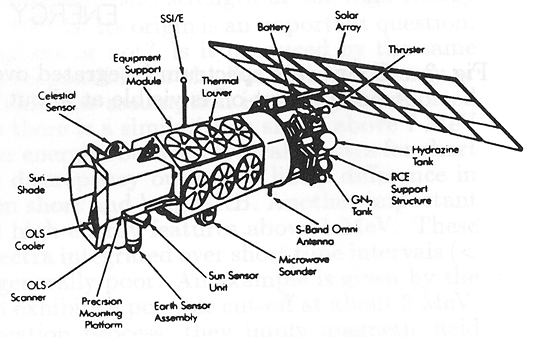
The only reason the film even premiered at all to that many people was because Jordan had the bright idea to apply for a grant from the Doc Agnes Foundation for Young Filmmakers and we got eight hundred and fifty dollars, which was barely enough to buy a new computer. Later, everyone found out that Doc Agnes was a satanist but we didn’t know that at the time. At the time, Jordan and I were just pretty happy to get a new computer. Keeping an angel on the last one’s hard drive hadn’t been good for it.

Jordan bought a suit for the premiere, and I borrowed an old dress from my mom, this uncomfortable heavy-skirted thing that Jordan goggled at before settling down. There were two other films being shown after ours but I don’t really remember the specifics. By that time, we had figured out that if we picked up flutes of champagne and drank them fast enough, no one stopped us. They didn’t end up showing those other two movies anyway.

It was at Doc Agnes’ house, of course. He had this whole private movie theater set-up that took up the entire third floor, and everyone filed in, loud and tipsy, cheerfully rustling their silks and wools and whatnot. Jordan and I sat in the last row, sweating and nauseous, like we already had hangovers. Ours was the first movie. It was fourteen minutes and twenty-two seconds long. By the time the film was done, the projector was smoking so much they had to douse it with a fire extinguisher, and an image of the angel in the shape of Defense Meteorological Satellite Program Flight 32 had been burned into the screen. All twenty people seated in the front two rows passed out. There were reports later of hallucinations, visual impairment, cognitive dysfunction, and loss of appetite.

#25
October 14, 2024
Read more

third wandering

When the car finally stopped, they were in the middle of a long field surrounded by trees, the sun setting over tall grass. They had run out of road a long time ago. It was as good a place as any to stop driving.

The exact stopping point was in the center of a triangle made of three shrines, which was apparently auspicious. The third shrine still looked mostly like a person, so they left offerings at the other two and avoided the third. Anselm was the superstitious one of them; he insisted. Through careful measurements, he determined which shrine was closest to them. It was beneath an old and mighty yew. There was nothing left visible of it, buried somewhere in the roots of the tree.

It was hard to know what to do when there wasn’t anywhere left to drive. The car belonged to Michon, who had been the sole driver and thus the leader, but now that the car was no longer in use, this hierarchy was to be replaced, though none of them were very keen to discuss the matter. Privately, Michon still believed that they were the most capable leader of their trio. However, they also wanted to sleep in more in the mornings.

Now that there was nothing left but the sky, it was hard to talk about anything. Michon didn’t hear Sophia speak for six days. They didn't even notice her silence, not until she spoke one morning, her voice ragged with disuse. She told Michon and Anselm that she had visited the third shrine, but it had moved.

#24
October 13, 2024
Read more

The Funeral

I recently read The Four Humors by Mina Seckin and it made me think about funerals.

The book’s main character has just lost her father. She’s spending her summer in Istanbul, and in the first part of the book, her only goal is to avoid her father’s grave. She’s looking for her father, and she doesn’t think she’ll find him in the grave.

The funeral is this specter that hangs over the book. It happened right before the book begins, and I really love the way the book describes the funeral rites, mostly because I think they’re beautiful traditions, and also because it fits so well with other themes of the book: the way we burden each other in grief, the way those burdens are welcome, the ways we isolate ourselves, the ways we can be forgiving, unforgiving.

“Before the funeral, you have to wash the body. If it’s a male body the men wash it. If it’s a female body the women wash it. Uncle Yilmaz washed Baba’s body with my cousins. Then they put the body in a white cotton bag. No coffins allowed. Your body will become soil faster this way.”

#23
August 14, 2024
Read more

(bugs bugs bugs bugs bugs)

I’m here.

It’s not like you said it would be at all. The ring is in perfect homeostasis. Most of the greenspace has been cultivated into wetland. I mean, if you think about it, the bots probably figured out that would lead to the most ideal carbon flux. If I had a few more weeks here, I’d—

You don’t have weeks. Keep looking.

I know I don’t. I’m just saying more people should know about this. More people should see this.

#22
June 20, 2024
Read more

Nostalgia of the present moment

In May, the light in and around our apartment changes. I discover all over again how many windows to nowhere the apartment seems to have, windows that just face other people’s windows. Light steals in through some elaborate ruse during the summer months. When I first moved into this apartment, it was December 2020 and the room I was in had a window that only faced west. I would wake up in complete darkness, go to work, and then when I left work it would be dark again. I began to have recurring dreams where I would discover hidden windows in the apartment where light would come in. In the dreams I stood by the sunny windows, in awe of what I’d missed.

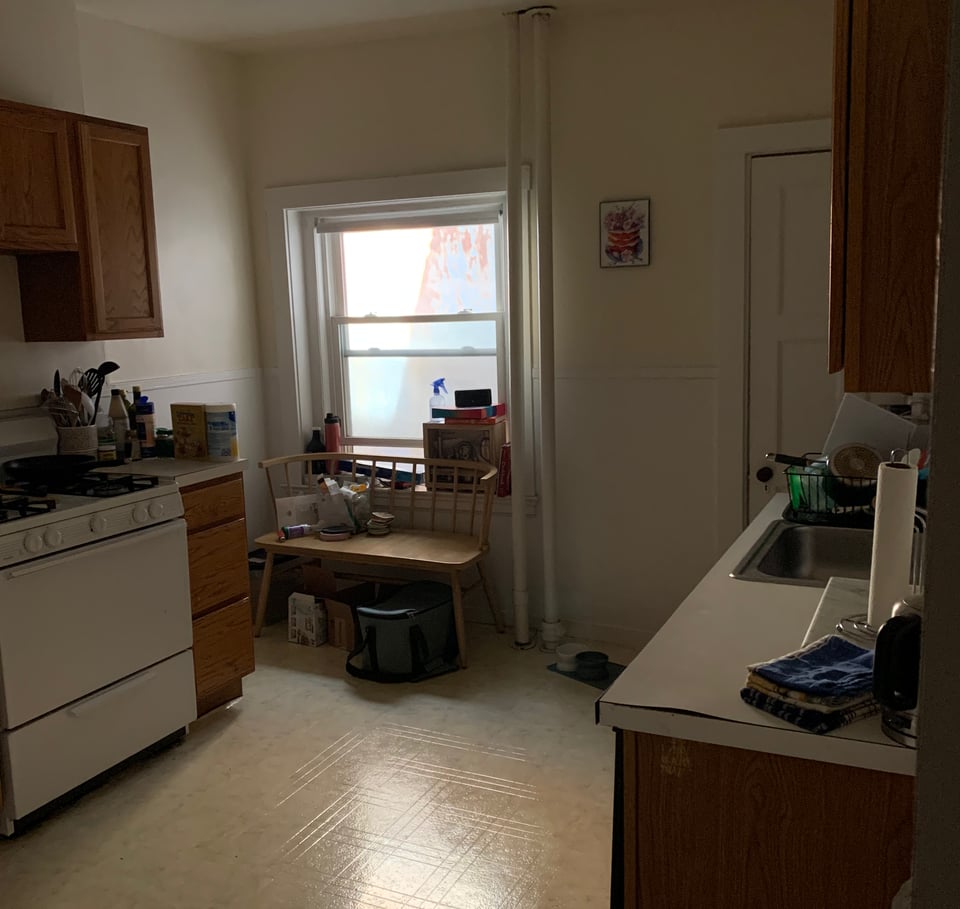
The other day I was so struck by the sight of our dark kitchen lit by the yellow glow of light from the usually sunless window that I had to take a picture of it. I thought, right now, this kitchen looks like a memory I will have one day.

I am made for nostalgia; it is what I’m for. I miss people all the time. Every song and street corner must be imbued with associations of the past in order for me to have experienced it. The other day I was on a crowded train, no seats available, and it made me miss the cold months when I first moved to Boston and the train would be empty. Completely empty. The car to myself. No one on board. No one was going to work. No one was going to class. In my journal entries at the time I wrote that these were the worst months of my life. Why do I miss it? My memories have softened. There’s something frightening about the lack of objectivity; there’s something forgiving about it too.

#21
May 28, 2024
Read more

The last house party

Content warning: Death/Afterlife

I meet him in the building’s lobby, which looks like just about any lobby in a three block radius. Marble, glass, gold. A misshapen bronze of some Greek legend. A doorman who smiles at him and not at me.

I try not to stare at him as we wait for the elevator, but on the way up he smiles at me a little knowing. It’s a night like any other, he says. And here, there are so many nights left.

The apartment is so crowded that the party is spilling out into the hall. He disappears almost immediately to find us drinks, and I do my best not to beg him to stay. It didn’t work to beg the first time he left, and maybe this way I could get used to him being gone.

#20
May 13, 2024
Read more

Somatic response to ritual

Today is my first day fasting for this year's month of Ramadan. The first fast was technically yesterday, but my body was bleeding, and I was exempt.

It's strange doing this again. The last time I fasted was in New York, so it was probably 2019, and I have done maybe a day or two since then when I visited my family in California. My body follows learned somatic responses. This morning, I woke up before dawn to eat. I remembered the words of the intention to fast in Arabic as if my lips were waiting to say it. I remembered how to bend at the knees, I remembered how to wash the insides of my nostrils and ears, I remembered how to ask for blessings, I remembered how to turn my head, first to the right to greet one angel, then to the left to greet the second angel. My muscles moved; I spoke without knowing I was speaking.

It's 2:00pm as I write this. The sun will set around 7:00pm today and I will break my fast. Already, my body feels light, radiant, heady. I've been reading texts about Sufism in Islam, how to deny the material, how to purify the heart, how the pursuit of knowledge is the pursuit of God, how greed is a curse.

I'm angry all the time these days. Angry at injustice, at corruption, at the complete disregard for human life. I've felt, lately, that my mind has not been clear, and I want it to be as sharp as it possibly can, to cut away all the lies we tell ourselves, that it's okay for some people to die, that it's okay to be silent, that it's okay to turn your face away from what's happening. I needed to strengthen myself.

#19
March 12, 2024
Read more

As the story goes

As the old story goes, the traveler came to a giant hill. His feet sore and his back weary, he wanted nothing more than to sit down and never look at another hill again. He told himself that he would enjoy his rest much more splendidly with a pretty view to look at, and so he tightened the straps of his sandals and made his way up.

The view atop the hill was indeed pretty, and as the traveler caught his breath, he saw that there was a large boulder crowning the hill, on top of which sat a small army of crows. The crows made him quite uneasy, but the crows, equally uneasy of his presence, made their exit hastily enough, and the traveler gratefully took his rest in the shade of the boulder.

Only three crows remained. This was fine, the traveler thought, though he'd never known crows to be so silent and so still.

The boulder, he noticed, had a very distinctive shape. The traveler, his rest forgotten, began to circle it, examining it more closely. Its folds and crags, he decided, looked almost like faces. Three faces. The first face was pleasing to look at – it reminded him of a childhood sweetheart. The second face was a little distressing – it looked almost like his poor late mother. The third face looked almost like himself.

#18
February 28, 2024
Read more

Torpor

You wonder about the heavy feeling hanging on you today.

It's the gray sky, perhaps. When you half-walked, half-jogged to the bus stop this morning, it had rained only a few minutes before. The air was so soaked with it that by the time you made it to the bus stop, there was sweat running down your back. Today you unzipped your coat, a spring day in February. Soon it'll be time to put your wool coat away, which is for the best, because there's a new hole in the right pocket. You bought this coat secondhand in a thrift store your first year living in New York City. The left pocket has already needed to be stitched up. You have no idea how to sew, so you took the coat to California, and your mother brought out her sewing kit, the one her mother bought for her when she was in elementary school. She made careful stitches in the torn cloth, and every time you put your hands in your coat pockets, you feel those careful stitches on the left, and the ragged hole on the right.

It's probably not the sky.

Earlier this week, you got drunk with your labmate and talked about your mothers. The first time you ever got drinks with her, you were both in New York, and she wasn't a mother yet. She has a daughter now. She worries about the kind of mother she is. She read you a quote she'd heard, about love and control. It wasn't really the words that stuck with you, but the earnestness she said them with. It's the way prayers are said.

#17
February 23, 2024
Read more

Monkeys do it

I read a sentence in a paper about cell contraction during gastrulation that made me tear up a little today, which just kind of illustrates the level of underwater I am right now. This year, seven whole years into my PhD, I've finally figured out why it's so hard for me to care about other things: it's all my horrible, horrible thesis' fault.

The paper begins by describing cell contraction. Cells, during the early shaping of the primordial stuff of an embryo, like to contract. They contract a lot, contract often, and do it at very specific times and magnitudes. This is how tissues are shaped. This is how you get a brain instead of a butt. One sheet of cells decides to get smaller on one side and fatter on the other, and suddenly you have a spiral, which means more layers, like folding pastry dough. That's gastrulation, baby. We're layers all the way down. As Lewis Wolpert liked to say, "It is not birth, marriage or death, but gastrulation which is truly the most important time in your life." Not sure about that, but it's catchy as dicta go.

Drawn diagrams of a gastrulating newt.
Spirals!

Back to the paper:

#16
February 16, 2024
Read more
Older archives  
Powered by Buttondown, the easiest way to start and grow your newsletter.