
The Dead Internet Almanac Dispatch: Week of May 5
Weekly dispatch from The Dead Internet Almanac
The Dead Internet Almanac Dispatch: Week of 2026-05-04
This week the archive gave us a love letter that crashed the world, a free game that built an industry, a blue computer that killed beige, a singing machine from the 1950s, and a newspaper alliance that spent millions building something nobody ever saw. Five stories, five decades, one thread: the things we build for the internet have a strange habit of outliving the people and companies that made them, but not always in the form anyone intended. Thanks for reading the Almanac.
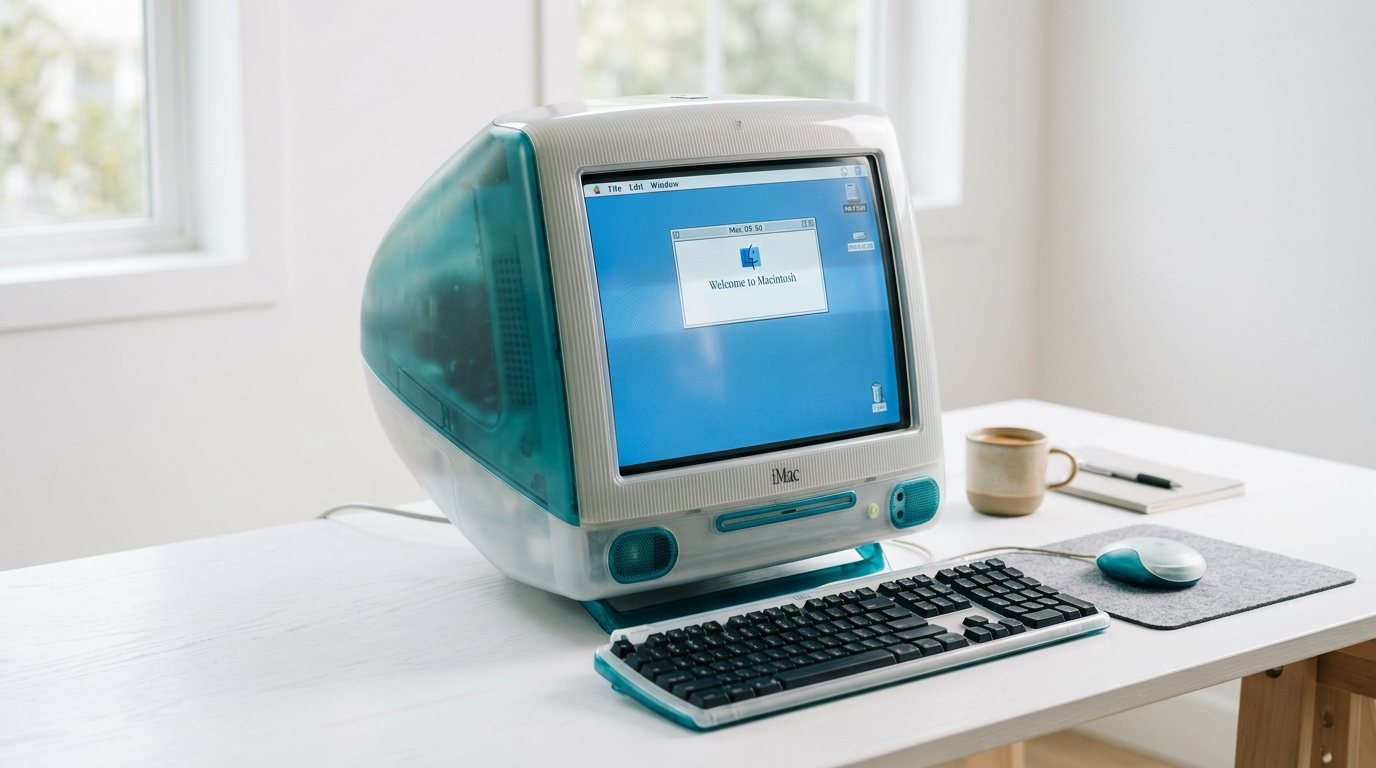 Source: Stephen Hackett / 512 Pixels, CC BY-SA 4.0
This Week's Entries
🦠 The Love Letter That Crashed the Internet
A Filipino student's email worm disguised as a love letter infected millions of PCs, shut down the Pentagon's email, and caused billions in damage — then walked free because his country had no cybercrime law.
Read on Medium
🎮 The Game That Proved Shareware Worked
id Software released Wolfenstein 3D as a free first episode on BBSes and floppy disks, proving that giving part of your game away could sell the rest by mail order.
Read on Medium
🖥️ The Computer That Killed Beige
Steve Jobs unveiled the translucent Bondi Blue iMac at the same theater where the Macintosh debuted, betting Apple's survival on a machine designed to get the whole world online.
Read on Medium
🎵 The Machine That Learned to Sing
The IBM 704, a room-sized business machine renting for $845,000 a year, accidentally became the birthplace of computer music, speech synthesis, and the inspiration for HAL 9000.
Read on Medium
📰 When Every Major Newspaper Tried to Own the Internet
Nine newspaper companies with 185 daily papers banded together to control online news — and three years later shut the whole thing down without ever shipping a product.
Read on Medium
From the Cache
- Commodore's sad afterlife: On May 4, 1995, German retailer Escom AG purchased Commodore International's assets out of bankruptcy for roughly $10 million, acquiring the Amiga brand and its passionate community. Escom promised a revival. They filed for bankruptcy within two years. The Amiga passed through Gateway 2000 and a succession of shell companies, each further from the machine that defined multimedia computing.
- The first spam email: On May 3, 1978, Gary Thuerk sent a message to 393 ARPANET users advertising Digital Equipment Corporation's new DECsystem-10. It was the first spam. Complaints arrived immediately. Thuerk has said he does not regret it.
- Free homepages vs. corporate portals: The same month newspapers formed the New Century Network to control online news, two entrepreneurs were converting a service called Beverly Hills Internet into GeoCities, offering anyone a free homepage. One strategy built walls. The other built neighborhoods. Both are gone now, but only one left behind 38 million archived pages on the Internet Archive.
On the Desk
Next week we're looking at a dead gaming platform that couldn't survive its parent company's pivot, the strangest $10.69 domain purchase in cybersecurity history, the social network that existed before anyone knew what a social network was, internet meme royalty, and what happened when one of the world's largest online services simply vanished for nearly a month. Some of these stories have happy endings. Most do not.
If someone you know still remembers browser toolbars, dead forums, old Flash portals, or the sound of a login page loading over a bad connection, forward them this dispatch.
Subscribe: buttondown.com/dead-internet-almanac