
The Dead Internet Almanac Dispatch: Week of June 29
Weekly dispatch from The Dead Internet Almanac
The Dead Internet Almanac Dispatch: Week of June 29
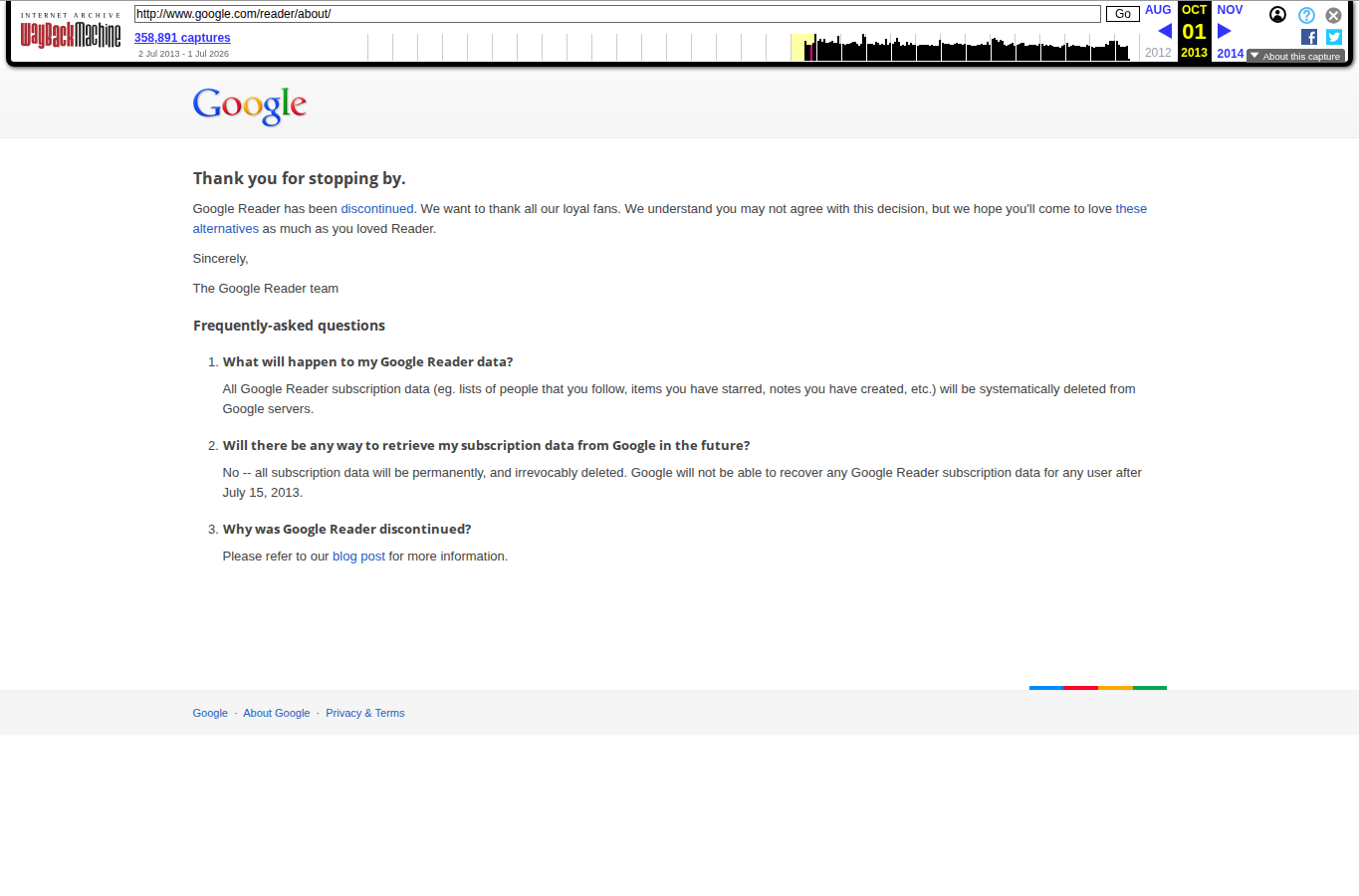
This week kept circling the moment when the web stopped feeling like a destination and started behaving like infrastructure. A phone put Safari in a pocket but still needed a desktop ritual to wake up. A leap second made official time look strange to Linux kernels. Google Reader closed the inbox that many people used to read the open web on purpose. BitTorrent turned downloaders into carriers. Then a UCLA press release reminded us that the network began as rooms, terminals, grants, and paperwork before it became a place with myths.
Start Here
📡 July 1: An Inbox for the Open Web Closed at Midnight
The best doorway into the week is Google Reader because its disappearance still explains so many later web habits. It was an ordinary tool with an extraordinary premise: choose your sources, read them in order, and let the web come to you without an algorithm pretending to know your mood.
Also in the Almanac
📱 June 29: A $599 Phone With a Gate
The first iPhone looked like the future, then asked buyers to activate it through iTunes. Before the App Store, it was a polished little web window attached to a desktop machine.
⏱️ June 30: 23:59:60, The Second That Made Servers Sweat
A leap second is only one tick long, which is plenty of time for software to reveal that reality has edge cases.
🧲 July 2: When a Download Became a Swarm
BitTorrent made the crowd part of the delivery system, turning a file download into a small act of mutual aid, bandwidth math, and early-broadband folklore.
🗄️ July 3: The Birth Announcement in a Filing Cabinet
UCLA announced the first ARPANET station in the language of a university office, long before origin stories came with launch pages, screenshots, and share buttons.
Now in Audio
🎗️ June 26: The Blue Ribbon Case
Listen instead: Podcast episode
🪐 June 19: The FAQ That Pulled Halo Into Xbox Orbit
Listen instead: Podcast episode
From the Cache
- Netscape’s old plugin directories now read like a hardware store aisle for the early browser: PDF viewers, media players, helper apps, tiny bridges between a page and the rest of the machine.
- The W3C validator is one of the web’s great civic artifacts: a machine that politely tells a handmade page where its seams are showing.
- Old FTP mirrors have a special kind of afterlife. Even when the front door is gone, the directory listing can still feel like opening a drawer in someone else’s workshop.
On the Desk
Next week begins with a game that made the network visible in parks, sidewalks, lobbies, and battery percentages. A lightweight operating system pitch follows, asking whether the browser could become the computer instead of merely living inside it. Then the week turns toward quieter failures: a major glitch where ordinary services briefly felt haunted, and a DNS cleanup deadline that kept infected machines online until the substitute map was taken away. Waiting at the edge is the television-shaped web, where a living room appliance tried to make the internet feel less like a desk and more like a channel.
Forward this to one person who remembers when the web felt handmade.