
Where Technical SEO and Content Connect
I explore how Content and Technical SEO intersect and how to improve your traditional and AI search performance.
Hello and welcome to another issue of David Rosam On Digital Marketing.
We've covered the fundamentals of Content and Technical SEO for AI Search in recent issues. Today, I'm exploring where these disciplines intersect—the technical side of content creation and the human elements that make Technical SEO work.
Structure Your Pages for AI Success
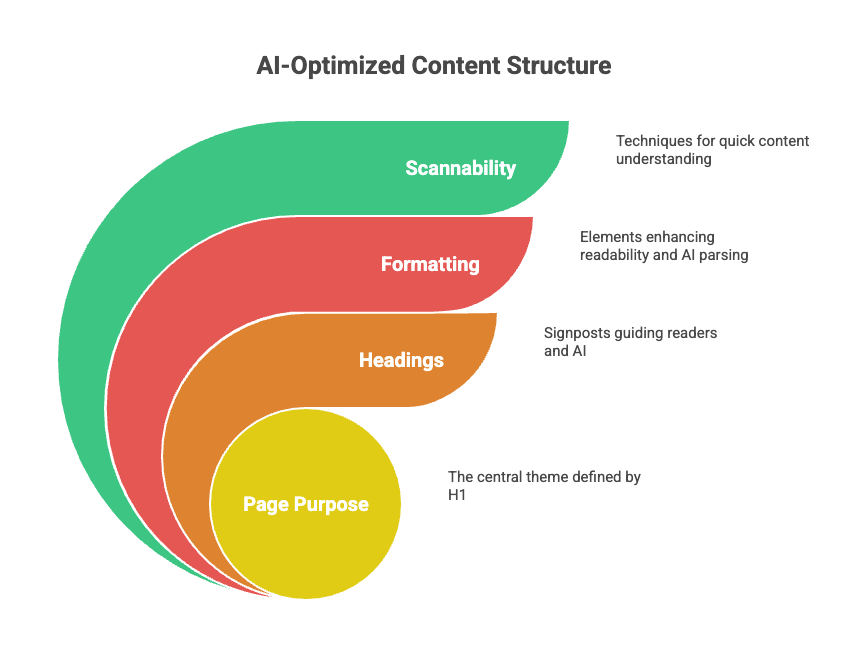
Content structure isn't just about making your pages look organised. It's about helping AI systems parse, summarise, and extract the information that matters most. Well-structured content signals expertise and creates the logical flow that both humans and AI systems need.
The One H1 Rule Still Matters
HTML5 technically allows multiple H1 tags per page, but I've never liked the confusion this creates. Which section matters most? Where should readers start? How do they navigate your content?
And, for AI bots, clarity wins every time. Use one H1 heading that clearly defines your page's purpose. Include your main keyword here—and carry it through your H2s and H3s where it makes sense. These headings serve both human readers and search engines as essential signposts for your content's focus.
Essential Structural Elements
For AI Overviews, format matters:
Using an implied Q&A format with each section providing your readers with answers to the questions they have about your product or service, the pain points you’ll resolve etc etc
Use bullet points, numbered lists, and tables to organise data and break up text blocks—AI systems find these formats straightforward to parse
Make your content scannable:
Add a Key Takeaways section at the beginning of longer articles (some call these "TL;DR" sections, but I prefer to think my content is always worth reading in full 😀)
Keep paragraphs short and sentences concise
Use on-page anchors and strategic internal links to help AI systems map your content structure
Structure Your Website Architecture
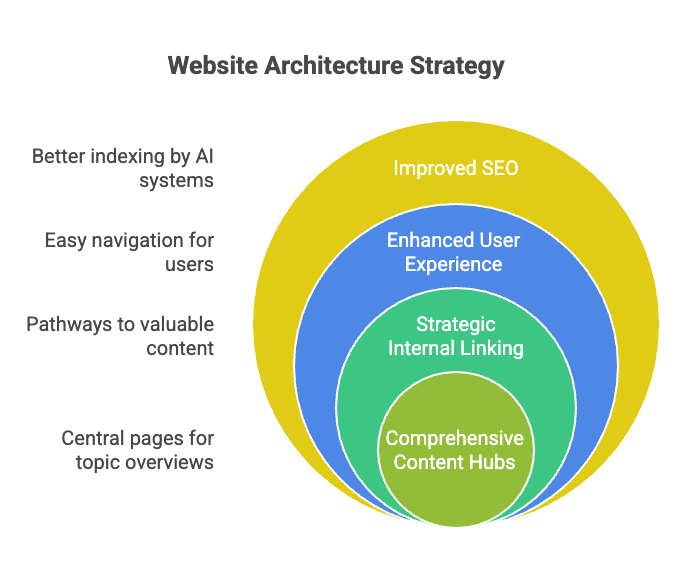
Create content hubs that work:
Build hub pages or topic indexes that provide comprehensive overviews, linking to detailed sub-pages. This hierarchical structure helps users and AI systems understand your content's scope and reinforces your topical authority.
Internal linking with purpose:
Use internal links strategically to help surface your most valuable content
Help AI systems connect related topics by creating clear pathways through your site—think of it as building a subway system for your content
Make every piece of valuable content easily discoverable through thoughtful internal linking
The Bottom Line
Adapting your site for AI search isn't revolutionary—it's about applying core SEO principles more rigorously. These fundamentals have always focused on creating clear, well-organised, authoritative content. But if you’ve not been putting users first and answering their questions with your content, now is the time to change your content mindset.
The intersection of Content and Technical SEO is where real performance gains happen. When you get both right, you’re getting real leverage for your website.
Need help implementing these strategies? Book your free consultation to explore how I can improve your traditional and AI search performance.
Thank you for reading.
David Rosam
David Rosam Digital Marketing
david@davidrosam.com
PS. Could I please ask you to share David Rosam On Digital Marketing with your friends and coworkers?
