"War and revolution"
Announcement: I’m going to do an in-person book event with the United Teachers of Los Angeles on Saturday, April 11, 2026 at 11am PST. If you’re in LA it’d be awesome to see you there! And if you know anyone in LA please forward this along. Sign up here.

***
The most interesting Bolshevik was Parvus. He had a few names actually: Alexander Helphand, Israel Gelfhand, Helphand, A.J. Parvus. He helped form and then finance the Russian Social Democratic Party, led the early soviet of St. Petersburg in 1905 along with Trotsky, and then became a kind of international “merchant of revolution,” generating revenue and agreements that would create the conditions for Lenin to return to Russia in 1917 on an armored train through Germany from his exile in Switzerland.
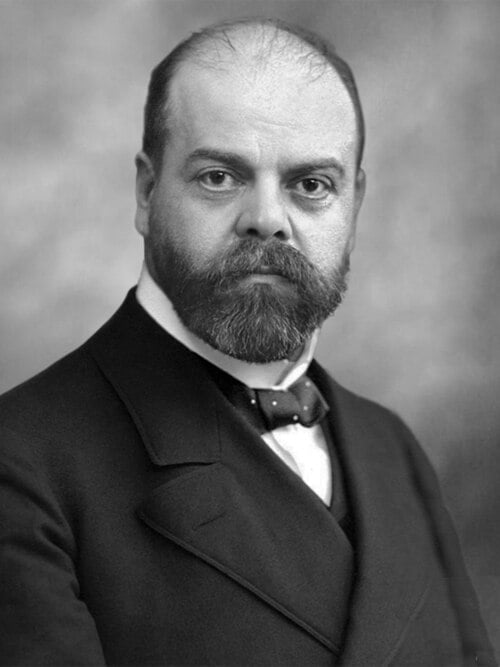
I find Parvus a fascinating character who folded up so many contradictions of the moment, pursuing finance, politics, art, and internationalism—he’s also underappreciated in narratives of the Russian revolution and the history of communism.
After reading a bunch about him I came upon a pamphlet he wrote in the early 20th century discussing the political-economic conditions for revolution in Russia. It’s called “War and Revolution,” and the recent US-Israeli actions in Iran, and the four year anniversary of Russia’s invasion of Ukraine, have brought this text up for me once again.
The pamphlet hasn’t been translated into English. I spent some time a few years parsing through the Russian, looking for help, but having a difficult time finding someone with the time (of course without money to pay them). So I struggled to render the words, got a few paragraphs in, and gave up. I haven’t found anyone to translate it since.
With much ambivalence, with all the debt piled up to force AI down our collective throats, feeling rage at the market uncertainty and environmental cost (AI is basically the anti-Green New Deal), using my job’s already egregious subscription, I asked an AI to do it and I’m sending along the PDF this week. It’s about 11 pages. I’m conflicted about this—I’m hoping sending it along might inspire a reader out there to help check if the translation is anything like what it’s supposed to be, and perhaps we can find resources to pay for a proper translation. In the meantime, I’m sending it along for us to consider.
War, Parvus wrote, creates the conditions for revolution within an aging autocracy’s borders, and he tracks the political economy of this thesis using bond yields, leadership intrigue, and a sharp pen. I can’t speak the accuracy of his data, but his analysis of exactly how this worked in Russia in the early 1900s reverberates today in its structure, particularly as we make our way back to Great Powers-style geopolitics and geoeconomics. One of the things to track, he’d recommend, would be bond yields.
When bond yields go up, it means that the borrower (in this case countries) have to pay lenders more. The price of their debt is going up. That means the debt is harder to get, increases the amount the countries have to pay to get the liquidity they need for stuff they want to do. The countries don’t want bond yields to go up. They should go down. They want cheap debt. But war makes everything more uncertain and so, the yields rise.
And indeed, Yields are up across the board in major capitalist economies, indicating more expensive debt for these countries as their ruling classes knock the balance of forces about like a piñata. Parvus’s analysis could be quite relevant. When I read Russia in the below, his introduction, I hear the US:
Nine months of war have passed.
Autocracy has entered the period of its political agony. It remains terrifying in its death throes, yet its days are numbered.
Autocracy will fall — this is the undeniable result of the war.
The war may drag on; its final outcome is unknown. But one thing is certain: it has, in the end, undermined the political foundations of Tsarist Russia.
Nine months ago, at the outset of the war, I wrote: “the war is irresistibly driving Russia toward political bankruptcy.” What, then, is the condition of Tsarist Russia at the present moment, after nine months of war?
Autocracy began the war at the height of its influence in world politics. Europe feared Russia. Europe was so persuaded of Russia’s might that it could not even imagine that Japan— or any other state — would dare attack her. European governments continued to believe in Russia’s strength even when her unpreparedness for war had already become obvious.
But blow followed upon blow.
The war revealed the complete military weakness of Russia.
Slowly, hesitantly, in wavering movements, public skepticism grew with each new defeat.
Yet that skepticism coexisted with an astonishing tendency to become excited once more at every new rumor of a Russian victory — only to be disappointed again. The public opinion of Western Europe, vacillating between illusion and disillusionment, finally underwent a decisive shift in its attitude toward Russia. Simultaneously, the political
posture of European powers toward Russia began to change.
It became clear that the military might of Russia — with which European states had long reckoned in their diplomatic calculations — had been a fiction. A bogey, a phantom. An
apparition that had held them back from fully pursuing their own political aims.
One of the key forces that had maintained the equilibrium of Europe, and indeed of the world, revealed itself to be an inflated quantity. And once that quantity is removed, a
completely new balance of forces emerges — and European policy adjusts accordingly.
For the rest of the post, I’ll include the pamphlet’s section on bonds, where Parvus discusses the ways that war borrowing weakened the Tsarist state in Russia and made it vulnerable.
SECTION 4
The Financial Collapse: Bonds, Credit, and the Coming Crisis
The decline of Russia’s credit continues.
The prices of Russian government securities have fallen. They have fallen despite the desperate maneuvers of the Ministry of Finance, which has been systematically supplying foreign banks with funds for speculative operations to support the price of Russian bonds, spending tens of millions on buying up Russian securities. The prices have fallen despite the fact that conditions in the money market have been extraordinarily favorable for government borrowing.
Industrial growth remains modest; as a result, large sums accumulate in the banks. In such a period, the stock exchange eagerly awaits new government loans, and when the government seeks a subscription of one hundred marks, several thousand are typically offered. All the more noteworthy, then, that the Tsarist government succeeded only with great difficulty — after prolonged negotiations — in securing its war loan in France, and even then only on terms exceedingly unfavorable to itself. By doing so, it depreciated all Russian securities, making a return to earlier price levels impossible, and thus undermined its own credit.
Last year, the Russian four‑percent rente stood at roughly the same level as the Italian four‑percent: Italian bonds traded between 103 and 104, and Russian securities between 100 and 101. Now the Russian four‑percent rente stands at 89–91, while the Italian rente has remained unchanged. Thus, the depreciation of Russian government bonds reaches approximately ten percent. If one spreads this loss across the entire Russian state debt, it becomes apparent that the creditors of the Tsarist government have already suffered a paper loss approaching one and a half billion marks.
Of course, this loss remains “on paper” so long as the holders of Russian government securities keep them in their vaults. Hence the interest of the stock exchange in preventing Russian prices from falling further. Losses on Russian bonds are already considerable; everyone knows that if all were to begin selling, prices would collapse beyond recovery. Therefore, the holders of Russian government obligations cling to them unwillingly, keeping them in their portfolios.
The present stability of Russian securities is not due to any expectation of a rise, but to the fear of driving them down to complete worthlessness. Their only protection is not confidence in Russian finances, but rather dread of pushing the state into bankruptcy — which would, of course, fall first and foremost upon the bondholders themselves.
Thus a mute tension has arisen. The stock exchange listens anxiously to military news and demands, with bitter insistence, Russian victories. Perhaps a future historian, making use of documents presently inaccessible, will show that pressure from the stock exchange was one of the chief reasons that compelled General Kuropatkin to undertake his offensive. The stock exchange welcomed that moment as the dawn of a new era. Once again, events turned out otherwise.
The price has so far been held up, but the foundations of its equilibrium are being steadily undermined, and when the next serious blow comes, Russian securities will fall far more sharply and deeply than before.
It is impossible to predict when this moment will arrive. It depends on the course of military events, on political developments, and on the financial maneuvers of the Tsarist government — and, on the other hand, on the general condition of the money market. But sooner or later, the break is inevitable; and we may say with certainty that the further serious decline of Russian securities will have a profoundly destructive effect upon all stock‑exchange operations: it will drag down the prices of every other traded value, Russian as well as foreign.
Already, the initial fall in Russian securities at the beginning of the war exerted severe pressure on the stock market. Banks holding Russian securities either in their own portfolios or as collateral will suffer. This, in turn, will produce new complications. The gold reserve of the Russian State Bank abroad — used for speculation to sustain Russian prices — will be exhausted. It will be nearly impossible to maintain the gold convertibility of Russian credit notes. One of the most severe monetary crises will break out.
Naturally, such prospects cannot incline European bourgeois circles to sympathize with the Tsarist government. They cannot yet foresee all the consequences, but they sense that if the war continues only to multiply Russia’s defeats, various political and financial calamities will inevitably spill over into Europe as well. Distrust of the Tsarist government is growing. The very standpoint from which Russian affairs are considered has changed. Skepticism stains everything in a new color. What once appeared a formidable force now seems empty boasting; courage appears obstinacy; bravery, madness. And if formerly timidity was cloaked in the mantle of prudence, now prudence itself is suspected of cowardice.
Bitterness and hostility take precedence. And in place of Russia’s former “great power” status within European political calculations, there increasingly enters the idea of Russia’s disintegration.
During the Anglo‑Russian crisis, the German bourgeoisie spoke as ambiguously as the French. At the height of the conflict, the German press sharply attacked Russia; but once it became clear that England’s threats could, for the time being, be disregarded, the bourgeois German papers suddenly remembered their role as “impartial observers,” and began condemning both the Russian naval officers and the British government. Since Germany is not bound to Russia by any defensive alliance, this conduct was apparently motivated by the wish to draw England into war with Russia.
But if in the Russo‑Japanese War Germany clearly placed her stake on Russia, in a potential Anglo‑Russian war she could only have calculated that such a conflict — weakening England and thoroughly crushing Russia — would enable Germany to step forward as the triumphant heir to both.
Russia, then, stands isolated. Her alliance with France retains only a superficial significance. Having shown her weakness, she has lost her allies. A few more defeats — an even sharper decline — and her friends will unite with her enemies. Meanwhile, Russia’s adversaries advance.