Trade movies
This week I’m sending along a podcast interview I did with Geoff Alexander, host of Trade Movies. Geoff got in touch with me on tiktok after he read my Baffler essay about the municipal bond market and Mamdani.
Geoff is a lefty that’s really into movies, and he likes to interview all kinds of people on his show. He has an amazing format for the podcast: he gets in touch, asks his guests to recommend a film for him to watch that’s relevant to the topic of the interview, and then he recommends the guest watch a film he thinks is relevant to that topic. So we “trade movies” and then talk about them during the show.
Geoff had me on to talk about municipal finance, specifically municipal bonds, and the two movies we picked created a fascinating dialogue woven with philosophy, film, and finance.
After poking around, I recommended he watch Adam Curtis’s Hypernomalization because the first scenes of that mind-bending documentary are during the New York City fiscal crisis in 1975. Curtis actually has news roll taken when the city’s finance officers try to sell bonds to the banks that typically buy them, but no bankers show up. This plunged the city into one of the most intense municipal finance crises ever, ushering in neoliberalism.

Geoff asked me to watch The Saragossa Manuscript from 1965, a long, also mind-bending film by the Polish director Wojciech Has. I’d never heard of Has or the movie before, but it was really amazing. A beautiful and confusing epic with a trippy and nested set of stories in Inquisition-era Spain.
Geoff said my piece on the municipal bond market reminded him of this movie because of how chaotic, endless, and opaque it is. That’s the feeling of the film (which apparently inspired David Lynch.)
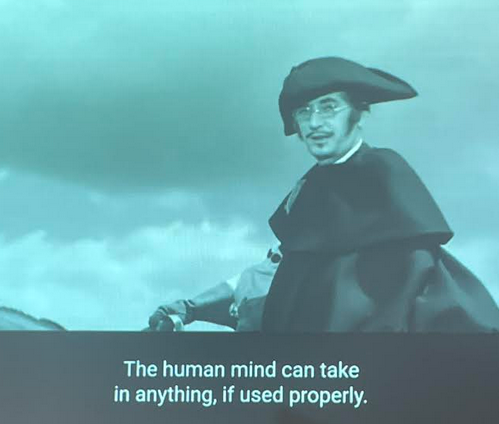
I watched the movie with Shelly while we were taking care of Sylvan our newborn, and there were some amazing lines, like this one where a character says “the human mind can take in anything if used properly.”
It was so fun riffing on these films viz. bonds. It lent itself to a much more philosophical, literary, and generally humanist encounter with municipal finance. Geoff created an index for the conversation, and the chapter titles reflect where our chat went:
Chapters
00:00:00 Introduction to David Backer and His Work
00:03:25 Understanding the Bond Market and Its Implications
00:06:30 The Role of Social Movements in Education
00:09:35 Exploring the Financial Mechanisms Behind School Funding
00:12:41 The Complexity of Capital Expenditures
00:15:36 The Nature of Bonds vs. Loans
00:18:32 The Opacity of Financial Systems
00:21:45 Cinematic Reflections on Finance
00:24:24 The Saragossa Manuscript and Its Parallels to Finance
00:26:24 Philosophical Insights from Film and Finance
00:35:20 Understanding Complexity Through the Feynman Method
00:36:17 The Insanity of Modern Society and Politics
00:38:28 The Challenges of Entering Power
00:41:16 The Mechanics of Municipal Bonds
00:44:06 The Infinite Complexity of Public Finance
00:46:33 The Role of Experts in Understanding Finance
00:49:20 The Opaqueness of Private Equity
00:51:55 The Language of Finance and Its Implications
00:53:42 The Deliberate Opacity in Financial Systems
00:57:57 The Class Struggle and Financial Opacity
01:01:15 The Need for a New Approach to Power
01:03:53 Philosophical Reflections on Causality
01:06:48 The Complexity of Political Structures
01:10:01 Art and Propaganda: The Role of Surkov
01:12:06 Hypernormalization vs. Kayfabe: A Dialectical Contrast
01:18:37 Public Education: Challenges and Solutions
01:25:01 Making Education Truly Public