Misuse?
I recently gave a lecture to the University of Essex’s Management and Marketing Seminar through their Business School, organized by philosopher Rodrigo Nunes.
This was in England. It was interesting that right at that very moment the University was experiencing a significant fiscal crisis, with the administration making rampant cuts to assure creditors they’d be able to pay back their loans. In fact, when my lecture was scheduled, there was a rally for students and faculty and staff to try and fight back.
So I thought I’d look into the situation to see what I could see, if for nothing else to learn about higher education in England.
According to the Financial Times, the University is cutting 200 academic jobs, 200 administrative jobs, and closing an entire campus. They’re blaming a precipitous drop in international students by 54% circa 2022. The deficit is around 23m pounds. The obvious question is why the drop? The FT says:
Essex is one of five universities currently subject to an official “action plan” as a result of non-compliance with Home Office visa sponsorship rules, which union leaders said significantly affected its ability to recruit overseas students this year.
Oh. So national government changed the visa sponsorship rules, the university was found to be non-compliant with those new rules, and was put on an ‘action plan’. Now they can’t recruit international students.
When we look at the university’s financial statements we see a drop in tuition revenue, indeed, decreasing revenue from 316m to 292.5m, a loss of 23.5m.
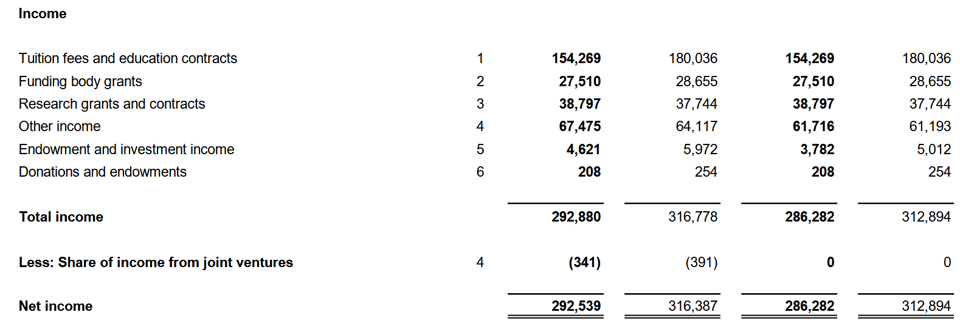
But we also see an increase in expenditure in that same cycle:
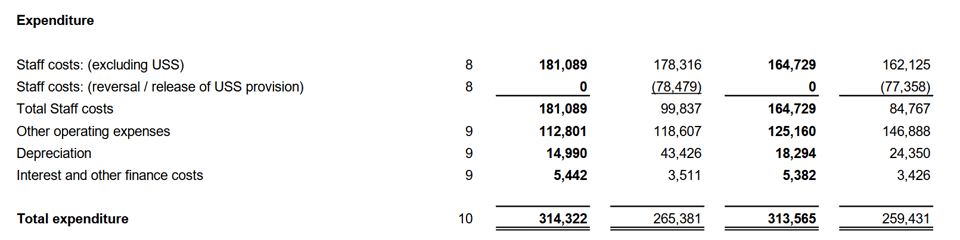
If I’m reading this right, the “total staff costs” nearly doubled between 24-25. I don’t know what “reversal” means exactly, but ultimately expenditures increased from 265m to 314m, an increase of 49m.
I think the union organizers on the ground there have numbers people, and they’ll know more than me, but I’m wondering why the expenditures are going up twice the amount that the revenues are losing. This could be due to severance payouts from a previous round of firings from 2024, actually, but it’s so much!
The official line of the university is that international students can’t come anymore and they’re facing big decreases in revenue. That’s true, and there’s an interesting analysis that follows
I mean yeah, international students decreased by a lot—and they pay more:
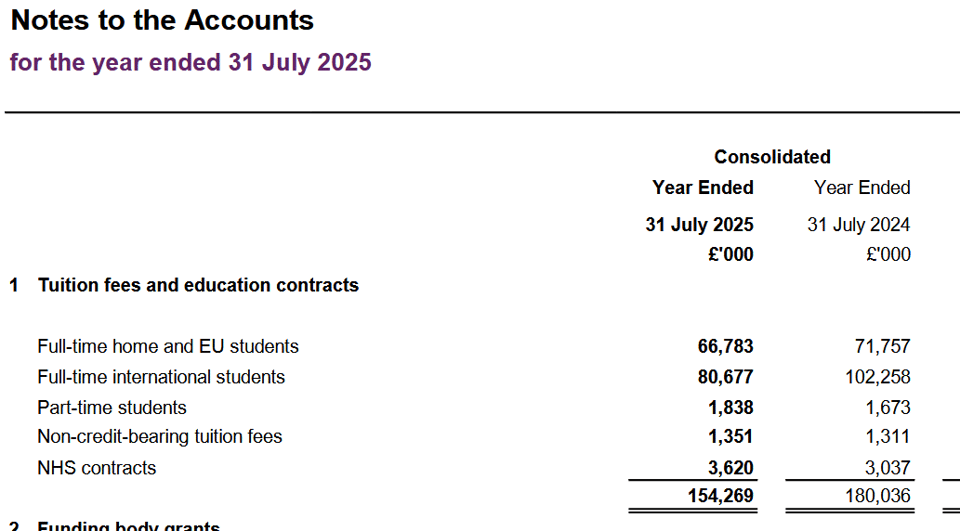
The question becomes why did the Home Office put in these restrictions? They’re cracking down on international students extremely hard.
If you’re thinking that maybe this is due to the new neofascist nativism sweeping the West in the wake of its hollowing itself out during the neoliberal period, then you’re right: “Ministers argue firmer guardrails are needed to protect quality and public trust after post‑pandemic net migration rises, citing misuse of study routes and poor agent practice.”
Indeed, the restrictions were put into place under the Rishi Sunak government after a clown car of failed conservative prime ministers.
Here’s the key ideological move: visa misuse. The new Labour government under Starmer had a feckless white paper to try and make these restrictions a little less restrictive, but, from what I can tell, ultimately they never acted on it, leaving the nativist stuff in place, exacerbated by data fluctuations from the pandemic (students leaving, these absences not being reported, universities getting dinged for it anyway).
A professor of international education put it clearly: ““We are likely to see increased actions against international students from the Home Office so long as anti-migrant sentiments become more and more embedded within government policies and society.”
In a way, this situation is like a preface to the more atavistic moves made by the second Trump administration against universities in the US: cowing them through threats of non-compliance, fining, etc., all around favored rightwing issues like immigration or DEI.
What kind of imagined relation to real conditions makes it make sense that more African and South Asian students at UK universities qualifies as “misuse”? And why would university officials just comply without questioning this?
As we’re seeing now in the US, capitulating to administrations that wield these threats doesn’t do anyone any good.
In the long-term though, I don’t think nativism/xenophobia is the best strategic analysis of this situation. These terms describe general political trends and states of mind, like hatred and love of country.
But who’s misusing what here? I have some in-the-trench questions. Maybe I’m reading things wrong but I’m not seeing the budget crisis as being so bad when we look at other numbers.
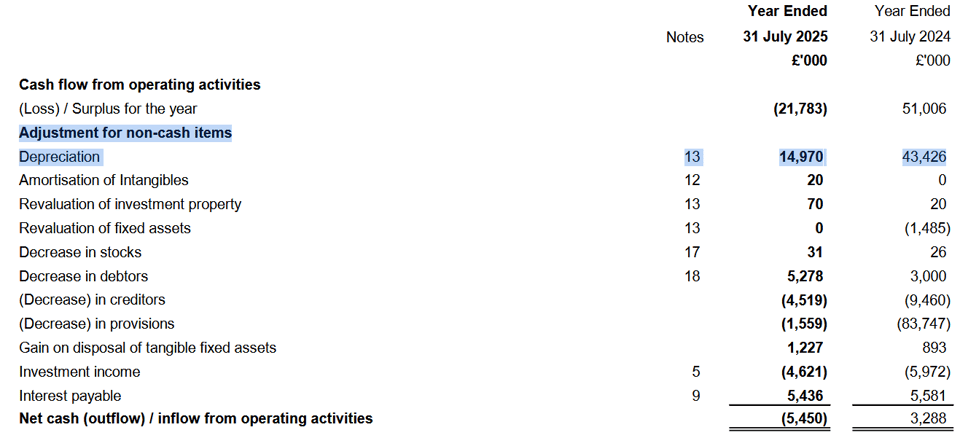
One thing I’m seeing is a pretty significant decrease in the depreciation of noncash items to the tune of 29m. This should be net income, right?

I don’t know. If this is an adjustment to the revenue flows, the decrease in depreciation leaves a higher net income. Which we actually see when they report net losses and inflows. The problem looks to be 8m or so pounds big rather than 23m pounds big. Maybe I’m reading it wrong. There might even be more money sitting around if what I’m seeing is right (and I’m interpreting it right).
The other question I’d ask is what’s up with the big increase in investment revenues. Like, their cash and cash equivalents actually increased by 18m. What gives?
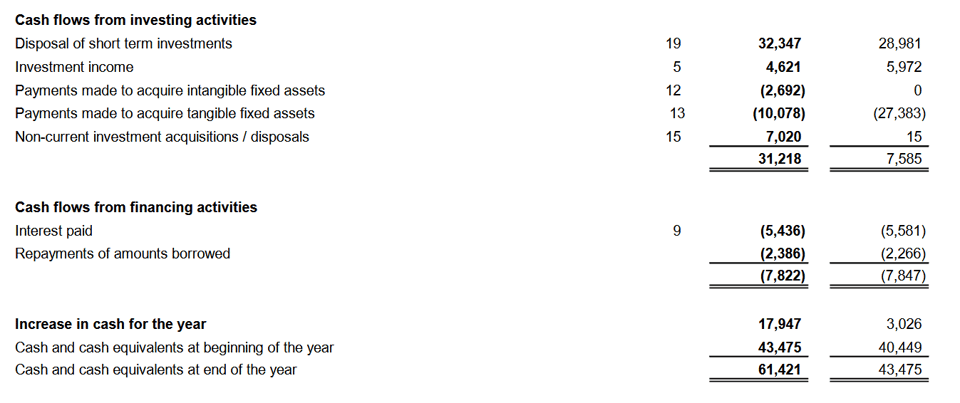
Like, who’s misusing what? Is this visa misuse or revenue misuse? When we put this in the context of the UK’s long defunding of higher education, going back to Tony Blair axing the teaching grant, what if this is a misuse of the social contract instead of displacing everything on the black and brown immigrants? Again, to break this down:
The dominant narrative of the budget crisis is that international students have decrease by 54%, creating huge drops in tuition revenue, ultimately leaving a 23m pound deficit. The dominant narrative isn’t wrong. But help me understand the following numbers:
When adjusting inflows from operating activities, depreciation increased by 29m from 2024-2025, yielding net income (p. 52).
The shortfall of net cash looks more like 8 million pound deficit, not 23 million?
On the same page, the university reports an 18 million pound increase in cash and cash equivalents.
If the university only had an 8 million pound loss when measured by net cash at end of year, and it had an 18 million pound increase in cash, then that means they had a surplus of 10 million pounds. Right?