This number is not in service.
Switchboard operators, party lines, shared lines, private lines, prank calls, call-in shows, unlisted numbers, severed wires, and of course obscene phone calls. This must be the Sunday Scaries.
Ten days adrift at sea today
Who’ll be the last man?
The widows weep at home and pray that
Theirs will be the last man
A hunger creeps for men asleep
And when I wake I bare my teeth
The blood and bile, o’er deck they seep
For I become the last man, for I become the last man.
~ Widow’s Bay (2026)
Time flies when you’re having absolutely no fun whatsoever. Welcome back to another Sunday Scaries! Winter drags on here in St. John’s, making a mockery of the April 25 ‘perfect date’ meme from Miss Congeniality, a film I’ve not seen but have seemingly absorbed through my pores by gay osmosis. For this issue, I’m going to move This Week in Horror right to the top: it was the legendary John Epperson’s 71st birthday two days ago. The name may not be immediately familiar to you, but you may know him best as the glorious Lipsynka, star of stages and screens large and small, and victim of ringing telephones everywhere.
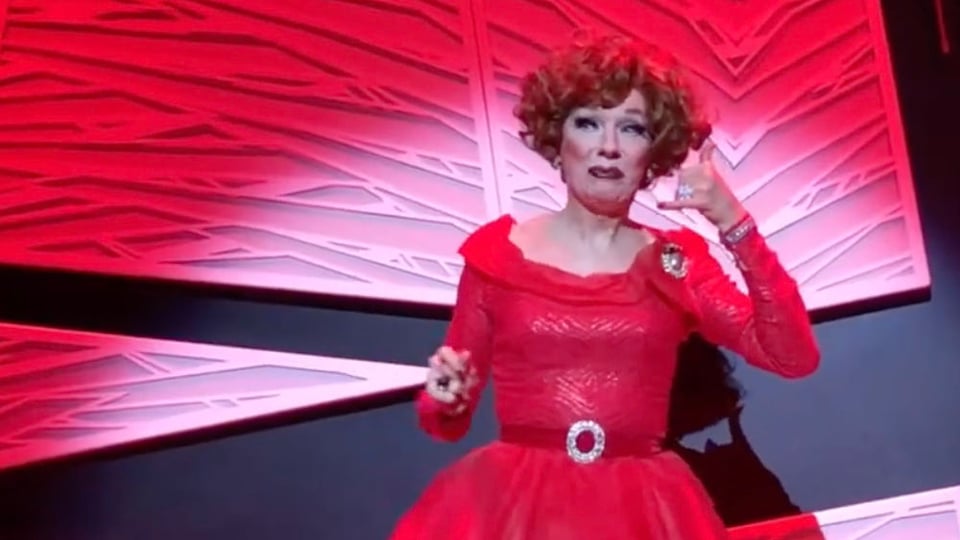
Once a rehearsal pianist for the American Ballet Theatre, Epperson eventually found his true calling as a drag artist, actor, vocalist and writer, appearing as Lipsynka in 1982 in numerous solo appearances and shows, and in productions like Charles Busch’s notorious/riotous Vampire Lesbians of Sodom, Cinderella, Once Upon a Mattress and Sasha Velour’s Nightgowns, as well as George Michael’s 1992 video for Too Funky, a star-making spot on the Joan Rivers Show in 1993, and the films Another Gay Movie (2006) and Another Gay Sequel (2008); out of drag, Epperson has floated in and out of the background in films like Vampire’s Kiss, Angels in America and Kinsey, and had a featured moment as a ‘jaded piano player’ in the rehearsal hall alongside Vincent Cassel and Natalie Portman in the 2010 film Black Swan. The ever-evolving but much loved centrepiece of Lipsynka’s solo act is her hilarious performance of telephone calls and melodramatic monologues taken from such films as Mommie Dearest, Butterfield 8, Chinatown, Carrie, X Y & Zee, Dead Ringer and more.
Please hang up and try your call again.
As I alluded to in our last edition, suspense thrillers and horror films have been tormenting and rescuing women via the telephone since 1912’s An Unseen Enemy with Dorothy and Lillian Gish in their debuts. While the telephone promised the convenience of remote communication, the technology invited the voices of strangers into your home when you least expected and when you were most vulnerable. Switchboard operators, party lines, shared lines, private lines, phone booths, prank calls, telephone salesmen, call-in shows, unlisted numbers, severed wires, and of course obscene phone calls. Women, often home alone and defenceless, were always being called by strange men or overhearing strange things, and found themselves being subject to any number of seductions and threats, including the possibility that it was all in their imaginations.
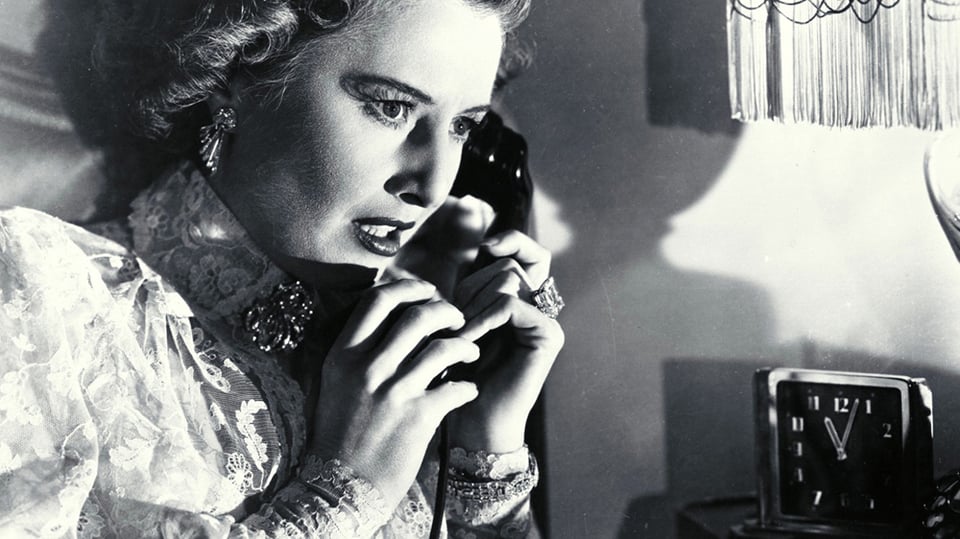
One of the earliest thrillers to make use of ‘crossed lines’ was the 1948 film Sorry, Wrong Number, with Oscar-nominated Barbara Stanwyck as an emotionally fragile bedridden woman who accidentally overhears a murder plot on her bedside phone; veteran thriller writer Lucille Fletcher (The Hitch-Hiker, Night Watch) wrote the screenplay, based on her smash hit 1943 radio play and stage adaptation starring the formidable Agnes Moorehead. Orson Welles described it as “the greatest single radio script ever written,” and its conclusion still startles today. Set aside a half-hour to listen, with the lights low and a warm cup of tea, and immerse yourself in another era.
Telephones offered anonymity, and showed great potential for impersonation. In the delightfully unpleasant 1965 William Castle thriller I Saw What You Did, a pair of bored teenagers making prank phone calls find themselves on the line with someone who has just committed an actual murder and put themselves into jeopardy. In the opening section of the 1963 Mario Bava classic horror anthology Black Sabbath, a French sex worker receives a series of threatening calls from her former pimp who has recently escaped from prison. She calls her estranged ex-lover Mary to come be with her, and from there the twists start twisting.
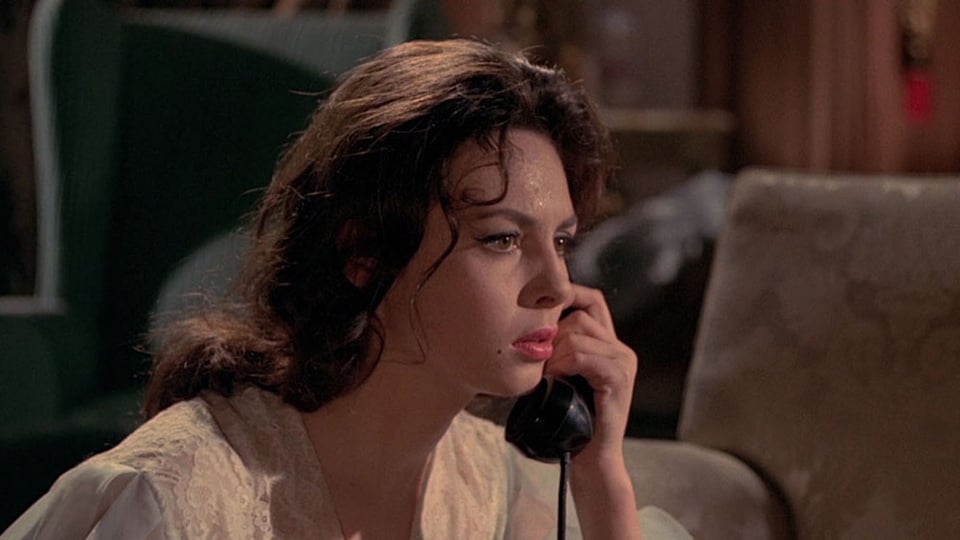
On occasion, the telephone was a conduit, catalyst or revelation of mental instability. In the 1960 film Midnight Lace, a British financier’s American wife (Doris Day) is taunted by murderous threats from an unknown caller and can’t get anyone to believe she’s being stalked and menaced. Jessica Walter memorably turned the tables and did the telephone terrorizing as a late-night radio caller obsessed with DJ Clint Eastwood in his 1972 directorial debut Play Misty for Me. Brian DePalma’s gory campy 1972 psycho-thriller Sisters has reporter Jennifer Salt trying to make a sneaky phone call from inside a shady hospital when she has a confrontation with a patient (Catherine Gaffigan), resulting in this spectacular oft-quoted monologue.
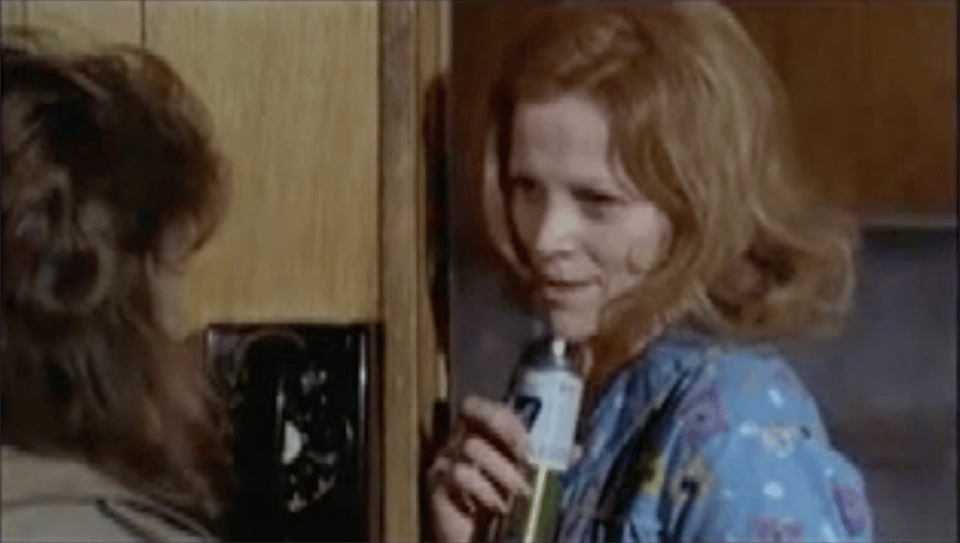
SOMEONE CALLED ME ON THE TELEPHONE!”
In the unsettling 1972 made-for-TV movie When Michael Calls, Elizabeth Ashley is harassed by called from her long-dead nephew. Is it a ghost, a horrible prank, a guilt-fuelled hallucination or is someone close to her trying to drive her mad? I saw this when it first aired, when I was nine years old, and it petrified me. I will be returning to this film in a few weeks along with my Top Movie of the Week Terrors.
Of course, telephones become an essential link between killer and final girl once we fully enter the Slasher Era: Black Christmas, When a Stranger Calls (and When a Stranger Calls Back), Are You in the House Alone?, Don’t Answer the Phone!, Ringu, One Missed Call, Eyes of a Stranger, the entire Scream franchise. (We even had a slasher film of sorts where the phone itself was the murder weapon.) We are overdue for an update to Charles Spiteri’s Senses of Cinema 2004 essay Isolation and Subjugation: The Telephone in the Slasher Film.
Subscribe nowCool Story, Bro: “I know why nobody tell Mama to hold up sheself dis time. It was because it was me dead in de casket in de bottom of de hole. It was my funeral. Except I wasn’t in de box.” Suzan Palumbo’s modern classic Douen, at The Dark Magazine.
Now watching: I have cleared the calendar in anticipation of the debut of the “wonderfully demented” Widow’s Bay, starting Wednesday on Apple TV.
Now playing: I tried to resist but I have succumbed to the quiet lunacy of Tomodachi Life: Living the Dream. I am in the process of populating my island Collinwood with various characters from the Dark Shadows series, as well as refugees from various other horror movies and shows. At the moment, comely mortal Victoria and her vampire pal Acrid have moved in together, but Acrid is now crushing out on local lycanthrope Wolfgang, who so far just wanted to stay good friends. Stay tuned!
That’s it for this edition. Until next time, remember: “I was once in Dublin for the horse show, and I got a call at the Sheldon Room from a man who wanted to dress me in black underwear. Personally, mind you! It was the most stimulating minute-and-a-half I spent in Ireland!”

