
Some light spring reading.
Spring travel beckons, so enjoy a collection of online short stories to help you fight off the next few weeks of Sunday Scaries.
Ten days adrift at sea today
Who’ll be the last man?
The widows weep at home and pray that
Theirs will be the last man
A hunger creeps for men asleep
And when I wake I bare my teeth
The blood and bile, o’er deck they seep
For I become the last man, for I become the last man.
~ Widow’s Bay (2026)
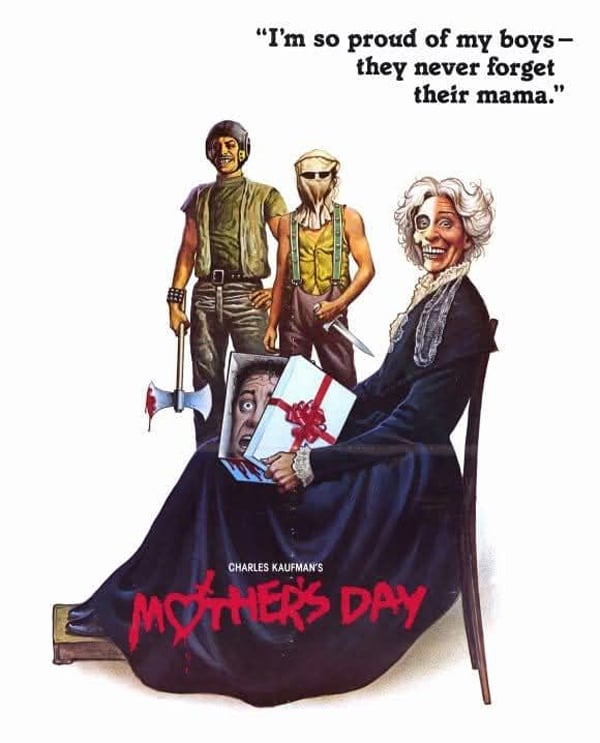
Hello and Happy Mother’s Day to all who celebrate. For the rest of us, and maybe you, it’s time for some Sunday Scaries.
I will be out and about for the next few weeks: first in Halifax for the first-ever TriCon, the Trident Conference for Speculative Fiction, where I will be holding a kaffeeklatsch, hosting a book launch for the new Natalie Zina Walschots novel Villain, and participating in several many panels; and second, on a ten-day visit to the UK with stops in London, Manchester, Edinburgh and Glasgow. If you’re in any of these respective neighbourhoods, come say hi!
I will be back in Canada and semi-functional around June 1. Until then, Sunday Scaries will be on a brief hiatus, so I will leave you with a few reading recommendations to fill your evenings with recreational unease unrelated to the headlines and social media.
Good Night, Sleep Tight by master of terror Brian Evenson is at Electric Lit.
“There is a saying,” his mother had told him several times, just before sleep, when he was still quite young, “always three graves.” She had taken the saying from a book, he discovered years later in college. The same book, as it turned out, from which she had taken many of the stories that, late at night, she had told him to frighten him. Even once he learned that, they still frightened him.
“Why three?” he asked her that first time.
She shrugged. “One for the father,” she said. His own father at the time was already gone, buried. “One for the mother. And, well … ”
A Geography of Innocence by M. Rickert is brought to us from Issue 7 of Weird Horror, published by Undertow Publications.
What remains of the town I once knew is the contour of destruction: the search for a child replaced by the search for a body replaced — eventually — by ennui. Anyone who has ever gone through such a transition gains membership to the ravaged clan. That is why we choose to stay in the location of our despair, so accustomed to it, nowhere else feels like home. Almost everyone who leaves, returns, and we hear rumors about the rest, how they have fallen into ruin. That might have happened even if they had never left this place, where there are three many times bars as churches and rumors about the lone sheriff have always been infused with abuse and neglect. Still, there is no disputing that those who have tried to escape came back with tremors and limps as if any attempt at residence amongst the innocent proves dangerous.
Steve Calvert brings us the shivery British classic On The Brighton Road by Richard Middleton.
It may have been this strange alternation of heat and cold that disturbed the tramp in his dreams, for he struggled for a moment with the snow that covered him, like a man who finds himself twisted uncomfortably in the bedclothes, and then sat up with staring, questioning eyes. “Lord, I thought I was in bed,” he said to himself as he took in the vacant landscape, “and all the while I was out here.” He stretched his limbs, and, rising carefully to his feet, shook the snow off his body. As he did so, the wind set him shivering, and he knew that his bed had been warm.
Psychopomp has been kind enough to share with us Premee Mohamed’s chilling story Everybody Keeps Saying Probably.
Here is the shape of our story, the three of us: an ellipsis (from a particular fixed point we flew away from each other and then rejoined at another point; and then we had you).
Here is the shape of our doom: an ellipsis (on its way, in its thousands and thousands).
It also means: dot dot dot, an uncertainty, a trailing off.
But you are a little young for all this. You are so young that your soft and hard palate are not fully developed and you still have a toddler’s charming rhotacism. Everyone keeps saying probably and you say pwobably and I think that is the only thing your mother still laughs at these days. Because, let’s be fair, there isn’t much.
Subscribe nowOriginally written for a spoken-word David Lynch tribute, here we have One of Our Girls is in Trouble by LC von Hessen, courtesy of Seize the Press.
One of our girls is in trouble.
Oh, it seems normal, doesn’t it? Safe, even. In that little apartment of hers. Lightly faded floral prints and autumn-hued neutral tones for a madhouse dayroom simulacrum of calm. A wall-to-wall shag carpet to muffle any sounds of domestic discord from the other tenants. Unbroken by turquoise and fuschia, Memphis-style slashes, grids, chaotic angles. A good girl’s home.
(You have been good, haven’t you?)
Yet it’s marked by a conspicuous absence. And a note in an unknown hand:
If you ever want to see him again, come tonight. And come alone.
Ergot Press has the unsettling crime story Shrike by Samir Sirk Morató.
The Tulane house has worn a hundred masks since its construction; before it dies—should it die—it will wear a hundred more. Long gone are the frat and its fifteen boys: all that remains of them is the sun-stenciled shape of an epsilon on Tulane’s crumbling brow and the lewd, careless memorial plaques inside. Longer gone are the mistress who built Tulane and her servants that squeezed through its covert passages, worms in a palatial apple. Tulane is a bed and breakfast now, one that, until a few years ago, used to echo with paranormal investigators and tragedy tourists, but that too is fading. History oozes on.
Its threshold for titillation, too, changes. Once, a headline about thirteen fraternity boys getting flayed was juicy. Nowadays, it’s prudish. The news discusses monsters liquidating sorority girls with acid, or debreasted flocks of cheerleaders strewn along highway gutters. Any story sans maggoty panty shot can't make it, Tulane included. So the house languishes now, a hostel barely breaking even, a brownstone labyrinth girdled by iron fences and oak branches.
And C.W. Reeve has posted his short sharp shocker Needles on his blog. Originally published in the anthology Historical Horrors, it is based on the true story of Kitty Hudson, dubbed 'the human pin cushion', an early patient at the now defunct Nottingham General Hospital.
4th of August 1783
Nottingham General Hospital was still young when Kitty Hudson tramped up Derry Mount and arrived at the door – eighteen, tired and in pain, clutching a letter of recommendation from the Snowden Family.
Only eight patients had been admitted thus far. She became the ninth.
At only six years old, Kitty was placed under the charge of Mr White, the sexton of St. Mary’s, and she paid for her keep by sweeping the pews and the aisles of the grand old church. After each service, she found herself in possession of an abundance of pins, all shapes and sizes – lillikins, short whites, middlings, cawkins – pins that worked themselves loose from the clothing of the parishioners during the service, tumbling to the floor to be gathered up by Kitty’s besom. Her hands occupied at the broom, Kitty would store these pins in her mouth. Although their sharp tips scratched against her teeth, she discovered a certain comfort in the cold metal as it pressed into her lips.
That’s all for this edition. I’ll see you again on May 31 with another Sunday Scaries. Until next time, remember: “Darlings, you have made your mother very proud!”

