
Call me by my dream name.
Friendly ghosts, dappled forests, imaginary playmates, synchronized minds, enchanted insects, fluttering doves, flowing gowns. This must be the Sunday Scaries!
“Be careful what you do...because this hotel was built over one of the Seven Doors of Evil - and only I can save you!”
~ The Beyond (1981)
Welcome back to Sunday Scaries, one day after Valentine’s Day, two days after a Friday the 13th, as our thoughts turn to the topic of sequels.
On nearly every entertainment platform, whether a film or novel or TV show or video game, the urge to follow a wildly successful work with a sequel seems almost irresistible—and never more so than with the horror genre. Audiences want to revisit the same characters, who now benefit from the knowledge of the dangers they face; they want to recoil from the same frights, jump to the same scares, confront the same fears, but ideally more and bigger and potentially better than the first time around. And yet that almost never happens. Only a handful of horror sequels have ever reached the heights of their predecessors, and a precious few have surpassed them. The vast majority collapse under the weight of the expectations set by the originals.
And yet they try. There are more than 50 films in the Amityville franchise, with somewhere between 10 and 20 direct sequels depending on how you measure it. The Godzilla series numbers 38 films. The middling Skin-emax friendly Witchcraft series has now reached 17 directly related films. Halloween, Hellraiser, Texas Chainsaw Massacre, Nightmare on Elm Street, Puppet Master, Child’s Play, Children of the Corn, Saw. And, of course, Friday the 13th. Many times the driving force behind these continuing franchises is the antagonist, the creature, the villain, the ‘unkillable killer’. It seems you can’t keep a good monster down.
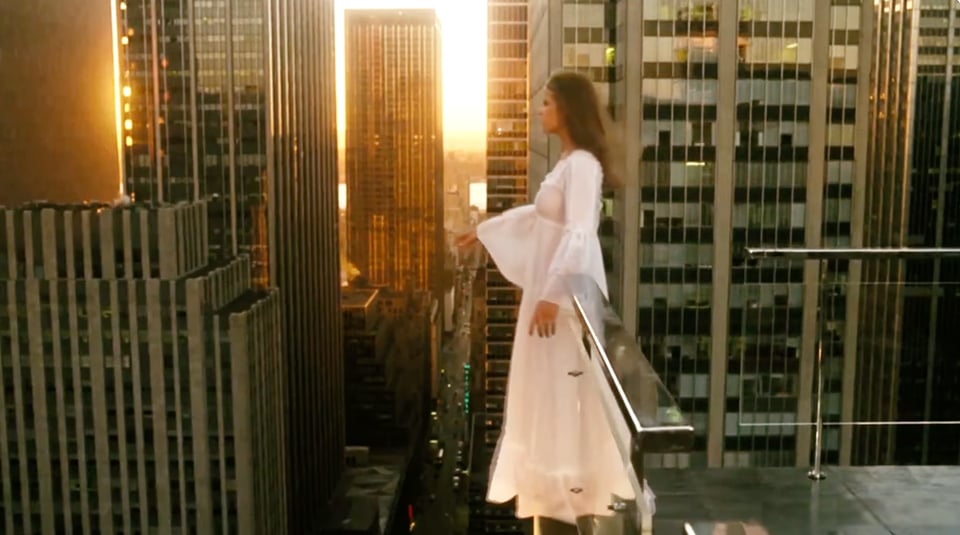
He's gone!"
This week I returned to two favourite films with some remarkable similarities. Both were peculiar postscripts to stories already effectively concluded in their first films. Both are centred around young characters dealing with the scars of unusual childhoods marked with trauma and loss. Each in their isolation gravitates toward a debatably imaginary presence from their past that offers questionable companionship and access to special powers of empathy and imagination, strange connection to the natural world and its wonders (with insects playing featured roles), and possibly even to the paranormal or supernatural. Each is imperilled by this disconnection from the workaday world and their vulnerability to this hidden realm and the forces it may contain. And each becomes the subject of a critical conflict among authority figures around questions of belief and intuition and fantasy and magic versus rationality, skepticism and science. One of these films was significantly more successful aesthetically than the other, but both suffered by sharply departing in tone and style from their progenitors (so much so that each was accused of starting as unrelated to its predecessor with superficial references shoehorned in). Neither could meet the intense audience expectations that awaited their release. In short, they were flops, poorly received by audiences and critics alike. Only years later were either of them reevaluated and their merits reconsidered.
So strange to be finding these connections between the luminous wartime childhood fairytale of The Curse of the Cat People (1944), sequel to the 1942 hit Cat People, and the beleaguered much-mocked metaphysical horror thriller Exorcist II: The Heretic (1977), follow-up to 1973’s religious horror juggernaut The Exorcist.
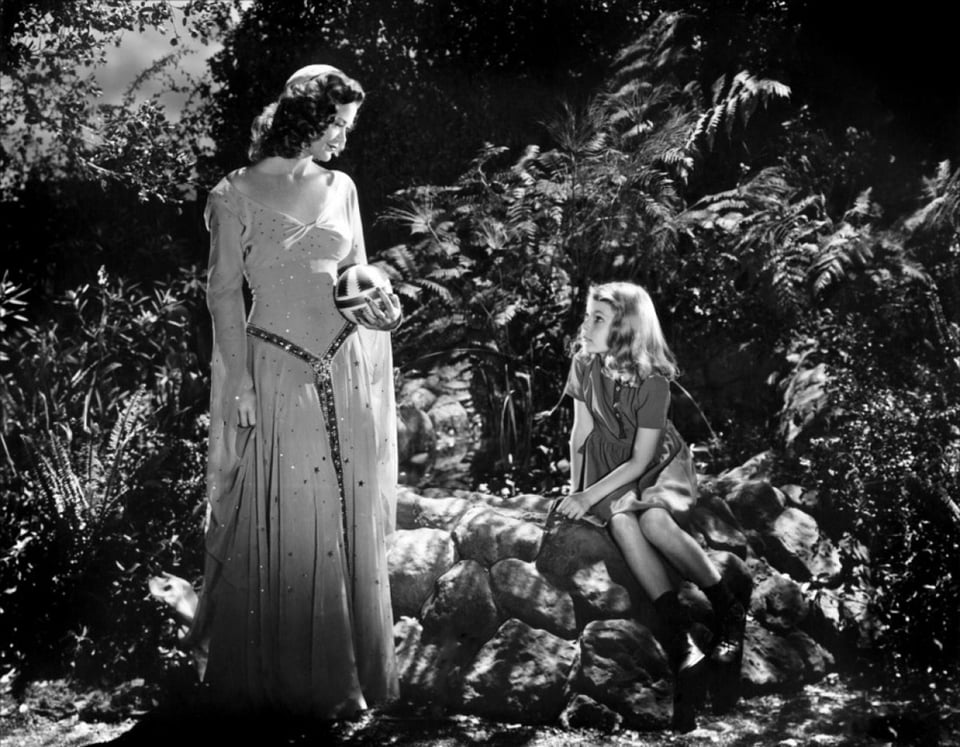
Curse, which had its achingly lonely child protagonist Amy finding friendship with the ghost of her mother (Irena, the cat-woman from the original film, with Simone Simon returning for the role), was as unlikely a sequel to the brooding psychosexual noir of Cat People as one could possibly imagine. Ann Carter is captivating as the introverted Amy who alienates her peers and worries her father, stepmother and teacher with her fancies. Perhaps in some way she takes after her late mother, the delusional half-human murderess? Only an elderly author succumbing to dementia, with whom she strikes up an acquaintance, seems to appreciate Amy for who she is.
As lovely as the film is, its conclusion is a disquieting one. Ultimately Amy learns that to survive, she must leave her vision of her mother behind, suppress her lively imagination and pay more attention to the needs of others. The message is clear: lonely self-absorbed nonconforming children become lonely young women and then lonely old women, sacrificing the kind of fulfillment that only marriage and children can bring, and what kind of fate is that?
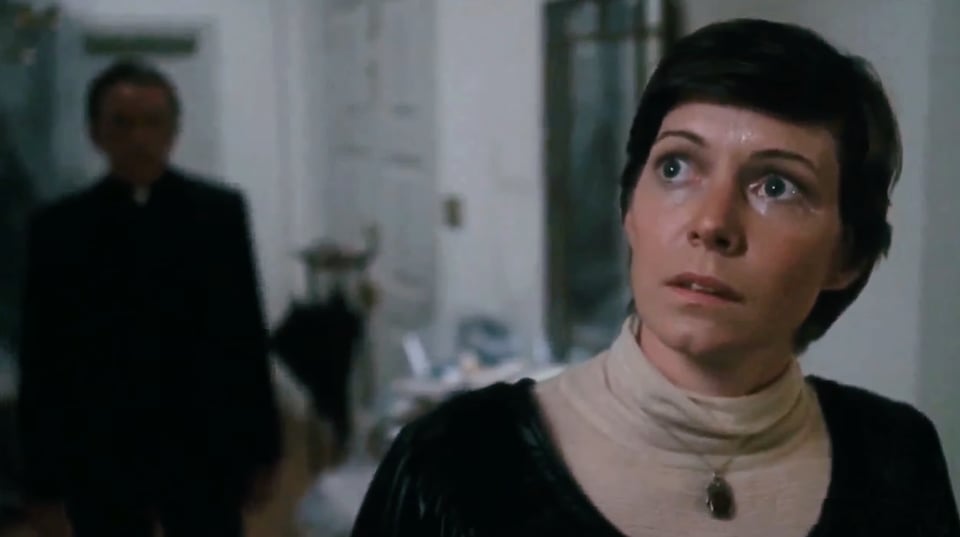
As difficult as it was to follow up the wild success of Cat People, it was all but impossible to continue the story of Regan MacNeil, the little girl who survived a violently obscene demonic possession in 1973’s occult shocker The Exorcist. Cited upon its release as the most terrifying film ever made from the most terrifying book ever written, with susceptible audience members fainting, vomiting and fleeing the theatres, any sequel was doomed to fail before the first words of the script were typed onto the page. TCM has a sharp summary of the film’s production challenges, and the recent documentary Boorman and the Devil elaborates on the director John Boorman’s ill-fated approach to the material: tellingly, he disliked the original film, and set out to craft a kind of counterpoint to the first film’s overbearing Catholic reductivism. Exorcist II returns to Regan as a young woman and explores her ongoing vulnerability to the demon Pazuzu and his agenda of worldwide chaos and destruction, with support from troubled priest Richard Burton, sympathetic psychiatrist Louise Fletcher, and African locust researcher and former possession victim James Earl Jones, as well as returning Exorcist veterans Max Von Sydow as Father Merrin and Kitty Winn as Sharon, assistant and frequent caregiver in the MacNeil household. Unfortunately, relentless rewrites throughout production took their toll, and the final film fails to cohere. Burton’s dialogue is frequently laughable, the rhubarbing African natives are alarmingly stereotypical. Flashbacks to the original exorcism radically revise Father Merrin’s character and inexplicably erase Father Karras’s role in defeating the demon. Fletcher’s psychiatrist is saddled with a clinic outfitted with incongruous glass walls and some unconvincing telepathic technology. Linda Blair, in an ill-considered attempt to show her as a ‘normal teenager’ is shown tap-dancing not once but twice to Lullaby on Broadway in her school musical. Fatally, not one moment in the film is genuinely scary, nor could it be: in just four years, popular culture had largely moved on from its fascination with the devil, and was embracing new visions of horror from emerging auteurs like David Cronenberg (Rabid), Wes Craven (The Hills Have Eyes), Dario Argento (Suspiria) and David Lynch (Eraserhead). Depictions of demonic possession were now so commonplace in rip-offs, retreads and parodies as to be comical. Audiences had no interest in discussions and debates about God and Satan and the fight for the human soul, except perhaps on the PTL Network.
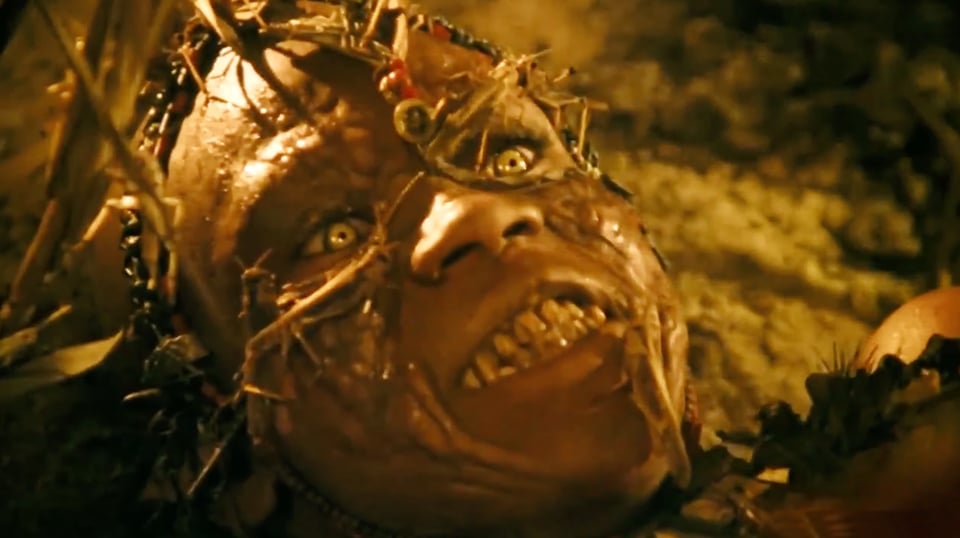
However, a number of striking scenes and moments stand out from the muddle, and prompt one to wonder what might have been: Regan has a moving encounter with one of Fletcher’s other patients, an autistic girl who is drawn out of her wordlessness by Regan’s unique empathic skills, and the suggestion that she is one of a number of ‘born healers’ positioned to fight evil on behalf of mankind is fascinating; Burton’s discovery of the mysterious African witch-doctor Kokumo dressed in an elaborate locust costume, seated in a room with metal spikes jutting up from the floor, has a startling conclusion; the admittedly messy final confrontation at the MacNeil house in Georgetown, Washington has a visually extraordinary (if truly bonkers) climax where Regan defeats a destructive plague of locusts by moving her arm above her head as if waving a bull roarer, while Ennio Morricone’s hauntingly beautiful vocal theme plays. Can these moments compensate for all the nonsense? Well, I’ve watched worse films for more meagre pleasures, and perhaps you have as well.
Some other films in conversation with these include:
Phenomena (1985): In Dario Argento’s fractured fairytale, young Jennifer Connelly communes with the insects at a Swiss boarding school while a maniac is on the loose and Donald Pleasance’s (!) chimpanzee (!!) brandishes a straight razor (!!!)
The Sender (1982): Accomplished actor Zeljko Ivanek makes his debut in this underrated, underseen film as a disturbed telepath, an amnesiac who transmits his upsetting dreams into the minds of those around him. Features fan favourites Shirley Knight, Kathryn Harrold and Marsha Hunt.
Eyes Without a Face (1960): Édith Scob astonishes in one of her early performances, from behind an expressionless white mask, in Georges Franju’s highly influential modern gothic about a surgeon who kidnaps women and surgically removes their faces to try to restore that of his daughter, maimed in a car accident. The film’s final moments are transcendent.
Now watching: Chris Cunningham’s 1999 masterpiece, the video for Bjork’s song All is Full of Love, the closing track of her album Homogenic. In the four-minute video, widely regarded as one of the best of all time, Björk is a robot being assembled in a factory.
Now listening: The Future Sound of London’s beautifully eerie 1994 track Dirty Shadows. (See if you can guess why.)
Now baking: Jay Edidin’s very basic beer bread. Quoted below.
1. Preheat your oven to 350º F and grease a loaf pan.
2. Whisk together: 3 c flour; 1.5 tsp salt; 3 Tbsp sugar; 2 Tbsp baking powder
3. Add 12 oz (a standard can or bottle) of (ideally) room-temperature beer.
4. Dump it into the loaf pan and bake for 45-55 minutes, or until a knife comes out clean. AND THAT'S IT. YOU BAKED BREAD, YOU AWESOME PERSON! I am so proud of you!
(Click through to Bluesky in the link above for some additional notes on the recipe.)
This week in horror: The Men’s Free Figure Skating competition at the Milano Cortina Games was absolutely bugfucking nuts, with Kazakhstan skater Mikhail Shederov taking the gold and Japan's Yuma Kagiyama and Shun Sato winning silver and bronze respectively, while the highly favoured US skater, ‘Quad God’ Ilia Malanin, squandered his sizeable lead by signing his name all over the ice with his ass.
Cool story, bro: Colin Dickey tells the compelling true story of the TEDx talk he didn’t give but that someone else remembers, in The Art of Haunting over at the Virginia Quarterly Review.
And that’s all we have for tonight’s Sunday Scaries. Tomorrow is a holiday for some of us, so enjoy and stay safe out there wherever you are. Until next time: “Come. Fly the teeth of the wind. Share my wings.”

