
When the President Is a Racist
Telling the truth without getting distracted
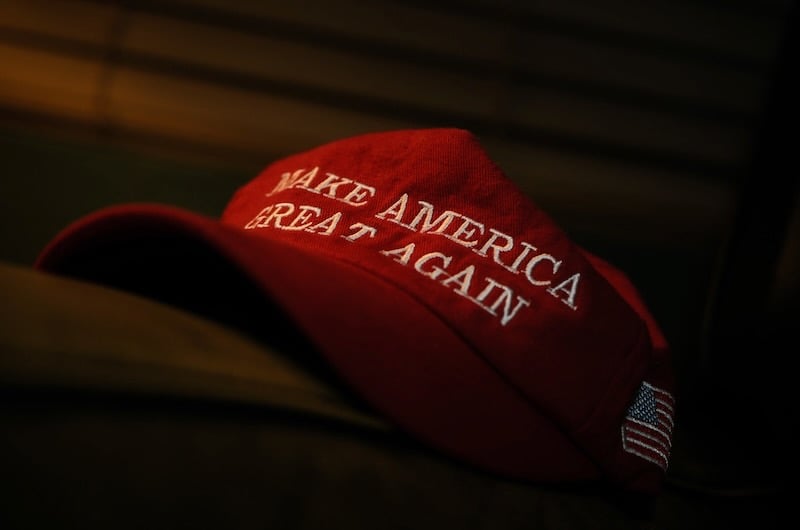
Earlier this week, the president posted a racist video clip of former President Barack and First Lady Michelle Obama portrayed as monkeys. The post has since been deleted after a massive outcry, including, uncharacteristically, from member’s of the president’s own party. In response to such obvious racism, I find myself trying to resist two unhelpful impulses.
The first is to ignore yet another example of Donald Trump’s long-known, easily proven racism. After all, this is the man who refused to rent apartments to African Americans, legitimized white supremacists, and fanned the “birtherism” conspiracy theory about President Obama. Why should one more, albeit absolutely terrible, case of his racism require that we spend any more time discussing what is an indisputable fact?
The problem with this impulse is that it diminishes the damage created by the president’s racist video. There is the obvious harm directed at those citizens who’ve long had to endure this nation’s racist stereotypes. For the most powerful man in the world to display the first Black president and first lady with one of the oldest of these tropes is offensive beyond description.
The harm is also social. Words create worlds of possibility. A powerful person’s communication defines permission structures for hopeful possibility as well as, in this instance, terrifying destruction. While the video has been taken down, the intended audience has already been energized and there is no accounting for a racist mob animated by their racist president.
The second impulse is to allow this overt racism to consume our attention. After all, as we just noted, the harm to my neighbors and the society we share is real. How, in 2026, is it possible for the U.S. president to, once again, endanger the people his office is meant to protect? Doesn’t such blatant hate – for the sake of truth, community, justice, and everything else to which racism is an affront – demand our sustained, purposeful attention?
The issue with this understandable inclination is that it mistakes the nature of racism which has always acted as a justification for some sort of theft. Those who have been racialized as less-human are subject to material exploitation. To describe the president as a racist is to say something almost too obvious. Of course he despises Black people as a people – racists always make exceptions for individuals – and Black women in particular have provoked his animosity. But focusing solely on a powerful racist’s hate can distract from how his racialized vision is organizing the world for profit: resorts in Gaza, oil fields in Venezuela, cancer-causing refineries on the gulf coast, defunded poverty-alleviation programs, all while enriching himself by an estimated $1.4 billion.
So, if it’s unhelpful to both move quickly past yet another instance of the president’s racism and to focus too completely on it, where are we left? First, we can accept the fact that the president is a racist. His actions, words, and policies have made this clear. We shouldn’t be surprised when a racist does racist things.
Second, the deceptive nature of racism means that we should always be prepared to counter the president’s dehumanizing fictions with the truth. This means speaking truthfully about his words and actions as well as about those he purposefully dehumanizes.
In Notes of a Native Son James Baldwin wrote that holding these two commitments “seemed to be in opposition.”
The first idea was acceptance, the acceptance, totally without rancor, of life as it is, and men as they are: in light of this idea, it goes without saying that injustice is commonplace. But this does not mean that one could be complacent, for the second idea was of equal power: that one must never, in one’s own life, accept these injustices as common place but must fight them with all one’s strength.
Holding these seemingly opposites together, accepting the president’s racism and committing to counter it with the truth, allows the attentional capacity to avoid distraction from this administration’s destructive aims. The president’s video was awful. But rather than consuming our attention, it can alert us to the impact of his oppressive policies on Black and Brown communities: Somalians and Haitians scapegoated and targeted for deportation, African American communities abandoned to cancer-causing industrial pollution, food assistance slashed while immigration enforcement budgets soar. We could go on.
What this moment requires of us is the ability to speak truthfully about the obvious wickedness without becoming consumed by it. From there we can direct our attention to the critical stuff the president’s racism is meant to distract us from.
The View From Here
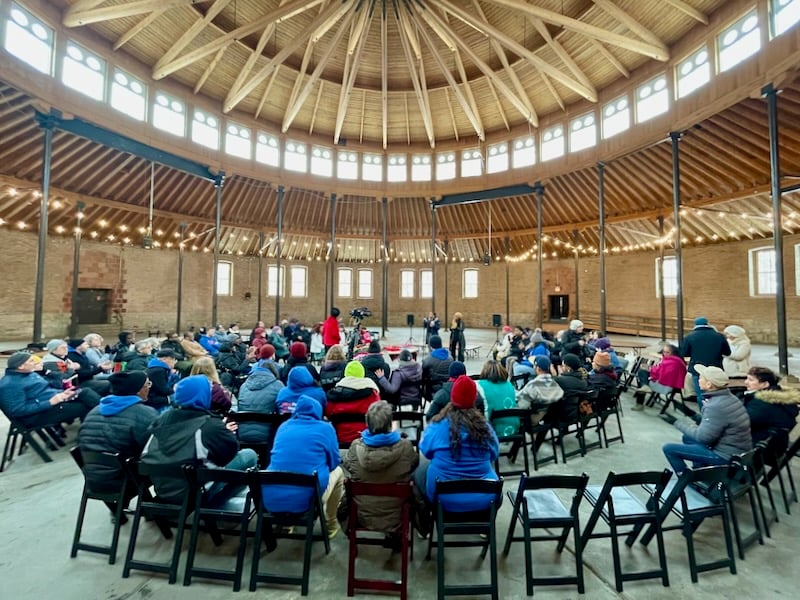
Yesterday morning I walked over to the grounds of the DuSable Black History Museum for an event hosted by an interfaith group I’ve been working with since ICE’s deportation campaign began in Chicago. These friends have been a source of courage and wisdom during some challenging days.


