
Acknowledging the Rise of Authoritarianism
Possibilities open when we tell the truth
I don’t know about you, but I was hoping 2026 would provide at least a small break from the barrage of discouraging events incited by this president and his administration. Alas, within the span of a few days the U.S. invaded Venezuela, an ICE agent killed a woman in Minneapolis, and the president, when asked on Thursday if anything could check his power, responded, “Yeah, there’s one thing: my own morality, my own mind. It’s the only thing that can stop me.”
Something that has been clear to me for a while, and which events like these only confirm, is that this president is actively working to assert his authoritarian agenda. I use “authoritarian(ism)” broadly, meaning consolidating power, undermining political plurality, destabilizing democratic norms, and abusing civil liberties. Historians will one day define more precisely whether we’re living through the rise of tyranny, fascism, or something else. Until then, it’s reasonable to speak broadly of the authoritarian tendencies which the administration is increasingly unconcerned to disguise.
In his little book On Tyranny, historian Timothy Snyder identifies twenty lessons which can be taken from previous tyrannical eras and regimes. I’ve read it a couple of times and it’s eerie to notice how quickly the U.S. is stumbling along the path toward authoritarianism. For example, although video footage shows that the ICE agent who killed Renee Nicole Good in Minneapolis earlier this week had many opportunities to diffuse the situation, the Trump administration claims the agent acted in self defense against a woman who “violently, willfully, and viciously ran over” the agent.
“You submit to tyranny,” writes Snyder, “when you renounce the difference between what you want to hear and what is actually the case.” Authoritarian regimes, he goes on to say, show “open hostility to verifiable reality, which takes the form of presenting inventions and lies as if they were facts.” Sound familiar?
This can all feel very overwhelming which is, I think, precisely the point. An overwhelmed citizenry is prone to disengagement and cynicism, ideal conditions for those bent on further consolidating their oppressive and extractive power. One straightforward thing you and I can do to push against becoming overwhelmed by the barrage of lies and bullying is to simply accept what we are living through. We don’t have to understand each nuance or motive of this administration; again, historians will be the best arbiters of those debates. But we can accept what our eyes have seen, that this government has mobilized and weaponized its lust for unlimited power.
Very practically, accepting the conditions of creeping authoritarianism looks like redirecting our energy from those who want to defend the administration and its motives or debate the minutiae of what, technically, constitutes authoritarianism. Not that we shouldn’t be willing to have occasional good-faith conversations with those who might disagree, but our focus can shift from debate to a couple of more fruitful possibilities.
The first possibility which opens to us when we believe our government’s words and actions is that we find collaborators who’ve also accepted the rise of authoritarianism. There are lots of people all around the country doing great work to respond to the Trump administration’s deception and cruelty. Collaboration looks like advocacy, compassion, and civil disobedience. It might involve public resistance or more quiet institution-building. Collaboration includes interfaith cooperation and civic engagement with those leaders who have enough integrity to tell the truth about our circumstances.
The second possibility that comes with acknowledging the moment we’re living through is learning from others who endured previous eras of authoritarian. I’m reading Kevin Sacks’ excellent book about the history of Emanuel AME Church in Charleston, site of the massacre carried out by a white supremacist in 2015. The church was founded before the Civil War which means its history includes multiple periods of state-sanctioned oppression, disenfranchisement, and racial terror. Generations of its worshipers found in Mother Emanuel a haven in the midst of tyranny in the forms of slavery, war, Reconstruction, Jim Crow, and so on. Their example can shape our imaginations. Their perseverance can inspire our own. Their Christian faith, tested in the fires of brutality and domination, can refine our worship and witness.
This might sound strange, but acknowledging that we’re living through the rise of authoritarianism provides a measure of peace. Why? Because dealing with reality brings us into contact with others – contemporary friends and saints from previous generations – who’ve chosen to stay awake to the creative possibilities which remain available despite what the tyrants and their enablers would have us believe.
So, let’s tell the truth about these troubling days, find our collaborators and exemplars, and get to work.
(Photo credit: Scott Umstattd)
“Clearing the Fog of Empire: A Christian Response to the U.S. Strike in Venezuela”
Earlier this week Christians for Social Action published an article I wrote about the U.S. attack on Venezuela.
From American flags in church sanctuaries to religious declarations on our currency to the administration’s recent use of social media memes overlaying Scripture with nationalistic imagery, the U.S. imperial mythology works to justify the government’s actions, especially when those actions are obviously illegal, immoral, or unjust.
In other words, the confusion many of us feel in a moment like this is intentional, the result of propaganda-like narratives meant to distract us from the truth. Simply recognizing this fact can free us from imperial misdirection and allow our attention to focus on those neighbors who are adversely impacted by the empire while also speaking truthfully about the harmful policies behind that impact.
The View From Here
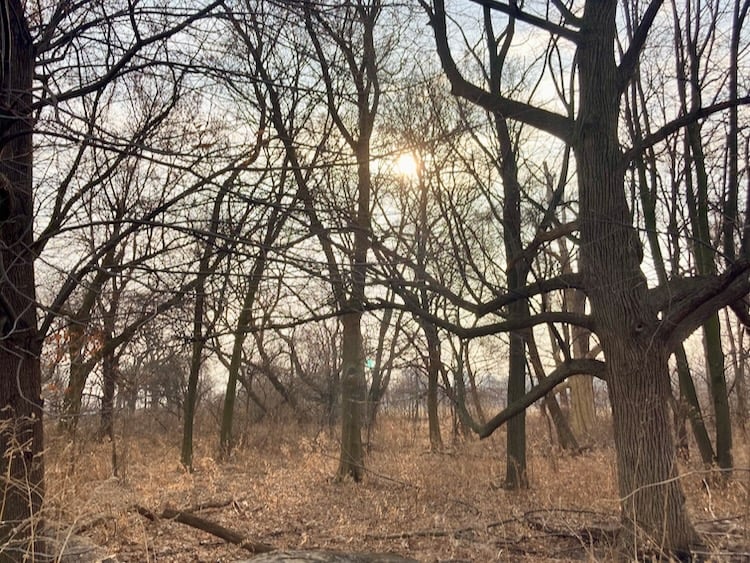
This is probably a minority opinion, but I love the winter shades of brown during my Jackson Park walks this time of year.


