Dispatch #03: how to say thank you
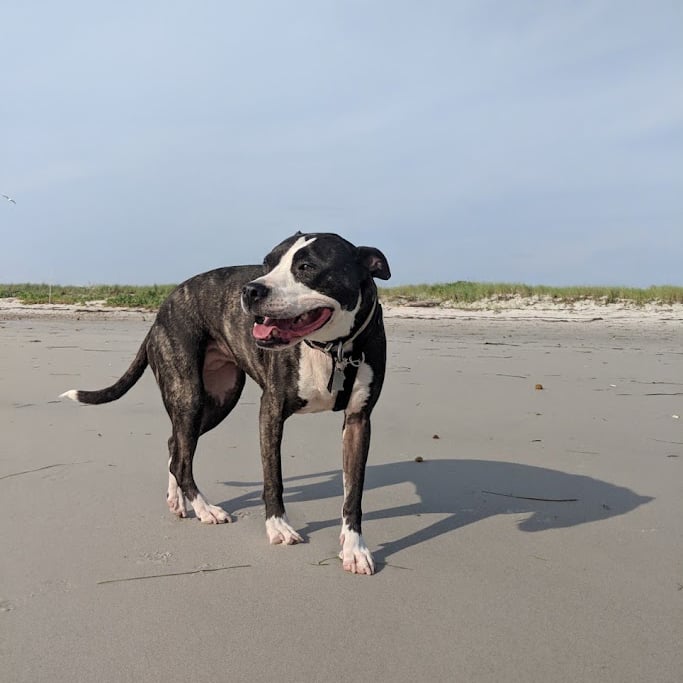
Our dog died last week. I know that’s blunt, but we’ve been practicing that language for the kids. She didn’t pass away, or go away, she died. Sometimes you need precision with your words and that can be hard. But it was going to be hard no matter what words you use.
Reggie was 15, which as my son Sebastian points out, was 105 in dog years. Since she was 7 months old, Reggie has been part of my life. What an incredible gift, 15 years, with a goofy, stubborn, gentle dog.
Five apartments and houses. Multiple careers. Graduate school. A pandemic. A wedding. Losing my father. Two kids being born. A horrific accident involving my wife and son. My own struggles with illness. Countless mundane days. Numerous amazing days. Reggie was along for the ride through all of that.
The range of emotions I have felt over the past few weeks has been overwhelming. I don’t throw around the word “blessed” much, but we were blessed in so much that her decline was relatively quick, and she passed away peacefully at home, in her doggie bed, with the care and assistance of a wonderful veterinarian.
All of that said, I’m still gutted. I knew she would not recover, it was her time to go, and the last, best gift I could give her was a peaceful death. But I miss her, I miss the dog that she was for fifteen years.
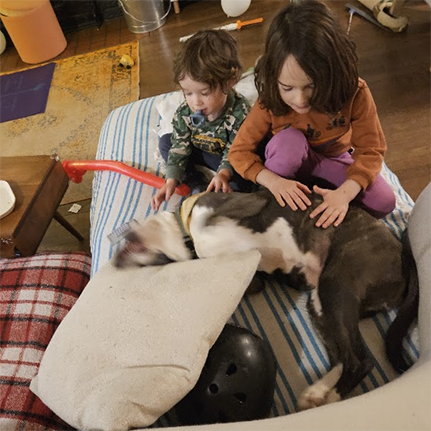
When I told Sebastian, who is now six, that Reggie was sick and we may need to say goodbye soon and help her to die in a gentle way, he reluctantly understood, as much as a six year old can. He urged us to focus on the positive while she was still with us, and would give her treats and put on little performances for her while she rested.
The morning we knew it was time, she had not eaten for several days and could no longer walk. Sebastian tried to give her a treat and she didn’t even lift her head. He didn’t say anything about it, but I think he knew just as I did. But I was the one who had to make the call.
There are moments in life when you face something and a part of you wants to say, “I need a grownup,” but you realize you are, in fact, the grownup. This was one of them. I did not want to make the phone call to arrange for Reggie to die. I did not want to watch her die. But I knew that it was my responsibility. I had to dig in and be brave, because to be perfectly honest I was terrified. I had lost pets before, but I never had to make that decision. I was skeptical that it would indeed be a peaceful process. I didn’t know what I didn’t know, and I wasn’t ready to say goodbye, even though it was time.
It was peaceful. My wife and I sat with her, I read a poem, and we held her paw as she got drowsy from the medication. We continued to pet her and tell her what a good girl she was and how she can start her next adventure now. We told her she had done a good job and was the best dog. And we watched her take her last breath.
I got fifteen good years with Reggie, a couple of hard weeks, and one especially hard day. I know that after some time, I’ll remember all of the other moments more than the final, hard one. I’m trying to give myself grace for making the decision.
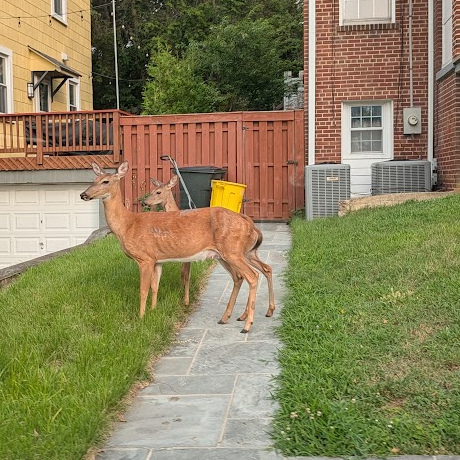
A few days after Reggie died, my wife spotted a deer in the neighbor’s backyard. A day or two later, I saw possibly the same deer walking down the alley behind our house. The other morning, I was talking with Noah, who is almost three, about how some people believe seeing a deer after someone dies is a sign that the person, or animal, who died is okay and at peace now. Three minutes after that conversation, as we were driving, we spotted two deer.
I don’t know if I believe in signs or not, but I do believe that grief has a power to dislodge us from the ordinary of our days. It allows us, if we are willing, to be a witness to the quiet beauty that was there all along.
Yesterday, as I was coming home from an appointment with my eye doctor, I saw a UPS truck turning onto our street. I got home precisely at the same time the UPS driver was getting out of the truck. He was delivering Reggie’s ashes. I walked up to him and he saw that the box said “cremated remains” on it, and I said, “that’s my dog.” He gently handed me the box, and gave his condolences. I shook his hand and said “thank you for bringing her home.” He asked how old she was, what kind of dog she was, and if we were eventually going to get another dog. We chatted for a few moments, and then I took her inside.
For that moment, that interaction to happen, my eye appointment had to last exactly the right amount of time, I had to walk back to the Metro stop near my eye doctor at just the right pace to catch the train, and then I had to locate a Bikeshare bike and ride it home at just the right speed so that the delivery driver could hand me that box instead of leaving it on the porch.
But that’s just the thing, the unlikely inevitability of everything. That moment did happen, so it had to happen, and I was able to receive it. Just as I was, begrudgingly, and not without fear, ready to receive her death. Do I wish I could have had more time with Reggie when she was healthy and young? Absolutely. Am I, despite it all, grateful that I could be the one to help her die in a way that was respectful and compassionate? Absolutely. I truly, deeply, believe that you cannot pick and choose what you are grateful for in this life. Her death was part of her life, a long, well-lived, and well-loved life. I am devastated, but I am thankful.
Rest easy, Reggie, we’ll see you around.
Look, the trees
are turning
their own bodies
into pillars

of light,
are giving off the rich
fragrance of cinnamon
and fulfillment,

the long tapers
of cattails
are bursting and floating away over
the blue shoulders

of the ponds,
and every pond,
no matter what its
name is, is

nameless now.
Every year
everything
I have ever learned

in my lifetime
leads back to this: the fires
and the black river of loss
whose other side

is salvation,
whose meaning
none of us will ever know.
To live in this world

you must be able
to do three things:
to love what is mortal;
to hold it

against your bones knowing
your own life depends on it;
and, when the time comes to let it go,
to let it go.

In Blackwater Woods
Mary Oliver