Fuzzy Brain #005 - On memory and Experience Design
Hi!
You are getting this email because you have signed up for Fuzzy Brain on danielsouza.org.
Every month, I write about music, things I am learning and experience design.
Today, we continue our series on Experience Design. We explore the relationship between language, memory, and long-lasting experiences.
Music
This month's playlist explores the beautiful work of jazz and afrobeat musicians. You will hear from Budos Band, Jet Black Crayon, Baden Powell, and others. It's all instrumental, but not boring. If you want to listen to one song to read this article, pick this one that was discovered by my partner, Leiliane.
This playlist is perfect for writing, working in focused mode and as a soundtrack for workshops. Enjoy.
Experience Design
Experience Design and Memory
A perspective on social memory
Ailton Krenak is a philosopher, writer and environmentalist who fights for indigenous rights in Brazil and worldwide. He is the first indigenous person appointed to the Brazilian Academy of Letters and the author of three books: Ideas to Postpone the End of The World (2019), Life is Not Useful (2020) and Ancestral Future (2022)
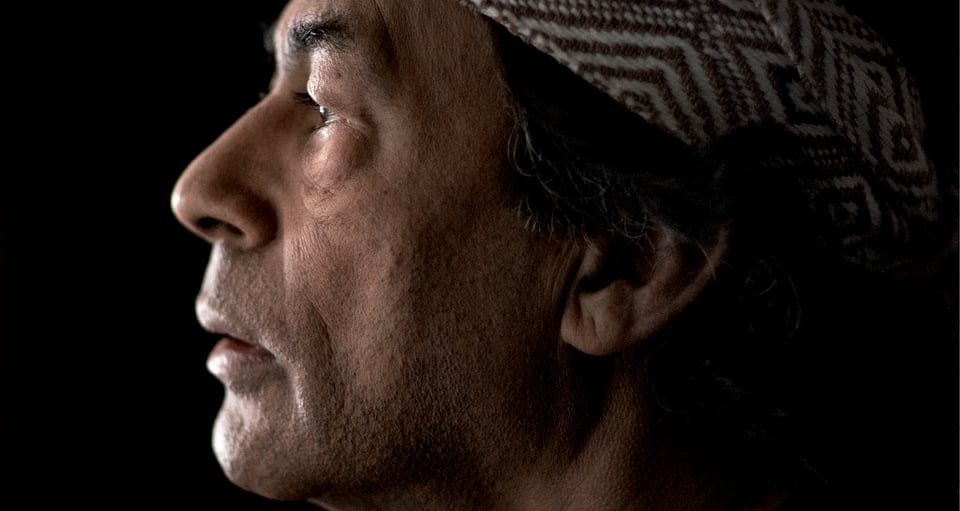
As I watched a YouTube video, his wisdom astonished me. The way he facilitated a conversation around a campfire was inspiring. In the video, he talks about memory and critical thinking—their interconnectedness and subtle relationship with language.
He starts his talk with commentaries about a significant fire that destroyed the National Brazilian Museum. Then, he pauses. And talks about how most pre-colonial objects, artefacts, and records about indigenous people were lost in the fire. Then, he follows up with his usual optimism:
“Imagine if we didn’t have the memory of all that burned. What a wonderful difference it makes to have memory, even if the materiality of things disappears… … The body and the territory are constituted within the same vessel, the same vehicle for us to establish memory, meaning, recounting the history of the origin of things, and also transmitting from generation to generation a social memory, not only of objects but a memory of our affections, of our senses of life.”
Krenak made me think about memory and experience in a novel way. And particularly about one thing that modern Experience Design doesn't address - social memories.
What we know about memory
In human-computer interaction (HCI), human memory refers to the psychological process that allows users to encode, store, and retrieve information. HCI and Interaction Design theories rely strongly on concepts from psychology and cognition. Practitioners will be particularly keen to minimise cognitive load and increase recognition over recall. However, these efforts are mainly about short-term memory and task efficiency in the context of usability and interface design. Long-term memory - episodic, declarative and associative - is discussed less.
Perhaps it’s a consequence of teams being stuck in touchpoint or channel thinking. But memory is multi-sensorial—the design of memories isn’t journey-agnostic. Digital experiences usually belong to a bigger context. But even people who don’t use a service might have an associative memory about a company, segment or activity.
Finding the gaps
Perhaps this is the reason memories fall apart, and with that, many ventures that rely on attention-seeking behaviours. There is a coordination and intentionality gap.
The importance of intentionally designing memorable moments in an industry where everything looks identical can’t be dismissed. As someone who has learned to be mindful about my information diet, I frequently think about attention scarcity as a designer. Everyone is overwhelmed and our brains are changing. The lines between digital and physical are blurred.
Digital immersive experiences designed with a broader sensory spectrum can create long-lasting memories. Some physical experiences can create memories by strategically using an underlying information structure that enables sense-making. But how might we make all of this connect in people’s minds?
When it works, it's memorable
When there is choreography and thoughtful timing, it feels like things work differently. Memory is mainly visual, but audio, touch and smell transform recall. A few examples on top of my head.
Haptics in IOS applications.
Some apps are good at syncing haptics with user actions. Duolingo shows you are progressing through sound, visuals and haptics. Atom, the new habit-forming app from James Clear, makes the moment of completing a task memorable with a small trick in haptics and animation.
“Le Bal de Paris” - A VR experience that doesn't suck
I have a VR device at home and have enjoyed many VR experiences in museums. But this was the only one I vividly remember. It was an installation in which dancers guided you through a fictional universe in Paris. There was a magic moment that I will not forget. After being introduced to the VR world and the story, you are encouraged to dance and a staff member helps you to move in sync with the music, gently holding your hands.
Slow visit to a museum
You will probably remember more about an exhibit if the curation, way-finding, and lighting are excellent. But the building itself, the architecture, and the space and time that holds the art also helps you to create a strong memory. The Museu d’Orsay in Paris and the CCBB in Brasilia are good examples I was lucky to enjoy.
Story, information, sensory memories and the peak-end rule
Storytelling and world-building are popular these days. However, many products and services focus solely on the founder’s story or weak plots about how the product or service was designed or used.
A story-based approach makes memorisation not only possible but rewarding. Something about our brains prefers a complete story - experiences designed with that lever are better. We remember things out of the ordinary, the entire (or intentionally incomplete) journey must surprise us.
Narrative structures can support information delivery and create the proper canvas for these strategies. Enough and timely information can create the pace and the rhythm for the story to develop as an artefact to help people achieve what they want.
From an information perspective, strategies like chunking, making relationships visible (causality, hierarchy, structure), and using personal language are conduits to meaning, emotion and memory.
Story, content, and sensory design are tools for creating the space for emotions and, thus, great memories. But how do we make it long-lasting?
When remembering things, we tend to focus on the most exciting or intense parts and how they end rather than everything in between. That is why the hero’s journey and the peak-end rule are so prevalent. The intentional design of peak moments and endings transforms people's relationship with services.
This article is an exploratory draft. It is the fifth one of a series about Experience Design. You will find all the sources and extra commentary on a public google docs.
Wishing you a beautiful week.
You can e-mail me with your comments and questions
ps1: Thanks for reading my newsletter. You can find all the previous editions and their respective playlists on the archive page.
ps2: A welcome to the new joiners on this list: Kalina, Jakob, Sabri, Cinthia, Helio, Maciej and Yasmin.