We Might Have To Get A Little Less Fandom-y
Mo Drammeh
There is something really wrong with the way we talk about books on the Internet. When I have a discussion with my real life friends — which I do have! — about literature, I notice the lack of desperation in the air which seems to pervade online literary discourse. When we read fiction, we seem to have a very bad habit of projecting our neuroses onto it. The expectations placed upon the novel (both as a medium and in the sense of individual novels) these days are increasingly bewildering. In an earlier article, I articulated my opposition to the idea that the novel and the act of reading itself would save us from fascism, but this is only one of many burdens people have placed on the novel. People will put out deeply, uh, motivated interpretations of novels. People treat characters like they’re real people and real people like they’re characters. Pages and pages of arguments between two people who equally do not understand the themes of the book or show they’re talking about. Much discussion about books seems to have very little to do with the content of the books themselves and very much to do with the people having those discussions. In this article, I want to get to the bottom of why, and I believe the only way to find that ‘why’ is by interrogating the idea of fandom, and its relationship to consumerism.
The question of “fandom,” as a methodology for interacting with art, as a mode of community generation, and as a marker of identity, is, to me, completely unavoidable in the discussion of how we interact with art in the modern era. It is the elephant in the room. Even as any given work eludes the particular formation of the phenomena we call ‘fandom,’ the way scenes, symbols, characters, and lines of dialogue are understood and discussed here nevertheless smacks of its influence. All of the vibes have been off for quite some time now. I’ve had my own experiences with fandom in the past, having passively been in a few over the years, and I really do get the appeal. Being part of a community and being able to share in the excitement when a new section of the story drops are very fun things to do. That said, even before I really unpacked why I thought so, I always felt like it was negatively impacting my ability to genuinely appreciate and enjoy whatever the work in question was. I believe I understand why that is, but we’re going to have to define some terms and make some arguments to get there.
So, consumerism. For my purposes, consumerism is both the fetishization of consumer goods and the precipitant chauvinism that comes with the expectations the consumer puts on the product, an entitlement felt towards fulfilling their idea of what the product does. It is based on the commodity, some type of product with an exchange value. A commodity only has a instrumental value assigned to a predetermined function, a thing I want it to do. My phone is only a good phone insofar as it allows me to browse the Internet and make phone calls. A laundry basket that can’t hold a lot of laundry is a poor laundry basket. The quality of a commodity is subjectively evaluated based on its ability to satisfy the consumer’s expectations. The thing is that books are also commodities, and as such the conversation around what makes a good one gets very complicated very quickly.
A book is a good book if it is good at what it’s meant to do. I think this is about as specific of a statement as you can make while remaining purely objective about what makes a book work. As such, this leaves a void of subjectivity that allows the reader to decide “what it’s meant to do.” If you’re in academia, that might look like analyzing the book as a political project or in terms of how its form matches its themes — the type of thing our high school English teachers all taught us. There are pros and cons to this type of approach but it’s generally able to lead towards productive discourse. This is not the primary approach fandom, or most online literature discussion, takes for a number of reasons. We don’t have time to get into all of them but here’s a few I’d propose: a noticeable decline in public school funding over the past few years in several states across the U.S. and the culling of humanities programs at universities, the related increase in anti-intellectualism, the long history of the social and economic gatekeeping of higher education on racial, gender and class-based lines, etc. By default, we can then only judge the novel as we would anything else: as a commodity, as a product.
Given that any piece of art eligible for fandom generation is some form of commodity, (be it a film, a video game, a series of novels, etc.) it is necessarily the case that the identity of “fan” is one based on consumerism. The most loyal fan is the most loyal customer. To truly buy into a work is to literally buy it, to pay for it with your Netflix subscription, your $60 dollars for the latest triple-A release, or at Barnes and Noble. And, especially in an economic environment of gradually worsening material conditions, of stagnant wages and a, uh, let’s-call-it-volatile job market, if you’re going to pay for something, you better know you’re getting something out of it. It should fulfill your expectations; it should do the thing you bought it for. Even if and when you are not paying with literal currency, you are paying with time which could otherwise be used towards any number of ends. This is the mindset which subliminally undergirds consumerist analysis: I am a paying customer, and at the moment I paid for the book, I entered an unspoken social contract with the author to repay my investment via fulfilling my demands about the art. The bounds on the nature of good and bad art are set by the consumer, of the consumer and for the consumer. The customer is always right.
In this way, a contradiction forms between the fan and the author. The fan projects their desires onto the work; they want certain plotlines and those plotlines to play out in a certain way, to see certain things depicted and others pointedly not, to have their expectations about genre and its conventions fulfilled. The artist, on the other hand, is (or, in my opinion, should be) strictly interested in the formal project of the work, the best execution of which may and in fact usually does involve not just giving the consumer what they want, and subverting those expectations of genre, plot, structure and prose. This is true in large part because the fan necessarily must demand something they have already seen, or otherwise could already conceive of and would be able to otherwise articulate; something which fits into their pre-established desires which are usually synthesized from other works and prior experience. Whereas the author generally tries in their work to create something that no one has seen before, something which cannot be perfectly encapsulated in a snappy blurb or genre label and which changes the standard for what literature can be henceforth. When a reader comes to a book this way, the author and reader literally have conflicting interests.
Consider a novel’s comp titles: if I market a fantasy book as being “the next Game of Thrones,” I will have failed as an artist if it is, in fact, yet another carbon copy of A Song of Ice and Fire. And yet, if my book is nothing like A Song of Ice and Fire and entirely its own distinct Thing, my reader will complain that it isn’t what they paid for — and not unjustifiably!
We end up in quite an awkward position here. We have all these expectations about a work that we want to have met, but the way in which those expectations formed mean that we can be blinded by them into not fully appreciating the technical craft behind the work, or, worse, actively protest those aspects of the work which subvert our expectations in interesting ways and push the medium forwards. In this way, fandom can act as something of an enforcement mechanism for the artistic status quo. It becomes harder to take risks, to get experimental, to do things which challenge the reader when the work is held captive by an audience which explicitly does not want that, and even if you can, the fruit of all your labor may very well fall on deaf ears.
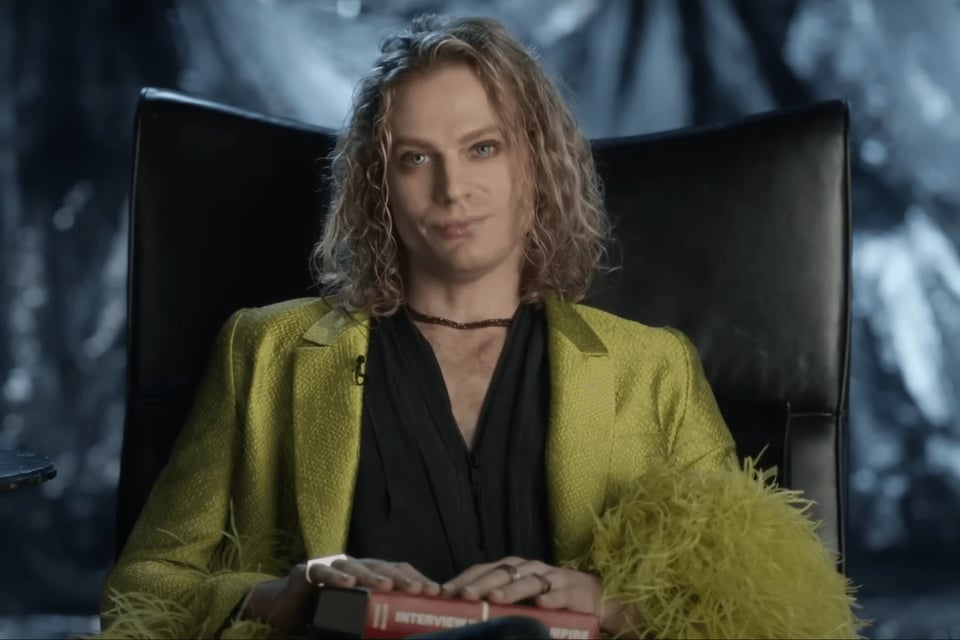
Here’s a case study. Interview with the Vampire (2022) is entirely predicated on the fact that all of its main characters are pretty terrible people. At base, they are vampires who have, at one point or another, killed innocent people to sustain themselves despite being able to feed on animals. Beyond that, over the course of the books and show, they are shown to act in abusive, predatory and unethical ways towards one another. This is done in service of the work’s greater exploration of abuse as a phenomenon, among other things — its dynamics, who can do it, the forms it takes, how it relates to other systems of power. Lestat is controlling, manipulative, and occasionally violent towards Louis. Louis was a sex trafficker, and turns Claudia into a vampire and forces her into a life of feeding on innocents she never consented to. Claudia, who is in the running for the most ethically upright character in the entire cast, gleefully participates in the murder of multiple people, including the marginalized and malnourished, and seemingly tried to turn a boy she was attracted to without his consent in much the same way Louis did to her.1 You can do this for pretty much every character.
In spite of this, fan discussions about these characters can often boil down to arguments litigating which evil ass vampire is the least evil. Fans will end up interpreting characters in bad faith in much the same way a sleazy lawyer might massage the intent behind the precise wording of a law. Ignoring the obvious and intentional racial dimensions of Lestat spending the whole first season abusing and controlling two black characters. Downplaying Armand’s manipulation of Louis and the grievous harm he causes Claudia. Participating in, to a certain degree, the same apologia for abuse these same characters will spout in light of their actions! Once again, it’s about expectations, about that social contract the author never signed. Fans come into the show expecting to root for a cast of likeable, relatable characters, and when they do not find that in the text, they rewrite it until they can, and thereby erase its meaning. It goes without saying this is not an attitude that is completely ubiquitous in all fandom spaces — but it is one prevalent enough to be a problem.
Failures of interpretation are hardly unique to consumerism. To some extent, they are inevitable. And who are we to say what a ‘failure’ is, anyways? As goes the oft-repeated truism, “art is subjective.” And yet, it is also true that some subjective interpretations of art can be generally agreed to have more or less basis in the text. Some subjective interpretations can have more or less explanatory power for why the novel takes the form it does. Some subjective interpretations make the work click! Individual lines of dialogue or narration that felt out of place suddenly make sense. Character decisions that may have initially felt wrong or uncomfortable now feel justified and even satisfying. Narrative structure, character psychologies, paratext — if the work is well composed enough, everything falls into place in the reader’s understanding in light of a cohesive interpretation.
As, again, art is subjective, I can only speak for myself, but I find this to be one of the most satisfying things art can do for you, and I suspect I am not alone in that. You can understand, then, why when we arrive at interpretations myopically; when we choose interpretations not for explanatory power but instead to satisfy the expectations we placed on the work before we ever turned the first page; when our interpretation brings us farther from the text and, rather than clarifying it, only obfuscates it, we lose out on what makes the work special. This is what ultimately makes me recurrently bounce off of fandom. For all of our aspirations of centering our whole selves, our identities, around the beauty of the art, a lot of the time, we just end up centering the art around ourselves.
Much of what I’ve said, if it was ever exclusive to fandom, no longer really is. Anyone unfortunate enough to open up the Goodreads reviews for experimental fiction will understand this. They will lodge complaints about characters being “unlikeable;” characters making poor decisions regardless of whether it follows the logic of the character’s arc or psychology; being “unable to relate to the protagonist(s);”2 a very intentionally esoteric novel “being confusing,” i.e. asking more of the reader than desired, etc., etc. Then there’s all the discourses over whether ‘depiction is endorsement’ and the antipathy for any challenging fiction. All of it precipitates from mismanaged expectations. We project what we expect out of fiction onto works which break those expectations, and we break them back until they are contorted into spectral illusions which have absolutely nothing to do with the actual, existing text.
There is nothing wrong with anyone in fandom spaces. Well, actually, there’s something deeply wrong with all of us, but there’s nothing particularly wrong with anyone in fandom spaces. Consumerism is a force which guides the way we interact with much of American life. It is hardly the fault of the individuals who are, themselves, shaped by capital relations, that their actions are also shaped by capital relations. I do not mean to claim some moral authority over people who I think are reading books weird. What I want to do is simply point out that the way a lot of us are discussing literature online isn’t working. It doesn’t get us any closer to understanding the art, it doesn’t produce interesting and productive discussion, and it doesn’t even focus on the art itself. If we want to center ourselves in appreciating art, we need to look beyond ourselves and, for the first time, actually appreciate the thing in front of us, and not the thing we want it to be.
Ultimately irrelevant, but this note about Claudia trying to turn Charlie could be said to be up for debate — it’s never explicitly stated, but A.) she does bring him to Lestat and ask him to turn Charlie after his death, though you could argue that this is simply her having a bout of post-manslaughter remorse, and B.) she initially bites him only after he calls her an ‘angel,’ a motif we originally saw with Louis and Lestat when they turned her, and (I figured) the implication is that this is what her intent was. If you disagree, that’s fine, I guess you just hate me. I called our other friend and they said you told them you hate me ↩
Particularly hate this one given the frequency with which it’s levied against non-white authors in particular. The utter irrelevancy to actual quality of ‘relatability’ aside — you’re practically conceding you can’t empathize with someone who has a different skin color than you! ↩

Add a comment: